Turn Gion into a training ring.
This Kyoto Ninja Experience Cafe Kyoto Gion is one of those rare activities that feels like a movie scene you can actually do yourself: you get a ninja costume and gear, then you train with real weapon props under instructor guidance. I especially like how structured it is, with step-by-step coaching, and how it ends with plenty of photo moments so you leave with content you’ll actually want to post. One consideration: you’ll need to change into the outfit, so try to avoid wearing a skirt.
If you like hands-on fun, this one hits the sweet spot. You rotate through training with three weapons (shuriken, blowgun, and katana), and the vibe stays safe and playful. It’s also indoor, which matters in Kyoto when the weather can change faster than your sightseeing plans.
In This Review
- Key points to know before you go
- Entering the ninja zone: the 6th floor in Gion
- Your ninja transformation: costume rental and quick briefing
- The main event: shuriken, blowgun, and katana training
- Shuriken throwing stars
- Blowgun practice
- Katana basics
- Training instructors: safety, humor, and real encouragement
- Indoor ninja photos: turning practice into shareable memories
- If you’re just watching: cafe time in ninja mode
- How long it takes and who will love it most
- Families and kids
- Solo travelers
- Price and value: is $45 worth a Kyoto ninja session?
- Practical advice before you go (so nothing slows you down)
- Should you book Ninja Experience Cafe Kyoto Gion?
- FAQ
- How long does the Ninja Experience Cafe Kyoto Gion activity take?
- How much does it cost?
- What’s included in the price?
- What weapons do you train with?
- Where is the meeting point?
- Is this experience suitable for young children?
Key points to know before you go
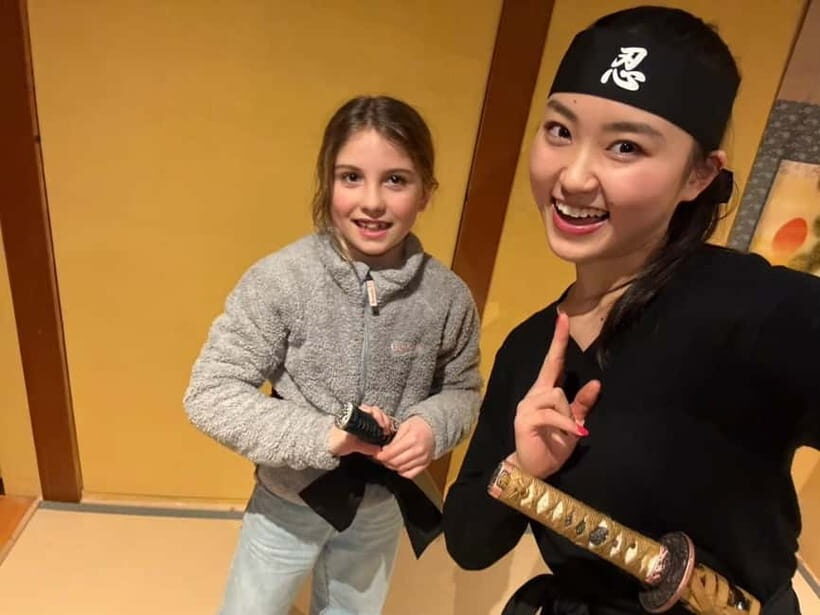
- Costume transformation that turns you into a ninja right away, not at the end
- Three-weapon training: shuriken, blowgun, and katana
- Small group size (up to 10), so you get real coaching time
- Indoor, weather-proof activity in the middle of Gion
- Photo and video help from staff, so you don’t feel awkward posing
Entering the ninja zone: the 6th floor in Gion
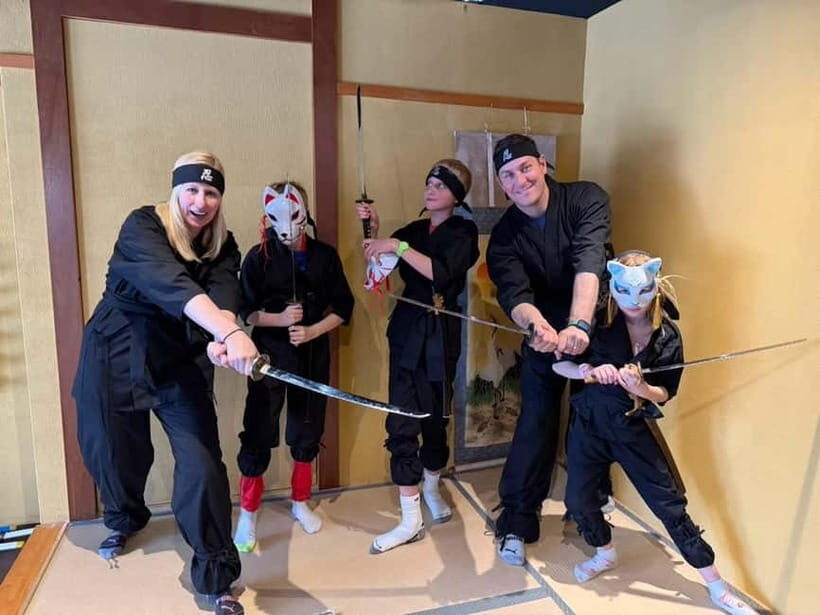
The meeting point is simple: the cafe is on the 6th floor, and the building has an elevator. That means you can show up, get oriented, and start focusing on the fun instead of hunting signs through side streets.
What I like about this setup is how quickly you switch modes. One minute you’re thinking about Kyoto streets; the next, you’re learning ninja basics in a dedicated space designed for the activity. Because it’s indoors, it also works well when you’re tired from walking or when the weather won’t cooperate. It’s a good “reset” activity during a Gion day.
The session runs about 1–2 hours, depending on the starting time you pick. And because it’s a small group capped at 10 participants, you’re not lost in a crowd.
A few more Kyoto tours and experiences worth a look


Your ninja transformation: costume rental and quick briefing
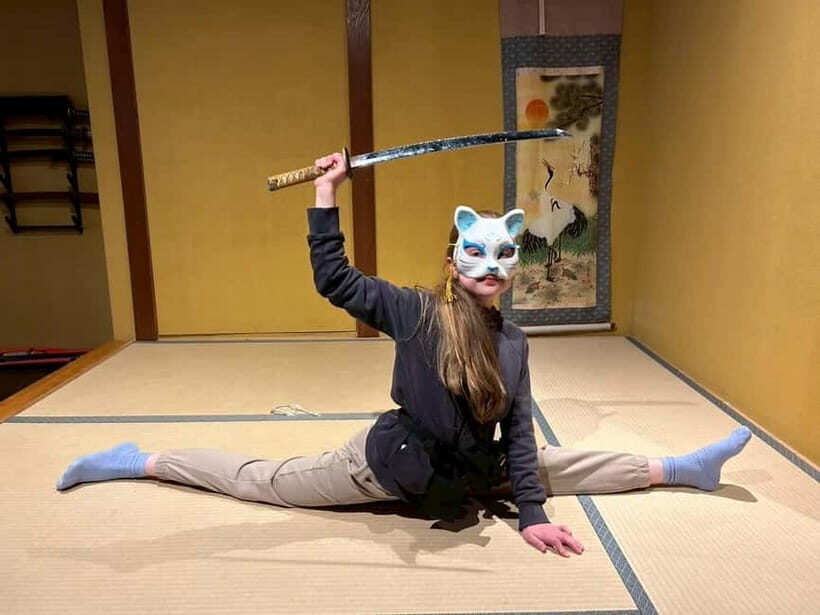
Once you arrive, you put on an authentic ninja costume with rental gear. This isn’t a “dress-up corner” and a quick photo. The costume is part of the full experience, including the training flow, so you’ll feel like you’ve committed to the bit.
The staff and instructors guide you step by step, which matters when you’re handling weapons—even if they’re training-focused props. The whole thing is set up as safe, fun practice, not a chaotic free-for-all.
If you’re going with a group, here’s a detail worth planning around: people who aren’t joining the training don’t get the full add-on training experience. The setup is that you can observe and take photos, and you can enjoy ninja-themed cafe food and drinks while watching.
The main event: shuriken, blowgun, and katana training
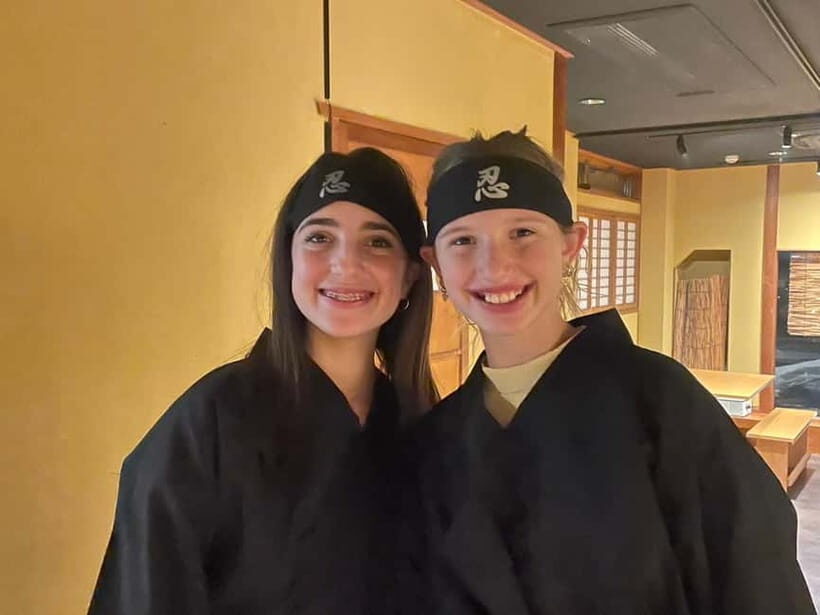
This is the heart of the Ninja Experience Cafe Kyoto Gion: you train with three ninja weapons, guided by instructors who help you learn what to do and when.
Shuriken throwing stars
The shuriken station is where your “action movie” brain wakes up. You’re not just pretending to throw—you get chances to practice so you can feel the technique and adjust your accuracy. The experience gives you a fun way to learn control and aim without it turning into a serious weapons workshop.
If you enjoy games with a skill element (think target practice), this is usually the most satisfying station to repeat. You get that instant feedback from where the throws land.
Blowgun practice
Next up is the blowgun. This one feels different from shuriken because it’s more about consistent technique. The training time gives you a chance to try your precision at a distance, which makes it feel genuinely challenging in a playful way.
It’s also a great contrast: shuriken is dynamic and quick; blowgun is steady and deliberate. You’ll likely feel a change in focus as you switch between stations.
Other ninja experiences in Kyoto



Katana basics
Then comes the katana. Even if you’re not expecting to become a swordsman, you get instruction for the fundamentals and a chance to practice safely in a controlled environment. It’s a good “final boss” moment for the session, because it rounds out the ninja theme with a more iconic weapon.
The katana station also helps you understand that the point isn’t fighting—it’s form, control, and learning the motions in a guided setting.
Training instructors: safety, humor, and real encouragement
The experience is led by ninja instructors who work with participants in both English and Japanese. That bilingual approach helps a lot if your group includes different comfort levels.
One of the standout things I’d emphasize is how much the instructors keep the mood supportive. In particular, instructors such as Yui and Wei have been praised for being welcoming, funny, engaging, and encouraging—especially for families with kids. That kind of energy matters because it turns “weapon practice” into a confidence boost, not a stressful skill test.
It’s also why the small-group format works: you get feedback and guidance, rather than just watching from the edge.
Indoor ninja photos: turning practice into shareable memories
This cafe is built for photos. You’ll have photo opportunities during and after training, and the staff can help you capture the best photo and video moments.
That means you don’t have to rely on your arm-holding buddy to frame your throw, your sword pose, and the full costume look. You can focus on doing the training while they help you with angles and timing.
A practical tip: wear clothing that makes it easy to move and that you can change into and out of quickly. And again, if you can, avoid skirts. The costume change is part of the experience flow, so plan your outfit accordingly.
If you’re the type who likes to remember the trip with actual proof (not just blurry “we were here” shots), you’ll probably get more satisfaction from this than a typical photo stop.
If you’re just watching: cafe time in ninja mode
Not everyone in a group needs to train. If you’re accompanying someone, you can observe the sessions and take photos from the cafe area. You can also enjoy ninja-themed food and drinks while you watch the training.
A detail to note: the experience indicates that companions who aren’t participating should order one drink at the cafe. So if you’re planning a family or friend group, budget that in so no one is surprised.
This “watch + snack + photo” setup is also a solid option if you have mixed energy levels in your party—some people want the full training, while others are happy to enjoy the vibe and get pictures.
How long it takes and who will love it most
Plan for 1–2 hours. That’s long enough to do all three weapon stations and get photos, but short enough that it won’t steal the entire day from your Kyoto schedule. Check available starting times when you book so you can align it with your other Gion plans.
Because the group is limited to 10 participants, it’s comfortable for solo travelers, couples, and small groups. You’re not stuck waiting endlessly for your turn, and the instructors can keep things moving.
Families and kids
The experience is described as suitable for a wide range of ages, but it’s not suitable for children under 3 years. If you’re traveling with young kids, that’s a key cutoff to remember. For kids old enough to participate, the encouraging instructor approach is a big part of why families seem to enjoy it—especially when kids feel nervous at first and get pushed gently into the fun.
Solo travelers
If you’re traveling alone, the small group helps you feel included rather than singled out. You’ll likely chat naturally with the other participants in the waiting and photo moments.
Price and value: is $45 worth a Kyoto ninja session?
At $45 per person, this sits in the “activity splurge” category. But value isn’t only about cost—it’s about how much of your time is spent doing something, not just looking at something.
Here’s what you’re paying for, in practical terms:
- Costume rental so you don’t need to hunt props or outfits in Kyoto
- Guided training with three weapon types, not a one-weapon demo
- Instructor support in English and Japanese
- Photo opportunities, plus staff help so you’re not stuck with awkward selfies
- An indoor setting that protects your plan from weather issues
If you’re the type of traveler who likes making memories with your own hands and your own camera roll, it can feel like a good deal. If you’re mainly after cultural history or a deep museum-style narrative, you might prefer something else in Kyoto. This experience is about doing, posing, and learning quick skills in a safe format.
Also, the rating given is extremely high (4.9 from 20 reviews), which usually points to consistent fun and good instruction rather than a one-off surprise.
Practical advice before you go (so nothing slows you down)
A few details will make your visit smoother:
- Avoid skirts if possible. You’ll need to change into the outfit.
- Come ready to participate in training if you want the full experience. It’s the core part of the session.
- If someone in your group isn’t training, plan for the cafe expectation: they should order one drink.
- Use the elevator to reach the 6th floor meeting point.
That’s it. No complicated planning. The experience is designed to be easy to step into.
Should you book Ninja Experience Cafe Kyoto Gion?
I think you should book it if you want an indoor activity in Kyoto that feels hands-on, visual, and a little bit goofy in the best way. The combination of costume transformation, three-weapon training, and photo help makes it a rare “do it” experience that still looks great afterward.
Skip it if you’re not into training stations, or if your group includes someone who doesn’t want to participate and also doesn’t enjoy the idea of observing and ordering a drink. It’s built around the action, not around quiet wandering.
If your goal is to add one memorable, easy-to-fit activity to a Gion day, this is a strong choice.
FAQ
How long does the Ninja Experience Cafe Kyoto Gion activity take?
The experience lasts about 1 to 2 hours, depending on the starting time you select.
How much does it cost?
It’s $45 per person.
What’s included in the price?
The included items are training with shuriken, blowgun, and katana, ninja costume rental, guidance from instructors, and photo opportunities.
What weapons do you train with?
You train with three ninja weapons: shuriken (throwing stars), blowgun, and katana (sword).
Where is the meeting point?
The cafe is on the 6th floor of the building. There is an elevator, so use it and go directly to the cafe.
Is this experience suitable for young children?
It is not suitable for children under 3 years.