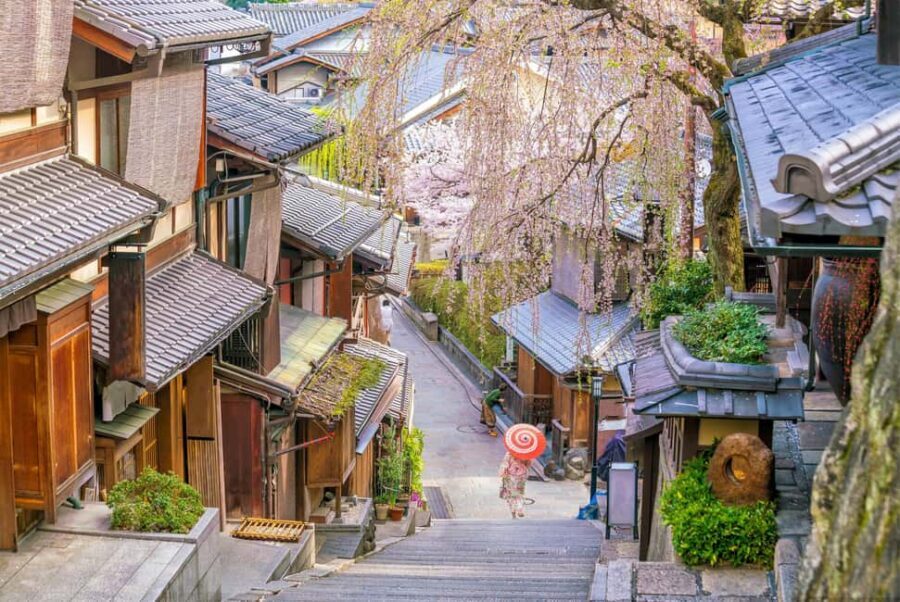
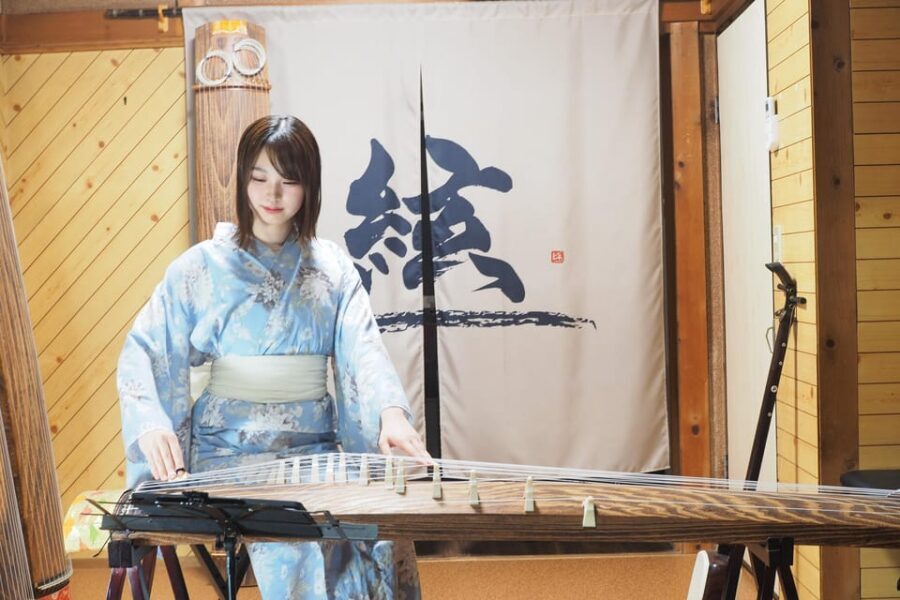
Countryside Kyoto, powered by an e-bike. This tour is built around a Japanese local guide and the gentle push of an electric bike, so you can take on Kameoka’s rolling roads without feeling cooked. I especially like how it mixes classic Kyoto sights with genuine rural routines like farmers working their fields, plus quiet mountain-air breaks that feel a world away from crowds.
Two things I really like: the small-group feel (max 5) that makes it easy to stop for photos when you actually see something cool, and the way the route lands at big-name spots like Tenryuji and calmer nature moments like Hirosawa Pond.
One thing to consider: this experience depends on good weather. If rain or poor conditions hit, you may need to switch dates or get a refund, so keep an eye on the forecast.
In This Review
- Key highlights to know before you go
- Entering Kyoto countryside by e-bike, with a guide who keeps it human
- Meeting in Arashiyama, then rolling into temple streets and countryside lanes
- Stop 1: Arashiyama Station and quick e-bike orientation
- Stop 2: Sagatoriimoto Fukatanicho, a Tendai temple approach area
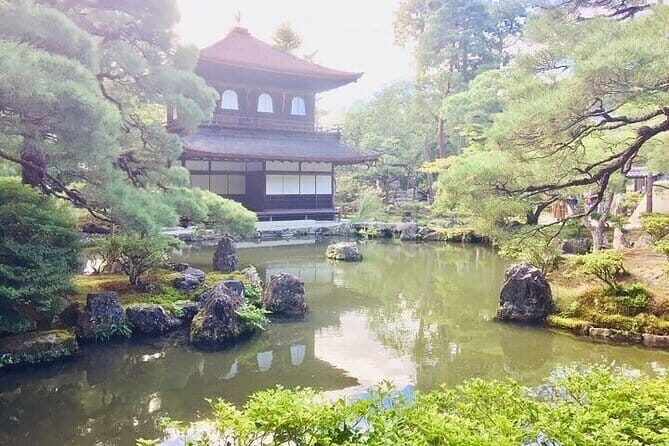
- Stop 3: Hirosawa Pond for mirror-quiet scenery
- Bamboo forest riding and Tenryuji’s guided UNESCO visit
- Stop 4: Sagaogurayama Tabuchiyamacho and the bamboo forest ride
- Stop 5: Arashiyama’s most representative spot, briefly
- Stop 6: Tenryuji (1.5 hours) with UNESCO-level temple context
- Rural Kameoka energy, Seven Lucky Gods, and the photo-friendly private feel
- Price and what $117.27 really buys you
- Who this tour suits best (and what might not)
- Should you book this Kyoto countryside e-bike tour?
- FAQ
- How long is the Kyoto countryside e-bike tour?
- Where do we meet at the start?
- How many people are in the group?
- Is the admission fee included for the stops?
- Do I need my own bike?
- What if I have never ridden an e-bike before?
- What should I do at the end of the tour?
- Is a helmet included?
- What happens if the weather is bad?
- Can I cancel for free?
Key highlights to know before you go
- A Japanese local guide who can explain what you’re seeing in plain, real terms
- E-bike assistance that helps you ride hills comfortably at your own pace
- Arashiyama-area classics plus rural roads around Kameoka
- Tenryuji (UNESCO World Heritage) with a focused, guided visit
- Seven Lucky Gods temple stops for blessings you won’t stumble into by accident
Entering Kyoto countryside by e-bike, with a guide who keeps it human
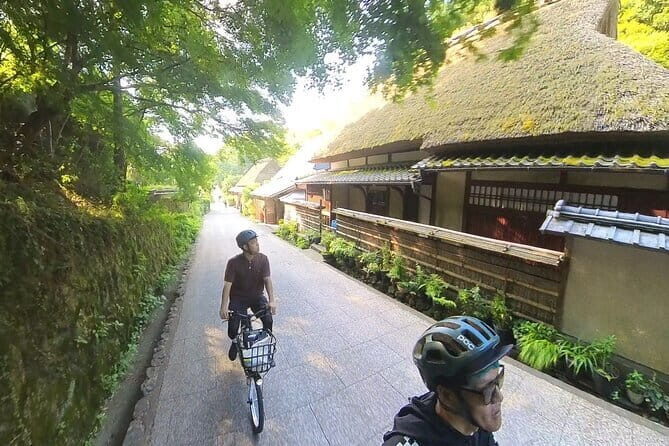
This isn’t a big bus tour. It’s designed as a calm, guided ride where the bike does the heavy lifting and you do the enjoying. Your e-bike support matters here because the route includes rolling hills, so even if you’re not a road-cycling type, you can keep moving and still have energy for the temple stops.
The guide side is the point. In Kyoto, “English-speaking” often means scripted phrases. Here, you’re riding with a Japanese guide who can point out details and local context in a way that feels practical. The tour’s guide is listed as someone you’ll meet in person, and people specifically mention guide Yuki, including his humor and explanations of local history. If you’re the type who likes knowing what you’re looking at (instead of just walking past it), you’ll likely have a great time.
Logistics are straightforward but do read the message your guide sends you ahead of time. The tour states that the guide will message you via Viator, so check that before the day arrives. And yes—you get a cycling helmet and the bike/e-bike rental is part of the package, so you’re not scrambling for gear.
Other cycling tours in Kyoto Prefecture

Meeting in Arashiyama, then rolling into temple streets and countryside lanes
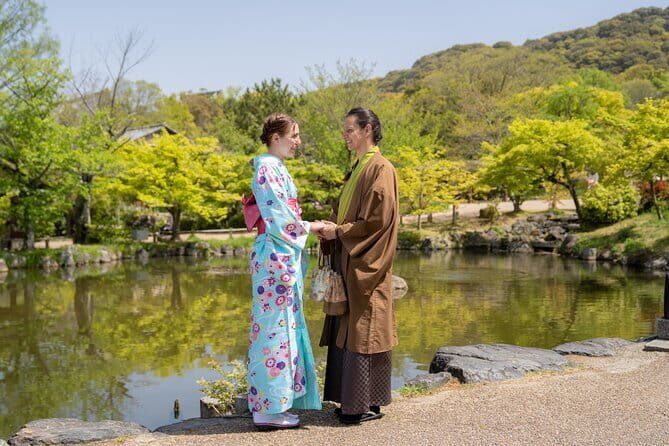
The day kicks off with a clear meetup moment: your guide is waiting at the share cycle Crew port at the south exit of Arashiyama Station. From there, the route is a mix of Kyoto’s old-street atmosphere and a gradual shift toward the calmer feel you came for.
Stop 1: Arashiyama Station and quick e-bike orientation
Even if you’re new to electric bikes, you’re not left to guess. The tour includes basic instructions on operation and bike handling. That’s a big deal because confidence matters more than speed on a guided route with frequent stops.
Practical note: you’ll also want to wear comfortable clothing and shoes you can walk in. The tour is mostly riding, but you’ll do meaningful walking at temples and scenic points.
Stop 2: Sagatoriimoto Fukatanicho, a Tendai temple approach area
Next you’ll visit Sagatoriimoto Fukatanicho, described as a Tendai sect temple in Saga. It’s noted as the starting point of the Sagano tour and sits at the foothills entrance to the approach to Mt. Atago Shrine.
What makes this worthwhile is the framing. Instead of treating temples like isolated photo backdrops, you get a sense of how routes and religious sites connect to old travel paths. The stop time is about 30 minutes, and admission for this stop is listed as free.
Stop 3: Hirosawa Pond for mirror-quiet scenery
Hirosawa Pond is about a 1.3 km circumference and is known for mirrored reflections on calm days. Even if the water isn’t perfectly still, it’s a good pause point—big enough to feel like a real nature break, small enough to stay relaxed.
This is the kind of stop that makes the whole e-bike idea click. Riding puts you into motion, and then the pond makes you slow down and actually look. Admission is listed as free, and the stop runs about 30 minutes.


Bamboo forest riding and Tenryuji’s guided UNESCO visit
After the pond, you’ll spend real time on the ride itself—this tour leans into the “move through the scenery” feeling.
Stop 4: Sagaogurayama Tabuchiyamacho and the bamboo forest ride
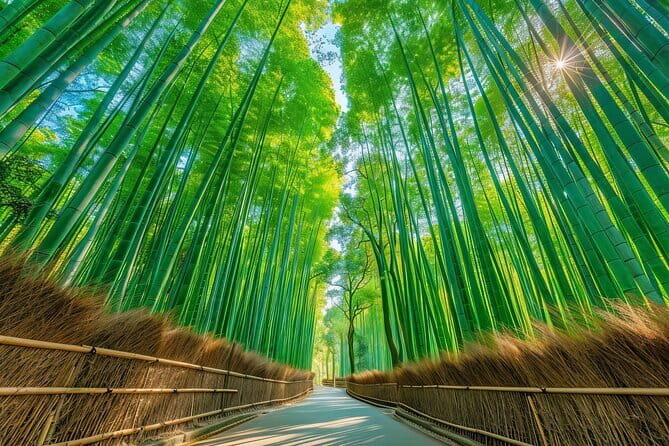
The tour heads into Arashiyama’s natural bamboo forest, mainly Moso bamboo, and you ride through it. The route notes that it’s less touristy earlier in the morning, which is a nice reality check: if you can choose an earlier slot, the bamboo experience usually feels calmer.
For me, bamboo is one of those Kyoto elements that can go either way: crowded and rushed, or quiet and atmospheric. On a smaller guided ride, you’re more likely to get the second version.
Stop 5: Arashiyama’s most representative spot, briefly
This is a short stop (around 10 minutes) at Sagatenryuji Susukinobabacho, identified as Arashiyama’s most representative tourist spot. Translation: you’ll get the classic view, but you won’t be stuck there all day.
This stop is brief by design, which keeps the pacing steady for a 4-hour tour. If you want longer time in the bamboo, you can always extend your day after the tour ends—but during the ride, you’re there for context, not a full day detour.
Stop 6: Tenryuji (1.5 hours) with UNESCO-level temple context
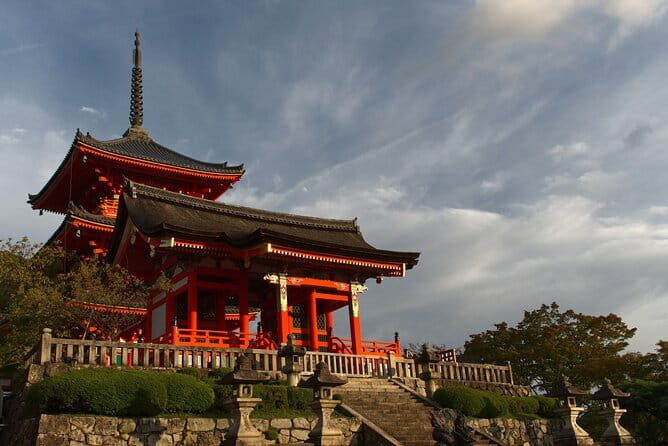
Then you land at Tenryuji for about 1 hour 30 minutes. Tenryuji is described as the first of Kyoto’s five temples as a Zen temple connected to the Ashikaga Shogun family and Emperor Godaigo. It’s also listed as a UNESCO World Heritage Site under Historic Monuments of Ancient Kyoto.
Why this matters for you: a guided temple visit changes how you look at the place. Without context, you can wander and still feel like you saw “a temple.” With context, you start to notice why certain structures and views became meaningful over time.
Admission for this stop is listed as free, and with the longer time slot, you’ll have enough breathing room to do more than just snap photos and move on.
Rural Kameoka energy, Seven Lucky Gods, and the photo-friendly private feel
One of the best parts of this style of tour is how it mixes big Kyoto landmarks with smaller rural feeling, without pretending the countryside is a museum.
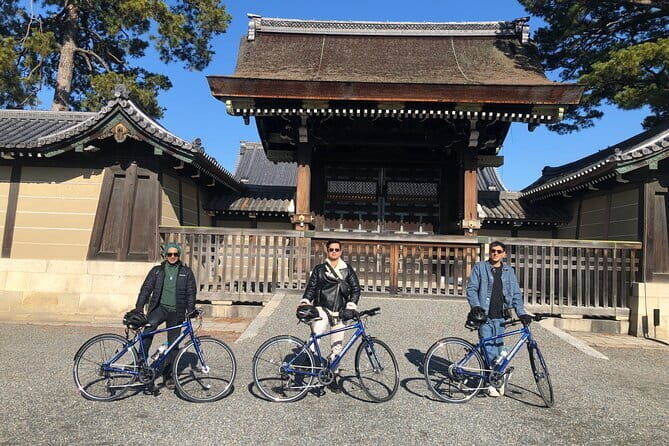
You’re going past local farmers and traditional agricultural methods, and you’re doing it on a bike that lets you travel between points without the stress of traffic and parking. The route is framed as an eco-friendly way to explore, and that’s not just marketing—electric assistance reduces the strain, so your brain stays on the scenery and the explanations.
A detail that keeps coming up in the guide feedback is the temple-blessing element. People describe a stop at a Seven Lucky Gods temple, and mention visiting multiple shrines/temples for blessings. Even if you’re not religious, it’s a fun ritual-style thread through the day. It also explains why the tour feels more personal than a checklist.
Another subtle win: since this is set up as a private experience, you can stop for photos at places that catch your eye. That means you aren’t forced into a one-size-fits-all timetable. Your guide can also help you get the right angle and pace—especially important around bamboo and temple grounds, where everyone wants the same “perfect” spot at the same time.
Price and what $117.27 really buys you
The price is listed at $117.27 per person for about 4 hours. On the surface, that may sound like a splurge. Here’s why it can be good value:
- You get bike/e-bike rental included.
- A cycling guide is included for the whole ride and stop time.
- A helmet is provided.
- Each stop in the described route lists admission as free.
Also, small-group format matters. Max 5 travelers means less waiting, less crowd friction, and easier time to ask questions. That’s especially valuable in Kyoto, where planning a multi-point route through traffic and parking can cost you time and sanity.
The tour is also noted as being commonly booked about 13 days in advance on average. If you want a specific day and you’re traveling in a peak season, book earlier rather than later.
Who this tour suits best (and what might not)
This is a great fit if you want Kyoto countryside scenery without getting stuck in logistics. The e-bike assistance helps a wide range of fitness levels, and the guided structure keeps you from missing the meaning of temples and viewpoints.
You’ll likely enjoy it more if:
- You like calm movement and don’t want a rushed “see everything” day.
- You want Japanese cultural context from a local guide.
- You’re happy doing short walks between riding segments.
It may be less ideal if:
- You strongly dislike riding bikes or aren’t comfortable in traffic areas (even with assistance).
- Your schedule is weather-sensitive, since the tour requires good weather and may shift if conditions are poor.
- You need a full-day deep temple plan. This is paced for a ride-and-stops experience, not a long, slow temple immersion.
Should you book this Kyoto countryside e-bike tour?
If your goal is to see Kyoto beyond the main lanes—without turning the day into a logistics project—this is a strong choice. The combination of e-bike comfort, Tenryuji UNESCO time, and rural pacing is exactly the kind of mix that works well when you want variety in one afternoon.
Book it if you value:
- a Japanese guide’s context (including guide Yuki and the Seven Lucky Gods element people love)
- a small-group vibe with photo flexibility
- a route that pairs classic Arashiyama sights with quieter countryside rhythm
Skip it (or rethink timing) if weather is unreliable for your dates, or if you know you’ll be unhappy on a bike-focused day with multiple short stops.
FAQ
How long is the Kyoto countryside e-bike tour?
It runs for about 4 hours.
Where do we meet at the start?
The itinerary lists the guide meeting you at the share cycle Crew port at the south exit of Arashiyama Station. The meeting point is also listed at Nodokame Road Observation Deck in Kameoka, so check the guide message for the exact setup.
How many people are in the group?
The tour has a maximum of 5 travelers.
Is the admission fee included for the stops?
The itinerary lists admission tickets as free for the stops shown.
Do I need my own bike?
No. Bike or e-bike rental is included in the tour price.
What if I have never ridden an e-bike before?
The tour includes simple instructions on how to operate the e-bike and handle the bike before you ride.
What should I do at the end of the tour?
You return the bicycle at the end point, and then you’re free to enjoy Kyoto on your own.
Is a helmet included?
Yes. A cycling helmet is included.
What happens if the weather is bad?
The tour requires good weather. If it’s canceled due to poor weather, you’ll be offered a different date or a full refund.
Can I cancel for free?
Yes. You can cancel up to 24 hours in advance for a full refund. If you cancel less than 24 hours before, the amount paid is not refunded.