Ikebana turns everyday flowers into a quiet lesson. This class pairs a hands-on, beginner-friendly Ikebana experience with a visit to Tondaya, a 140-year-old machiya (traditional Kyoto townhouse) where you can see how local culture is lived, not staged.
Two things I really like about this experience: you get a real lesson guided by an Ikebana master, and your finished arrangement is displayed where it’s easy to photograph in front of the garden. One thing to consider is that this is a 90-minute activity, so if you’re hoping for lots of theory or multiple design rounds, you may feel the time is tight.
In This Review
- Key points before you go
- Ikebana Meets a 140-Year-Old Machiya in Nishijin
- The 90-Minute Plan: From 1462 Origins to Your Finished Arrangement
- What You Learn as a Beginner (and What You Might Want More Of)
- Tools, Seasonal Flowers, and the Pace You Can Handle
- Photo Time: Displaying Your Work in Front of the Garden
- Nishijin Lifestyle Museum Tondaya: Artifacts, Stories, and Local Texture
- Price and Value at $122: Where the Time Goes
- Practical Stuff You Should Know Before You Go
- Who This Kyoto Ikebana Class Suits Best
- Should You Book This Ikebana Experience?
- FAQ
- Where is the meeting point?
- How long is the Ikebana experience?
- Is this class beginner-friendly?
- What should I bring, and can I go barefoot?
- What’s included in the price?
- What languages are available?
- Is there a minimum number of participants?
- What is the cancellation policy?
Key points before you go
- Beginner-focused Ikebana with seasonal materials and the tools you need
- Meet and converse with an Ikebana master during the session
- Your arrangement gets displayed for photos in front of the garden
- After class, you’ll tour Nishijin Lifestyle Museum Tondaya in a historic machiya
- The experience uses English or Japanese, with interpretation support if needed
Ikebana Meets a 140-Year-Old Machiya in Nishijin
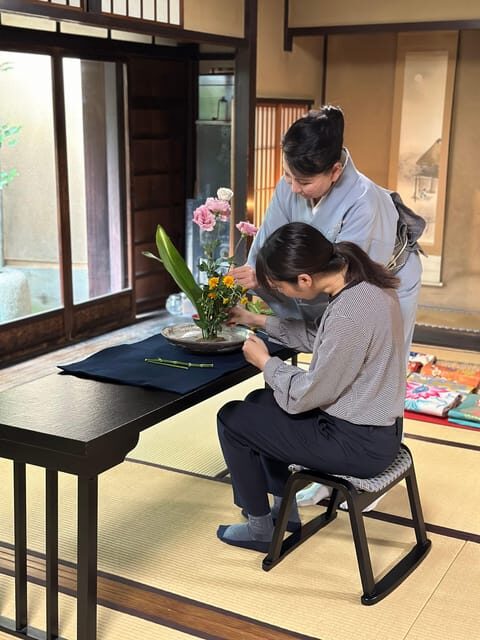
Kyoto has a talent for making art feel like part of daily life. Here, you’re not just learning flower arranging; you’re doing it inside a traditional townhouse atmosphere at Tondaya, a machiya recognized as a culturally significant landmark. That matters because Ikebana isn’t only about making something pretty. It’s about spacing, balance, and how nature fits into a human-made setting.
In fact, the class connects the practice to a specific origin story. In 1462, an arrangement in Kyoto was admired for its beauty and elegance. This form was different from religious flower offerings—it was designed to express harmony between nature and human space. You’ll hear that background while you learn the basics, so the lesson doesn’t feel like random steps.
One of the best values of doing Ikebana in this kind of setting is the pacing. A beginner lesson can easily feel rushed, but the machiya environment slows you down in a good way. You’ll be paying attention to lines, structure, and proportion instead of treating the flowers like a craft project you finish and move on from.
If you're still narrowing it down, here are other tours in Kyoto Prefecture we've reviewed.

The 90-Minute Plan: From 1462 Origins to Your Finished Arrangement
This experience is 90 minutes long, and the flow is clear: history and guidance first, hands-on arranging second, then a tour and a chance to see your work in context. You’ll start at Tondaya, Nishijin Japanese Cultural Experience Museum, at 697 Ishiyakushichō in Kyoto.
The lesson itself begins with the roots of Ikebana. You’ll get the story of how it evolved into the Japanese art of flower arrangement, including the idea that it expresses harmony—not just decoration. Then your instructor guides you through a traditional arrangement approach designed for beginners.
After you create your arrangement, the next phase is surprisingly satisfying. Your completed work is displayed in front of the garden, which turns the lesson into a short “presenting moment.” That’s useful because it gives your eyes a reference point for what the instructor is aiming for. It also gives you something tangible to photograph beyond your tabletop.
Finally, you’ll transition into the Tondaya portion of the visit. This part isn’t a separate event that feels disconnected from Ikebana. Instead, it broadens what you’re practicing: you’re still learning how traditional Japanese culture is organized—through objects, architecture, and stories.
What You Learn as a Beginner (and What You Might Want More Of)
The class is built for beginners, so you’re not expected to arrive with prior arranging experience. The goal is to help you produce an arrangement that follows core ideas, even if you’ve never touched an ikebana vase and tools before. You’ll be guided step-by-step, and you’ll have time to ask questions during the session.
A big part of making this work for newcomers is language support. The instructor can operate in English and Japanese, and if English isn’t enough (or isn’t used fully in the group conversation), a translation device may be used when needed. Staff may also be scheduled as interpreters, since not every staff member speaks English.
Still, it’s smart to calibrate expectations based on what Ikebana is. It has plenty of theory, and people can study it for years. This activity focuses on a traditional beginner arrangement rather than a long lecture series. If what you really want is deep explanation of rules and why each decision is made, the 90-minute structure may feel short. The upside: you’ll leave with an actual arrangement you made, not just facts.
Tools, Seasonal Flowers, and the Pace You Can Handle
You won’t have to worry about bringing your own supplies. Seasonal flowers and all necessary tools are provided as part of the experience, along with the materials used to make your arrangement. For first-timers, this is a practical win—you can focus on technique and decision-making instead of hunting down correct stems or worrying whether your tools are compatible.
The lesson is also designed to be doable in a single sitting. That means the structure of the arrangement is taught in a way that beginners can repeat. You’ll learn what to do with the materials you’re given and how to shape the arrangement so it matches the traditional approach you’re being taught.
One subtle but important point: Ikebana places attention on negative space as much as flowers. Beginners often assume the goal is to use more blooms. In reality, you’ll spend time thinking about spacing and angles, and your instructor’s corrections matter. If you’re someone who likes clear guidance, you’ll probably enjoy the step-by-step approach that leads to a final arrangement you can be proud of.
Also, note that the staff include specialists across multiple traditional arts such as kimono, tea ceremony, calligraphy, and ikebana. Even when you’re only doing Ikebana that day, that breadth usually shows up in how the instructors talk about tradition and discipline.
Photo Time: Displaying Your Work in Front of the Garden
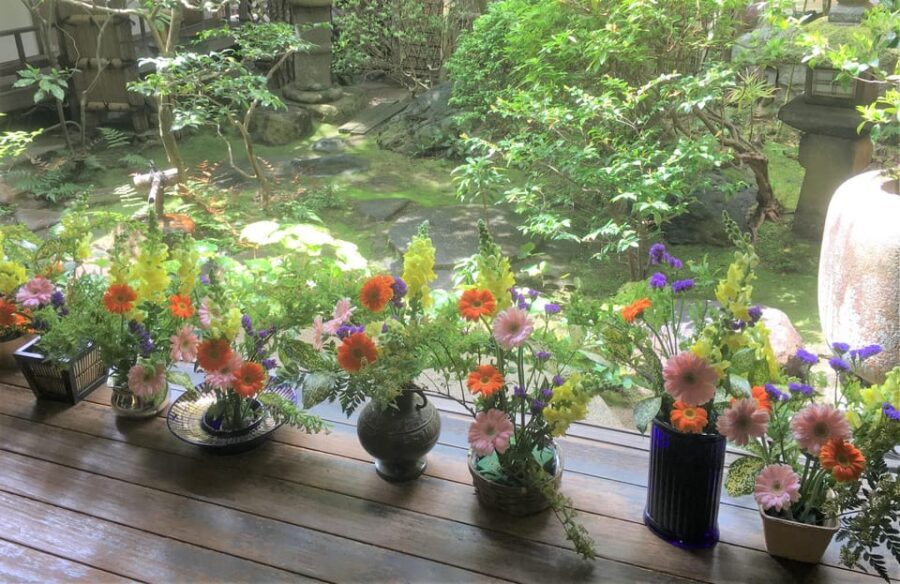
I like lessons that end with a built-in “result moment.” Here, you don’t just finish and pack up. Your completed arrangement is displayed in front of the garden after your Ikebana time. That gives you a clean visual finish and a natural background that matches the art form’s theme.
This is where your experience becomes more than just a class. The display spot turns your arrangement into part of a wider environment. You’re seeing your work as it would be appreciated, not as a quick desk photo.
If you care about photos, this is the part to slow down for. Aim for a couple of angles: one straight-on to capture the arrangement’s overall line, and one slightly off to show depth. The garden setting helps the arrangement read as intentional, which is exactly what Ikebana is trying to do.
If you’re the kind of person who plans what to photograph on the day, you can think of this like a mini gallery moment. You’ll already have the flowers “done,” so you can focus on framing and light instead of rushing to create.



Nishijin Lifestyle Museum Tondaya: Artifacts, Stories, and Local Texture
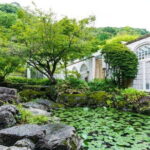
After the Ikebana lesson, you move into Nishijin Lifestyle Museum Tondaya, inside a 140-year-old machiya. Tondaya is designated as a culturally significant landmark by the Kyoto City Government, so it’s not just a pretty building. It has a protected sense of place, and the visit is meant to help you understand living heritage.
What makes this stop worthwhile is that it connects objects to stories. The museum staff share historical artifacts and explanations that help you see how traditional Kyoto culture is maintained. Even if you’ve walked past machiya facades before, being inside the structure changes the way you understand them.
This is also a good time to ask questions, since the staff are experienced in several traditional arts. While your main hands-on activity is Ikebana, you’ll likely notice how the day’s theme of form and discipline shows up again in the museum’s approach to explaining what you’re seeing.
One added note from what people have said about the visit: you may have a chance to wear traditional kimono for a small extra cost. If that option is available during your session, it can be a fun way to slow your pace and experience the space with a little more cultural texture.
Price and Value at $122: Where the Time Goes
At $122 per person for 90 minutes, you’re paying for several things at once: the instructor-led Ikebana lesson, the materials (flowers and tools), and the museum entrance fee. For a beginner activity in Kyoto that includes supplies and an on-site cultural visit, that price can make sense—especially if you want a guided experience rather than trying to self-learn.
That said, value depends on your expectations. Some people feel the experience is too short if they were hoping for lots of instruction, deeper theory, or multiple chances to redo the arrangement with commentary. If you’re coming in expecting a long, detailed lecture about rules, this may not hit your target.
Here’s the balanced way to think about it: you’re buying a guided endpoint. Your arrangement is part of the experience, and it’s displayed afterward for photos. If you want a structured, hands-on result with a cultural stop inside Tondaya, the pricing can feel fair. If you want a long, theory-heavy class with lots of explanation, it may feel expensive per minute.
Also, note that you must book with a minimum of two participants. That doesn’t change the experience quality, but it can affect your total cost if you’re traveling solo.
Practical Stuff You Should Know Before You Go
Let’s keep this simple and save you hassle.
You’ll need to wear socks. Bare feet aren’t allowed, and you should avoid wearing stockings or tights. Bring socks that are comfortable enough to stand and sit in for the full session, since you’ll be in a traditional interior where footwear rules matter.
Language is another practical factor. The instructor may work in English or Japanese, and when communication gets tricky, a translation device may be used. If you have a particular question you want answered—like what to do if your arrangement feels off—writing a quick note before you arrive can help you get your point across.
Timing matters too. Arrive on time for your scheduled experience. In a class setting, you want to start fresh rather than feeling rushed at the beginning.
Finally, this is a private group experience. That’s usually a comfort factor because it tends to keep questions manageable and the instruction more focused.
Who This Kyoto Ikebana Class Suits Best
You’ll likely enjoy this experience most if you fit one of these profiles:
- You’re a beginner who wants a guided start with seasonal flowers and tools provided
- You like structured instruction and want to leave with a completed arrangement
- You enjoy combining hands-on art with a cultural stop in a real machiya setting
- You’d like photo opportunities built into the day, not added as an afterthought
- You want a short, meaningful Kyoto activity that’s different from temples and shopping streets
If you’re an experienced ikebana student, you might find the beginner focus limiting. And if your main goal is deep theory, it’s worth remembering that this is a 90-minute format, not a semester-long training program.
Should You Book This Ikebana Experience?
Book it if you want a satisfying mix of hands-on Ikebana and an on-site cultural visit in a genuine Kyoto townhouse. The strongest case for booking is the combination: you learn the practice, you make an arrangement, it’s displayed for photos, and then you step into Tondaya to connect the art to place.
Skip or reconsider if you’re primarily chasing long explanations or multiple redesign attempts. This is about making something guided, finished, and shown—not a prolonged theory workshop.
FAQ
Where is the meeting point?
Meet at Tondaya – Nishijin Japanese Cultural Experience Museum, 697 Ishiyakushichō, Kamigyo Ward, Kyoto, Japan.
How long is the Ikebana experience?
The experience lasts 90 minutes.
Is this class beginner-friendly?
Yes. It is designed as an Ikebana experience for beginners.
What should I bring, and can I go barefoot?
Bring socks. Bare feet are not allowed, and you should refrain from wearing stockings or tights.
What’s included in the price?
Materials (flowers and tools) and an entrance fee are included.
What languages are available?
The instructor can work in English and Japanese. If needed, an interpreter and/or a translation device may be used.
Is there a minimum number of participants?
Yes. Reservations must be made for a minimum of two participants.
What is the cancellation policy?
You can cancel up to 24 hours in advance for a full refund.