Kyoto at night feels different. This 90-minute visit to Keishunin Temple lets you slow down in the glow of illuminated gardens, then sit through zazen meditation with help from the VP Monk. My favorite part is the way the guide brings the temple to life, including the matcha tea and sweets tasting led by Deputy Chief Priest Yasumasa Arashima.
One thing to consider: this is not a long, free-roam evening. You’ll be guided step by step, so if you’re hoping for hours of wandering on your own, you may feel rushed—especially if you’re dressed lightly for the colder night air.
In This Review
- Key highlights at a glance
- Keishunin Temple after dark: the gardens are the main event
- Meeting your guide and stepping into the temple’s story
- Sehakuan tea room: a close look at atmosphere, not just objects
- Kano Sansetsu fusuma paintings: art you can read slowly
- Zazen at Keishunin: what you’ll do during the meditation
- Matcha and Japanese sweets with Deputy Chief Priest Yasumasa Arashima
- Price and value: is $206 for 90 minutes worth it?
- Who should book this Kyoto night Zen experience
- Should you book? My practical take
- FAQ
- FAQ
- Where does the experience take place?
- How long is the experience?
- What language is the guide?
- Is this a private group tour?
- What do you do during the tour?
- What’s included in the price?
- What is not included?
- Do I need to reserve in advance?
- Is flash photography allowed?
- Who can participate?
Key highlights at a glance
- Nighttime Keishunin Temple visit focused on calm, guided attention rather than sightseeing speed
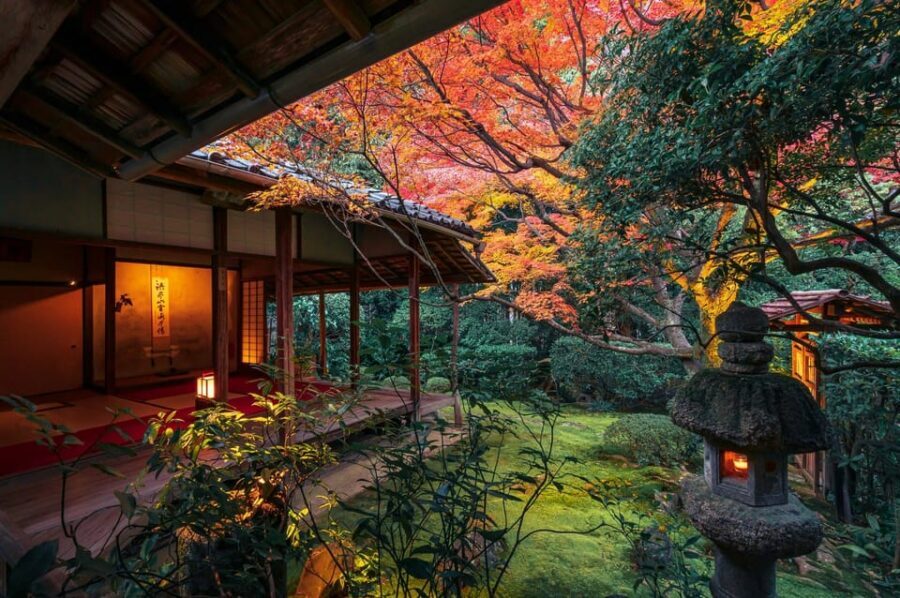
- Four gardens lit up after dark, including areas recognized as nationally designated historical sites and scenic spots
- Tour of Sehakuan, the tea room where you get a closer look at temple culture
- Zazen meditation experience, guided by temple leadership (including the VP Monk)
- Matcha tea and Japanese sweets tasting with Deputy Chief Priest Yasumasa Arashima
- Kano Sansetsu fusuma paintings, seen as part of a story you can actually follow
Keishunin Temple after dark: the gardens are the main event
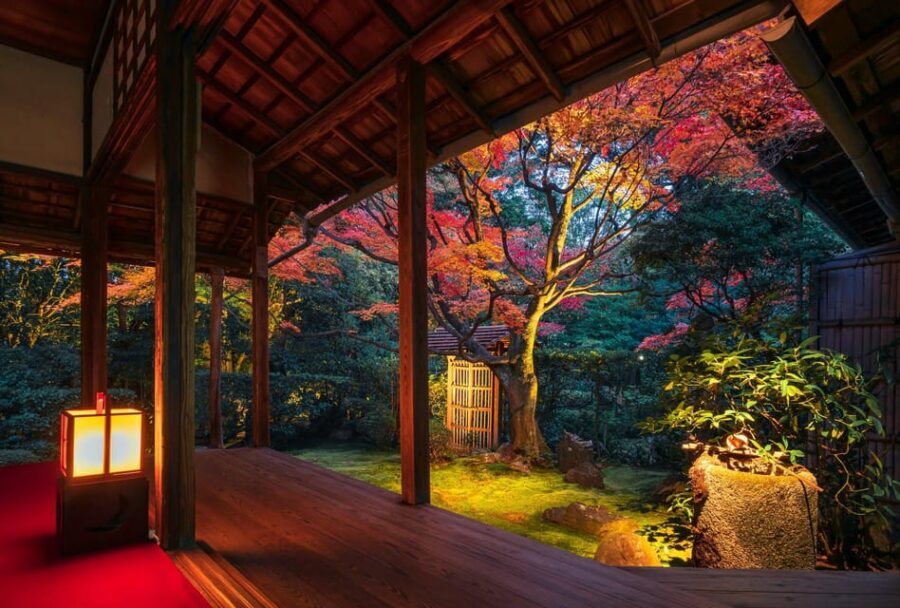
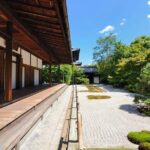
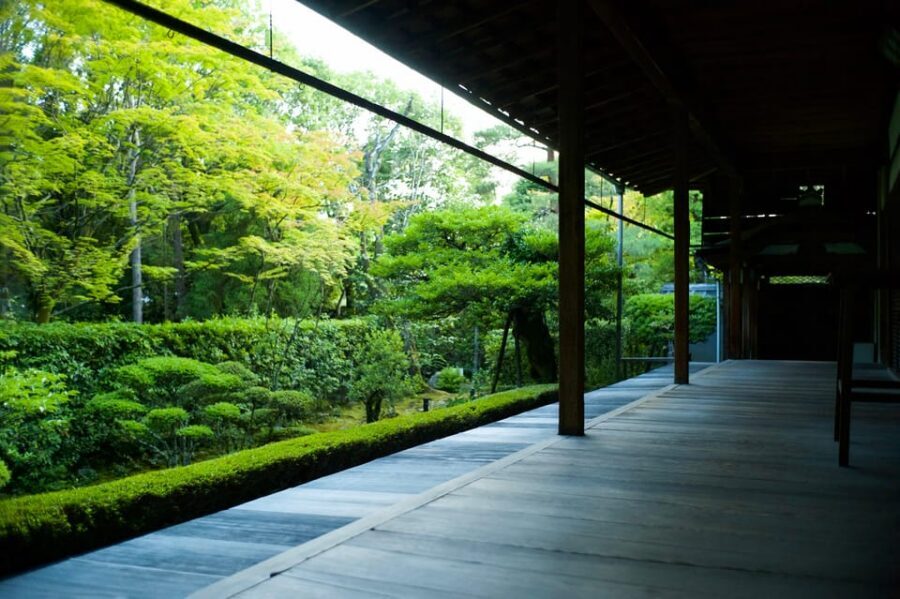
This experience happens at Keishunin, a sub-temple of Myoshinji Temple in Kyoto. At daytime, temples are already beautiful. At night, the gardens change character. You can feel it when the lights come on and the pace of everyone in the group slows with them.
The program centers on the four gardens at Keishunin, which are designated as nationally recognized historical sites and scenic spots. That matters because it’s not just “pretty plants.” These spaces are protected and considered important enough to be listed. In practice, you’ll get a guided walk that helps you notice what you might otherwise skip—placement, atmosphere, and how the gardens are designed to be viewed in a specific rhythm.
As you move between garden areas, you’re also learning the temple’s background and cultural meaning from your English or Chinese live guide. It gives structure to the evening. You’re not just standing there taking photos. You’re getting context for why each part matters, which makes the lights feel less like stage lighting and more like a gentle spotlight on tradition.
Practical note: dress for real night conditions. Warm clothing and comfortable clothes aren’t a suggestion here. You’ll likely spend enough time outdoors between lit areas that chilly air can cut your attention short.
A few more Kyoto tours and experiences worth a look

Meeting your guide and stepping into the temple’s story
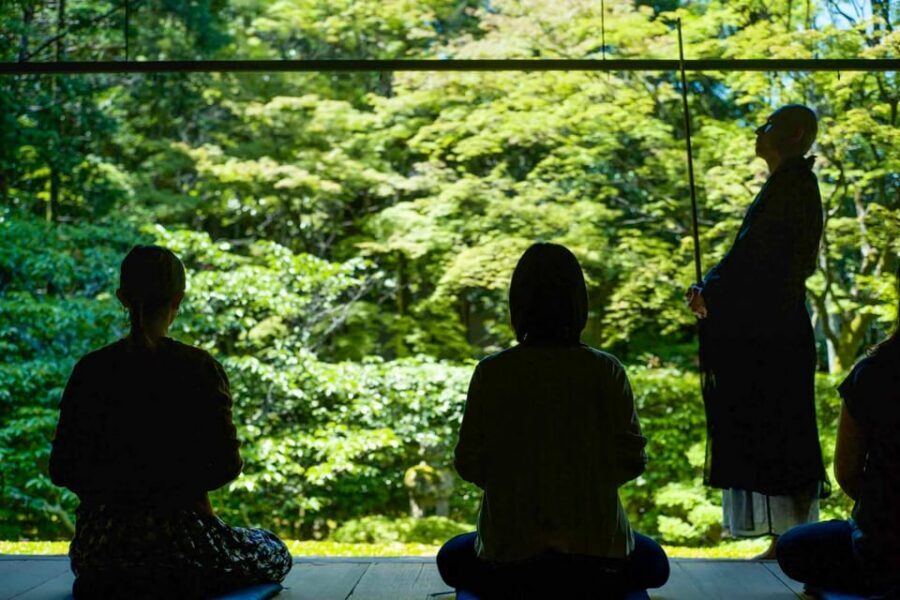
Your evening starts with meeting your guide at the temple. From there, the tour is paced like a conversation: walk a bit, stop to look closely, then connect what you see to what it means.
This is where the small-group vibe helps. It’s a private group, and the guide is there in the moment—so you can ask questions if something isn’t clear. The program is also set up to skip the ticket line, which means less time waiting and more time in the calm.
You’ll tour the grounds and then transition toward the interior highlights, including a special tea room space and art panels. That combination is the unique part of this booking: you’re doing both the outdoor atmosphere and the indoor cultural details, all in one smooth 90-minute block.
Sehakuan tea room: a close look at atmosphere, not just objects
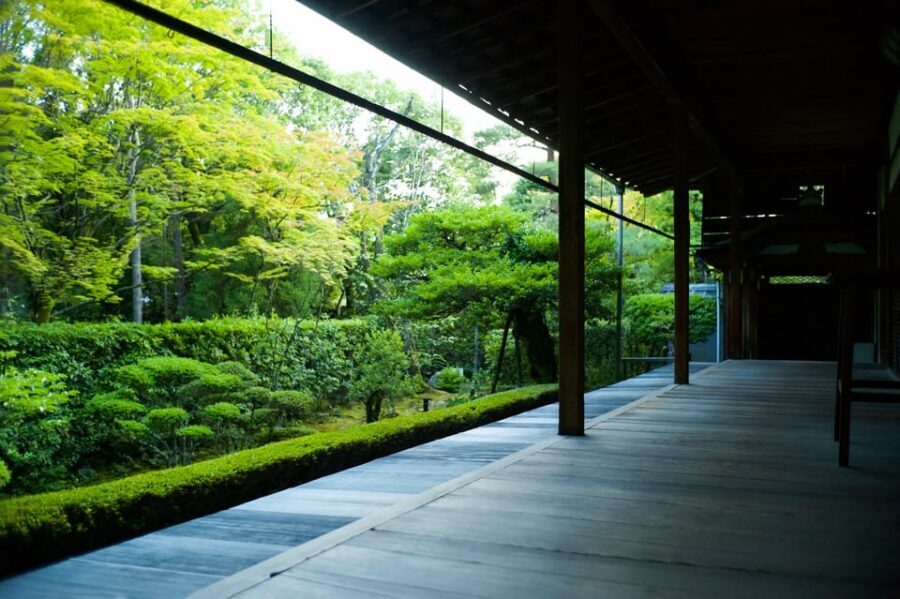
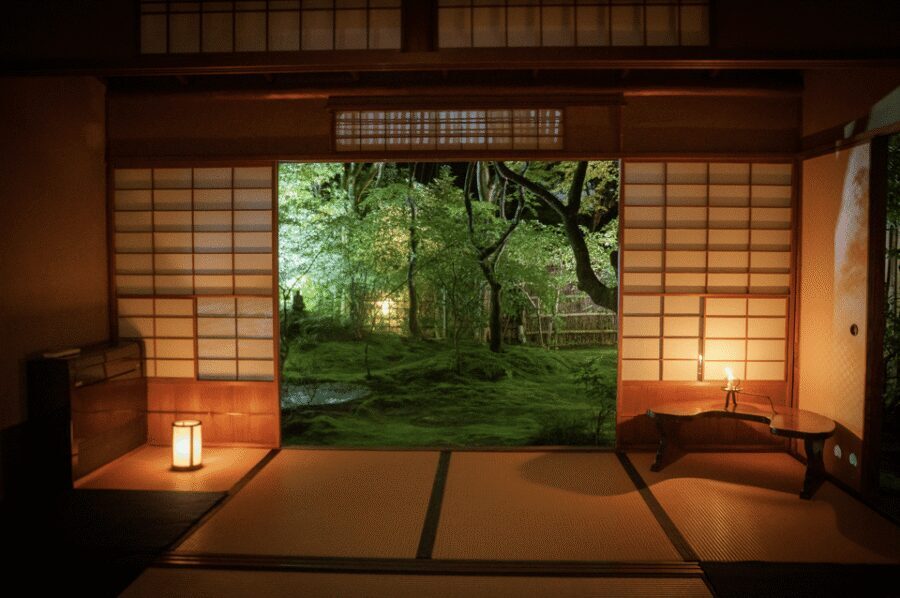
One of the most interesting parts of the night is the tour of the hidden tea room Sehakuan. The key word here is tour. You’re not just allowed to wander and hope you interpret the space correctly.
Instead, you learn how Sehakuan fits into the temple’s culture. Tea rooms like this are designed for a particular kind of focus—quiet attention, controlled light, and simple details that matter because they’re meant to be noticed carefully. In a guided setting, that clicks faster. You start to see how the room supports the mood you’re expected to cultivate.
During this portion, you also get connected to the temple’s art and visual language through the fusuma paintings discussed later. The night doesn’t treat art as a side quest. It treats art as part of the full experience—what you see shapes how you sit, and how you sit shapes how you look.
Kano Sansetsu fusuma paintings: art you can read slowly
The tour includes viewing Kano Sansetsu fusuma paintings. Fusuma are sliding panels, and they’re often used like moving walls—so the way they’re presented can feel different depending on the lighting and the room’s layout.
What I appreciate about including Kano Sansetsu here is that the guide can explain what you’re looking at in real terms. Instead of you guessing at symbolism from a distance, you’re given enough context to interpret the panels during the time you have. That turns a quick look into something you can actually remember later.
This also fits the theme of the evening. The gardens are meant to guide your attention; the fusuma are meant to guide it, too. Both are visual tools for mindfulness, and having them on the same timeline makes the experience feel coherent.
Zazen at Keishunin: what you’ll do during the meditation
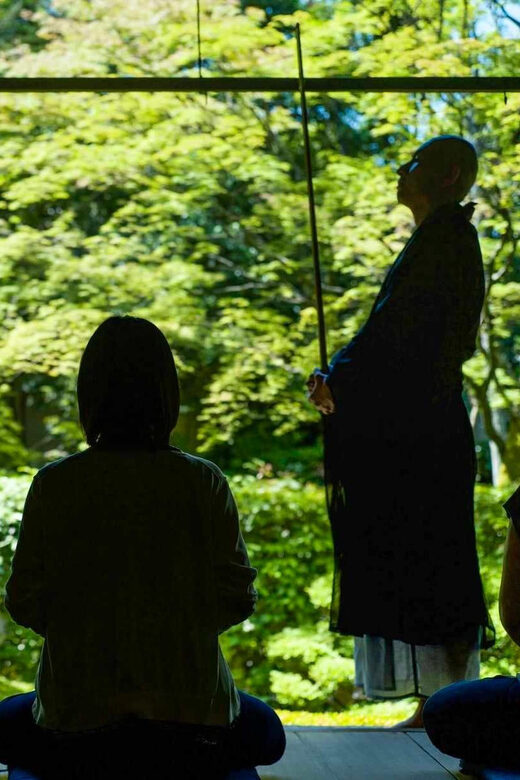
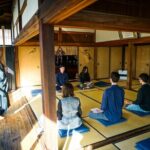
Now for the heart of the program: zazen meditation. Even if you’ve tried meditation before, having a guided session in a temple setting changes the experience. You’re surrounded by the kind of silence that feels intentional, not empty.
During the meditation portion, guidance comes from temple leadership, including the VP Monk. That matters because you’re not just listening to instructions. You’re being coached in a tradition where the tone of the teacher is part of the lesson.
In past sessions, the program also includes translation support so the meditation guidance lands clearly. That’s a big deal for zazen because details—how you settle, how you stay present, what to do if you feel restless—can be the difference between trying and actually practicing.
One extra thing I like about this activity is that it doesn’t pretend meditation is only bliss. It acknowledges what happens when you get tired and offers a customary way to refresh your focus. It’s the kind of practical adjustment that makes the session feel human rather than performative.
Wear something comfortable. You don’t need special clothing, but you do need to be able to sit and stay comfortable long enough for the guidance to take effect.
A few more Kyoto tours and experiences worth a look

Matcha and Japanese sweets with Deputy Chief Priest Yasumasa Arashima
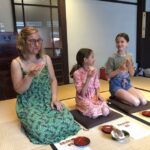
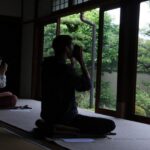
After meditation, you get a proper temple reset with matcha tea and Japanese sweets tasting. This part is led by Deputy Chief Priest Yasumasa Arashima, which gives the tasting an extra layer of authenticity. You’re not just drinking matcha. You’re meeting it through someone trained in the temple’s way of hosting.
Matcha tea is often described as earthy, but the bigger takeaway here is how it fits the night’s pacing. After quiet sitting, the flavors and warmth of tea become part of the mindfulness loop. It’s the same concept as a slow meal after fasting: your senses come back online.
You’ll also have a traditional Japanese sweet. In some evenings, people finish with a brief, respectful chat after the tea. It’s not a sales pitch. It feels more like a moment to share impressions and land the experience with a few human words.
Price and value: is $206 for 90 minutes worth it?
At $206 per person for 90 minutes, this isn’t a budget activity. But it does pack in several things that are hard to reproduce on your own, especially on short notice.
Here’s what you’re paying for, in real terms:
- Access to a special nighttime visit at Keishunin Temple
- A guided tour of the four lit gardens
- Inside access to Sehakuan and the viewing of Kano Sansetsu fusuma paintings
- Guided zazen instruction (including the VP Monk)
- Matcha and Japanese sweets tasting led by Deputy Chief Priest Yasumasa Arashima
- A live guide in English or Chinese, plus private group attention
If you only want to see gardens from the outside, you could probably find a self-paced temple visit option for less. But you would lose the guided interpretation of what you’re seeing, and you’d lose the structured meditation plus the hosted tea moment. In my book, that’s the value equation: you’re buying time with teachers and context, not just entry tickets.
Also, the program is built to reduce wasted minutes. It skips the ticket line, which keeps the night from turning into waiting around in the cold.
Who should book this Kyoto night Zen experience
This is a great fit if you:
- Want a quieter, more reflective Kyoto experience than the usual temple photo route
- Like guided explanations that help you understand what you’re looking at
- Are curious about zazen but want a structured session instead of guesswork
- Enjoy tea culture and appreciate tasting it in a temple setting
- Prefer a private group format with a guide who can support questions
It’s not a great match if:
- You want long independent time. The whole program is 90 minutes.
- You need wheelchair accessibility, since wheelchair users aren’t suitable for this activity.
- You’re traveling with children under 12. The activity states it’s not suitable for children under 12.
Should you book? My practical take
I think you should book this if you want Kyoto to feel calm on purpose. The illuminated gardens, Sehakuan tea room tour, Kano Sansetsu fusuma viewing, and guided zazen all reinforce the same theme: attention. And the matcha tasting with Deputy Chief Priest Yasumasa Arashima gives the evening a satisfying landing point.
Skip it if you’re mainly chasing big sights and don’t care about meditation or tea culture. Also, if you hate cooler evenings, plan your outfit carefully; this is a night-focused experience with outdoor garden viewing.
FAQ
FAQ
Where does the experience take place?
It takes place at Keishunin Temple in Kyoto, which is a sub-temple of Myoshinji Temple.
How long is the experience?
The duration is 90 minutes.
What language is the guide?
The live tour guide is available in English and Chinese.
Is this a private group tour?
Yes, it’s listed as a private group.
What do you do during the tour?
You’ll visit Keishunin at night, tour the four illuminated gardens, visit the tea room Sehakuan, view the Kano Sansetsu fusuma paintings, and take part in zazen meditation. You’ll also taste matcha tea and Japanese sweets.
What’s included in the price?
Included items are the special night visit to Keishunin, the four-garden tour, Sehakuan tour, viewing of the fusuma paintings, zazen meditation, and matcha tea plus Japanese sweets tasting.
What is not included?
Transportation to and from the meeting place is not included, and personal expenses are not included.
Do I need to reserve in advance?
Yes, a reservation is required.
Is flash photography allowed?
No, flash photography is not allowed.
Who can participate?
The activity is intended for primary school students and above, but it specifically states it is not suitable for children under 12. Wheelchair users are also not suitable.