Kyoto’s Gion looks different at night. This 2-hour walking tour takes you through the old-teahouse lanes of Gion and Pontocho, where lamplight, wooden facades, and carefully timed stories make the city’s geisha world feel real. I especially like the way the guide connects street corners to meaning, and I like that you can ask questions as you go. One thing to consider: it’s a nighttime walk along narrow lanes, so you’ll want comfortable shoes and patience for rain, crowds, or slower visibility.
You’ll start in a very practical spot, in front of Ben’s Cookies Kyoto Shijo, then move into Pontocho Alley, cross toward key landmarks, and end up walking the iconic areas near Yasaka Shrine and Hanamikoji Street. Guides vary by group, but recent guides like Manuel and Yukari (and others such as Yuki, Kenji, Nami, and Deborah) are consistently praised for clear, respectful storytelling and a pace that leaves room for photos and questions.
Key things I think matter most
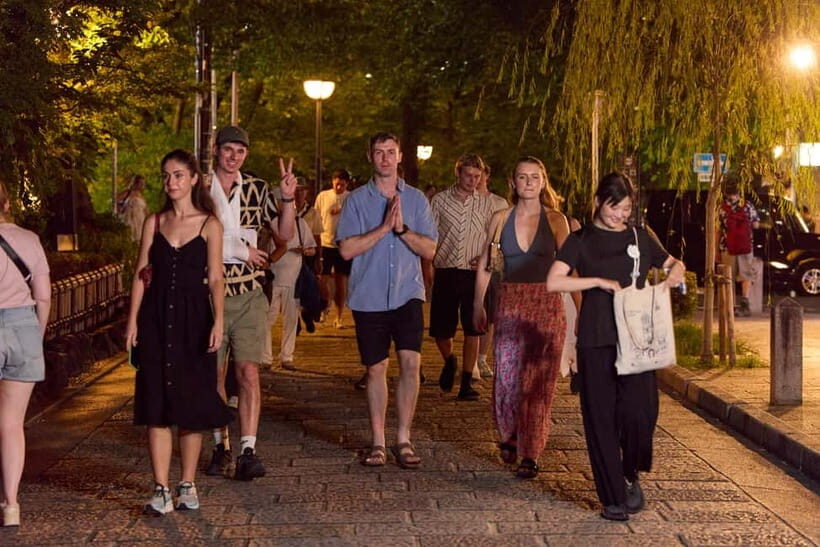
- Nighttime Gion and Pontocho: old streets with a lived-in feel, not a museum vibe
- Geisha culture context: training and tradition explained in plain language as you walk
- Guides who answer questions: many groups note a relaxed pace with time to ask
- Stop-by-stop storytelling: Pontocho Alley to Izumo-no-Okuni to shrine and main lanes
- Chances to spot geiko and maiko: en route to appointments, not just from a distance
Nighttime Gion: what you’re really paying for
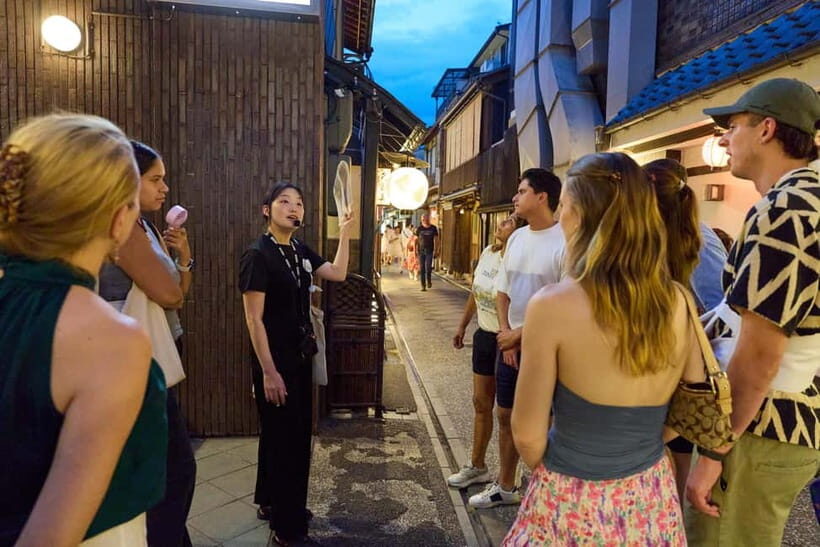
This tour is built around a simple idea: geisha culture makes more sense when you see the places where it happens. At night, Gion and Pontocho feel quieter, and the streets reveal their design—narrow, layered, and meant for foot traffic. You’re not rushing through “photos only.” Instead, your guide slows you down just enough to explain what you’re looking at and why it matters.
I like that the tour doesn’t pretend to be a show. You’re walking real neighborhoods where history and modern life overlap. And because it’s only 2 hours, you get a focused introduction without wiping out your whole evening.
A few more Kyoto tours and experiences worth a look

Meeting at Ben’s Cookies Kyoto Shijo and starting smart
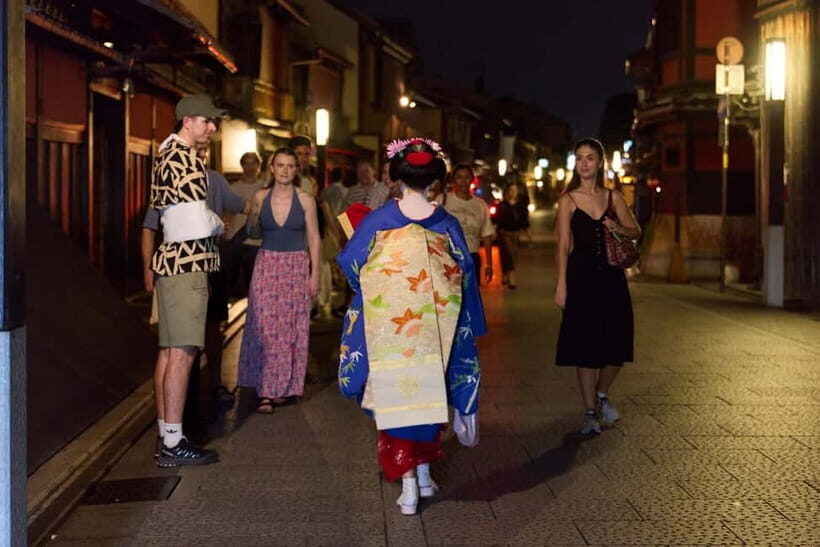
You meet your guide in front of Ben’s Cookies Kyoto Shijo. Your guide holds a sign board, so even if you’re jet-lagged, you can find the group quickly.
This start point is practical for a couple reasons. First, it keeps the group anchored in a clear landmark. Second, you can grab water beforehand without turning the night into a logistics puzzle. The tour explicitly asks you to bring water, and I agree: Kyoto evenings can feel cooler than daytime, but walking still works up a thirst.
Pontocho Alley after dark: teahouses, lanes, and “read the room”
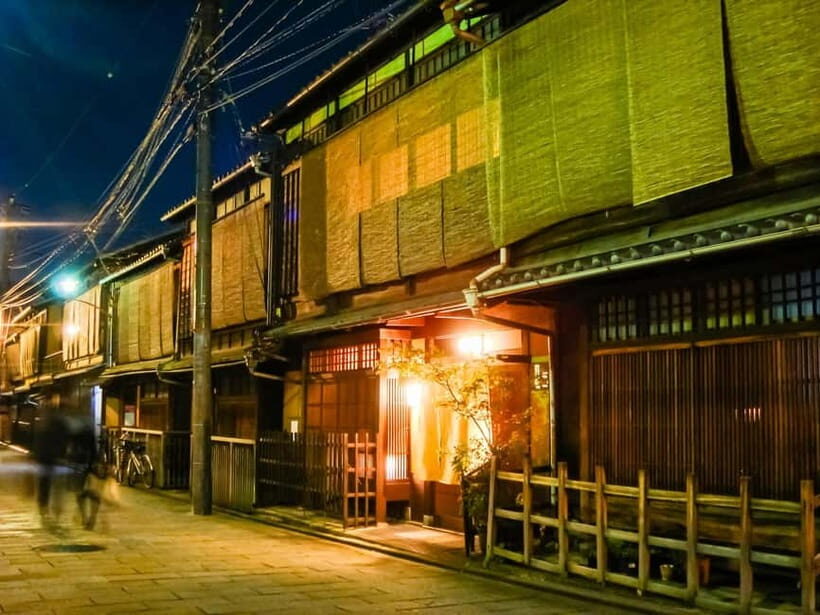
Your walk begins with Pontocho Alley, one of the best-known entertainment streets in Kyoto. The tour has you spending time here so you can actually observe the details: traditional wooden building lines, the way eateries face the lane, and the sense that the street is meant for evening movement.
What I love about this stop is how it sets your expectations. During the rest of the tour, you’ll keep noticing patterns—who is heading where, how the lane changes near intersections, and how the area’s reputation ties into the rhythm of the night. Even if you don’t see someone in full traditional dress right away, you’ll start understanding why people come to Pontocho for atmosphere.
A possible drawback: Pontocho can be busy depending on the night. If you’re hoping for lots of sightings, bring a bit of flexibility. The tour is designed to create opportunities, not guarantee specific encounters.
Izumo-no-Okuni statue: the kabuki connection that adds context
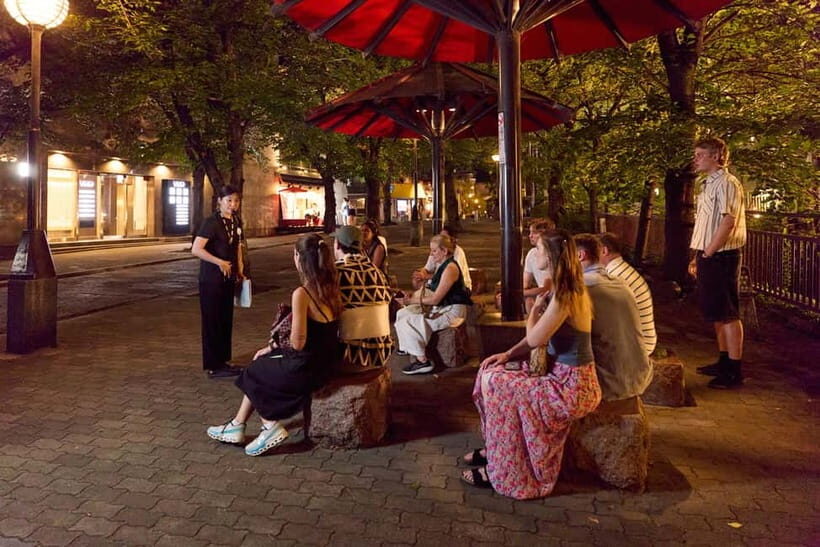
Next comes a thoughtful detour with a history hook: the statue of Izumo-no-Okuni. The tour ties this landmark to the woman credited with inventing kabuki, and it’s a clever pivot. Geisha culture and performing arts are linked in many ways, but most first-timers only learn the names. This stop gives you a thread to follow.
I like stops like this because they stop the tour from becoming just scenic walking. You’re learning how performance culture shaped the broader entertainment world in Kyoto, not only the costume-and-photo version people sometimes expect.
Also, if you’re the kind of traveler who enjoys “why does that matter?” questions, this is a good moment to ask. Your guide is there for exactly that.
Crossing the river and entering Gion’s core feeling
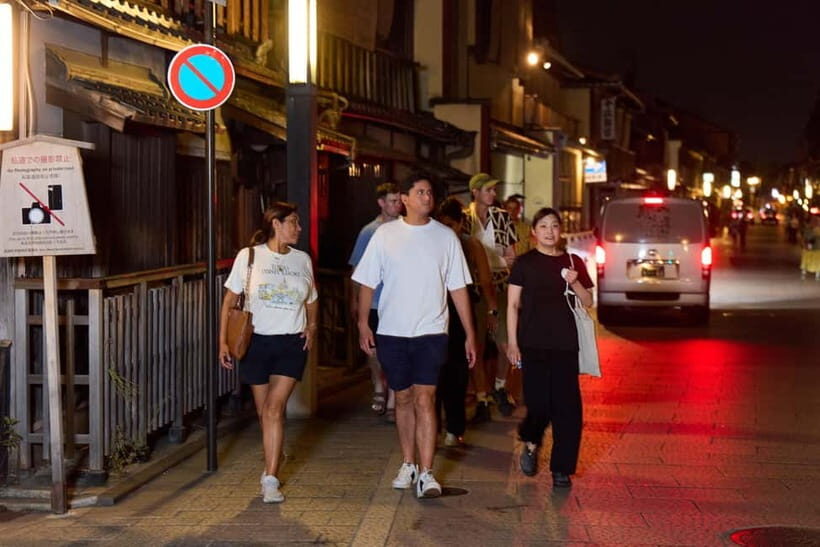
After Pontocho, you cross the river and continue deeper into Gion, Kyoto’s most famous geisha district. This is where the walk starts to feel more intimate again. You’re leaving the wider famous lane energy and moving into the smaller lanes that make Gion what it is.
In Gion, your guide focuses on the district’s traditions and the way the neighborhood supports scheduled appointments. That’s also where you’re likely to start noticing activity linked to geiko and maiko life—sometimes simply by noticing how people move, pause, and wait.
In the best moments, you’ll catch glimpses of geisha and maiko en route. Multiple groups mention seeing geiko and maiko during the walk, including people who were lucky enough to spot a maiko in the area. Just keep expectations realistic: sightings are part of the experience, but they aren’t the only point.
Other walking tours we've reviewed in Kyoto

Yasaka Shrine: a classic stop with a practical purpose
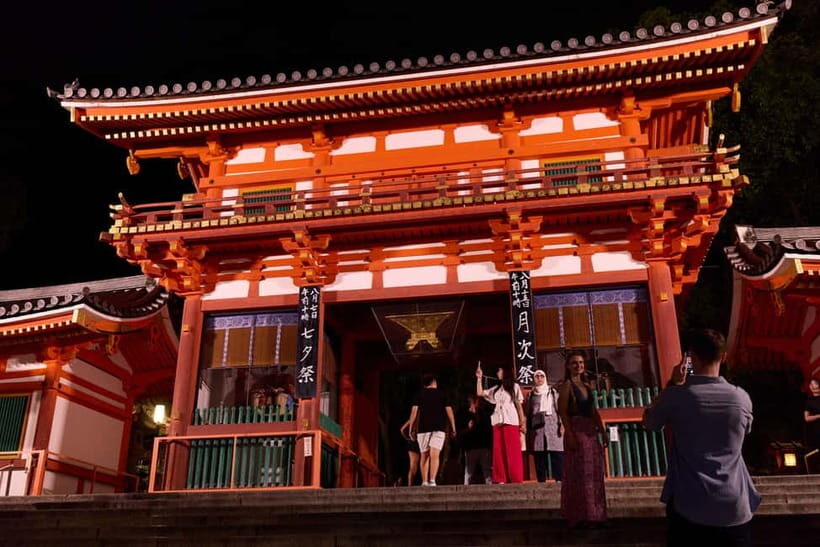
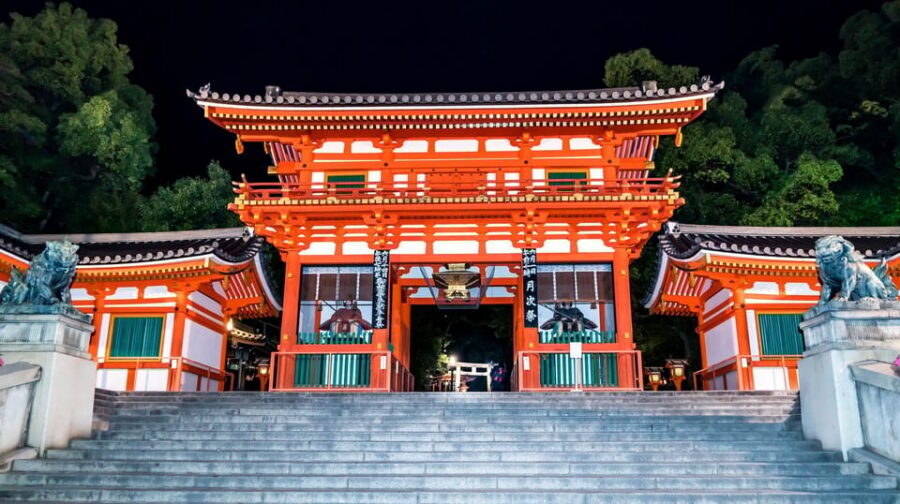
You’ll then visit Yasaka Shrine during the tour. This stop matters because it anchors your evening in one of Kyoto’s best-known spiritual landmarks. It also gives your guide an easy place to explain how Gion fits into the broader cultural map of the city.
From a practical viewpoint, it also breaks up the walking. The tour includes guided time here, so you’re not just passing by on a “check it off” schedule.
One note for your photos: at night, lighting can be mixed. If your camera struggles in low light, you might prefer a few wider shots at key corners, then rely on your guide’s explanations for the rest.
Gion Corner and Hanamikoji Street: the iconic lanes you should not rush
The tour continues with Gion Corner, then heads to Hanamikoji Street. These are among the most recognizable lanes in the district, and they’re famous for a reason: this is where Gion’s main character energy shows up in full view.
Hanamikoji Street is a great place to slow down. Your guide’s job here is to turn what could be a busy “look and go” street into a place where you understand what you’re seeing. If you watch carefully, you’ll notice how the street’s layout supports the evening flow—where people gather, how the scenery frames the lane, and why the area feels like it’s built for foot traffic.
This is also one of the better parts of the night for questions, because the tour is still close enough to the beginning that you’re fresh on the basics. A well-paced guide can connect what you learned in Pontocho and at the shrine to what you see on the main lanes.
What your guide will do (and why it keeps getting praised)
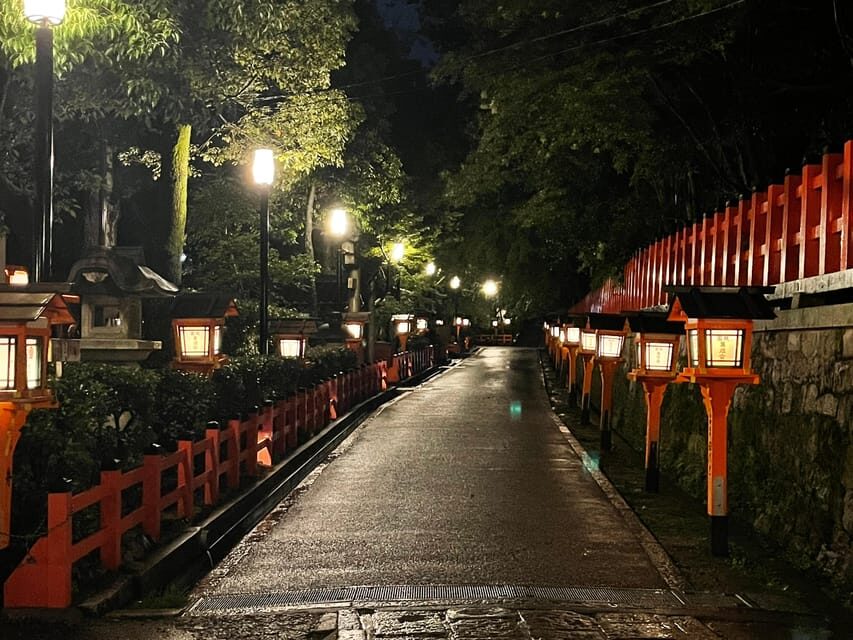
This is a guided walk, and the guide makes the difference. The tour includes an English-speaking (and also Spanish-speaking) local guide, and many groups mention the same qualities: a friendly approach, a steady pace, and lots of time for questions.
Several guide names show up repeatedly in past groups, including Nami, Yuki, Kenji, Deborah, Akari, Shin, Adrian, and Manuel. The common thread isn’t just fact. It’s how the information is delivered—stories you can follow, explanations that connect to what’s right in front of you, and an attitude of respect toward the culture.
If you’re new to geiko and maiko, this kind of guidance helps you avoid common misunderstandings. If you already know the basics, it can still sharpen your understanding by connecting training and tradition to the streets and routines you’re walking past.
Price and value: $20 for two hours of meaningful Kyoto
At $20 per person for 2 hours, this tour is a strong value if you want an intro that doesn’t require extra planning. You’re paying for three things:
- A local guide who explains what you’re seeing on the spot
- A tight route through major Gion and Pontocho areas without you getting turned around
- Time spent at key cultural anchors like Pontocho Alley, Izumo-no-Okuni, and Yasaka Shrine
In plain terms, $20 here buys you understanding. And understanding is what turns an evening walk into something you’ll remember, instead of just another set of photos.
You’ll also likely appreciate that the walk is designed as a straightforward evening stroll, not a strenuous hike. Reviews mention an easy walking pace and time for explanations, which is exactly what you want in a city where you’ll already be doing a lot of steps each day.
Practical tips so you enjoy the full 2 hours
A few small choices can make the night smoother:
- Bring water, since the tour recommends it
- Wear shoes good for narrow lanes and nighttime footing
- Keep your phone ready, but don’t let it steal your attention from the guide’s explanations
- Be ready to ask questions. This is the kind of tour where a good question often leads to a better story
And one cultural practical note: the tour states that alcohol and drugs are not allowed. Plan for a normal, clear-headed walk.
Who this tour is best for
This experience fits best if you want a respectful, well-paced introduction to Kyoto’s geisha districts. I’d especially recommend it if:
- You have limited time in Kyoto and want an organized nighttime orientation
- You care about cultural context, not only landmarks
- You want to understand the difference between geiko and maiko as you see the districts where their traditions live on
It’s not suitable for children under 10, which makes sense given the nighttime setting and the nature of the cultural focus.
Should you book the Gion Geisha District Walking Tour?
If your goal is to understand Gion and Pontocho beyond the postcard version, I think booking is a smart move. The route is concentrated, the storytelling is the point, and your guide’s Q-and-A style makes the experience feel personal even when you’re sharing the sidewalk.
Book it if you want: a guided nighttime walk, meaningful stops like Izumo-no-Okuni and Yasaka Shrine, and real chances to encounter geiko and maiko en route. Skip it only if you’re mainly looking for a long “free roam” evening or you dislike guided walks.
FAQ
What is the duration of the Kyoto Gion geisha district walking tour?
The tour lasts about 2 hours.
Where do I meet the guide?
Meet your guide in front of Ben’s Cookies Kyoto Shijo. The guide will be holding a sign board.
What language is the tour guide available in?
The tour offers a live guide in English and Spanish.
What should I bring?
Bring water.
Are alcohol and drugs allowed on the tour?
No. Alcohol and drugs are not allowed.
Can I cancel if plans change?
Yes. Free cancellation is available up to 24 hours in advance for a full refund.
Is there a pay-later option?
Yes. You can reserve now and pay later.
Is this tour suitable for children?
The tour is not suitable for children under 10.
What areas does the tour cover?
You’ll walk through Pontocho Alley and the Gion geisha district, with stops including the statue of Izumo-no-Okuni, Yasaka Shrine, Gion Corner, and Hanamikoji Street.
Will I have a chance to see geisha or maiko?
The tour is designed to help you encounter geisha and maiko en route as you explore.