Fushimi Inari makes more sense with context.
This self-guided audio walk turns the usual photo loop into a story about Shinto practice, the meaning behind the shrine spaces, and why people keep returning there for generations—right as you move through the torii forest.
I like two things a lot: the self-paced format (you stop when you want) and the offline VoiceMap setup (audio, maps, and geodata stay usable). One drawback: you have to bring your own smartphone and headphones, and you’ll want to download everything before you get swamped by crowds.
In This Review
- Key highlights before you go
- Fushimi Inari in 45 to 60 minutes, without rushing
- How the VoiceMap audio tour works (and why offline matters)
- Starting at the fox statue by Inari Station
- Hand Water and the main hall stop: where routine becomes ritual
- Wabi-sabi inside the torii world
- Senbon Torii: walking the thousand gates with an actual route
- Okusha Shrine and the Root-up Pine Tree stop
- The wish-stone moment and fox power you can feel
- Ending at the pond near Kumataka Shrine
- Price and value: why $5.99 can beat a rushed guide
- What to bring so your phone doesn’t ruin your torii walk
- Who this audio tour is best for
- Should you book this Fushimi Inari audio tour?
- FAQ
- Is this tour self-guided?
- How long does the audio tour take?
- What does it cost?
- Where does the tour start?
- Where does the tour end?
- Does it work offline?
- Do I need a smartphone and headphones?
- Are attraction or museum tickets included?
- Can I get a refund if I cancel?
Key highlights before you go

- Start at the fox statue by Inari Station so you can begin fast and avoid guessing
- Hand Water, Wabi-sabi, and other shrine ideas explained in plain audio
- Senbon Torii walk made logical instead of just another red-gate grind
- Fox statues + wish stone stops that add meaning to the sights
- Private to your group vibe while still letting you walk your own rhythm
- Offline audio and maps so you’re not stuck hunting signal at the shrine
Fushimi Inari in 45 to 60 minutes, without rushing
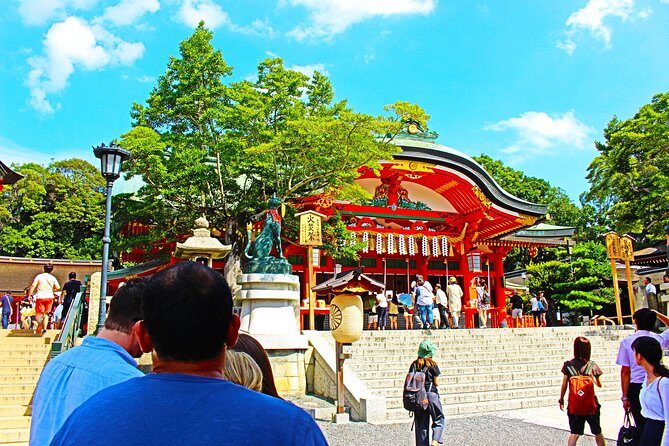
This tour is built for a sweet spot of time: about 45 minutes to 1 hour. That matters at Fushimi Inari because you can feel pressure to keep moving, especially if you’re part of a day with multiple stops. Here, the plan is simple: you walk the key areas, hear what they mean, and keep your own pacing.
You’ll spend the bulk of your time among the shrine’s famous red gates, but the tour tries to answer the question people quietly ask while they’re taking photos: what am I actually looking at? Instead of treating the senbon torii as scenery only, you get explanations tied to shrine rituals and beliefs. That makes the gates feel more intentional as you walk deeper in.
The walk is also structured so you don’t just drift. The audio cues you at specific moments—like when you’re near the main hall, when you’re learning about Hand Water, and when you reach the areas connected to Okusha and that Root-up Pine Tree stop. Even if you’re just trying to see the best views quickly, the guidance helps you hit the right points.
A few more Kyoto tours and experiences worth a look



How the VoiceMap audio tour works (and why offline matters)
You use the VoiceMap app on Android or iOS, and the experience includes lifetime access to the tour in English. The big practical advantage is offline: the download includes audio, maps, and geodata, so you’re not dependent on spotty coverage near busy shrine areas.
Here’s how to make it work smoothly:
- Download the tour before you arrive at the shrine.
- Bring a charged phone battery.
- Use headphones you can plug in or pair easily.
If you show up and realize you didn’t download, you’ll spend precious time trying to get your phone to cooperate while everyone else is already walking. The whole point is that you get an orderly route with narration, without needing to coordinate with a group or follow someone else’s pace.
Also, it’s “private” in the sense that only your group participates. Since this is audio-based and self-guided, that usually translates into fewer distractions and less waiting. You’re still walking through public shrine grounds, but the tour experience itself stays focused on you.
Starting at the fox statue by Inari Station
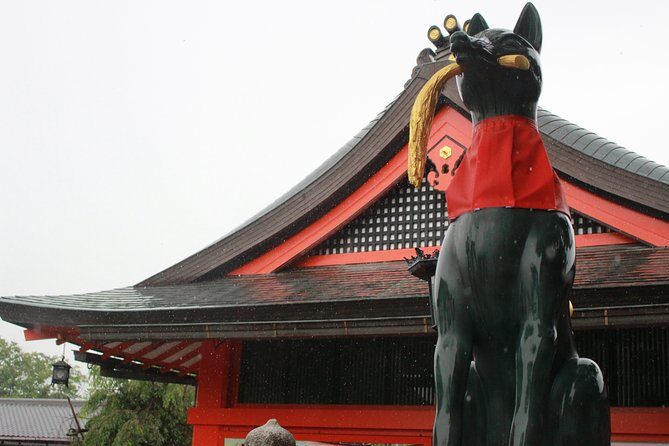
The tour begins outside the Fushimi Inari Taisha Shrine area, opposite Inari Station, in front of a fox statue. That’s a smart choice because it’s easy to locate, and you don’t need to puzzle out where the route really starts.
Right away, the audio sets the tone: fox imagery matters here. Fushimi Inari is famous for its fox statues dotted across the shrine grounds, and the tour uses that theme as an entry point. You’ll get early context so that by the time you reach the fuller torii section, the fox motifs aren’t just decoration in the background of your pictures.
The first couple of listening stops are also about foundation. You’ll learn about the significance of shrines in general and how visitors are meant to understand the space while they walk. This is helpful if you’ve never done anything like Shinto shrine visits before, because the tour doesn’t assume you already know the basics.
Hand Water and the main hall stop: where routine becomes ritual

One of the more interesting parts of this walk is the stop about Hand Water. Instead of skipping past it as a practical step, the audio explains what this kind of ritual does and why it fits the shrine setting. If you’ve ever wondered why people pause and perform small actions before moving deeper, this is where the tour connects the dots.
After that, you get a short pause at the main hall. This is a good moment to slow down and reorient. The route encourages you to take in the space without feeling like you have to race forward. Even a brief stop helps, because the shrine changes from a walkway you’re photographing to a place you’re actually visiting.
This is also where the tour’s theme starts to feel less like trivia and more like meaning. You’re being guided to notice relationships between:
- what you do as a visitor,
- where you’re standing inside the shrine complex,
- and how the shrine’s symbolism is meant to shape your experience.
Wabi-sabi inside the torii world
At another stop, the audio introduces Wabi-sabi. Now, wabi-sabi can sound like a fancy cultural label if you only hear it in travel books. The value here is that it’s connected to what you’re physically surrounded by at Fushimi Inari—an environment where time, weather, and age are part of the visual story.
This kind of theme isn’t about turning you into an expert. It’s about changing how you look. Instead of expecting everything to be perfectly clean and new, you learn to notice the lived-in feel that shrines often carry: the textures, the aged surfaces, the atmosphere created by constant use over long periods.
That shift makes your walk more rewarding, especially on a day when you’re tempted to focus only on the red gates. The torii are the star, sure. But wabi-sabi is one reason the star doesn’t feel like a single shot—it feels like a place.
Other walking tours we've reviewed in Kyoto






Senbon Torii: walking the thousand gates with an actual route
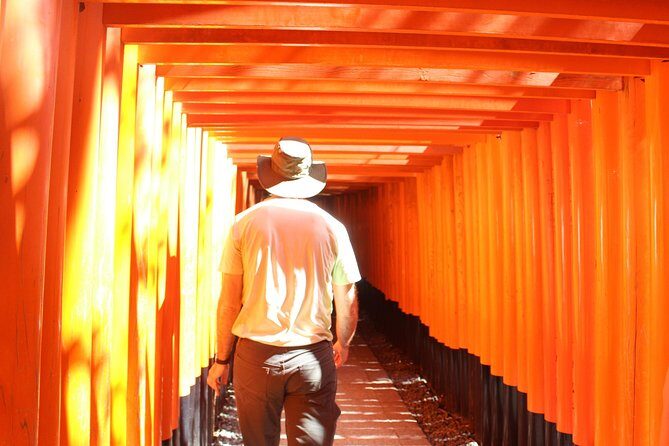
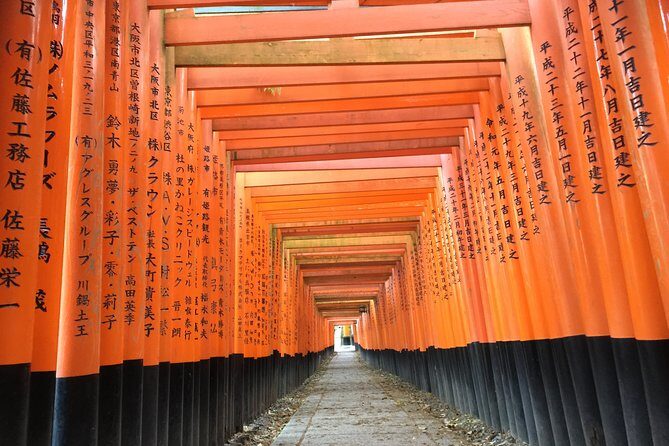
The heart of this experience is the Senbon Torii, the famous walk through the thousand torii gates. You’ll be guided through it, with the audio cues spanning key segments of the gate passage.
The best part is that you don’t just hear about the gates as an iconic landmark. You get a structure that helps you process what’s happening as you move through the corridor of torii. That means your photos become more than souvenirs; they become markers of where you are in the shrine’s meaning.
Practical tip: go slower than you think you need. The gates look repetitive if you’re moving fast. If you slow down just enough to listen and look, you start noticing the small changes—angles, depth, and how the corridor feels longer than it appears in one glance.
Also, the tour repeats the gate passage in the stop list, which usually translates to a guided way of staying on track without losing time. You’re less likely to skip parts unintentionally or drift off while trying to photograph.
Okusha Shrine and the Root-up Pine Tree stop

Deeper inside the shrine complex, you’ll learn about Okusha Shrine. This stop matters because it helps you understand that Fushimi Inari isn’t just the famous torii walkway. It’s a layered place with areas that carry different significance.
The tour then includes a brief stop by the Root up Pine Tree. That’s the kind of detail people often miss when they treat the torii gates as the entire show. Here, it becomes a listening moment rather than just a quick glance.
If you want your visit to feel more complete, these side stops are where you win. They break the mental monotony of walking gate after gate and give you a sense that you’re moving through a purposeful complex, not a long photo corridor.
The wish-stone moment and fox power you can feel
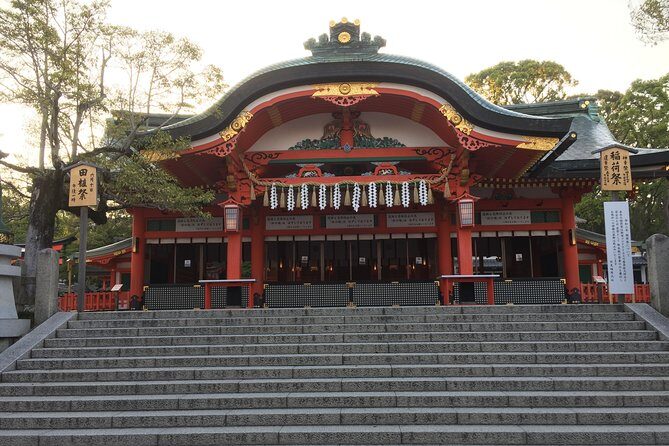
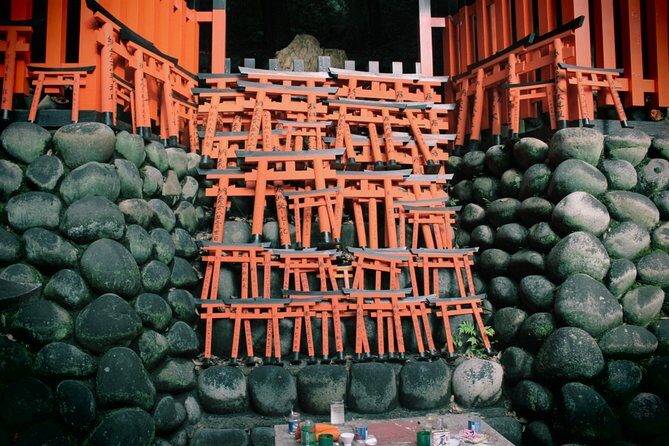
The tour highlights several signature shrine elements, including fox statues and an area tied to a Heavy-Light Stone, where you can make a wish. That kind of activity adds an extra layer to the walk because it turns you from observer into participant.
It’s not about the wish itself being proven by science. It’s about the ritual feeling real. You’re doing something a shrine visitor is meant to do, at a spot chosen for that action. That makes the torii experience more human and less like theme-park sightseeing.
And all along the way, the fox theme keeps returning. The audio connects the fox symbolism to the experience so you’re not just looking at repeated shapes. You’re learning why the motifs are there and how that symbolism is tied to the shrine’s long influence over people.
Ending at the pond near Kumataka Shrine
Your tour ends at Kumataka Shrine, and the last part of the route finishes at a pond deep in the shrine’s complex. This is a smart way to end because ponds naturally force a slower moment. Instead of finishing right back where the crowd pressure starts, you get a calming landing point.
There’s also a practical benefit: you get a clear end destination. From there, you can keep going deeper if you want, or take a quick break before heading back toward your next Kyoto plan.
That end choice can make the whole experience feel less like a checklist. You’re walking a coherent path, learning along the way, and then easing out rather than snapping back to street level right after the biggest photo moment.
Price and value: why $5.99 can beat a rushed guide
At $5.99 per person, this is priced for value. You’re not paying for a live guide’s time. You’re paying for a structured audio route plus offline access that you can replay later.
Here’s what makes that cost feel fair:
- You get lifetime access to the English audio route.
- You get offline audio, maps, and geodata, which reduces stress and wasted time.
- The walk is short enough to fit most Kyoto schedules without needing a full half-day commitment.
- You can match the pace to your energy and interest level.
Compared with the usual “see it fast” approach, the audio meaning connection is what you’re really buying. It turns the same sights into a more personal experience, and that’s the kind of value that actually sticks.
What to bring so your phone doesn’t ruin your torii walk
Even though this is a phone-based tour, you don’t want your trip to depend on charging cables and last-minute downloads.
Bring:
- a smartphone with enough battery for the whole walk
- headphones (smartphone and headphones are not included)
- whatever you need to keep your comfort up while walking
Before you start, do the simple but essential thing: confirm everything is downloaded for offline use. If you do that, the shrine becomes the only variable. If you don’t, your experience becomes a tech troubleshooting session.
Also, plan your timing. The shrine is always active, and Fushimi Inari is one of those Kyoto spots where crowds can be intense at peak hours. Going with a self-guided plan helps, because you can pause without feeling like you’re falling behind.
Who this audio tour is best for
I think this works especially well if you want:
- a self-guided way to see Fushimi Inari without being herded
- learning that fits into a quick walk, not a long lecture
- a route that helps you get value from the best-known sights like the Senbon Torii
It’s also ideal if you’re traveling with different interests in your group. One person can focus on the architecture and gates, while another spends more time with the ritual explanations. You’re still moving together in one place, but you’re not forced into the same attention span.
If you’re the type who wants a live back-and-forth Q&A, you might prefer a guided tour. An audio route can’t answer unexpected questions on the spot. Still, for many visitors, the structured audio explanations are a great trade for flexibility.
Should you book this Fushimi Inari audio tour?
Yes, I’d book it if you want the famous torii walk but also want meaning beyond the photo. The price is low, the walk fits easily into Kyoto time, and the offline VoiceMap setup keeps the experience smooth at the shrine.
I’d skip it only if you strongly prefer a live guide for constant interaction, or if you hate relying on a phone for navigation and listening. Otherwise, this is a practical way to enjoy Fushimi Inari with your own pace—and to understand why people keep coming back for more than just the red gates.
FAQ
Is this tour self-guided?
Yes. It’s a self-guided audio walking tour in English using the VoiceMap app.
How long does the audio tour take?
Plan for about 45 minutes to 1 hour.
What does it cost?
It’s $5.99 per person.
Where does the tour start?
It starts at the fox statue at the entrance to Fushimi Inari Taisha Shrine, opposite Inari station (address listed near 稲荷駅).
Where does the tour end?
It ends at Kumataka Shrine, near a pond deep in the shrine’s complex.
Does it work offline?
Yes. The tour includes offline access to audio, maps, and geodata.
Do I need a smartphone and headphones?
You need a smartphone, and headphones are not included.
Are attraction or museum tickets included?
No. Tickets or entrance fees to museums or other attractions en route are not included.
Can I get a refund if I cancel?
No. This experience is non-refundable and cannot be changed for any reason.