Kyoto at night feels like a secret. This night e-bike tour takes you past illuminated temples and quieter backstreets, with the electric assist doing the heavy lifting. Two things I really like: you get an easier glide through Gion and the Kiyomizu area after dark, and the English guide ties the streets to what you’re actually seeing. One catch: you still need to be comfortable riding an e-bike, since it isn’t a full-on chauffeur ride.
For $64 and about 2 hours, you’re not just buying movement—you’re buying a small-group plan, an e-bike plus helmet, and a local-style route that avoids the thick daytime crowds. The payoff is big if you want Kyoto’s evening mood without spending the whole night negotiating stops, directions, and timing.
Weather is usually manageable. The tour goes ahead in light rain, and ponchos are available if needed. Just remember the rules: no smoking, and come prepared with comfortable shoes and good balance.
In This Review
- Key highlights worth your attention
- Why Kyoto after dark feels different on an e-bike
- Getting going at Kyoto Tourist Lounge Gion (and what to bring)
- The ride’s backbone: Miyagawasuji, sightseeing time, and museum-area views
- Kiyomizuzaka and Kiyomizu-dera: short stops that make night photos easier
- Yasaka Pagoda and Ninenzaka: lit landmarks plus old-street atmosphere
- Maruyama Park break time: a breather in the middle of the sights
- How the guide turns streets into a story (and names to look for)
- Pace and effort: what “electric” really means here
- Price and value: is $64 a fair deal?
- Tips to make the night ride smoother
- Should you book this Kyoto night e-bike tour?
- FAQ
- FAQ
- Where does the tour start?
- How long is the Kyoto night e-bike tour?
- How much does it cost?
- What’s included with the ticket price?
- What language is the tour guide?
- How big is the group?
- What’s the minimum age and height requirement?
- What happens if it rains?
- Is smoking allowed during the tour?
Key highlights worth your attention
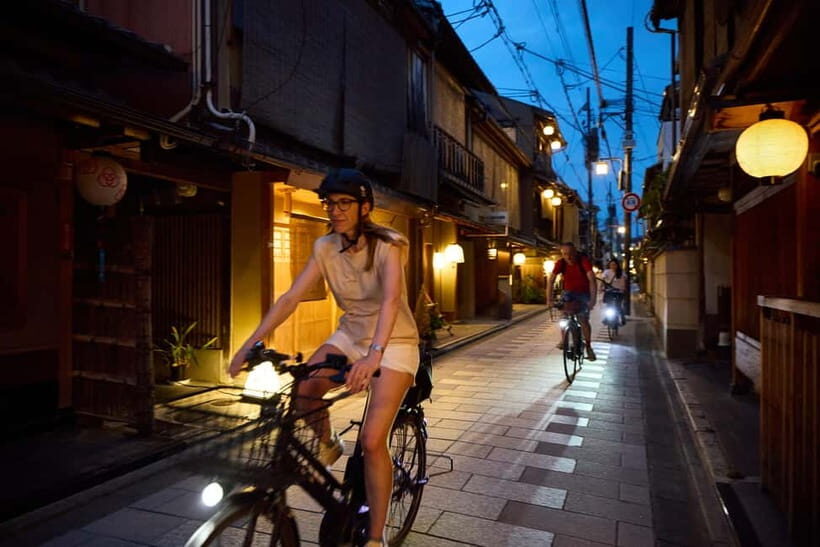
- Small group (max 6): more room for questions and a calmer ride through narrow streets
- Electric assist: helps you enjoy the sights without turning it into a workout tour
- Gion to Kiyomizu area at night: temple and alley views look different when the crowds thin out
- Photo stops with time: you don’t just pass by—there are short breaks to take it all in
- English guide with on-the-ground context: stories that connect the neighborhoods you’re riding through
- Light rain keeps going: ponchos available, so you’re not stuck canceling over a drizzle
Why Kyoto after dark feels different on an e-bike
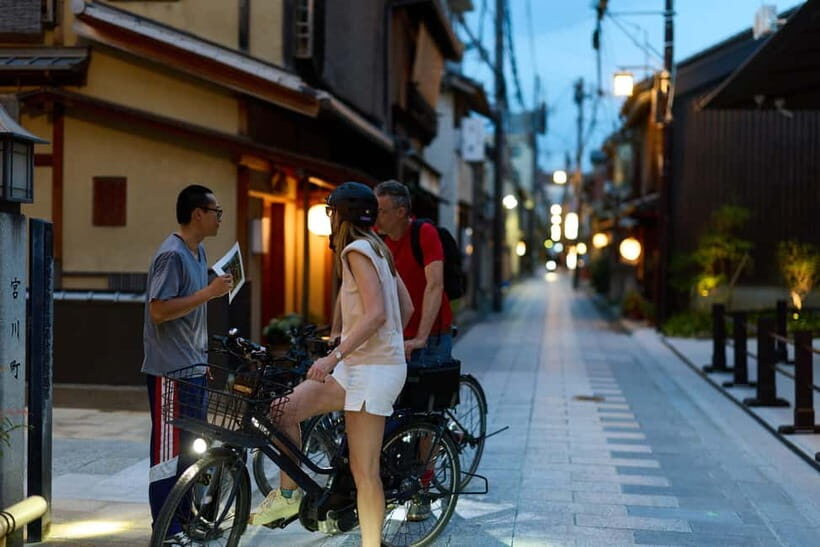
Daytime Kyoto can feel like a parade route. At night, the city changes pace. Streetlights soften the edges of old buildings, temple grounds look more atmospheric, and the narrow lanes around major sightseeing areas feel less pressured.
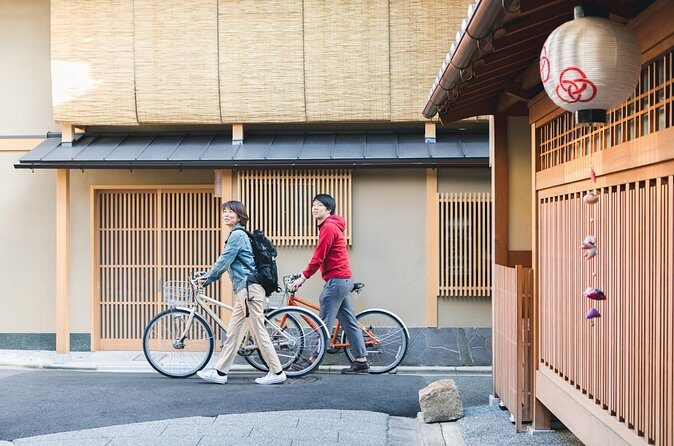
That’s where the e-bike helps. It keeps you mobile over multiple neighborhoods in a short time, but it also lets you slow down when you want to look closely. You’re not doing this as a long-distance cycle trip. Instead, you’re using the bike as a practical way to move through Kyoto’s evening highlights—especially in the stretch from the Gion side toward the Kiyomizu slopes and back.
I also like that the itinerary is built around illuminated scenes and short on-foot pauses. You get that night photography angle without spending all your time walking steep sections. It’s a nice balance for people who want atmosphere, not just exercise.
Other cycling tours in Kyoto


Getting going at Kyoto Tourist Lounge Gion (and what to bring)
The meeting point is simple: in front of Kyoto Tourist Lounge Gion. Aim to arrive about 10 minutes early so you’re not rushing your start.
You’ll be provided an e-bike rental and a helmet. You’re still responsible for the basics: comfortable shoes and a willingness to ride safely. A couple practical details matter here:
- You must be comfortable riding an e-bike.
- Minimum age is 12, and height must be over 145 cm.
- If you have back problems or you can’t ride a bike, this isn’t the right format.
The tour proceeds even in light rain, and ponchos are available. So if you plan around weather, do it with the assumption that you’ll ride in drizzle or mist unless it’s heavy enough to make the operator change course.
The ride’s backbone: Miyagawasuji, sightseeing time, and museum-area views
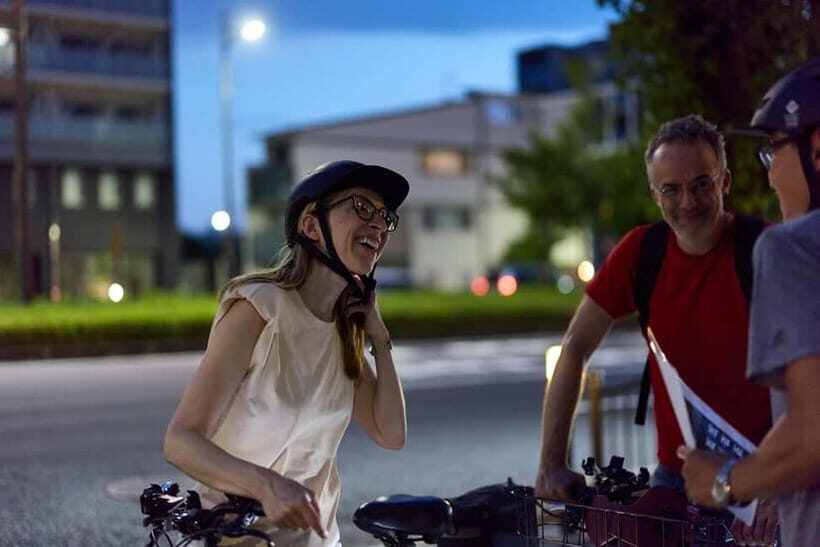
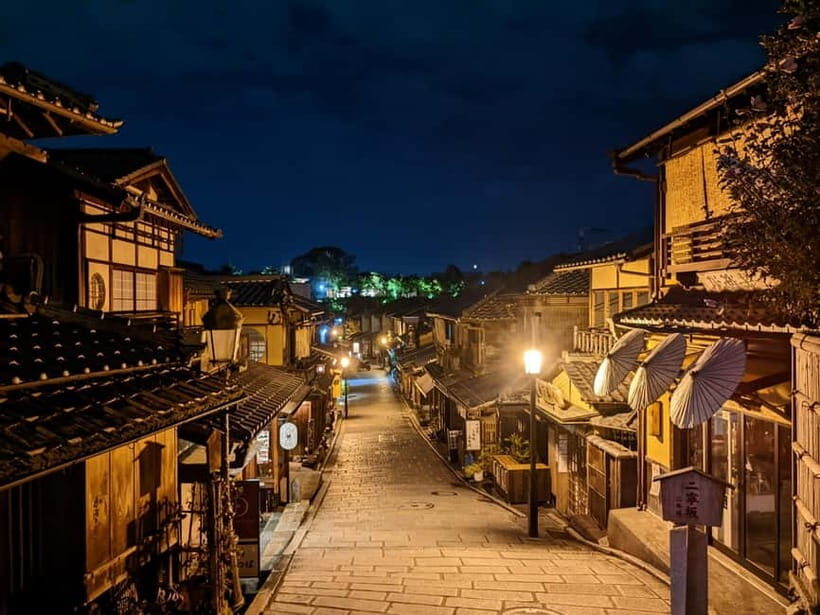
After you start from Gion, the route quickly threads into the quieter feel you came for. One early stretch includes Miyagawasuji, which is the kind of Kyoto street where a night ride lets you notice details you’d miss in a daytime crush—building facades, small corners, and the way lantern light bounces off stone and signage.
There’s also a chunk of guided sightseeing time along the way. This matters because Kyoto at night isn’t only about “where.” It’s about “why this place looks like this.” A good guide helps you connect landmarks to the neighborhoods and street patterns around them.
You’ll also get time near the Kyoto National Museum area. Even when you’re mostly outside (and not doing a full museum visit), it’s a useful anchor point. It adds a more formal, institutional side to the trip before you tilt back toward temple lanes and old-street scenery.
Kiyomizuzaka and Kiyomizu-dera: short stops that make night photos easier
Your route brings you toward the Kiyomizu-dera side, including Kiyomizuzaka and the Kiyomizu-dera photo/visit window. The tour schedules a stop that mixes quick photos with actual time to see the grounds.
Why night helps here: the area’s famous paths can get packed in daylight, and at night you’re more likely to experience it at a calmer speed. You can actually pause, look up, and feel how the terrain and temple layout shape the street views.
The drawback is also simple: because the tour is time-boxed, you won’t have hours to wander unhurried. You’ll want to go in with a plan for what you want to photograph most—big views, lantern-lit steps, or the temple approach—so your time doesn’t get eaten by indecision.
Still, for a first Kyoto night, this stop is the reason many people book the tour. It’s where the whole vibe locks in.
Yasaka Pagoda and Ninenzaka: lit landmarks plus old-street atmosphere
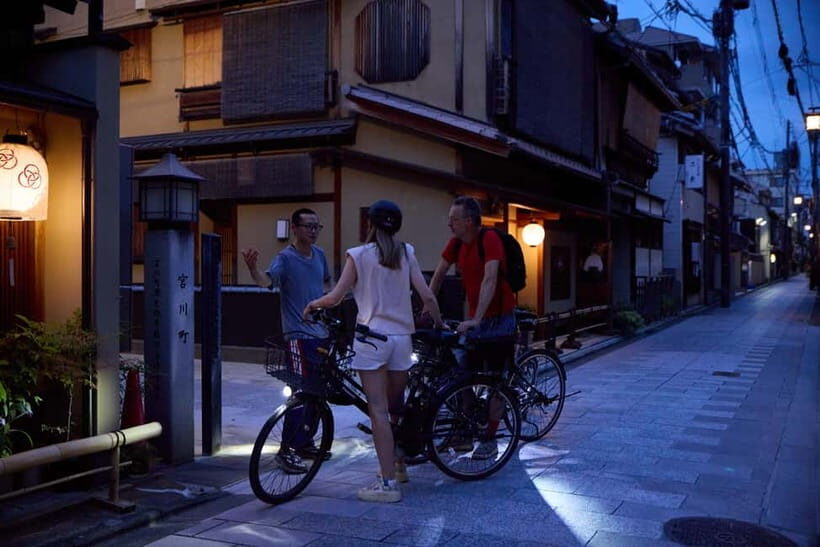
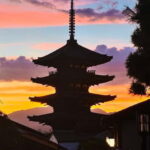
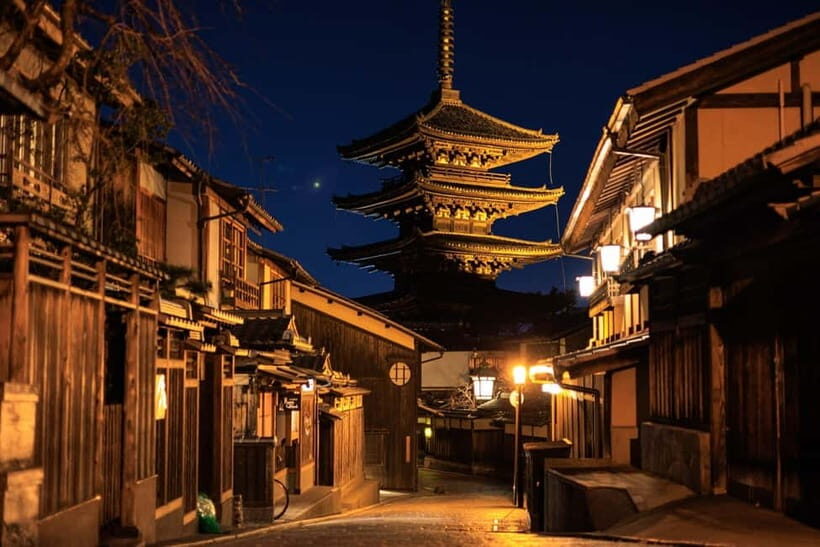
Next come two of Kyoto’s strongest evening visuals: Yasaka Pagoda and Ninenzaka.
Yasaka Pagoda is treated as a photo spot with guided stops. That makes sense because the pagoda’s silhouette and the lighting around it are a big part of the appeal. At night, you don’t need to hunt for the perfect angle as long as you take a few minutes to line up your shot and look around you.
Then there’s Ninenzaka, a classic old-street experience. You get visit and guided time here, which is key. Ninenzaka works best when you understand what you’re looking at—why the street feels layered, how the historic streetscape holds shape, and how the evening lighting changes the feel.
If you’re a slow-walker or you hate stepping off the bike for short bursts, you’ll want to mentally prepare for a few frequent transitions: bike to foot, photo to viewing, then back on the saddle. It’s not exhausting, but it’s not a single continuous riding segment either.
Other evening experiences in Kyoto




Maruyama Park break time: a breather in the middle of the sights
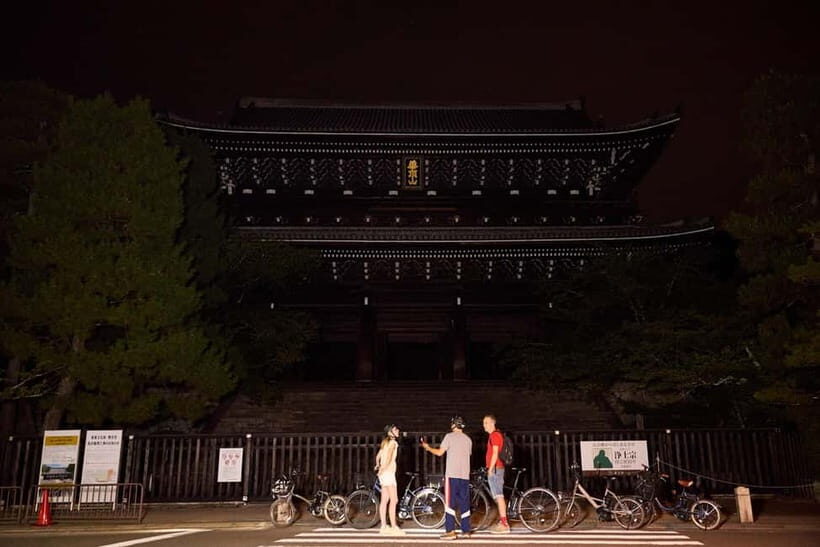
Mid-tour, Maruyama Park is where the pacing loosens. There’s break time plus a photo stop and guided visit.
This is one of the smartest parts of the itinerary. When you spend the earlier part of the evening around major landmarks, your senses run a bit hot—light, signage, crowds nearby, and constant attention. A park break gives you a chance to reset. You can step back from the steepest areas, catch your breath, and let the night settle.
It’s also a good place for anyone who wants a quieter photo set. Even when the broader area is active, parks tend to feel calmer than temple approaches and big pedestrian lanes.
Along the general route you’ll also pass through areas connected to the Gion/Kyoto shopping streets vibe—like Furukawacho Shopping Street—so that break doesn’t feel like you’ve left the story. It feels like a pause inside it.
How the guide turns streets into a story (and names to look for)
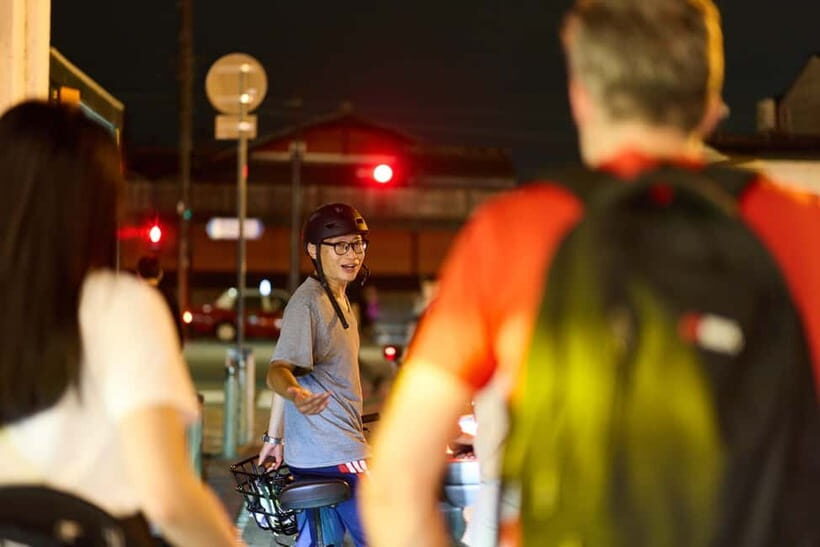
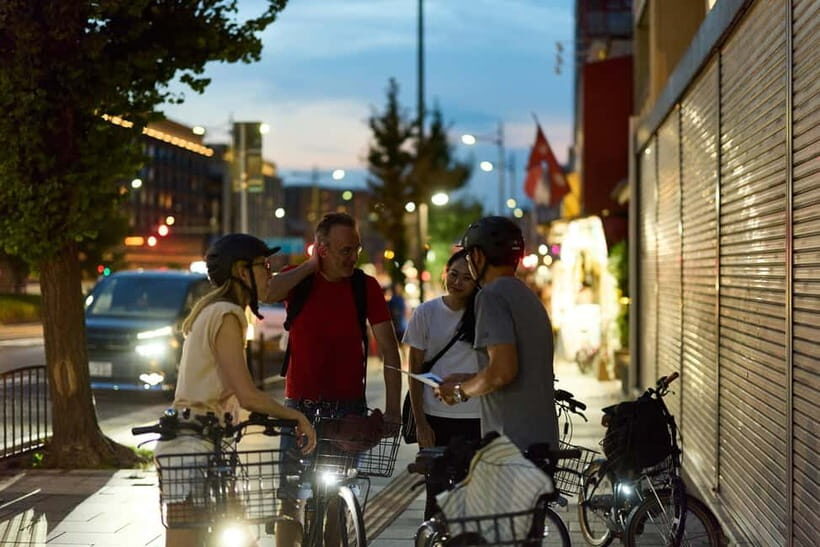
This is where the small group format pays off. The tour runs with a live English guide, and the group size is limited to 6 participants. That usually means you’re not stuck hearing explanations from far away while half the group is already pedaling ahead.
Based on guide names you may see on this operator’s calendar, people have been led by guides such as Ben and Jay. In both cases, the common thread is clear: you get practical historical context tied directly to the stops you’re seeing, not a lecture delivered at you while you struggle to ride.
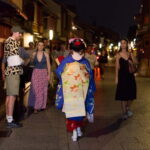
I also like that the pacing leaves room for small moments. For example, being in Gion at the right time can sometimes lead to memorable sightings, including the possibility of seeing geisha in the area. You shouldn’t assume it’s guaranteed, but the tour timing and location selection increase the odds.
Pace and effort: what “electric” really means here
The e-bike is the main reason this tour works for so many people. It’s not just about speed; it helps you handle Kyoto’s terrain and keep the energy for photos and short walks.
Still, don’t treat it like a free ride. One note that can matter: the tour includes some pedaling, so you’ll want to feel comfortable doing at least a little effort. If you’re expecting zero physical work, you might find the ride more active than you planned.
Also, the tour is about 2 hours, which means you’ll be on the bike for a meaningful portion, with short stops punctuating the ride. It’s a good length for a night activity—long enough to feel like you toured, short enough that you’re not wiped out at the end.
And again: this isn’t built for people with back problems or for anyone who can’t ride a bike.
Price and value: is $64 a fair deal?
At $64 per person for a 2-hour night ride, you’re paying for three things that are hard to replicate on your own:
- An e-bike rental (plus helmet)
- A live English guide who manages the route and adds context
- A planned sequence of evening stops that target Kyoto’s illuminated scenes
If you try to DIY this, you’ll quickly hit friction: where to start, how to navigate safely at night, what order to see things, and how to avoid losing time to confusion. This tour reduces that stress by giving you a structure.
It’s also good value if you’re trying to cover several of Kyoto’s most photographed areas in one evening: Gion vibes, Kiyomizuzaka/Kiyomizu-dera, Yasaka Pagoda, Ninenzaka, and Maruyama Park.
What’s not included is also part of the value equation. Food and drinks aren’t included, so you should plan your dinner separately. The tour is designed as a ride-and-see experience, not a full meal stop.
Tips to make the night ride smoother
Here’s how to show up ready:
- Wear comfortable shoes. You’ll be stepping off the bike for photos and visits.
- Be ready for short transitions between riding and walking.
- Bring yourself as someone who can handle light pedaling on an e-bike.
- If rain looks likely, plan on the fact that you may still ride in light rain—ponchos are available.
- Skip smoking. It’s not allowed on the tour.
One small but important mindset tip: treat this as a guided night circuit. If you try to behave like you have all day at every stop, you’ll feel rushed. If you focus on the highlights and enjoy the night ride between them, the whole thing clicks.
Should you book this Kyoto night e-bike tour?
Book it if you want Kyoto’s evening mood without the daytime crowd problem, and if you’re comfortable riding an e-bike for a couple hours. The combination of Gion-at-night energy, Kiyomizudera-area views, Yasaka Pagoda photo time, and a calming Maruyama Park break is a strong mix for a first Kyoto night (or a second night when you want to see a different side of the city).
Skip it if you can’t ride a bike, have back issues, or you’re looking for a totally effortless experience with no pedaling. Also skip if you dislike stepping off for brief visits and photos. This tour has a rhythm, and it assumes you’ll flow with it.
For most people who can meet the basics—age, height, comfort riding—it’s one of the more practical ways to see multiple Kyoto highlights after dark in a single, well-paced plan.
FAQ
FAQ
Where does the tour start?
The tour starts in front of Kyoto Tourist Lounge Gion.
How long is the Kyoto night e-bike tour?
It lasts 2 hours.
How much does it cost?
The price is $64 per person.
What’s included with the ticket price?
You get an e-bike rental, a helmet, and a live tour guide.
What language is the tour guide?
The live tour guide speaks English.
How big is the group?
The group is limited to 6 participants.
What’s the minimum age and height requirement?
Minimum age is 12 years old, and height must be over 145 cm.
What happens if it rains?
The tour proceeds in light rain. Ponchos are available if needed.
Is smoking allowed during the tour?
No, smoking is not allowed.