Ink, brush, and a fresh signature.
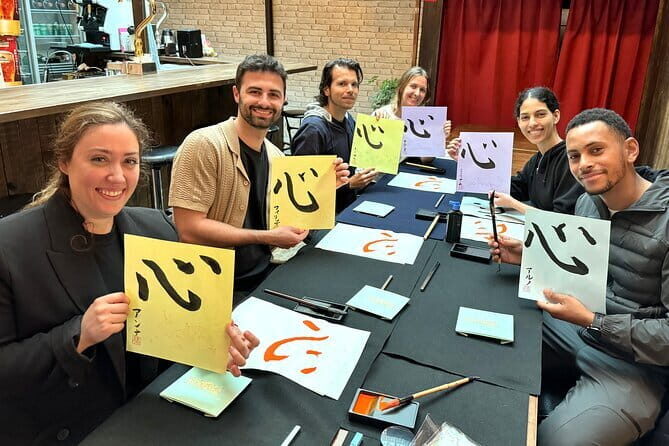
This lesson turns Japanese calligraphy (shodo) into something you can do in one hour, not just admire. I like that you start with clear brush-and-ink instruction, then move straight into writing both set characters and your own name. The small group format keeps it calm and focused, and you leave with finished work you can actually display. One catch: the meeting point near Kyoto Station can be slightly tricky to spot at first, so build in a few extra minutes.
What makes it especially worth your time is that everything is provided. You write on washi paper with the right tools, so you don’t waste energy hunting supplies before class. If you want a meaningful souvenir that looks authentically Japanese, this is a very practical way to get it—especially if you’re traveling with kids, since the format is family-friendly.
In This Review
- Key highlights before you go
- Finding Your Way: Kyoto Station Hachijo Exit and the MK Taxi VIP Stand
- The First Lesson: How to Hold the Brush and Use Ink Like a Pro
- Writing the Set Characters Scroll and Building Confidence
- Your Name in Kanji: Getting Help (and Meaning) for the Characters
- Small correction that helps a lot
- What You Take Home: Finished Calligraphy That Looks Right on Your Wall
- Kids and Families: Calm Shodo for Ages 9 and Up (and Beyond)
- How Much Is It Worth? Price, Tools, and the Real Beginner Benefit
- Who Should Book This Shodo Lesson—and Who Might Skip It
- Final word: should you book it?
- FAQ
- How long is the Japanese calligraphy lesson?
- How much does it cost?
- What’s included in the price?
- Is there a limit on group size?
- Where do we meet for the lesson?
- Is it near public transportation?
- Can I take my calligraphy home?
- Is this experience family-friendly?
- Will I need to bring my own supplies?
- Is there free cancellation?
Key highlights before you go
- Beginner structure: brush and ink technique first, then you write real kanji step by step
- Small group size (max 10) for more help and less waiting
- Personal souvenirs: you take home what you write, including kanji for common words and your name
- Instructor support for name characters with suggestions and meanings
- Family-friendly pacing, with kids activities built into the session
Finding Your Way: Kyoto Station Hachijo Exit and the MK Taxi VIP Stand
This class is easy to fit into a Kyoto day because it’s near the station area. Your meeting point is at the MK Taxi VIP Station Kyoto Station Hachijo Exit, at the taxi stand side, close to the Ibis Styles Kyoto Station area.
Here’s the practical tip that matters: when you come out of the Hachijo Exit, scan for the MK Taxi building and the stand area across the street direction. One person found it easiest to look for the MK building diagonally across the road when heading out of the station exit. In plain terms, don’t sprint. Kyoto station exits can feel like a maze, and you’ll arrive calmer (and faster) if you plan a little buffer.
If you’re using public transit, this location keeps the trip simple. No long rides, no guessing which neighborhood you’re in—you’re basically starting the class right where you arrive.
A few more Kyoto tours and experiences worth a look



The First Lesson: How to Hold the Brush and Use Ink Like a Pro
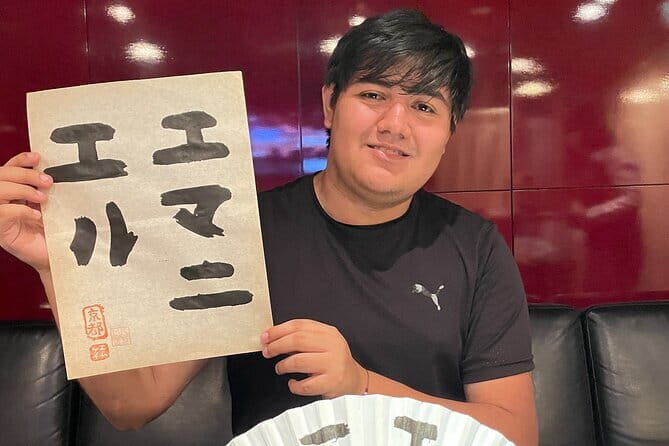
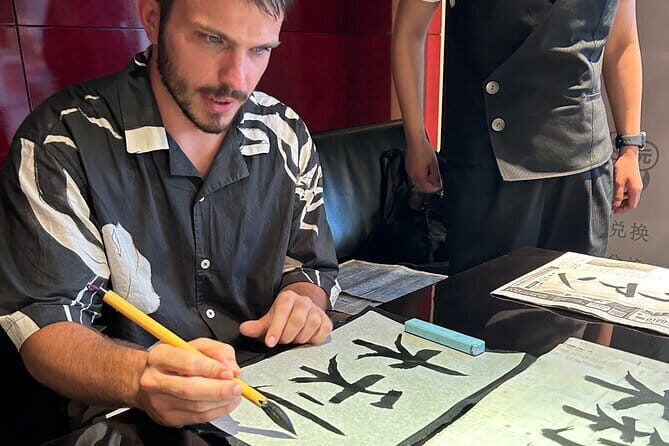
The session begins with a short lecture on the fundamentals of shodo: how to hold and move the brush, and how to apply ink properly. Even if you’ve never held a brush before, this part is valuable because it sets expectations for what your strokes should feel like.
You’ll learn that brush calligraphy isn’t about copying fancy shapes—it’s about control. The instructor-guided basics help you:
- understand how ink behaves on paper
- practice the stroke motion so your lines look intentional
- avoid the most common beginner mistakes (like pressing too hard or moving too cautiously)
Then you move into writing basic characters. The class includes a set of practice kanji linked to simple meanings, including one for One, an A character, Forever, and Kyoto. Doing these first is smart. It gives you momentum and a small win early, so your name later doesn’t feel scary.
You also tend to learn a bit about how calligraphy shows up in Japan beyond the classroom—part of the fun is realizing it’s not just a poster art. It’s a lived skill you’ll recognize in everyday places.
Writing the Set Characters Scroll and Building Confidence
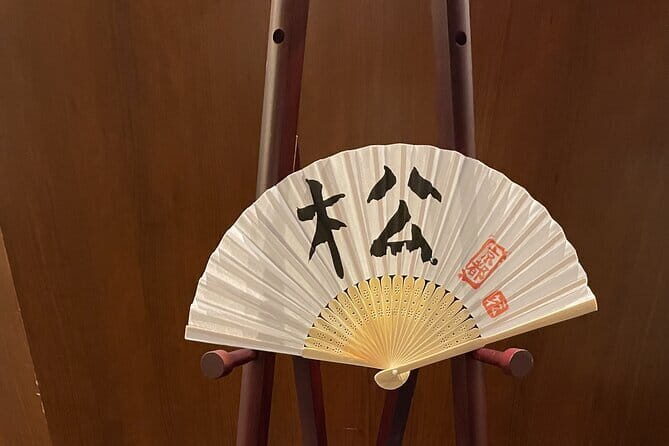
Once you start writing the practice characters, the structure becomes clear: you’re not just making random strokes. You’re learning a progression.
That progression usually looks like this:
- watch the instructor demonstrate
- try the character while getting small corrections
- repeat until the shape clicks
- keep the pace steady so you can focus on ink flow and stroke order
This is where the lesson earns its place for beginners. Shodo has a learning curve, but the class is designed to keep that curve gentle. You end up with a set of characters you can make into a scroll, and that alone is a nice souvenir because it’s not just your name—it’s a mini set of meaning-based kanji.
Your Name in Kanji: Getting Help (and Meaning) for the Characters
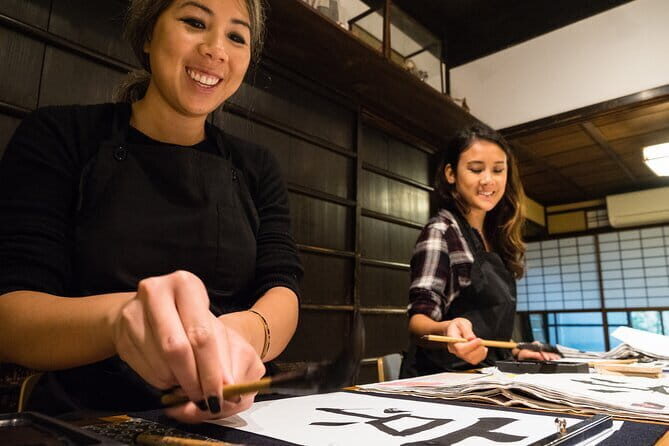
This is the part people remember.
After practicing the set characters, you write your own name in kanji. The instructor staff assists you with possible kanji options and what they mean. That’s a huge difference from many craft workshops where you just copy characters without context.
The staff often gives options that connect a name’s sound or parts to kanji meaning. For example:
- Brian might be mapped to 武礼安, where the characters relate to ideas like martial/bravery, politeness/gratitude, and peace.
- Liz might be mapped to 梨図, with meanings tied to pear and painting.
Even if your name doesn’t have a perfect one-to-one match, the value here is the explanation. You’re not just buying a decorative item. You’re getting a story behind the characters you chose.
Small correction that helps a lot
Because your name work is personalized, you’ll likely get hands-on coaching as you go. That’s one reason the class caps at 10 people. With a bigger class, beginners often wait too long for corrections. Here, you stand a better chance of making your strokes cleaner and more confident.




What You Take Home: Finished Calligraphy That Looks Right on Your Wall
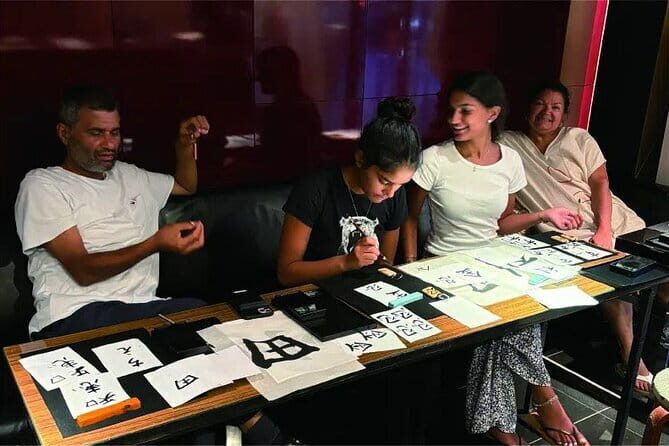
You leave with your written work, which is the key point for value. The class is designed around take-home results, not just a one-time experience.
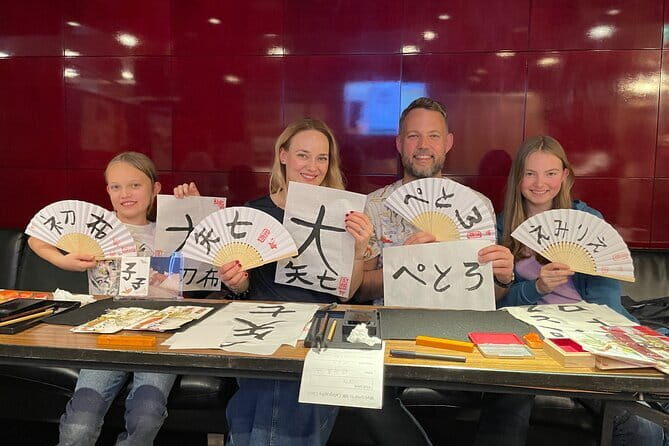
The main souvenir is your calligraphy piece. You’ll typically create a scroll featuring the kanji practice characters, and you’ll also produce your own-name kanji. That makes it a two-part keepsake: one part shows what you learned, and the other part is uniquely yours.
Some lessons also include additional items tied to the session craft. One person noted getting a photo frame connected to the class and custom fans made with calligraphy. Even if the exact extras can vary by session setup, the consistent theme is that the workshop is built for finished products you can bring home immediately.
For gift-givers, this matters. Japanese calligraphy isn’t hard to find as a store souvenir, but it’s harder to find something that looks personal and has meaning behind it. A handmade name kanji piece hits that sweet spot.
Kids and Families: Calm Shodo for Ages 9 and Up (and Beyond)
This is a family-friendly experience with activities for kids, and the format is set up so children aren’t stuck doing something too abstract. A parent in a similar situation said both they and their 9-year-old enjoyed it, with lots of chances to practice and decorate items tied to calligraphy.
The best part for families is the small-group vibe. When kids get bored, it’s usually because the pace drags or nobody can help quickly. Here, help is built into the setup. You get guidance early, then you work on short, tangible steps.
Also, the session isn’t only about writing. The lesson gives you a reason to stay engaged: you’re building a finished souvenir. Kids like seeing progress that turns into something they can hold, display, and show later.
How Much Is It Worth? Price, Tools, and the Real Beginner Benefit
The price is $50.40 per person for about one hour. That may sound steep until you factor in what’s included.
You get the tools: brushes, ink, and washi paper. That’s not just convenience; it’s quality. Calligraphy paper and ink matter. If you had to buy your own materials in Kyoto, you’d spend time and money, and you might end up with the wrong supplies for beginner practice.
So the value comes from three places:
- you get the right materials from the start
- you get coaching in how to use them
- you walk away with a meaningful keepsake
Also, this lesson is near Kyoto Station, so you don’t burn half a day on transit. Time is money on short trips, and this workshop respects your schedule.
One more plus: because the group limit is 10 people, the instruction feels less like a demo and more like a guided practice.
Who Should Book This Shodo Lesson—and Who Might Skip It
You’ll likely love this if:
- you want a beginner-friendly introduction to calligraphy
- you like crafts that produce a finished, personal souvenir
- you’re short on time and want something near Kyoto Station
- you’re traveling with kids and want a calm activity they can handle
You might consider skipping if you’re looking for a long cultural lecture or a multi-hour art studio experience. This is a focused workshop. It’s designed to be doable, not overwhelming, and the payoff is your finished calligraphy.
Final word: should you book it?
I think this is a strong pick if you want a hands-on Kyoto memory that feels genuinely Japanese. The combination of small group coaching, included materials, and take-home calligraphy makes it a good use of an hour.
If you can handle finding the MK Taxi VIP meeting point without stress, you’re set. Plan a little extra time near the station exits, and you’ll start the lesson relaxed.
FAQ
How long is the Japanese calligraphy lesson?
The lesson runs for about 1 hour.
How much does it cost?
The price is $50.40 per person.
What’s included in the price?
You get the use of brushes, ink, and washi paper.
Is there a limit on group size?
Yes. The experience has a maximum of 10 travelers.
Where do we meet for the lesson?
Meet at MK Taxi VIP Station Kyoto Station Hachijo Exit, near the taxi stand and Kyoto sightseeing reception area.
Is it near public transportation?
Yes, it’s near public transportation.
Can I take my calligraphy home?
Yes. You can take home your finished calligraphy creations.
Is this experience family-friendly?
Yes. It’s described as family-friendly, with activities available for kids.
Will I need to bring my own supplies?
No. Brushes, ink, and washi paper are provided.
Is there free cancellation?
Yes. You can cancel for a full refund if you cancel up to 24 hours in advance of the experience start time.