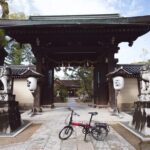
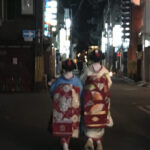
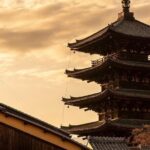
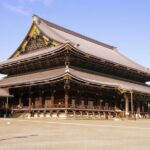
Gion can feel like time travel. This 2-hour walk turns the neighborhood into a story you can read on the street, starting at Yasaka Shrine and ending near Gion-Shijo. I love how the route mixes calm viewpoints with the kind of local details you usually only hear from someone who lives in Kyoto’s rhythm.
I especially like the way you learn to connect the places to the festivals and daily geisha-world customs. You also get that rare chance to admire the elegance of geiko and maiko up close, plus the guide keeps the culture grounded in real-life meanings, not fantasy.
One catch: you might not see a geiko or maiko in person on your exact night, even though the tour is designed to help you catch glimpses if the timing lines up. Also, you’ll be doing a steady walk with no wheelchair option.
In This Review
- Key things I’d watch for on this Gion tour
- Gion’s geisha streets start at Yasaka Shrine
- Why this 2-hour walk feels worth it
- Yasaka Shrine: festivals, faith, and the geisha neighborhood
- Maruyama Park and Nene no Michi: Kyoto’s calm breaks
- Ninenzaka stone steps: where old Kyoto looks real
- Yasui-Konpiragu Shrine’s power stone archway (and the story behind it)
- Hanamikoji Street: where geiko culture becomes understandable
- Can you really spot a maiko in full attire?
- Night photography and solo travel comfort
- Price and value: is $25 a fair deal?
- Practical tips so you get the most from the walk
- Who this Gion tour suits best
- Should you book Kyoto: Secrets of Gion?
- FAQ
- How long is the Kyoto Gion walking tour?
- How much does the tour cost?
- Where do we meet for the tour?
- Is the guide available in English?
- What are some of the main stops on the walk?
- What is included with the tour?
- Will I definitely see a geiko or maiko?
- Is the tour wheelchair-accessible?
- What cancellation and payment options are available?
Key things I’d watch for on this Gion tour
- Guides who steer the story: I’d look forward to hearing names like Tim, Majo, Bell, Shin, and Pedro, who were singled out for clear explanations and energy.
- Two-hour format that stays focused: You move through major old-street highlights without feeling like you spent the whole evening stuck in one spot.
- Yasui Konpiragu’s power-stone archway: You learn what people do there and why it matters for relationships, right down to the symbolism around walking through it.
- Photogenic lanes with calmer timing: Later departures can mean fewer crowds and better odds for night photography, and some guides even help with photos.
- Backstreets where maiko training gets explained: Even when you do not see someone actively heading out, the guide can point you to how the system works.
Gion’s geisha streets start at Yasaka Shrine
The best way to understand Gion is to start where Kyoto’s spiritual life shows up in public. This tour begins at a very practical meeting point: Starbucks Coffee – Kyoto Gion Hotel, and you’ll find the guide holding a sign with Traveling Kyoto ID. From there, you’re set up for an easy first win: you’re not wandering, you’re learning while you walk.
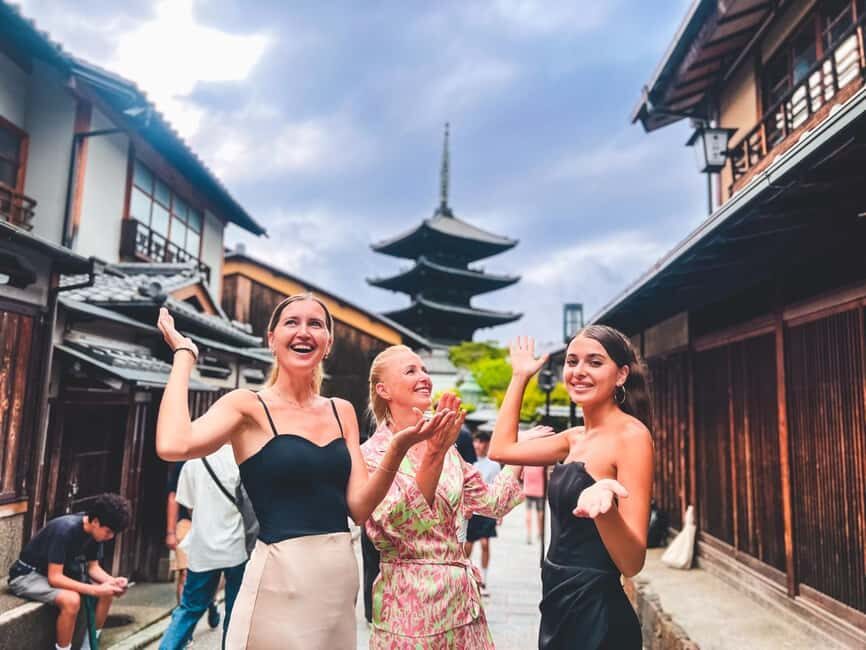
Your first big stop is Yasaka Shrine, one of Kyoto’s important spiritual sites. The guide explains how it ties into the festival calendar and the broader culture around Gion. If you’ve only seen shrines from afar, this is the kind of start that makes them feel like a living part of the neighborhood, not a checklist item.
There’s also a photo stop and a bit of time to look around. If you like grabbing a couple of good shots early, this is a smart moment to do it before the group momentum picks up.
A few more Kyoto tours and experiences worth a look


Why this 2-hour walk feels worth it
A short walking tour can be either perfect or rushed. Here, the duration works because the stops are arranged like chapters. You start with faith, then shift into parks and old lanes, then end with the core geiko-and-teahouse streets.
Price helps too. At $25 per person for 2 hours, you’re paying for a live English guide plus cultural context that takes time to research on your own. If you’re the type who enjoys knowing what you’re looking at, this cost usually feels fair. If you only want to take photos and move on, you might decide to DIY, but you’d miss the meaning behind the places.
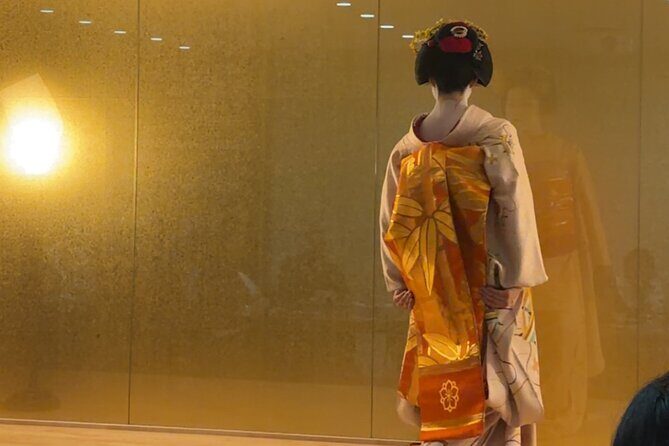
The tour ends near Gion-Shijo, and if the timing is right, you may catch a glimpse of a maiko in full attire heading to an engagement. That’s not a guarantee, but the planning matters because the guide is reading the neighborhood’s rhythms while you’re there.
Yasaka Shrine: festivals, faith, and the geisha neighborhood
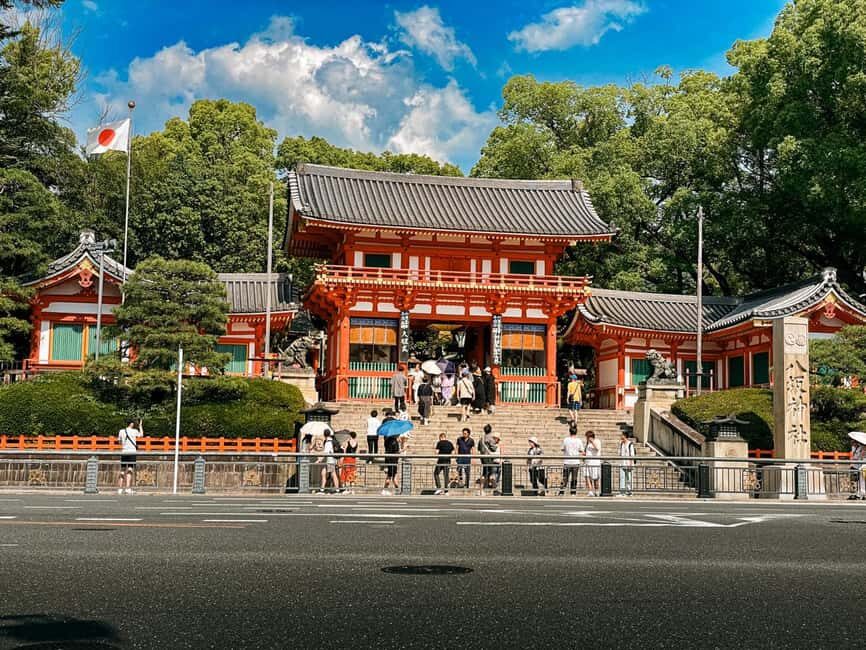
Yasaka Shrine is a strong first stop because it sets the tone of the evening. Kyoto’s festivals and seasonal events have a way of shaping what streets look like and how people behave. The guide connects those dots so that Gion’s elegance doesn’t feel random.
You’ll likely notice how busy shrine areas can be, especially around event periods. The tour uses that energy to teach you how to look: what shrines represent, why people show up, and how spiritual space overlaps with community life. In my view, this is the difference between seeing Gion and understanding it.
There’s also shopping time during the visit. If you want small souvenirs or snacks, this is usually easier than trying to hunt for them later when you’re already near the busiest streets.
Maruyama Park and Nene no Michi: Kyoto’s calm breaks
After Yasaka, you head to Maruyama Park, Kyoto’s oldest public park. The park is known for seasonal beauty, and the standout is the weeping cherry trees. Even if you’re not traveling during peak cherry season, the point is that you get a quiet pocket before you go deeper into the dense historic lanes.
Think of Maruyama Park as a reset button. You walk in, you slow down, and you start noticing details like the way locals use the space. It also helps break up what could otherwise be one long stretch of temple-to-teahouse sightseeing.
Then comes Nene no Michi, a lane named after Nene, the wife of samurai warlord Toyotomi Hideyoshi. This stop is special because it blends “Kyoto as it looks” with “Kyoto as it remembers.” The preserved architecture and small shops and teahouses help you picture how this kind of street functions.
When a guide names the person behind the lane, the street stops being just pretty. It becomes a thread in Kyoto’s timeline, and that makes your photos feel more intentional.
Ninenzaka stone steps: where old Kyoto looks real
Next you’ll go down Ninenzaka, one of those classic Kyoto slopes with old stone paving, historic wooden buildings, and artisan boutiques. It’s one of the best places on foot to feel the city’s preserved layers. You’re walking along a route that has a real “slow down” effect, because the stone steps and tight storefront rhythm make you pay attention.
This is also a photography-friendly stretch. The guide’s pacing matters here: you’ll have moments to stop for photos without feeling like you’re slowing the whole group. I like that the tour doesn’t treat photography as an afterthought, because timing is everything on these streets.
Potential drawback: Ninenzaka can be crowded depending on the night and season. The good news is that the later-hours style of this tour can mean fewer people around, which makes it easier to frame traditional architecture. If you care about cleaner shots, pick the later start time when you can.
Other walking tours we've reviewed in Kyoto





Yasui-Konpiragu Shrine’s power stone archway (and the story behind it)
After the scenic lanes, you reach Yasui Konpiragu Shrine, a quieter stop in Kyoto’s Higashiyama area known for its “power stone” archway. People crawl through it as part of a belief tied to relationships and personal change.
Here’s what makes this stop valuable: you learn the symbolism in plain language. It’s not treated like a gimmick. The guide explains how locals and visitors use the act as a kind of spiritual message, whether you’re praying for strong relationships or thinking about cutting ties with the past.
This is the kind of stop that’s easy to skip if you’re sightseeing alone. With a guide, you understand what you’re seeing before you see it, and that makes the experience more meaningful than a quick photo.
Hanamikoji Street: where geiko culture becomes understandable
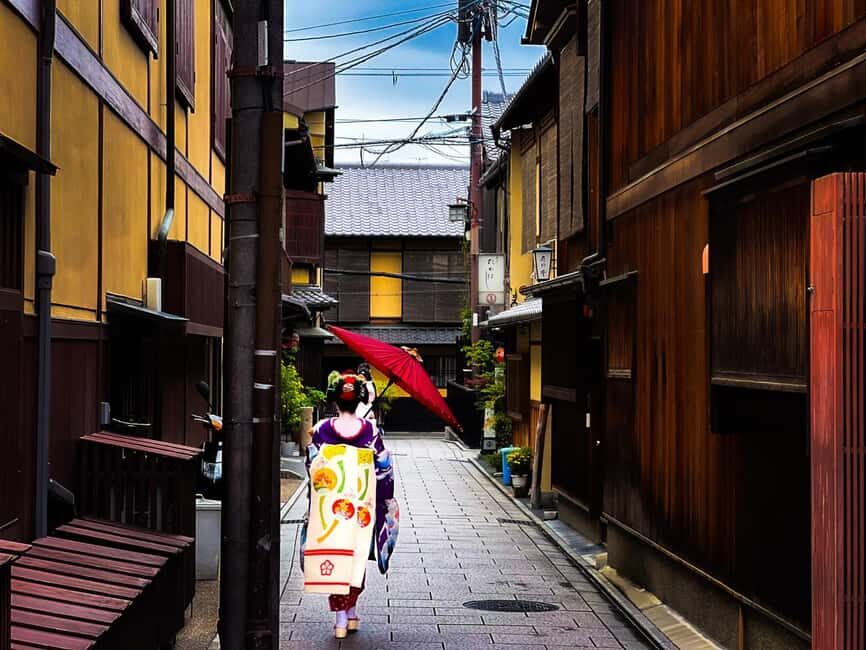
Now you hit the heart of the action: Hanamikoji Street. This is the famous Gion lane lined with preserved wooden teahouses, where real geiko still entertain. Walking here with context changes everything. Instead of viewing it like a stage, you start seeing how tradition works in everyday life.
Your guide explains history, customs, and daily life of maiko and geiko. They also describe what training looks like and how the world around them operates. This is the part many people want most, because geisha culture is often misunderstood online.
The tour also includes walking through narrow backstreets and smaller alleys where the guide can point out where maiko live and train. Even if you don’t catch someone stepping out, you still come away understanding the structure. That’s a big deal, because the private side of this culture is what most visitors miss when they only chase photo spots.
Can you really spot a maiko in full attire?
The tour ends near Gion-Shijo, and the plan is to end at a time and place where you may see a maiko heading to an engagement, if conditions and timing line up. That “may” matters.
Here’s how I’d think about it: don’t book expecting a guaranteed sighting. Instead, book for the education and the chance. When the timing is right, the sight of a maiko in full attire can be genuinely moving because the tour has already taught you what the clothing and role represent.
If you do catch a glimpse, you’ll know what you’re looking at. That alone makes the timing worth it.
Night photography and solo travel comfort
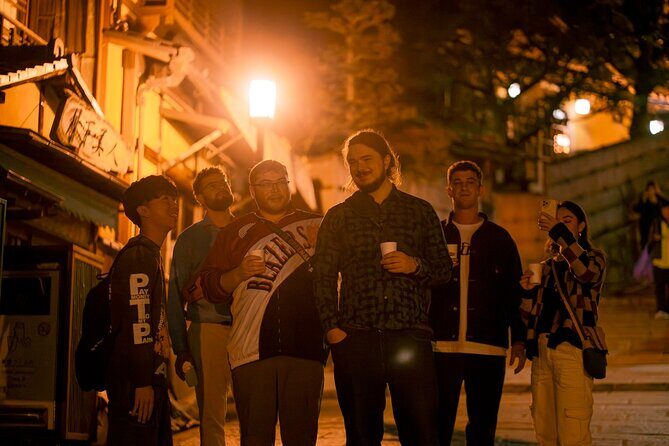
I like tours that make evening streets easier to handle. One review stood out for how later-hour timing can mean fewer people and better photo opportunities. Another mentioned a guide helping with photos when someone was traveling alone, which can turn a night of sightseeing from stressful to fun.
Even when you’re not chasing a perfect shot, those calmer moments matter. Narrow streets can feel overwhelming without a plan, especially after dark. With a guide, you get pacing, stop points, and a sense of where to look.
Also, if you’re traveling solo and you get anxious about navigating unfamiliar neighborhoods at night, having a clear meeting point and a guide moving with you can be a comfort. You still stay smart, of course, but the structure helps.
Price and value: is $25 a fair deal?
At $25, you’re not paying for transportation or a ticketed attraction. You’re paying for the guide’s explanation plus a route that hits Kyoto’s key visual and cultural markers in 2 hours. That’s why the guide quality matters a lot here, and the reviews place heavy emphasis on engaging storytelling and strong cultural explanations.
If you tried to do this on your own, you could walk the streets and see the shrines. But you’d spend time figuring out names, meanings, and what matters. Here, you’re buying time back and replacing guesswork with context.
For me, the best value scenario is simple: you want to leave with understanding, not just photos. If you only care about seeing the most famous lanes, you might decide you don’t need a guide. If you care about the “why,” this price usually feels reasonable.
Practical tips so you get the most from the walk
This is a walking-focused evening. Wear shoes that handle stone and slopes comfortably. Kyoto’s old lanes include steps and uneven footing, and the charm comes with a little physical effort.
Go in with respectful curiosity. These are real religious sites and still-living cultural spaces. You’ll enjoy it more when you treat each stop as a place with meaning, not just a backdrop.
If you’re sensitive to rain or bad weather, bring something that can handle it. One guide was praised for still giving a great experience even when weather interfered, and that’s a reminder that your evening might not always be perfect outdoors.
Who this Gion tour suits best
This tour fits well if you:
- want a guided route through Gion’s key landmarks without planning your own route
- care about geiko and maiko culture, especially the customs and daily-life context
- like photo time in historic lanes, with an easier pace than solo wandering
It might be less ideal if:
- you want wheelchair-friendly access (this isn’t suitable for wheelchair users)
- you need guarantees of spotting a maiko or geiko (the tour says you may catch a glimpse if timing lines up)
Should you book Kyoto: Secrets of Gion?
If you’re in Kyoto for a limited time and you want the Gion experience to come with real meaning, I’d book it. The route hits Yasaka Shrine, Maruyama Park, Nene no Michi, Ninenzaka, Yasui Konpiragu, and Hanamikoji Street, and the guide connects them so the neighborhood makes sense as a single story.
Also, the guide energy seems to be a major reason people rate this tour so highly, with several named guides praised for their teaching and engagement. Add in the possibility of calmer streets for photography and the chance (not certainty) of seeing a maiko near the end, and it becomes a smart use of your evening.
If you’re purely chasing selfies, you can DIY. If you want to understand the culture while you walk, this one is a solid bet.
FAQ
How long is the Kyoto Gion walking tour?
The tour lasts 2 hours.
How much does the tour cost?
It costs $25 per person.
Where do we meet for the tour?
You meet at Starbucks Coffee – Kyoto Gion Hotel.
Is the guide available in English?
Yes, the tour is run in English with a live tour guide.
What are some of the main stops on the walk?
The walk includes Yasaka Shrine, Maruyama Park, Nene no Michi, Ninenzaka, Yasui Konpiragu Shrine, and Hanamikoji Street.
What is included with the tour?
You get a guided tour of the Gion District and historical insights into the area and geisha culture.
Will I definitely see a geiko or maiko?
You may catch a glimpse of a maiko in full attire near the end of the tour if the timing is right, but sightings are not guaranteed.
Is the tour wheelchair-accessible?
No, it is not suitable for wheelchair users.
What cancellation and payment options are available?
You can cancel up to 24 hours in advance for a full refund, and you can reserve now and pay later.