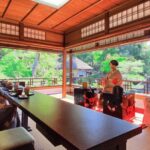
This isn’t a loud, camera-chasing maiko show. This is an ozashiki-style evening designed to feel like a real teahouse night: calm pace, close proximity, and conversation that goes beyond polite nodding.
I love the chance to watch the maiko perform on a Noh stage while the shamisen is played live right there in the room. I also love the structure of the evening, because it builds in time to meet, ask questions, take photos, and then play traditional ozashiki games as part of the flow. One thing to consider: you’re in a small, invitation-like format with stage rules, so you’ll want to follow the dress/footwear notes and be ready to enjoy the moment without trying to eat or drink during the photo time.
The whole experience is built around refinement and respect, not spectacle. If you want Kyoto culture with breathing room, this one is made for you.
In This Review
- Key highlights at a glance
- How this ozashiki night differs from big “maiko shows”
- The timing and stage rules that shape your evening
- Dinner in a historic house mood: what kaiseki means here
- Watching the maiko dance with live shamisen, up close
- The Q&A, kimono and kanzashi talk, and that face-to-face feeling
- Ozashiki games on the Noh stage: the moment it turns lively
- Free drinks for two hours: good for bonding, not for chaos
- Price and value: what $150 buys you (and why it’s not just a ticket)
- Who this experience fits best
- Logistics that matter in real life
- Should you book this maiko and kaiseki ozashiki night?
- FAQ
- How long is the maiko and kaiseki dinner experience?
- Where do I meet for the experience?
- What time does the experience start?
- What’s included in the price?
- Are there any footwear or stage rules?
- What is the maximum group size?
- What is the cancellation policy?
Key highlights at a glance
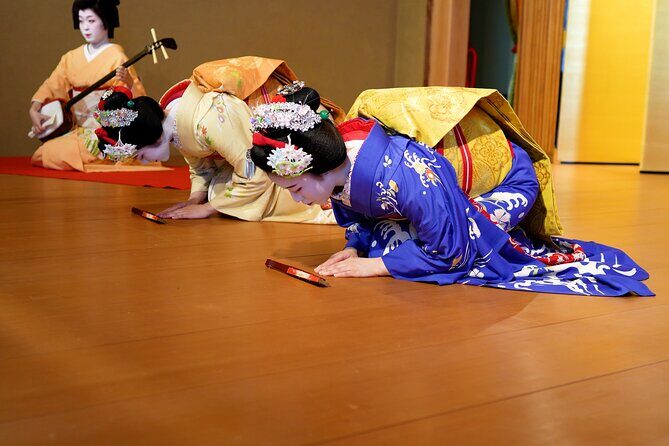
- Maiko performance on an actual Noh stage with live shamisen accompaniment
- Kaiseki dinner + free drinks for 2 hours, timed with the evening’s rhythm
- Two photo moments: supervised two-shot with the maiko plus free stage photo time
- Ozashiki games onstage, played in the same setting as the dance
- Kyoto-certified interpreter guide to help you follow the etiquette and Q&A
- Small group cap (max 20) to keep the tone intimate
How this ozashiki night differs from big “maiko shows”
Most “maiko experiences” are built like a production: sit, watch, clap, leave. This one is closer to the real Kyoto idea of ozashiki—an evening where art, manners, and conversation share the same space.
Here, the program keeps the stage feeling ceremonial. The maiko and the jikata (the live shamisen player) enter, the music supports the dance in real time, and then the night shifts into greetings, Q&A, and games. You’re not just observing. You’re part of the atmosphere in a respectful way.
That matters for your experience. When the event is designed for interaction, you get fewer moments that feel scripted, and more moments that feel like you’re learning the logic behind the performance: how to greet, when to ask, and what questions people genuinely care about.
A few more Kyoto tours and experiences worth a look


The timing and stage rules that shape your evening
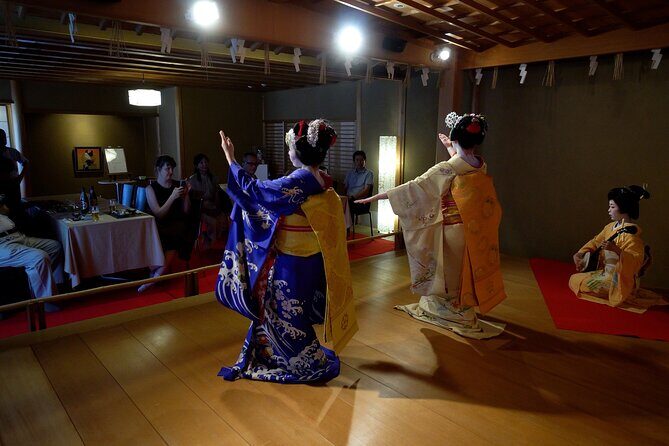
The night starts earlier than you might expect. Doors open at 17:50, and if you arrive early, you can relax in the 1st-floor café space before everyone gathers.
At 18:00, you move to the 2nd floor of the Noh stage. This is where the event’s “do it right” vibe shows up. There’s a free photo time on the Noh stage, but you must follow the footwear rule: socks or tabi are required. Also, no eating or drinking during that photo segment.
Then the evening switches gears. You’ll do a welcome toast, dinner starts, and the maiko and jikata enter. The stage becomes active again, with the dance and live shamisen happening right after introductions.
Practical takeaway: wear socks you’re comfortable staying in for the length of the photo window, and plan to keep food and drinks for the dinner phase. If you try to treat the stage like a normal venue, the rules can feel strict. If you treat it like a performance space, it feels smooth.
Dinner in a historic house mood: what kaiseki means here
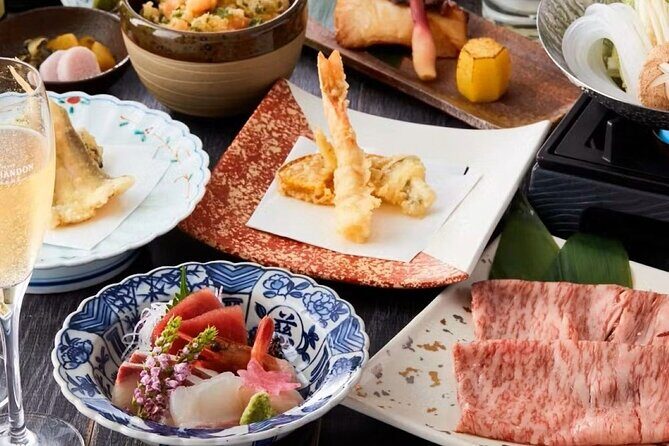
The evening isn’t just a “meal included.” It’s kaiseki cuisine paired with the pace of an ozashiki night. That means courses and timing feel intentional, so you’re not juggling a packed buffet while someone sings onstage.
You’ll have dinner plus free drinks for about two hours. This is a big value point, because you’re getting a full Kyoto-style meal experience and not paying extra for drinks. It also changes the social energy. You can settle into the conversations and Q&A without constantly stepping out for refreshments.
One more detail that makes the meal more than filler: the program keeps the conversation moments separate from the performance moments. You’re meant to eat while the atmosphere calms down, then focus when the dance returns.
If you’re the type who wants to understand what you’re eating, you’ll likely appreciate the interpreter’s help during Q&A and introductions. Even if your Japanese is basic, you should be able to follow the etiquette side and get more meaning than just taste.
Watching the maiko dance with live shamisen, up close
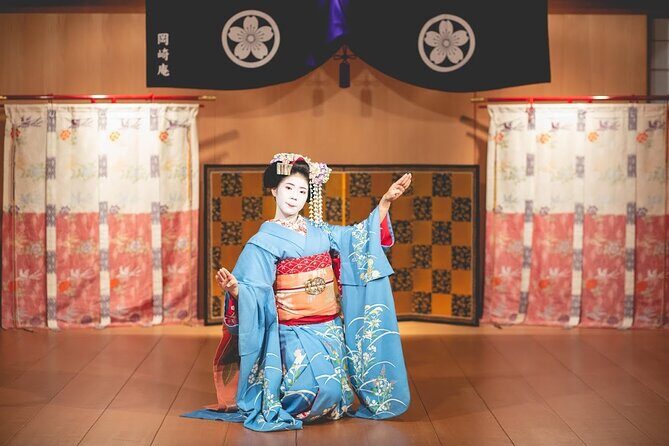
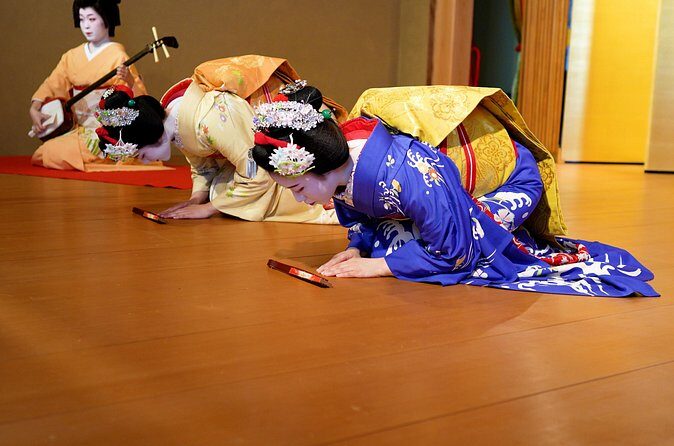
The core event is the maiko dance, performed on the Noh stage. The music is live shamisen, played by the jikata (not a recording), which matters because the rhythm and phrasing guide the movement.
What I like about this setup is how the stage format shapes your viewing. A Noh stage isn’t built for wide angles and casual wandering. It’s structured, formal, and close enough that you notice the fine details: how the performance lands in time with the music, and how the maiko’s presence fills the space without needing big gestures to feel dramatic.
The evening includes multiple maiko dance moments (the highlights and experiences describe more than one performance segment). That’s important because it gives you contrast. One dance can feel like a statement; multiple dances let you see how the maiko can shift mood and tempo within the same evening.
If you’re hoping for a performance you can watch like a concert and then talk about like a class, this hits that balance.
The Q&A, kimono and kanzashi talk, and that face-to-face feeling
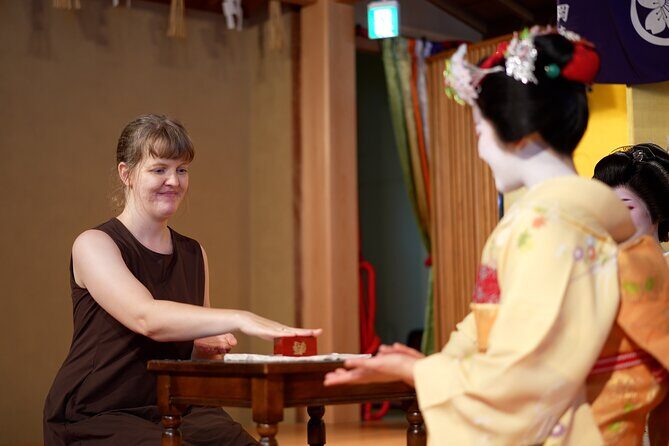
After the dance, the tone becomes personal. There are greetings and self-introductions, then a kimono and kanzashi introduction with Q&A.
This is one of the most valuable parts for your money. A staged show usually gives you admiration from a distance. Here, the event format gives you a chance to ask questions about what you’re seeing: the details of appearance, the meaning behind traditional presentation, and the everyday reality of being a maiko.
You also get a two-shot photo with the maiko. That’s not just a souvenir. It’s a structured moment that the evening uses to transition you from spectator mode to participant mode.
Some nights add a small keepsake moment too, so it’s worth going in with the mindset that you’re not only there to watch art—you’re there to be included in an exchange of culture.
A few more Kyoto tours and experiences worth a look


Ozashiki games on the Noh stage: the moment it turns lively
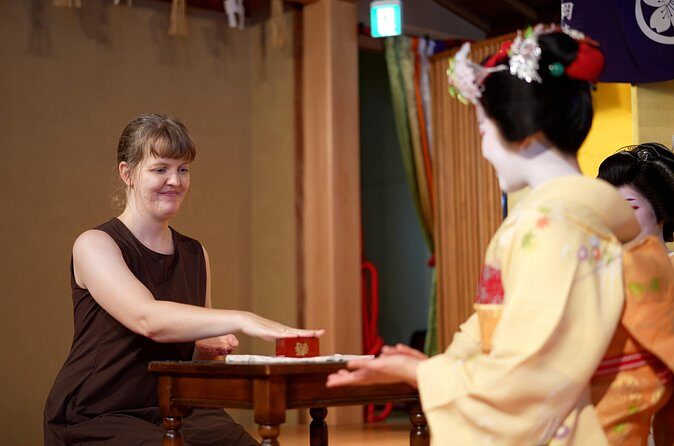
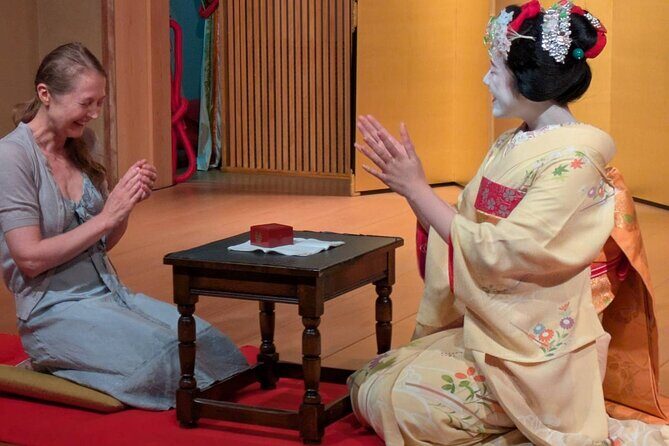
The evening doesn’t end at conversation. You move into ozashiki games played right on the stage, with the live shamisen helping keep the energy grounded in tradition.
This is where you’ll notice the difference between a “show” and an ozashiki night. Games bring people together, but the rules and tone are still formal. That means you’re not just cheering. You’re following cues, taking turns, and sharing space with the performers in a way that feels respectful rather than chaotic.
If you’re nervous about being put on the spot, don’t assume it’s a test of your social skills. The interpreter helps, and the group size is capped at 20, so the tone stays manageable.
For me, this is the segment that turns a cultural event into a memory you can explain later. It’s harder to forget the first time you play a traditional game in the same room as a live shamisen performance.
Free drinks for two hours: good for bonding, not for chaos
Unlimited drinks for two hours is a rare perk in this kind of cultural format. It makes the night feel generous and reduces the awkwardness of “do I order now or later.”
But the event still has clear timing. You’ll have a welcome toast, dinner starts, and then the night moves through performances and conversation segments. That structure keeps drinks from turning into the main event.
Practical advice: sip steadily and pace yourself. The evening ends at 20:00, and you’ll want enough energy to enjoy the final conversation and games without feeling sluggish. If you’re a light drinker, this is still worth it—you can keep it simple and use the drinks to loosen the social atmosphere.
Price and value: what $150 buys you (and why it’s not just a ticket)
At $150 for about 2 hours, the headline price can look steep if you compare it to generic cultural shows. But this program stacks several expensive elements into one ticket:
- Kaiseki dinner (not a snack or tasting plate)
- Free drinks for 2 hours
- Maiko dance performances on a Noh stage
- Live shamisen tied to the dance and games
- Direct interaction time (greetings, kimono/kanzashi intro, Q&A, conversation)
- Two-photo moment (free stage photo time plus a supervised two-shot)
- Kyoto-certified interpreter guide
- Small group cap (max 20)
Value isn’t only the list. It’s also the way the format prevents you from feeling rushed. A large venue can turn everything into a blur. A smaller group keeps your questions answerable and your photo moments less stressful.
So if your goal is to leave Kyoto with something more meaningful than video clips, this price can make sense.
Who this experience fits best
This works best for you if you want Kyoto culture with manners and conversation. You’ll probably enjoy it if you like:
- traditional performing arts but don’t want a stiff museum vibe
- food experiences that feel connected to the culture, not just a dinner reservation
- asking questions about what you’re seeing and learning how it fits together
It’s also a good match if you’re traveling with someone who enjoys shared experiences, because the minimum participation is two people and the atmosphere is social.
If you’re the kind of traveler who wants maximum freedom—walking around, ignoring rules, filming constantly—this might feel less your style. The stage rules and timed flow are part of the point.
Logistics that matter in real life
You’ll meet at Okazaki Enshōjichō, 9165 (岡崎庵) in Sakyo Ward, Kyoto. The area is described as near public transportation, which is helpful because the evening is timed tightly around the 18:00 start.
Also plan for the practical constraints of a performance space:
- No oversize luggage
- Follow footwear rules during the stage photo time (socks or tabi)
- You’ll be moving between a café space and the stage levels, so keep your routine simple
If you travel light, the night feels elegant. If you travel heavy, you’ll spend mental energy on what you can’t bring.
Should you book this maiko and kaiseki ozashiki night?
Book it if you want a Kyoto evening that feels designed for real interaction: live shamisen, maiko dance up close, kaiseki dinner, and conversation in a small group format. The $150 price becomes easier to justify once you see how many elements you’re getting and how the schedule keeps them connected.
Think twice if you’re trying to maximize flexibility, or if you strongly prefer casual, informal activities where you don’t follow stage etiquette. This experience rewards you for showing up with respect and curiosity.
If you’re aiming for a night you can talk about with specifics—music cues, kimono details, the feel of the games—this is the kind of Kyoto ticket that actually delivers.
FAQ
How long is the maiko and kaiseki dinner experience?
It runs for about 2 hours, ending at 20:00.
Where do I meet for the experience?
You meet at Japan, 606-8344 Kyoto, Sakyo Ward, Okazaki Enshōjichō, 9165 岡崎庵. The activity ends back at the meeting point.
What time does the experience start?
Start time is 6:00 pm. Doors open at 5:50 pm.
What’s included in the price?
You get meals and free drinks, a maiko dance experience, a two-shot photo with the maiko, time for conversation, and ozashiki games.
Are there any footwear or stage rules?
During the free photo time on the Noh stage, socks or tabi are required, and you can’t eat or drink on the stage.
What is the maximum group size?
The experience has a maximum of 20 travelers.
What is the cancellation policy?
You can cancel for free up to 24 hours before the experience start time for a full refund. If you cancel within 24 hours, the paid amount is not refunded.