Kyoto can feel like magic and math. This 5-hour, Italian-guided outing stitches together Sagano’s Bamboo Forest and the Golden Pagoda at Kinkaku-ji with a guide who focuses on what you’re seeing and how it connects to daily life past and present. I like the clear structure starting and ending at Kyoto Station, and I especially like that the native Kyoto guide answers the big questions you didn’t know you’d ask. One thing to consider: it’s tight timing in a compact half-day, so you’ll want to arrive ready to walk and enjoy without lingering too long at every stop.
The payoff is that you don’t just tick off two famous sights. You get cultural context for Kyoto as a former imperial capital—plus a look at the habits of aristocrats, the samurai world, and the kind of refined leisure and retiree life people built around the seasons and nature.
In This Review
- Key highlights that matter
- A half-day Kyoto plan that starts (and ends) at Kyoto Station
- Finding the meeting point near the north entrance (Karasuma-guchi)
- Sagano Bamboo Forest: how to enjoy the walk without rushing it
- Kinkaku-ji Golden Pagoda: understanding the famous icon
- The native Kyoto guide: what you gain from the Q&A style
- Getting around: trains, bus/coach, subway without the stress
- Price and value: is $117 worth it?
- Who this tour fits best
- Should you book the Kyoto Golden Pagoda and Bamboo Forest tour?
- FAQ
- How long is the Kyoto Golden Pagoda and Bamboo Forest tour?
- Where is the meeting point at Kyoto Station?
- What language is the tour guide?
- What stops are included during the tour?
- Is transportation included?
- Are entrance fees included?
- Can I leave the tour before it ends?
- Is the tour wheelchair accessible?
- What’s the cancellation policy and can I pay later?
Key highlights that matter
- Italian-speaking native Kyoto guide who explains what you’re looking at and answers questions on the spot
- Sagano Bamboo Forest guided walk for atmosphere beyond the selfie loop
- Kinkaku-ji (Golden Pagoda) focused visit that helps you read the site, not just photograph it
- Easy logistics from Kyoto Station with included trains, bus/coach, and subway segments
- You can leave early and still keep your day flexible
A half-day Kyoto plan that starts (and ends) at Kyoto Station
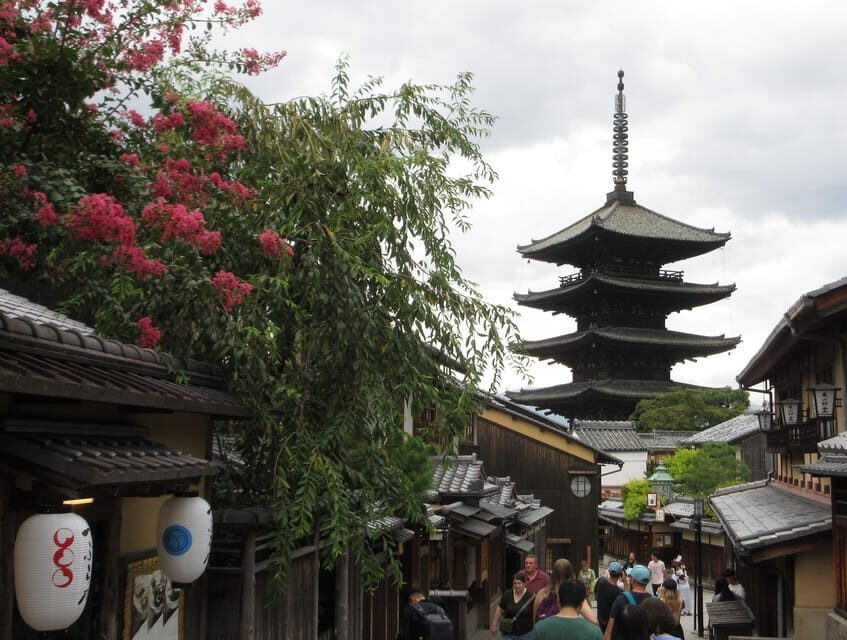
The best part of this tour is the rhythm. You meet at Kyoto Station, then you ride public transport in short, predictable hops. The whole thing is built for people who want Kyoto’s northwestern suburbs and its standout monuments without turning the day into a full travel project.
Expect a half-day format with a total duration of 5 hours. You’ll use train, bus/coach, and subway along the way. That mix matters because it keeps you from wasting time figuring out the transit puzzle. It also gives you a real sense of how people move around Kyoto, instead of feeling like you’re isolated in a single neighborhood bubble.
Another smart detail: the tour ends back at Kyoto Station, but you’re free to leave halfway if you want. That’s handy if you have dinner plans somewhere else, or if you want to continue exploring on your own after the core sights. It turns the outing into a strong baseline rather than a rigid cage.
And yes, the guide is live and in Italian. That’s not a small detail. When you can ask questions in your own language, you’ll notice how much you miss when explanations are only partial.
A few more Kyoto tours and experiences worth a look


Finding the meeting point near the north entrance (Karasuma-guchi)
Let’s make this simple: Kyoto Station is big, and you don’t want to be hunting when the group is boarding.
Meet at the space between the four escalators in front of the taxi (cab) terminal area. It’s toward the east, just outside the central north entrance of Kyoto Station. If you’re standing there correctly, you can see Kyoto Tower at the top left from your spot (not the right).
You’ll get a confirming email message by the day before with the meeting-point details. That’s useful for two reasons: you’ll have the location fresh in your mind, and you won’t have to rely on memory or guesswork.
Practical tip: arrive a little early and stand still long enough to match the landmarks. Kyoto Station can be a blur of signage and foot traffic, but once you lock onto the escalators-and-taxi-area layout, you’re set.
Sagano Bamboo Forest: how to enjoy the walk without rushing it
Sagano Bamboo Forest (in the Sagano area) is one of those places people talk about so much that it can feel like a guaranteed photo result. But the value here isn’t just the view. It’s the guided pace and the context your Italian-speaking Kyoto guide brings along the way.
You’ll spend about 1 hour at the Bamboo Forest, with guided touring, sightseeing, and time that includes shopping. That matters because Bamboo Forest trips often split into two extremes: either you rush through in 10 minutes for pictures, or you wander so long that you lose the connection to the bigger Kyoto story. This is designed to keep you balanced—enough time to feel the place, not so much that it turns into a blur.
What you’ll likely appreciate most is that the guide doesn’t treat the forest as a postcard. You’ll get explanations tied to Kyoto’s preserved environment and the way nature shapes life around the city. It’s the kind of framing that makes you notice small things: the way the light moves through the stalks, the quiet rhythm of the path, and the contrast between a restful atmosphere and the knowledge that this area has long been part of how people escaped the pressure of urban life.
Potential drawback: since the tour is only 5 hours total, you won’t have an all-day slow stroll. If you’re the type who wants long unhurried roaming for hours, this stop might feel a bit structured.
Kinkaku-ji Golden Pagoda: understanding the famous icon
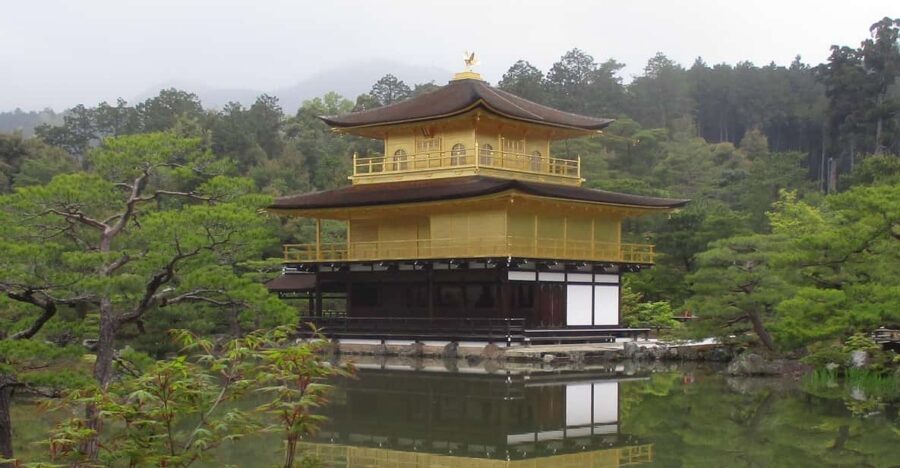
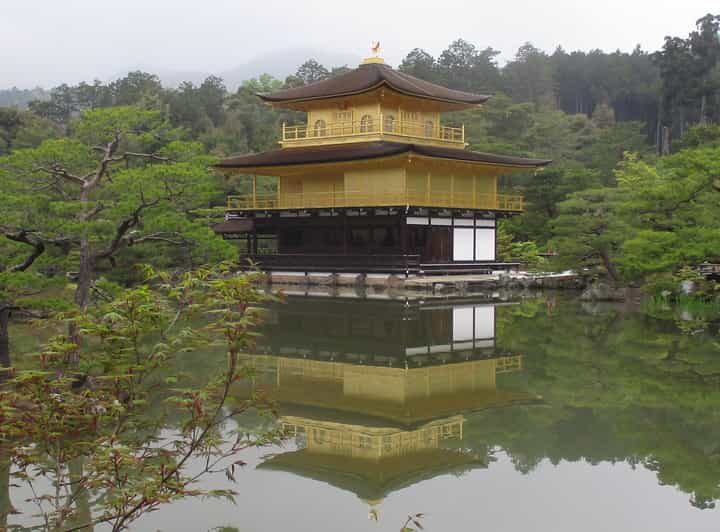
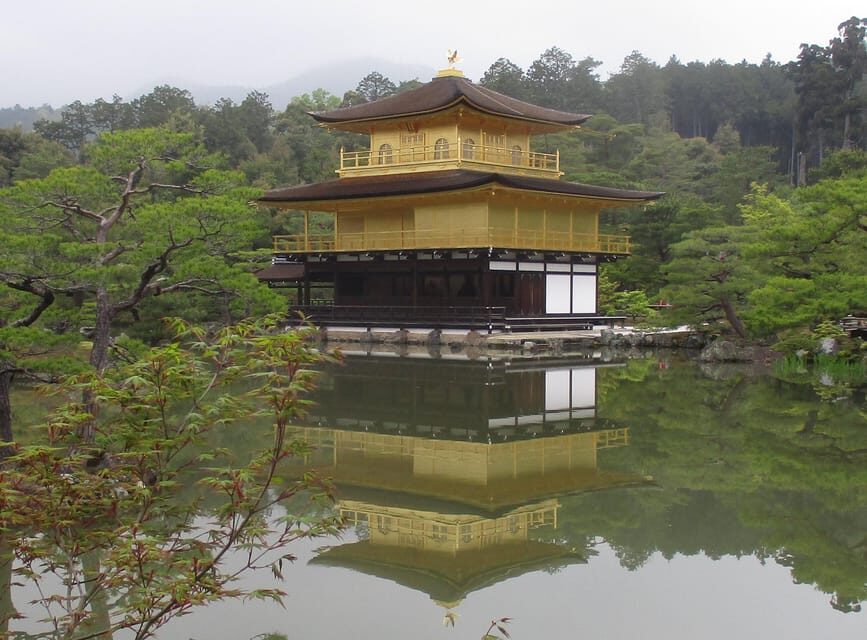
Then you head to Kinkaku-ji, the Golden Pagoda. This is the stop most people recognize by name, and your time here is about 1 hour with guided visiting.
A guided visit changes Kinkaku-ji in a practical way: you’re not only staring at gold and architecture. You’re learning what you’re seeing and why it fits into Kyoto’s idea of refined power and seasonal appreciation. Even if the Golden Pagoda is the headline, the real win is understanding it as a cultural signal—how the site reflects the values of court life and the tastes of elites who helped shape what Kyoto became.
Your guide will cover the preserved environment angle too. Kyoto’s historic areas aren’t frozen museum sets; they’re living places where landscapes and built monuments influence one another. The guide’s job is to connect the dots—between natural settings, historical patronage, and the daily reality of the people who lived with these monuments as part of their world.
You’ll also move on quickly, which keeps the tour from dragging. That’s a benefit if you’re trying to cover ground efficiently. The tradeoff is that you won’t have a long window for slow photography from every possible angle. If you want endless photo sessions, plan to continue on your own after the tour ends—or choose your priorities before you arrive.
The native Kyoto guide: what you gain from the Q&A style
The tour’s biggest strength is the guide. The strongest praise you’ll see for this experience isn’t about the routes or the famous stops. It’s about a guide who’s prepared and not generic, with a warm, friendly vibe and a habit of sharing memorable curiosities.
That shows up in how Kyoto comes to life in your head. Instead of getting a list of facts, you’ll get explanations tied to human stories: relatives of the imperial house, aristocrats, literati (people who worked with ideas and writing), and the samurai class in the broader sense of warrior culture.
The guide also answers questions. That is huge in a city like Kyoto, where one detail can lead to five new questions. If you’ve ever wondered why certain areas feel the way they do—why buildings and gardens seem designed to create mood—this kind of Q&A approach helps you connect details to meaning fast.
For me, the best way to describe it is this: you’ll walk away with a mental map of Kyoto that includes more than streets and monuments. You’ll understand how the historic capital mindset connects to daily life, past leisure, and the way nature and culture get treated like partners.
A few more Kyoto tours and experiences worth a look





Getting around: trains, bus/coach, subway without the stress
Transport isn’t glamorous, but it can make or break half-day trips. This one uses a straightforward structure:
- You start at Kyoto Station
- There’s a short train ride (about 20 minutes)
- Then you reach the Bamboo Forest area
- Another train segment (about 20 minutes)
- A bus/coach hop (about 15 minutes) to Kinkaku-ji
- Then return to Kyoto Station with a mix that includes subway time (about 15 minutes)
Why this matters: you get the feel of moving through real Kyoto without doing the heavy lifting. Everything is handled for you, and you don’t have to worry about missing a stop or figuring out connections on the fly.
Also, since entrance fees and transportation are included for the scheduled monuments, you avoid the “surprise bill” problem. With a short duration, that kind of clarity helps your brain stay on the sights.
One note: this is still a lot of movement for one morning/afternoon. If you’re sensitive to walking or transfers, it’s worth going into it with comfortable shoes and a calm pace. The tour is built for efficiency, not for a slow-motion, sit-and-stare day.
Price and value: is $117 worth it?
At $117 per person for a 5-hour outing, you’re paying for three things at once:
- Guiding in Italian, with a native Kyoto focus
- Transportation (train, bus/coach, subway) handled during the tour
- Entrance fees for the scheduled monuments
If you were to DIY this route, you could likely match the public transport and entry costs on paper. The question is whether you’d get the same payoff from the explanations. This is where the value lives: the guide’s ability to connect Kinkaku-ji and Sagano Bamboo Forest to how people actually lived—aristocrats, literati, and the samurai world—turns famous places into something more useful.
You’re also buying time. Half-day tours are great for first-timers because they help you hit “must-see” sights while still learning how to interpret them later. For repeat visitors, it can work as a refresher if you want context and a local viewpoint instead of another round of aimless wandering.
Finally, there’s flexibility: you can cancel up to 24 hours in advance for a full refund, and you can often reserve with pay later to keep your plans flexible. That reduces risk, especially when weather or schedule changes happen.
Who this tour fits best
This experience makes the most sense if you fall into one of these categories:
- You want Kyoto’s northwestern highlights without juggling transit
- You like to ask questions and get answers in Italian
- You care more about understanding what you see than just collecting photos
- You enjoy a structured half-day that still lets you keep options open after returning to Kyoto Station
It’s also a good match for people who are comfortable with walking and moving between spots. This isn’t an all-day ramble. The schedule is designed to cover major ground and still keep you engaged.
Wheelchair accessibility is listed, so if you use a mobility device, this is worth considering. As always, it’s smart to contact the provider if you have specific routing needs—since stations and historic grounds can vary.
Should you book the Kyoto Golden Pagoda and Bamboo Forest tour?
I’d book this if you want an efficient half-day that turns two headline sights—Kinkaku-ji and the Sagano Bamboo Forest—into a story you can actually remember. The guide quality seems to be the real differentiator, with a strong focus on explanation, friendly presence, and lots of interesting curiosities.
Skip it (or reconsider) if you want long free time at each site, or if you’re the type who needs hours of unstructured wandering. This is structured. It’s built for learning and pacing.
If your goal is to get your bearings in Kyoto quickly—then continue on your own afterward from Kyoto Station—this tour is a practical, high-value way to do it.
FAQ
How long is the Kyoto Golden Pagoda and Bamboo Forest tour?
It lasts about 5 hours, covering a half-day outing.
Where is the meeting point at Kyoto Station?
Meet at the space between the four escalators in front of the cab (not bus) terminal, toward the east just outside the central north entrance of Kyoto Station. From there, you can see Kyoto Tower at the top left.
What language is the tour guide?
The guide speaks Italian.
What stops are included during the tour?
You’ll visit the Sagano Bamboo Forest area and Kinkaku-ji (the Golden Pagoda). The tour returns to Kyoto Station.
Is transportation included?
Yes. The tour includes all transportation scheduled during the itinerary.
Are entrance fees included?
Yes. Entrance fees for the monuments visited during the scheduled stops are included.
Can I leave the tour before it ends?
Yes. The tour ends at Kyoto Station, but you’re free to leave halfway.
Is the tour wheelchair accessible?
Yes, wheelchair accessibility is listed.
What’s the cancellation policy and can I pay later?
You can cancel up to 24 hours in advance for a full refund, and you can reserve now and pay later.