Two hours, and Kyoto feels closer. I love how this walk ties together Yasaka Shrine with the character of Gion and Ninenzaka, so the city doesn’t feel like a list of stops. I also like that the guide explains the meaning behind what you’re seeing, especially the shrine connection to Susanoo. The main drawback: it’s not a good match if you have mobility limitations or use a wheelchair.
You get a smooth loop for a first-time visit, starting at Kyoto Tourist Lounge Gion and ending at Yasaka Shrine, with guided time at each major spot. I found it reassuring that the guide is live and English-speaking, so you’re not left guessing. You’ll be on your feet for the full 2 hours, so bring comfortable shoes and keep water handy.
The vibe is calm at the shrine, and then busier-feeling street scenery at Ninenzaka, with photo stops built in. You’ll also want a camera because the vermilion torii gates and traditional lanes are very photogenic. One more tip: there’s no meal included, so plan to eat before or after.
In This Review
- Key Things You Should Notice on This Gion Walking Tour
- First-Time Kyoto Win: Two Hours That Actually Make Sense
- Meeting at Kyoto Tourist Lounge Gion and the Flow of the Walk
- Gion for Beginners: What to Watch While You Walk
- Kenninji Temple: A Guided Pause Between Street Scenes
- The Route’s Photo Stops: Where the 2 Hours Actually Work
- Ninenzaka Cobblestones: Teahouses, Shops, and Easy Photo Opportunities
- Yasaka Shrine: Gardens, Vermilion Torii Gates, and a Calm Ending
- What You’ll Learn About Susanoo and Why It Changes How You Look
- Price and Timing: Is $22 Good Value for This 2-Hour Plan?
- Who This Tour Fits Best (and Who Should Skip It)
- Should You Book This Kyoto Gion Walking Tour?
- FAQ
- Where does the tour start?
- How long is the Kyoto Gion walking tour?
- What language is the guide?
- What’s included in the price?
- What should I bring?
- Is hotel pickup or drop-off included?
- Is the tour suitable for wheelchair users or mobility impairments?
Key Things You Should Notice on This Gion Walking Tour
- Vermilion torii gates at Yasaka Shrine that make the shrine instantly recognizable
- Ninenzaka cobblestone lane with teahouses, artisan shops, and local treats
- A guide-led sequence that keeps you from wandering around without context
- Kenninji Temple as a guided breather between street scenes
- Susanoo, the god of storms explained in a way that makes the shrine feel more meaningful
- Two full hours of walking with multiple guided moments, not rushed stop-and-go
First-Time Kyoto Win: Two Hours That Actually Make Sense
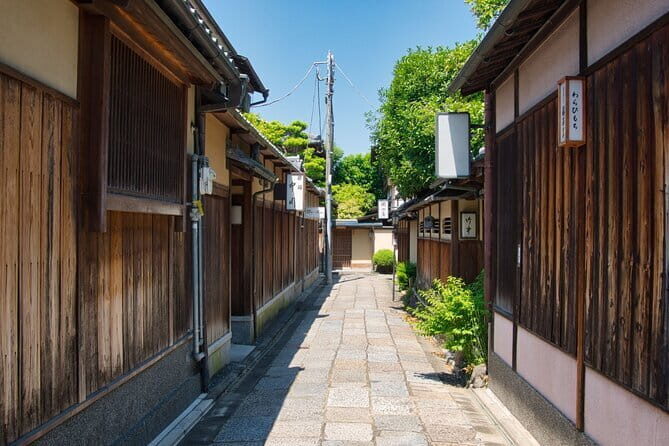
If this is your first trip to Kyoto, you’ll appreciate tours like this that give your feet a plan and your brain a thread. In just 2 hours, you move from Gion street atmosphere to temple grounds to the famous shrine, with Ninenzaka as the classic in-between. It’s a good way to get your bearings fast without trying to handle everything solo.
What I like most is the balance. You get photogenic scenery, yes, but also context—why Yasaka Shrine matters, who it’s dedicated to, and what you’re looking at when you stand near the torii gates. It helps you notice details you’d otherwise walk right past.
One practical reality: you’re covering ground. If you’re hoping for a slow, sit-down tour, this isn’t it. You’re walking, taking photos, and listening at short guided intervals.
A few more Kyoto tours and experiences worth a look

Meeting at Kyoto Tourist Lounge Gion and the Flow of the Walk
The tour starts at Kyoto Tourist Lounge Gion. That matters, because you avoid the stress of figuring out transit and meeting points on your own when you’re already arriving in a new city. From there, you’ll keep moving through the neighborhood in a guided rhythm.
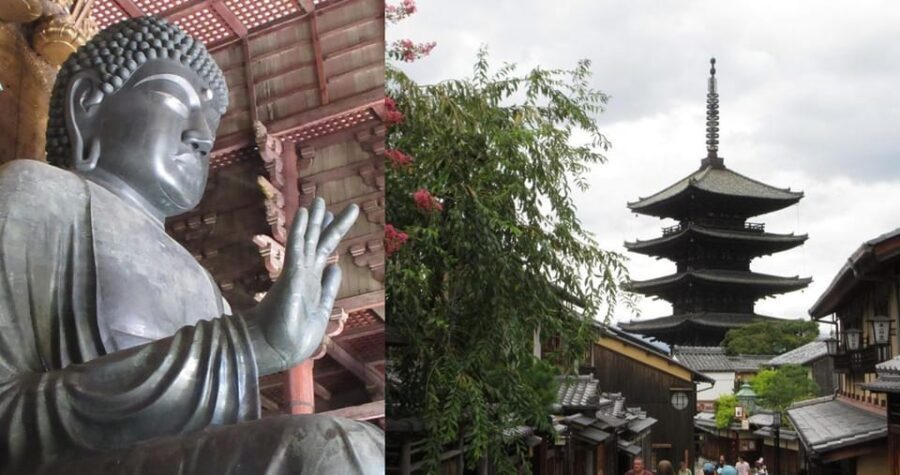
You’ll spend a short block in Gion with a guide, then head to Kenninji Temple for another guided stop. After that, the route includes another guided visit and a photo stop (the schedule keeps it compact), then you reach Ninenzaka for photo time and guided walking. Finally, you finish at Yasaka Shrine, with time for photos and a guided visit.
This structure is useful for you because it prevents the common beginner problem: seeing a shrine, then forgetting what you just learned five minutes later. Instead, you get short guided segments that build on each other as you go.
Gion for Beginners: What to Watch While You Walk
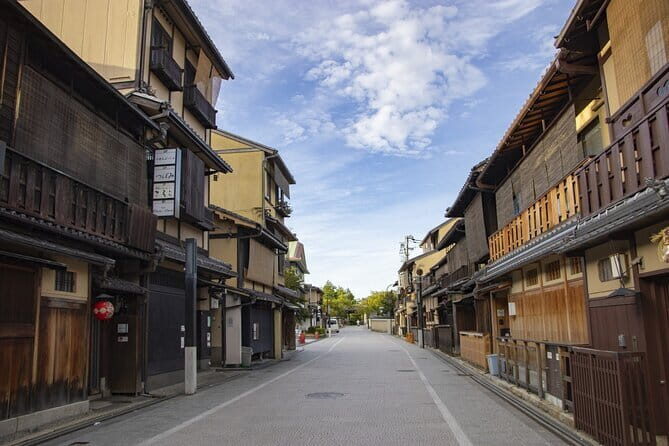
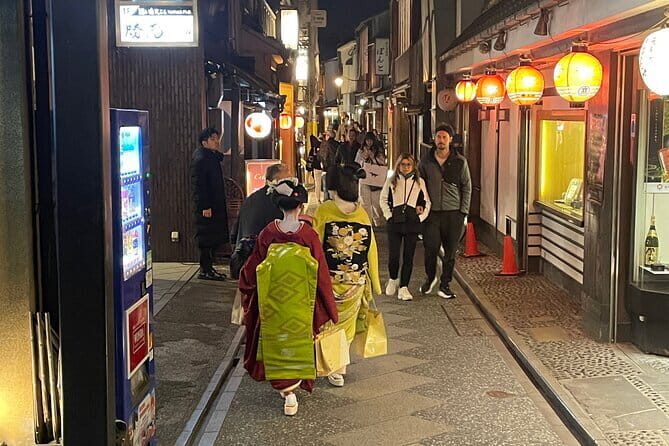
Gion is one of those Kyoto areas where the streets themselves feel like part of the story. During the guided portion in the district, you’ll get direction on what to notice while you walk—so you’re not just moving through pretty scenery without knowing what it represents.
Look at how the area is set up for pedestrians and how the streets connect toward the next landmarks. Even if you’re not an architecture expert, a good guide helps you spot the clues: the way traditional spaces sit next to everyday life, and how Gion’s cultural identity shows up in small details around you.
A key benefit here: Gion is easy to confuse when you’re on your own. With a guide, you’re less likely to waste time wandering the wrong lanes.
Kenninji Temple: A Guided Pause Between Street Scenes
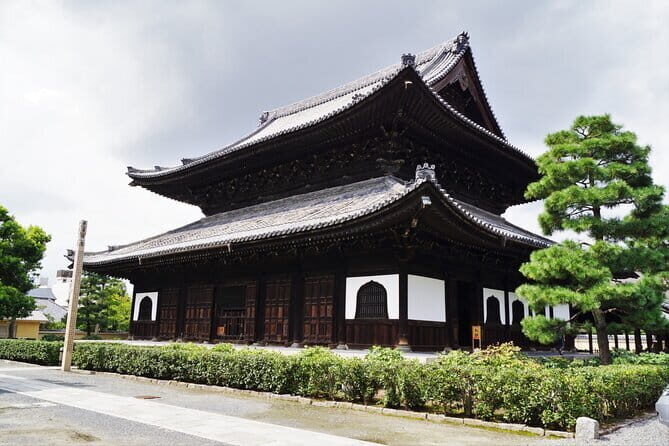
Next up is Kenninji Temple, a guided visit with a short tour segment. It’s a smart stop inside a short 2-hour schedule because it gives you a contrast to street-level wandering. You go from neighborhood atmosphere to a sacred site environment, and that change helps the whole experience feel fuller.
This is also where your guide’s explanations can really land. Even without turning it into a long lesson, a temple stop provides a physical sense of what Kyoto is beyond shopping streets and photo spots.
You’ll likely want to keep your phone/camera ready here too, since temple areas tend to reward a slower look. Just remember: you’re on a timed walking tour, so don’t get stuck at one photo angle.
The Route’s Photo Stops: Where the 2 Hours Actually Work

The schedule includes photo stops in the middle of the walk, including on the path toward Ninenzaka and later at Yasaka Shrine. Those breaks are more than a convenience—they’re there so you can frame the scenes without feeling like you’re holding up the group.
Here’s how to use those moments well: step slightly to the side before you shoot, take 2–3 photos, and then refocus on what the guide is pointing out. If you try to do it all at once—video, photos, and listening—you’ll miss the best part, which is the meaning behind what you see.
The route also includes another guided visit before Ninenzaka. That timing is intentional: you’re not expected to understand everything at once, and the guide adds context as you move toward the next big landmark.
Other walking tours we've reviewed in Kyoto





Ninenzaka Cobblestones: Teahouses, Shops, and Easy Photo Opportunities
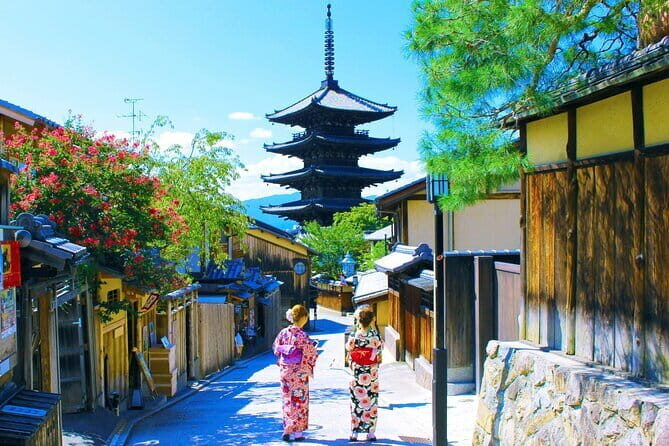
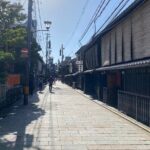
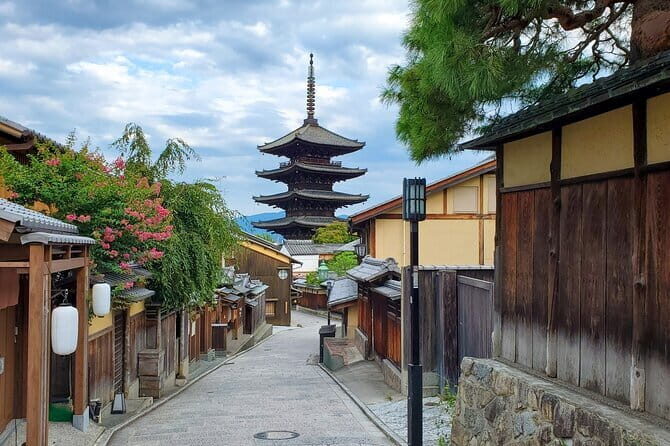
Ninenzaka is the kind of street that makes first-time visitors smile immediately. It’s a cobblestone lane lined with traditional teahouses, artisan shops, and local delicacies. That blend matters because you don’t just get a postcard view—you also get a sense of how visitors and locals move through a historic-feeling area.
During the Ninenzaka portion, you’ll get both a photo stop and guided time. Use that time to slow down for a few minutes. Cobblestones can make walking feel a bit different than paved streets, and that’s part of the experience. If you’re carrying bags, keep them manageable so you can move easily on uneven ground.
One more practical tip: since meals aren’t included, Ninenzaka is a great moment to decide what you’ll snack on later—or to grab something small if you’re already in that mood. Just keep it simple so you can stay with the group.
Yasaka Shrine: Gardens, Vermilion Torii Gates, and a Calm Ending
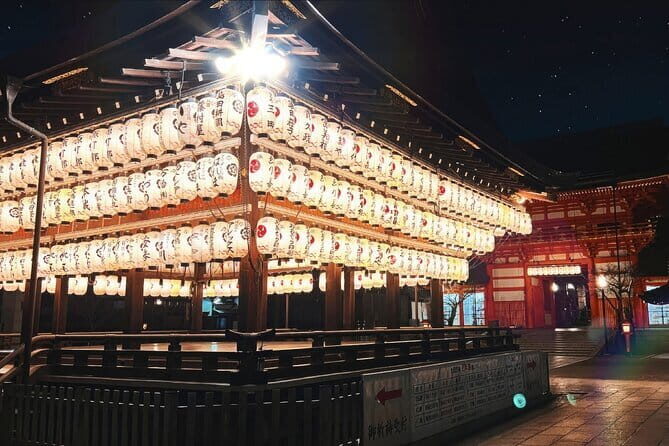
The tour’s highlight is Yasaka Shrine. After walking through Gion and Ninenzaka’s lively street scenes, you’ll arrive at a calmer space. Yasaka Shrine is described as a peaceful oasis in the heart of the Gion district, which is exactly how it feels once you’re inside the atmosphere of the grounds.
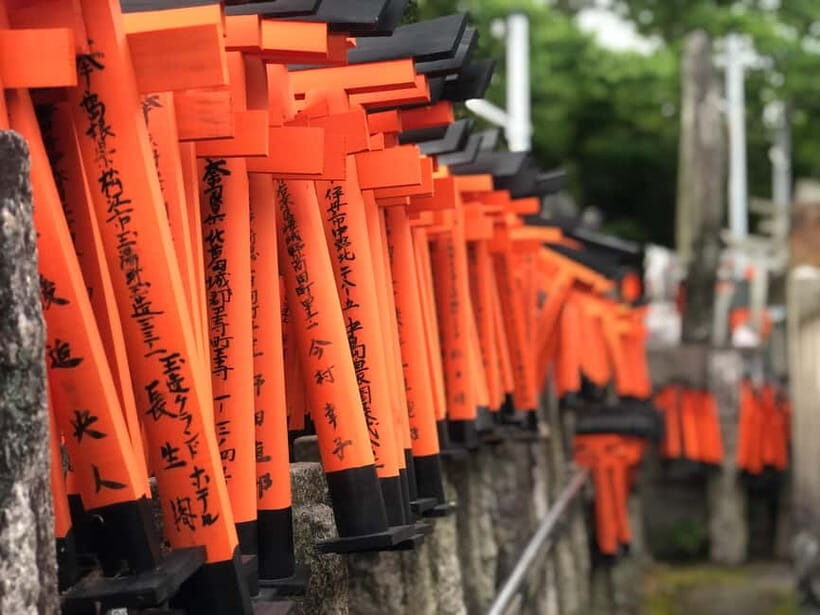
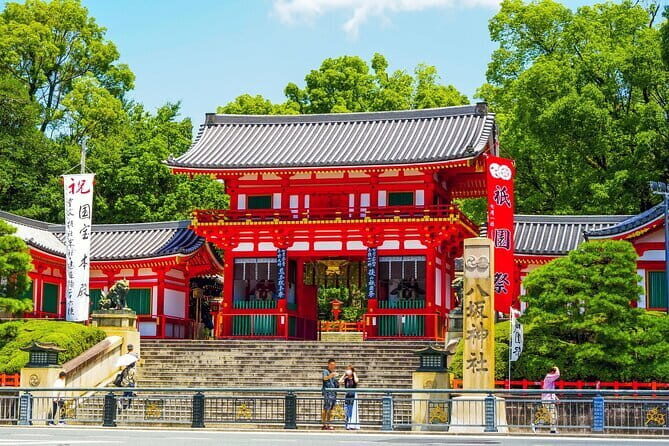
You’ll spend guided time there, with photo stops that focus on the shrine’s striking vermilion torii gates and the lush garden setting. This is one of the easiest places in Kyoto to orient yourself visually: the torii gates give you a clear landmark to photograph and a clear starting point for understanding what you’re seeing.
The guide also explains the shrine’s dedication to Susanoo, the god of storms. That detail is more than trivia. It helps you see the shrine as a living spiritual site, not just a scenic backdrop. And knowing it’s over 1,300 years old adds weight to what you’re standing in front of.
What You’ll Learn About Susanoo and Why It Changes How You Look
The education on this tour is practical: it helps your eyes connect to the story. When you learn that Yasaka Shrine is dedicated to Susanoo, it reframes your visit from I see a famous gate to I understand the shrine’s spiritual purpose.
I like this approach for first-time visitors. Kyoto has a lot of sacred sites, and it’s easy to feel overwhelmed. A guide who can give you a focused explanation—who the shrine honors, and why the place matters—helps you take home a real takeaway, not just photos.
This tour also gives you a way to compare spaces. Gion feels like culture in everyday life. Ninenzaka feels like traditional Kyoto on a walking scale. Yasaka Shrine gives you a more spiritual quiet. When you experience them in this order, you start to understand how Kyoto holds multiple moods at once.
Price and Timing: Is $22 Good Value for This 2-Hour Plan?
At $22 per person for about 2 hours, this tour is strong value for first-timers who want structure. You’re paying for a live English guide plus guided time at multiple major stops: Gion, Kenninji Temple, Ninenzaka, and Yasaka Shrine. You’re also getting a guided experience that reduces the risk of spending your limited vacation time figuring things out.
What makes it feel like value isn’t only the price—it’s the density of meaningful stops inside a short duration. Many low-cost tours in tourist areas are either too short to matter or too broad to explain anything. Here, the schedule includes guided segments and photo moments, which makes the time feel purposeful.
Just be honest with yourself about walking. You don’t have a hotel pickup, and meals aren’t included. If you’re trying to compress everything into one easy afternoon, plan a snack break or meal around the tour so you don’t end up hungry while you’re trying to enjoy the shrine.
Who This Tour Fits Best (and Who Should Skip It)
This is a good match if you:
- Want an organized introduction to Gion and Yasaka Shrine
- Like photo-worthy streets but also want meaning, not just scenery
- Prefer an English-speaking guide with guided time at key sites
- Have limited time and want a 2-hour plan that hits the essentials
It’s not a good match if you have mobility impairments or use a wheelchair. The tour is designed as a walking experience across streets and temple/shrine grounds, and that means you’ll need a comfortable level of mobility.
If you’re traveling with kids, it could work if they can handle steady walking and you keep expectations realistic about short guided explanations. If your group wants long stays inside buildings or a slow, sit-down pace, you’ll probably want a different format.
Should You Book This Kyoto Gion Walking Tour?
I’d book it if you want a straightforward, first-time-friendly introduction to Kyoto’s spiritual heart and its most photogenic historic lanes. The combination of Yasaka Shrine (with the vermilion torii gates and Susanoo focus), plus the street feel of Gion and Ninenzaka, gives you a Kyoto snapshot that’s easy to remember.
Skip it if walking is hard for you, or if you’re looking for a food-focused tour with meals included. This one is about sights and explanations, not eating. Also, bring your own water and plan your meal timing—don’t count on the tour to solve that part of your day.
If you want a calm ending with a strong sense of what you’re seeing, this 2-hour loop does that job.
FAQ
Where does the tour start?
The meeting point is Kyoto Tourist Lounge Gion.
How long is the Kyoto Gion walking tour?
The tour lasts about 2 hours.
What language is the guide?
The tour is guided in English.
What’s included in the price?
It includes a local tour guide and a walking tour of the Gion district.
What should I bring?
Bring comfortable shoes, a camera, and water.
Is hotel pickup or drop-off included?
No, hotel pickup and drop-off are not included.
Is the tour suitable for wheelchair users or mobility impairments?
No. It is not suitable for people with mobility impairments or wheelchair users.