Kyoto can be loud, but this route has a calm rhythm. You’ll pair the Fushimi Inari Taisha torii tunnels with the hushed mood of the Arashiyama Bamboo Grove in one well-paced, private outing. The guide keeps the day flowing with context as you walk, and the itinerary can be adjusted to match your interests.
Two things I really like: a private guide who explains what you’re seeing (including the fox statues and Shinto ideas at Fushimi Inari), and the practical hotel pickup and drop-off that keeps you from wrestling with directions and transfers. My experience also benefited from the kind of service that feels personal, like when my guide Masa stayed focused on what I wanted to get out of each stop.
One fair warning: this isn’t for wheelchair users, and it’s also a walking day. If your feet aren’t great with uneven paths and lots of steps, wear supportive shoes and plan for some steady movement.
In This Review
- Key things to know before you go
- The smooth plan: pickup, trains, and a 210-minute route
- Fushimi Inari Taisha: torii gates, fox statues, and why the walk feels different
- Arashiyama Bamboo Grove: serene timing, photo light, and quiet stories
- What the “flexible itinerary” actually means on the ground
- Cost and value: what $135 gets you (and what to budget for)
- A walking day: what to bring and how to stay comfortable
- Who this tour fits best (and who should think twice)
- Should you book this Kyoto Essential Tour with Fushimi Inari & the Bamboo Grove?
- FAQ
- How long is the Kyoto tour?
- Is this a private tour?
- What language is the guide?
- Does the tour include hotel pickup and drop-off?
- Are meals included?
- Is the tour suitable for wheelchair users?
Key things to know before you go
- Private guide time is built in for both Fushimi Inari and Arashiyama, so you’re not just following crowds.
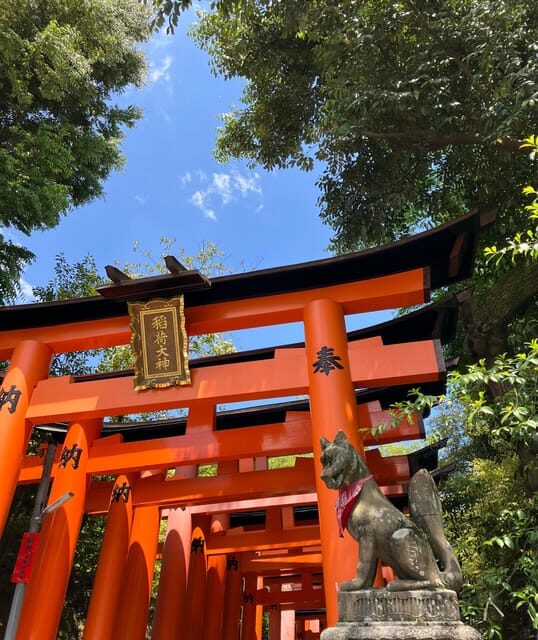
- Fushimi Inari’s fox lore and the meaning of the shrine add a lot to the torii-gate walk.
- Bamboo Grove photos are easier when you have someone guiding your timing and route through the forest paths.
- About 210 minutes keeps this focused, not exhausting, with train time included in the plan.
- Comfort matters: bring water and sunscreen, and expect walking on shrine grounds and in the grove.
- Not wheelchair friendly, so plan accordingly if accessibility is a priority.
The smooth plan: pickup, trains, and a 210-minute route
This is a short and efficient way to hit two of Kyoto’s most famous places without turning your day into a logistics puzzle. The tour runs about 210 minutes, which is roughly 3.5 hours of on-the-ground time plus travel between sites.
You can start from Kyoto or Osaka (pickup options are listed), and you’ll finish with drop-off in Kyoto or Osaka. Hotel pickup/drop-off is explicitly included in Kyoto, so if you’re coming from Osaka, double-check what’s covered in your exact departure option.
The day uses train segments (listed as 30 minutes each), which is part of why the itinerary stays tight. If you usually hate “time lost between stops,” this structure helps you get from one iconic scene to the next without guessing routes.
A few more Kyoto tours and experiences worth a look


Fushimi Inari Taisha: torii gates, fox statues, and why the walk feels different
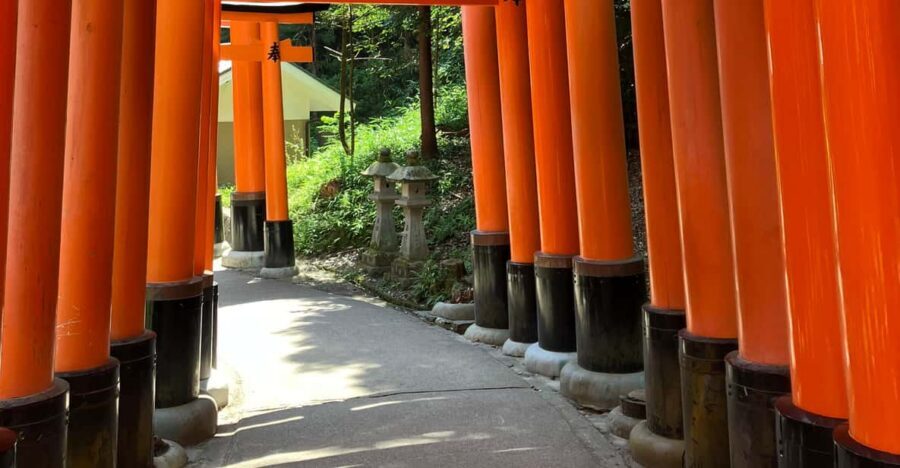
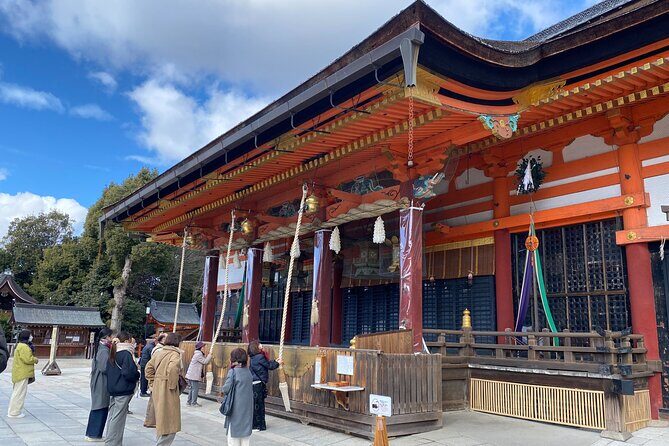
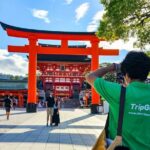
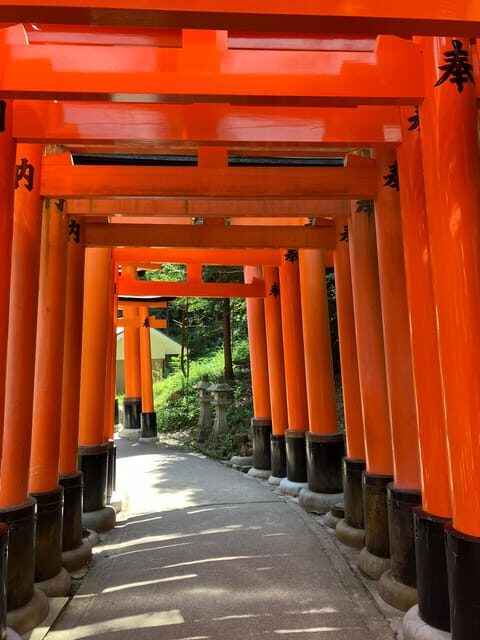
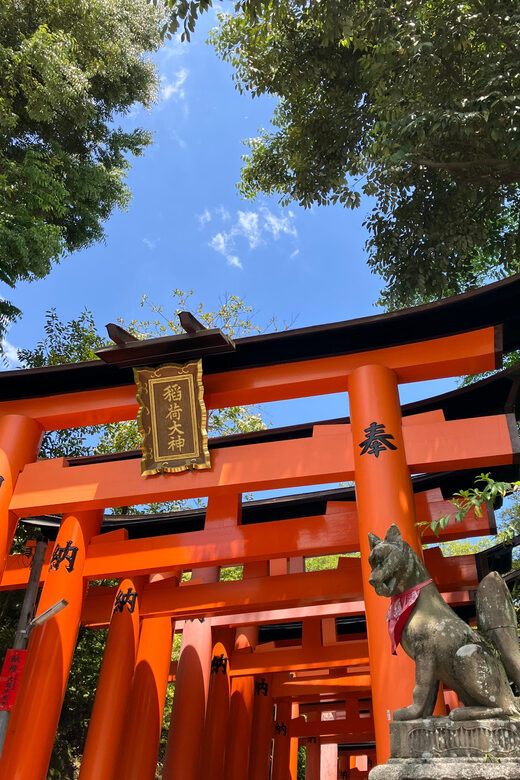
Fushimi Inari Taisha is one of those places where your first thought is visual: thousands of bright red torii gates climbing along sacred paths. But the longer you’re there, the more the meaning starts to land, especially with a guide beside you.
Your guided time here is about 1 hour, and the tour is designed around the spiritual atmosphere. The shrine is dedicated to the god of rice and business prosperity, and the walking routes up Mount Inari connect to that pilgrimage feeling. You’ll also hear why the fox statues matter and how they appear throughout the complex.
Here’s what a good guide changes in this kind of place: you stop treating it like a photo line and start treating it like a route with a purpose. Your guide will point out details on the winding paths and share the shrine’s significance so you’re not just staring at gates and hoping it all makes sense.
Practical tip: bring water and comfortable shoes, because the torii areas can add up fast even if you’re only walking for an hour. Also pack sunscreen. Kyoto sun can feel sneaky, and you’ll want to keep your energy for the return and the next part of the day.
One more consideration: Fushimi Inari is a place where crowds can gather. Going with a private guide helps you move with intention, rather than getting stuck in the loudest patch of foot traffic.
Arashiyama Bamboo Grove: serene timing, photo light, and quiet stories
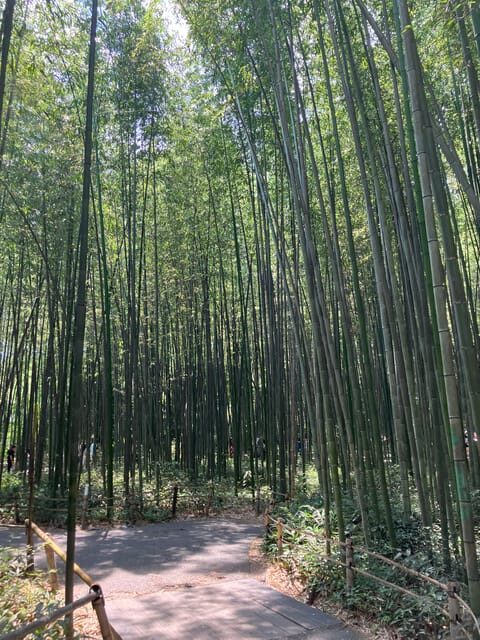
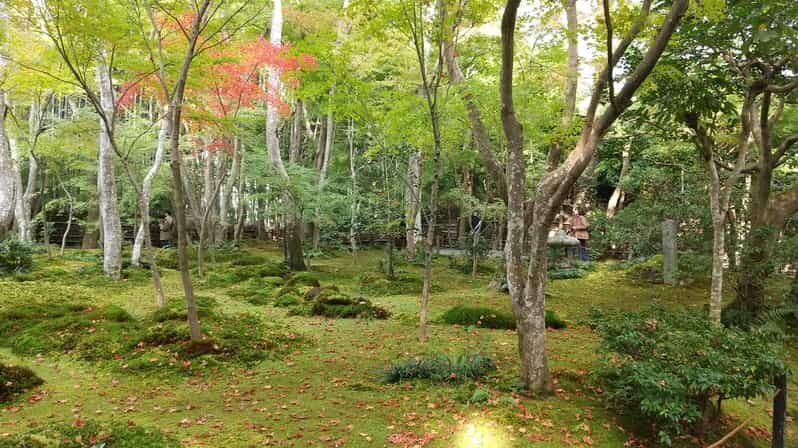
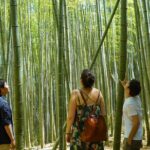
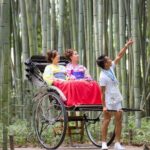
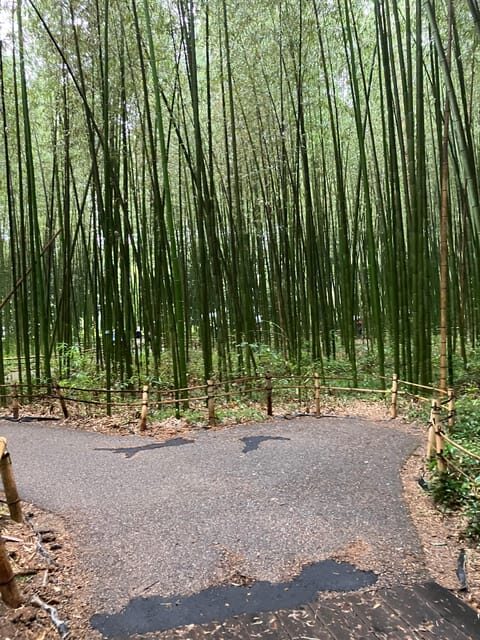
After Fushimi Inari, you head west to Arashiyama, where your second guided stop is the Bamboo Grove for about 1 hour. The grove has a different energy than the shrine: the tall stalks create a shaded hush, and the light filters through the plants in a way that makes even simple photos look cinematic.
Your guide leads you through peaceful paths rather than just depositing you at the entrance. That matters because the difference between a good photo and a great one is often where you pause and how you walk through the space. With guidance, you’ll spend more time actually enjoying the grove instead of constantly repositioning.
You’ll also get stories about Arashiyama’s role as a retreat for Kyoto’s aristocracy in earlier times. Even without turning it into a lecture, those context points make the district feel less like a tourist set and more like a place with a past tied to calm and escape.
The tour doesn’t stop at bamboo only. You’ll have a chance to explore the surrounding Arashiyama area, and the guide can help you fit that wandering to your mood—more quiet and slow, or more district browsing.
If you’re planning your camera strategy: consider shooting in short bursts. In a forest path, you’ll often want to step aside, let others pass, and reset your shot before the next angle.
What the “flexible itinerary” actually means on the ground
This tour is labeled flexible, and you’ll feel it most through your guide’s pacing and small route choices. Instead of a rigid script, the guide can tailor the day to your preferences within the time available.
That flexibility is especially useful if your interests are skewed. If you love Shinto symbolism, you’ll likely want a bit more time soaking in the shrine details and fox statues. If you care more about atmosphere and photos, you’ll benefit from guidance that helps you move through Arashiyama at a comfortable pace.
Start time flexibility is also mentioned. If you have a request or a question, the guide notes they’ll do their best to be flexible with itinerary and start time, but same-day changes may be difficult—so ask early when possible.
One more thing I appreciate: the tour format is private, so you’re not stuck merging your pace with a large group. That makes a big difference at places where you might want to pause, look longer, or take fewer photos and just enjoy being there.
Cost and value: what $135 gets you (and what to budget for)
The price is $135 per person, and the value comes from the mix of guide time and convenience. You’re getting a private guided tour covering two major sites, plus hotel pickup and drop-off in Kyoto, which is a real time-saver in a city where transit and walking add up quickly.
The tour duration is also relatively tight, which helps value if you’re doing Kyoto as part of a longer itinerary. You’re not paying for a half-day of waiting around; you’re paying for two guided blocks plus the structured travel between them.
One key budget note: transportation costs are not included. Even though the plan lists train travel time, you should assume you’ll pay for transit separately. This can change the all-in total depending on where you’re starting and how the pickup/drop-off option is set.
So the practical way to look at it is this: you’re paying for a guide and logistics that remove friction. If you were to do this on your own, you’d likely spend your own time figuring out routes, then spend time re-orienting mid-day when you get tired or want to change plans.
A few more Kyoto tours and experiences worth a look




A walking day: what to bring and how to stay comfortable
Even though the schedule is short, you’re moving through two different types of terrain: shrine paths and wooded paths in the bamboo area. That’s why the simple packing list matters.
Bring:
- Comfortable shoes (non-negotiable)
- Camera (you’ll want it for both torii framing and bamboo light)
- Sunscreen (Kyoto sun can catch you)
- Water (you’ll appreciate it at the point you’re ready to slow down)
The tour also states no smoking, which is easy to follow and usually not a problem at these sites. If you’re sensitive to heat, aim to carry water and take a slower pace in the mid-day sun.
And again: this is not suitable for wheelchair users. If accessibility is a concern, you’ll want a different format or an alternative route that’s designed for mobility needs.
Who this tour fits best (and who should think twice)
This is a strong match if you want iconic Kyoto with context and without the stress of transit planning. A private guide is perfect when you care about meaning—like understanding what you’re looking at in Shinto spaces—and when you want help choosing where to spend your limited time.
It’s also a good fit if you like photography but don’t want to treat the day like a scavenger hunt. The bamboo grove portion is made for calm pacing and better pauses, not just quick snapshots.
Think twice if you have limited tolerance for walking, uneven ground, or if wheelchair accessibility is required. Also consider that the tour is about 3.5 hours, so if you want long free time to linger in cafes or do extra Kyoto neighborhoods, you’ll need to add that on your own after.
Should you book this Kyoto Essential Tour with Fushimi Inari & the Bamboo Grove?
I’d book it if you want a simple, well-timed way to cover both Fushimi Inari Taisha and the Arashiyama Bamboo Grove with a private guide and hotel convenience. The best reason is that the guide turns two “famous sights” into two places you understand while you’re still there—especially with Shinto explanations and the fox statue context at Fushimi Inari.
I’d skip it if you’re determined to self-guide everything and you already know how you want to route through the shrine complex and bamboo area. In that case, you might prefer spending your money on more time, not on guide time.
Based on the high rating (and my own experience with Masa’s helpful, friendly approach), this is the kind of tour that makes Kyoto feel manageable without flattening the experience into a checklist.
FAQ
How long is the Kyoto tour?
The duration is listed as 210 minutes (about 3.5 hours).
Is this a private tour?
Yes. It’s listed as a private group tour with a live guide.
What language is the guide?
The live tour guide is available in English and Japanese.
Does the tour include hotel pickup and drop-off?
It includes hotel pickup and drop-off in Kyoto. The activity also lists Osaka as a possible pickup and drop-off location option.
Are meals included?
No. Meals are not included.
Is the tour suitable for wheelchair users?
No. The tour is not suitable for wheelchair users.