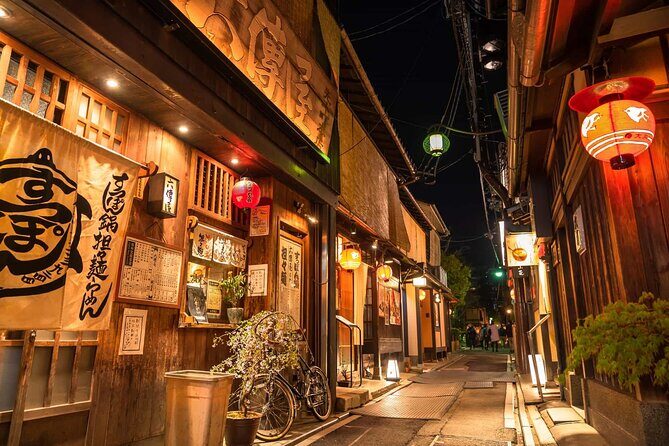
Kyoto after dark has a softer rhythm, and an e-bike is the easiest way to feel it. I love how this ride combines temples, canals, and lantern-lit streets with an actually manageable pace, and I also like that the stops are short enough to keep the night moving without rushing you. The biggest consideration is simple: this tour depends on good weather, and you’ll be cycling in the evening air.
You’ll start with a quick orientation on cycling hand-signs and safety, then roll through Kyoto on small-group energy (max 5). For couples, this feels like a date with built-in stops; for families, the assist from the e-bike can make a night tour feel doable. Children under 10 can join if they’re at least 140 cm and can ride a bicycle, and it’s the same fee as adults.
In This Review
- Key points to know
- Why Kyoto at night feels different on electric wheels
- Price and value: what $117.28 buys you in real time
- Getting ready to ride: meeting at Thousand Kyoto and learning the hand-signs
- Stop-by-stop: from Seikouin Wagatazizou to Nishi Hongan-ji’s quiet grandeur
- Shirakawa Canal and Shomen-dori: where old Kyoto meets neon-era reminders
- Nanzen-ji area and the Lake Biwa Canal system: water engineering in moonlight
- Heian Shrine and the Kamo River cool-down: big torii energy to a calm finish
- Small group pacing: why the tour feels calm even when it’s covering a lot
- Practical tips so the night ride feels effortless
- Who this Kyoto at night e-bike tour is best for
- Should you book? My honest take
- FAQ
- How long is the Kyoto at Night e-bike tour?
- Where do I meet and where does the tour end?
- What is included in the tour price?
- Are admission tickets required for the stops?
- Can children join?
- What is the group size?
- What happens if the weather is bad?
Key points to know
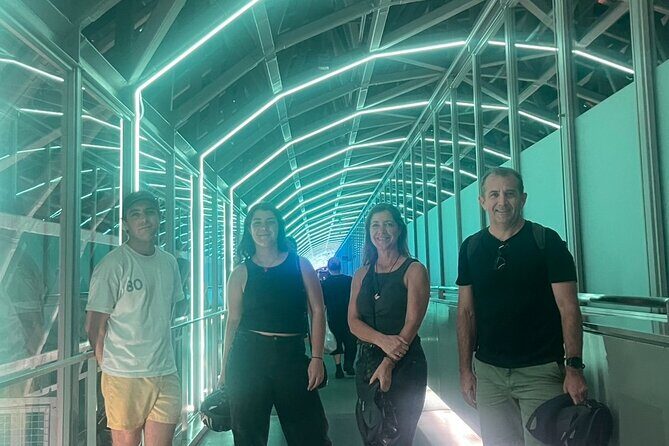
- Easy e-bike format for a night ride that’s friendly for many fitness levels
- Small group size (max 5) that keeps the pace calm and personal
- Clear safety briefing including cycling hand-signs before you move out
- Night stops with real texture: Hongan-ji, Shirakawa Canal, Nanzen-ji area, Heian Shrine, and the Kamo River
- Cooling break by the river so you can reset your legs and feel the evening air
- Mandarin and Japanese-speaking guide (Yuki is a name that shows up often)
Why Kyoto at night feels different on electric wheels
Kyoto’s daytime is famous for intensity: lines for famous gates, slow movement through hot neighborhoods, and lots of people around the same few photo spots. At night, the vibe changes. Streets get quieter, temple grounds look more dramatic with lighting, and the “texture” of daily Kyoto shows up more clearly when the sun is gone.
An e-bike helps you keep that feeling. You’re not spending the evening working hard to cover distance or climb hills. Instead, you can focus on the moments that matter: the slow turn into an alley, the way a canal edge reflects light, and how the city sounds when traffic thins.
Other cycling tours in Kyoto


Price and value: what $117.28 buys you in real time
At about $117.28 per person for roughly 3 hours, you’re paying for more than a bike rental. The value is the combination of guide time + equipment + curated night routing through major Kyoto sights.
Here’s what’s included:
- A cycling guide (with Mandarin and Japanese)
- An installed bicycle helmet
- Use of the e-bike
- A mobile ticket for your booking
Also, many of the stops list admission as free, so you’re not layering on extra site fees at each photo stop. The trade-off is that the time at each spot is brief (often around 10–20 minutes), so this is best for people who enjoy “see it, photograph it, learn a little, move on.”
Getting ready to ride: meeting at Thousand Kyoto and learning the hand-signs
Your tour begins back at the Thousand Kyoto area, at 570 Higashishiokōjichō in Shimogyo Ward. You meet at a share-cycle Clew port located in front of Seikouin Wagatazizou (behind the hotel). Plan on arriving a few minutes early so you can settle in without stress.
The first phase is practical. You get a briefing focused on:
- How to use the e-bike
- Cycling hand-signs
- Basic safety so you know what to expect in traffic-adjacent streets
This matters more than it sounds, especially at night. When visibility drops, clear hand signals prevent confusion at turns and stops. The e-bike takes care of power, but the guide takes care of flow.
Stop-by-stop: from Seikouin Wagatazizou to Nishi Hongan-ji’s quiet grandeur
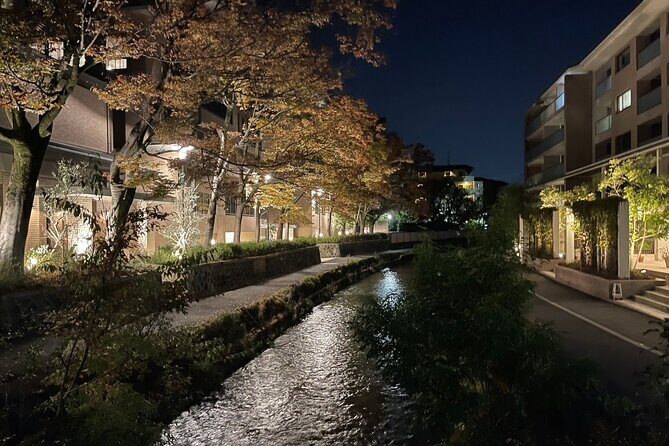
Stop 1 is essentially your launch point. Before you go sightseeing, you’ll match the rhythm of cycling at night—getting comfortable with controls and lane awareness—while the guide explains how the ride will work.
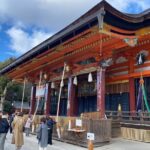
Then you move to Nishi Hongan-ji Temple (the Western Hongan-ji). This place is well known for its historical buildings, including registered World Heritage structures. At night, these kinds of sites feel less like a checklist and more like a calm, enclosed world.
What I like about this first temple stop is the contrast. You’re not just passing through a lit landmark—you’re getting a real “pause and look” moment. The downside is that you should expect a quick visit window rather than a long wander.
Shirakawa Canal and Shomen-dori: where old Kyoto meets neon-era reminders
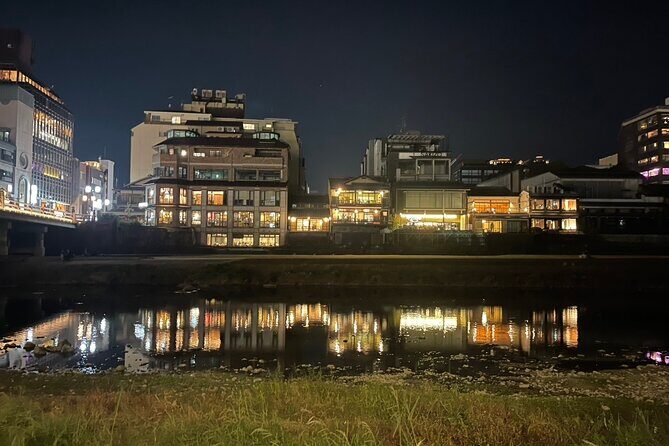
Next comes Shirakawa Canal, known for the old riverside atmosphere and the traditional feel of streets and buildings lining the water. It’s a classic Kyoto vibe: quiet, reflective, and made for slow glances and simple photos.
After that, you roll through Shomen-dori Street, where a huge historic building stands out. You’ll pass the old headquarters of Nintendo, which adds an unexpected angle to a night ride. It’s a reminder that Kyoto isn’t only temples and tradition—it’s also a modern city with layers.
For this part of the tour, consider what you want from the photos. The canal and riverside scenes are often best from an angle rather than a head-on shot, so ask the guide when you might have the cleanest viewing spot.
Other evening experiences in Kyoto




Nanzen-ji area and the Lake Biwa Canal system: water engineering in moonlight
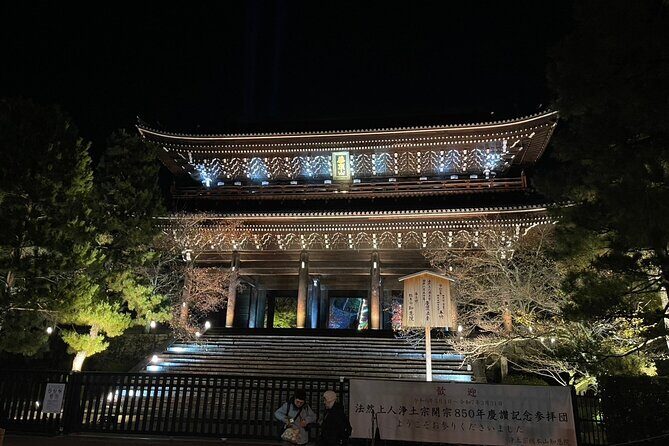
Stops 5 through 7 cluster around the Nanzen-ji area and the waterway network associated with the Lake Biwa Canal. You’ll stop at points like 13 Nanzenji Fukuchichō, 17 Nanzenji Kusakawachō, and 86 Nanzenji Fukuchichō, where the ride passes along the canal-linked structure that historically helped connect Kyoto with water from Lake Biwa.
This is one of the more interesting stretches because the scenery is not just “pretty.” You get a sense of how Kyoto developed—through smart water management designed to handle elevation changes. On a night bike ride, those details can feel more tangible because you’re moving alongside the structures rather than only looking at them from a distance.
Then you reach Nanzen-ji Temple, regarded as special among the Five Mountains of Kyoto. You’ll have time around the main temple and gate, and this stop works especially well at night when the architecture reads clearly under lighting.
The possible drawback here is emotional, not physical. If you’re chasing only “famous postcard Kyoto,” the canal/engineering explanation may feel like a detour. If you like understanding why places look the way they do, it’s a standout moment.
Heian Shrine and the Kamo River cool-down: big torii energy to a calm finish
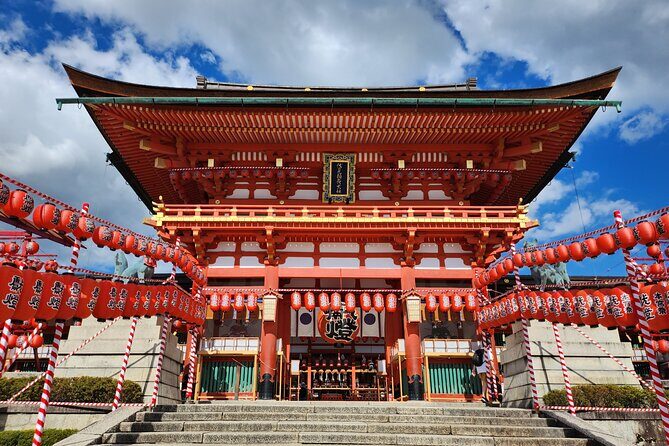
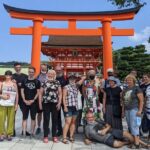
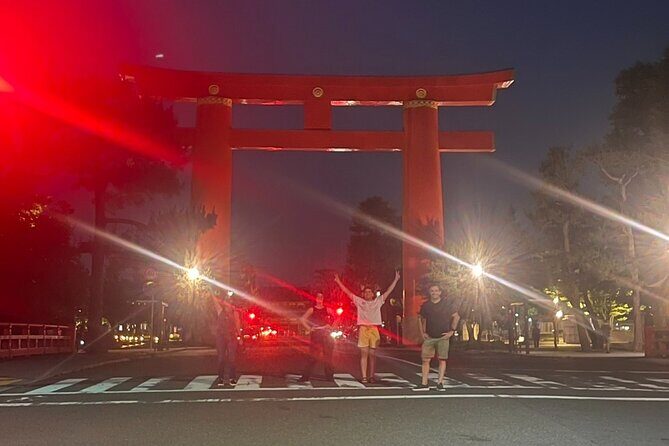
Stop 8 is Heian Shrine at 97 Okazaki Nishitennōchō. The headline feature is the large red torii gate, framed in a way that’s very photogenic after dark. You’ll also learn the shrine was established to commemorate the transfer of the capital to Heian-kyo, tied to the 1100th anniversary and associated with Emperor Kanmu.
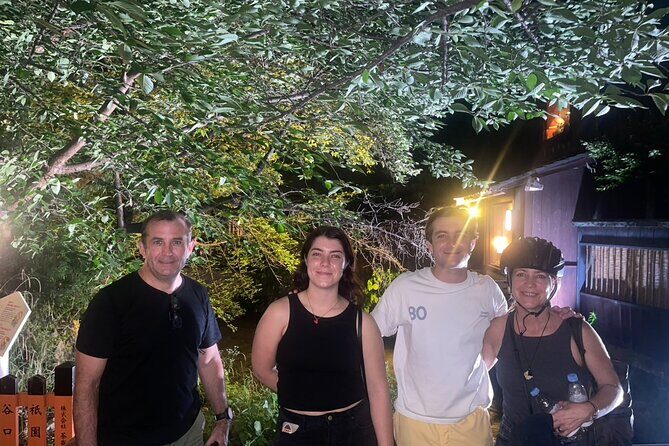
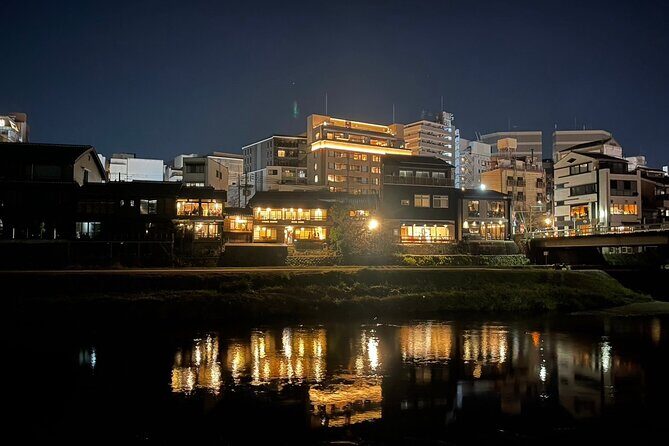
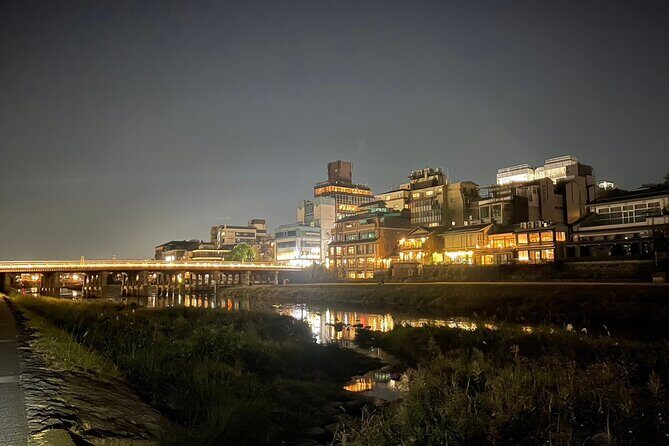
From there, the tour heads to Hokodencho, where the focus shifts to the Kamo River. You’ll get a short moment to relax in the riverbed area, or ride along the riverbank. Then there’s a chance to put your feet in the water to cool down.
That river “reset” is a smart move for a cycling tour. It lets you stop being in mode (bike-brain) and just feel the night air. It’s also a simple way to stay comfortable if Kyoto’s evening humidity clings around.
The tour ends back at 570 Higashishiokōjichō, and you’re free to explore on your own afterward.
Small group pacing: why the tour feels calm even when it’s covering a lot
With a maximum of 5 travelers, the ride stays easier to manage than larger group tours. In practice, it means:
- You can hear the guide without straining
- You’re more likely to stop for photos when the light is right
- The route tends to feel smoother rather than chaotic
The tour also keeps time windows reasonable: most stops run about 10–20 minutes, and you’re not stuck waiting forever at each location. The total duration is about 3 hours, which is long enough to feel like a real night outing, but short enough that you won’t feel drained.
Practical tips so the night ride feels effortless
You’re on an e-bike, so you won’t need “training wheels” energy. Still, a few small choices will make the experience better:
- Wear light layers. Even if Kyoto feels warm in the day, evenings can cool quickly.
- Bring a phone strap or secure grip if you plan to take photos while stopped. At night, you don’t want to juggle gear while remounting.
- Plan for photos at the stop, not during movement. The safest habit is to cycle first, then shoot once the guide signals you’re ready.
- If you’re sensitive to darkness, sit toward the middle of the group. You’ll benefit from the visible flow of the riders in front and behind.
- For the river stop, bring quick-dry footwear or be ready for wet feet when you cool down.
Who this Kyoto at night e-bike tour is best for
This experience fits a wide range of people, mainly because it’s designed around an easy e-bike pace and short stop windows.
It’s a great match if you:
- Want Kyoto at night without long walking
- Prefer a guided night route with explanation at the main sights
- Like calm, small-group atmosphere rather than large tours
It’s also a nice choice for families who can meet the child height requirement (140 cm) and are comfortable riding a bicycle. For couples, the combination of canals, temple lighting, and river air feels especially romantic in a low-key way.
Should you book? My honest take
If you want Kyoto after dark but don’t want to spend hours navigating and guessing where to go, this tour is a strong option. The price makes sense because you’re getting more than a bike: you’re getting a guided route, a safety briefing, and multiple meaningful night stops in one smooth session.
Book it if you enjoy:
- short guided pauses
- photo-friendly stops
- a small-group feel
Skip it if you need long time at each temple or if you’re only interested in slow, deep wandering with no cycling between sites. And if the forecast looks rough, remember the tour requires good weather, so you’ll want flexibility.
FAQ
How long is the Kyoto at Night e-bike tour?
It’s about 3 hours total.
Where do I meet and where does the tour end?
You meet at 570 Higashishiokōjichō, Shimogyo Ward, Kyoto, at the Clew share-cycle port in front of Seikouin Wagatazizou (behind the hotel). The tour ends back at the meeting point.
What is included in the tour price?
You get a cycling guide, an installed cycling helmet, use of the bicycle (e-bike), and a Mandarin and Japanese-speaking guide. You also receive a mobile ticket.
Are admission tickets required for the stops?
The tour information lists admission as free at the stops shown, so you should not expect to buy separate entry tickets for those locations as part of this experience.
Can children join?
Yes. Children under 10 can participate if they are at least 140 cm tall and can ride a bicycle. The fee for children is the same as for adults.
What is the group size?
The maximum group size is 5 travelers.
What happens if the weather is bad?
This experience requires good weather. If it’s canceled due to poor weather, you’ll be offered a different date or a full refund.