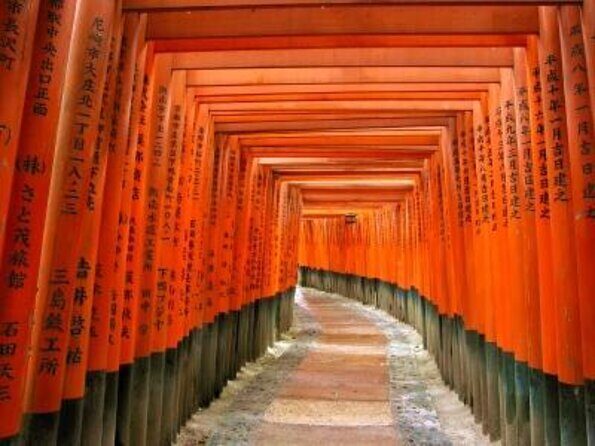
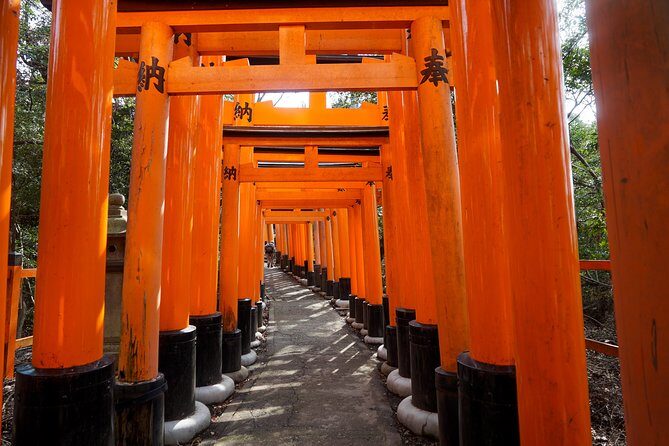
Skip the crowds at Fushimi Inari. This guided hike takes you off the main paths so you can approach the famous orange torii gates with breathing room, plus a calm bamboo forest detour and viewpoints up high.
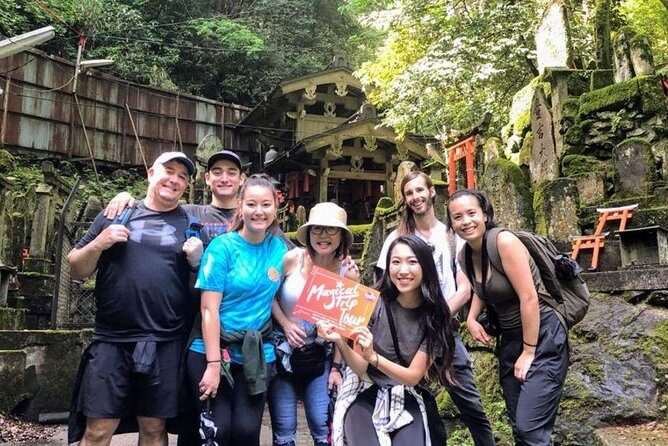
I especially like the small group size (max 7) and the way the guide keeps navigation stress-free while you’re walking on real mountain trails. One thing to consider: this is not a casual stroll—expect a moderate 7km hike with some slippery ground and bugs, so bring the right gear.
Key highlights you’ll feel on the hike
- Small group max 7 so you can actually ask questions and adjust pacing
- Hidden forest route that helps you avoid the busiest tourist flow
- Natural bamboo forest + a small Inari shrine off the usual path
- Views toward Fushimi-Momoyama Castle from up on the mountain
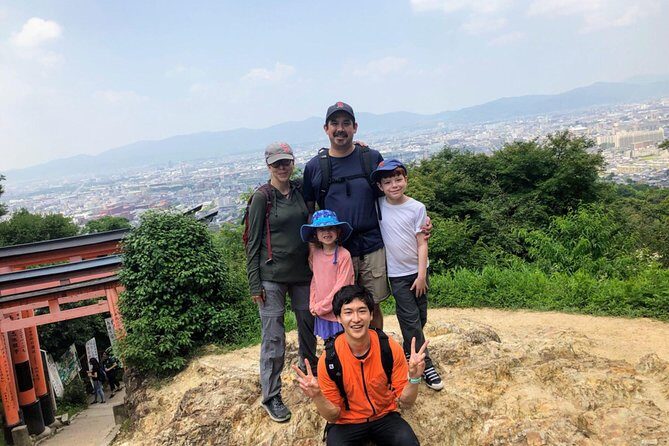
- Guide-provided tour photos so you’re not stuck setting up your phone every few minutes
- Comfortable shoes matter: the ground can be slippery and the trail has some effort
Fushimi Inari feels totally different when you walk up the mountain
Fushimi Inari-Taisha is famous for a reason: torii gates and fox motifs show up everywhere, and the whole place can feel like a living photo backdrop. The problem is simple—everyone wants the same front-door route.
This tour changes the angle. You start by heading toward the shrine area, then work your way up through less-used trails where the noise drops and the greenery takes over. You’re still going to the main icon spots, but you approach them from the back/upper side, so it feels calmer and more scenic than the bottom crowds.
Also, you’re not just chasing sights. You’re walking through spaces that feel more like everyday Kyoto—forest paths, narrow stretches, and side shrines that don’t make it into everyone’s quick itinerary.
A few more Kyoto tours and experiences worth a look

Starting from FamilyMart Nakai Tofukuji and getting your bearings fast
Your meeting point is FamilyMart Nakai Tofukuji (12-chōme-232 Honmachi, Higashiyama Ward, Kyoto). The end point is at Fushimi Inari Taisha (68 Fukakusa Yabunouchichō, Fushimi Ward), in front of the main shrine area.
Why that matters: Fushimi Inari is a place where one wrong turn can turn a “short hike” into a long detour. A certified guide by MagicalTrip handles the navigation, which means you can focus on the walk and the sights instead of trying to line up map pins while climbing.
One extra perk: many guides also take care of photo moments during the route, so you’re not just wandering with your phone out. And with a max group size of 7, the guide can keep everyone together without rushing you.
Passing Tofuji and easing into the quieter route
Early on, you’ll pass Tofuji and then head toward Fushimi Inari Taisha. This is a practical setup step: it gets you into the right area before the shrine complex turns into a human traffic jam.
Think of it like warming up your day. You’re not thrown immediately onto the hardest-looking parts of the hike, and you get time to settle into the rhythm of walking—especially if you’re coming from central Kyoto and still have travel legs.
The main hike: Fushimi Inari-Taisha’s hidden trail, bamboo, and a side shrine
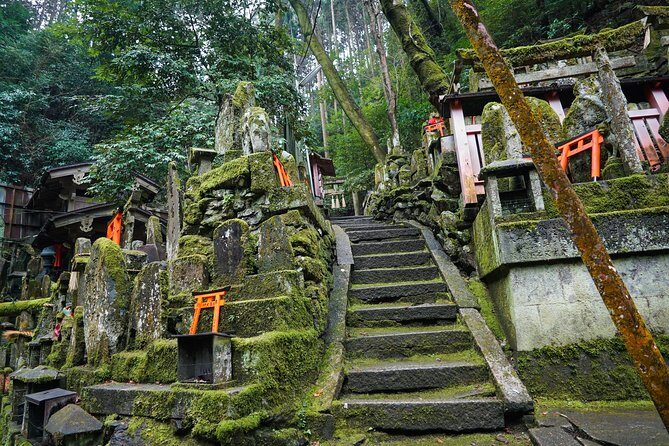
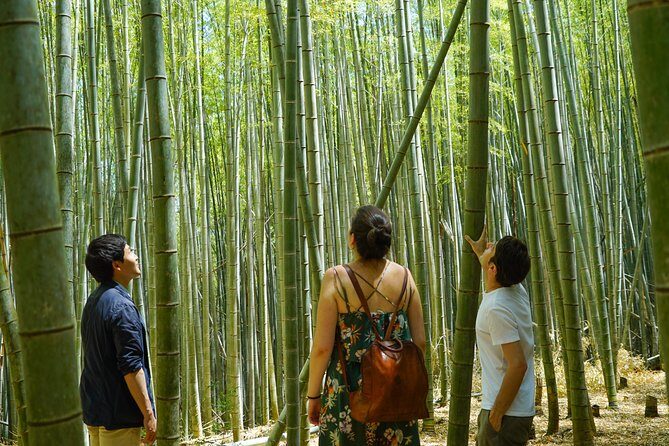
This is the heart of the experience. You’ll hike up the mountain through a hidden trail, crossing a narrow mountain path where a natural bamboo forest appears. That bamboo section is one of the best “wait, wow” moments here—cooler air, quieter steps, and a visual break from the orange torii overload.
On the way, you’ll also see a small Inari shrine that’s hidden from the usual tourist flow. That kind of stop changes the whole feel of Fushimi Inari. Instead of just photographing gates, you’re noticing the smaller, more personal layers of the place—how the shrine network works and why these routes exist beyond the main loop.
What makes the climb feel real (and not scary)
The tour is described as not super difficult, but it isn’t simple walking. You’re looking at roughly 7km total, and it takes effort. Some trails include stairs and tighter passages, and one consistent theme from guide performance is pacing—guides regularly take stops and can add extra breaks if you need them.
Also: the ground can be slippery. That’s not a “maybe.” It can be wet from weather patterns, shade, or just the mountain trail conditions. Bring shoes with good grip, and don’t do the sneaker-flex thing like you’re training for Tokyo Marathon. Just walk like you mean it.
Other private tours in Kyoto


Taking in the view: Fushimi-Momoyama Castle from above the torii gates
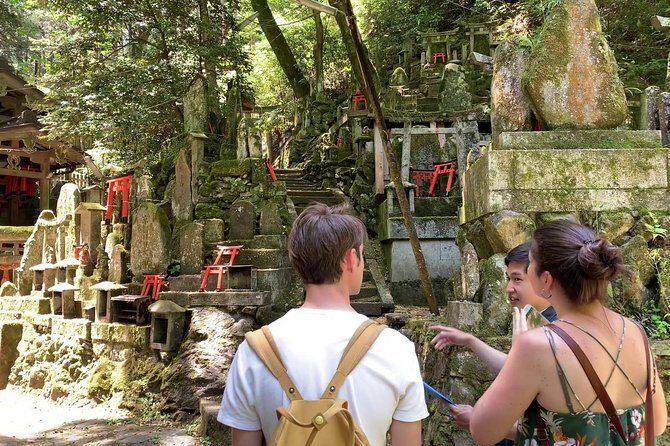
After enjoying the view from the top of Fushimi Inari, you’ll see Fushimi-Momoyama Castle viewpoints. The connection here is historical: the castle was built by Hideyoshi and rebuilt by Ieyasu.
You may not see the castle up close, but the value is in the perspective. Being higher changes how you understand Kyoto’s layout—and it gives you a break from the shrine gate pattern so your eyes can reset.
This is also a nice “reward moment.” The hike has a steady pull upward, then you get a view that feels like the day finally opened up.
Why guides’ photo stops are a real value
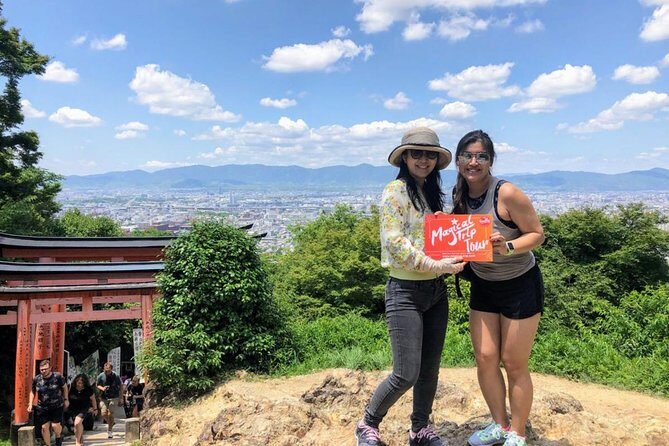
Tour photos during the hike are included. That might sound like a small perk, but it’s practical in Kyoto.
Fushimi Inari has loads of sight lines—torii gates, forest shadows, and narrow paths that look great in pictures. If you’re hiking with friends, one person always becomes the photographer. With a guide doing photo moments, you get better shots without losing the flow of the hike.
It also helps you capture the “in-between” scenes: bamboo forest angles, a side shrine tucked away, or the moment you’re approaching gates from a quieter direction.
In addition, you’ll see a wide range of guide styles. Names that have shown up include Emi, Skito, Shin, Naru, Matt, Yuko, Josh, Usuke, Hina, Duncan, Mat, and Yukari. Even when personalities differ, the consistent pattern is clear: guides explain what you’re seeing and keep the pace comfortable.
How the group size changes everything on a trail
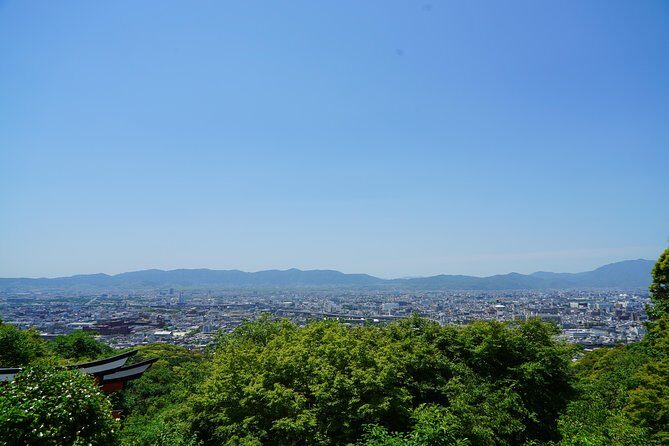
Max 7 travelers means your group isn’t stuck in a long line. It also means the guide can answer questions without shouting over ten languages and twenty selfie sticks.
This is where the “small-group” idea earns its money. On a famous shrine hike, crowds can block your view at the exact moment you want the photo. Here, the route plan and pacing aim to reduce that.
You’ll still meet people near the gates—this is Fushimi Inari—but you’re more likely to get quieter sections and calmer approaches, especially on the mountain side.
What to wear and pack for this 7km, slippery, bug-prone hike
If you do just one thing right, do this: pack like you’re going on a real trail walk, not a temple stroll.
- Wear shoes with good grip. The ground can be slippery.
- Bring long sleeves and long pants. Mosquitoes and bugs are a real possibility because you hike in forest/mountain areas.
- Summer can be hot and humid. Bring water and a hat to help prevent heat stroke.
- If it’s buggy, consider mosquito repellent. One helpful hint that comes up again and again is using it before the forest sections.
And if it’s raining: the tour depends on good weather. Still, expect wet conditions to affect trail footing. A sturdy shoe beats style points here.
Price ($63.14) and whether this is worth it
At $63.14 per person, you’re paying for three things you’d struggle to replicate alone: navigation support, crowd-avoidance strategy, and structured access to quieter parts of the shrine area.
If you go on your own, you can absolutely hike around Fushimi Inari. But you’ll likely spend time second-guessing route choices, missing side shrines, or hitting peak crowd walls when you reach the gates.
Here’s the value math that makes sense for most people:
- Guide time + route planning saves you energy and reduces confusion
- Small group size improves the experience quality, not just the comfort
- Included photos remove a hassle that can ruin the walk
If you love hiking and want a calmer, more “local-feeling” route, this pricing usually lands in the good-value zone for Kyoto.
Also, a private option is available, which can be a great fit if you want quieter pacing, a more custom route emphasis, or you’re traveling with family and need flexibility. (You’ll want to confirm private details when booking, since only the option type is stated here.)
Who should book this hike—and who should skip it
This tour fits best if you:
- enjoy walking/hiking and don’t mind uphill sections
- want Fushimi Inari with fewer crowds and more forest scenery
- like having a guide explain what you’re seeing as you walk
It may not fit if you:
- struggle with moderate hikes or have limited mobility, since it’s around 7km with a bit of effort
- don’t want to deal with slippery terrain and insects
One nice detail: guides take regular stops, and they can do extra stops if needed. That flexibility helps, but you still need to be prepared for a mountain-style walk.
Should you book the Fushimi Inari Hidden Hiking Tour?
Book it if your main goal is not lining up with the biggest crowd lines. This tour is built for people who want the torii gates, but also want the quiet approach, the bamboo forest, the side shrine, and the calmer feel of being up on the mountain.
Don’t book it if you’re looking for a totally easy, flat, “temples-only” wander. You’ll be walking uphill with real trail footing and some steps.
If you’re the type who gets restless when a place feels packed, this is one of the better ways to experience Kyoto’s most famous gate system—with a guide, a small group, and a route that actually changes what you see.
FAQ
How long is the Fushimi Inari Hidden Hiking Tour?
It runs about 3 hours (approx.).
How far do we hike?
The hike is listed as about 7km in total.
Is this tour easy walking?
It’s not super difficult, but it’s not a simple walk. It’s recommended for people with moderate physical fitness, and there can be some uphill and steps.
What should I wear?
Wear shoes with good grip because the ground can be slippery. Long sleeves and long pants are strongly recommended for mosquitoes and bugs.
Are food and drinks included?
No. Drink and food are not included.
Is an admission ticket required for Fushimi Inari?
Admission ticket for the Fushimi Inari-Taisha stop is listed as free.
How many people are in the group?
The tour has a maximum of 7 travelers.
What happens if the weather is poor?
The experience requires good weather. If it’s canceled due to poor weather, you’ll be offered a different date or a full refund.
Can I cancel for free?
Yes, free cancellation is available up to 24 hours in advance for a full refund.