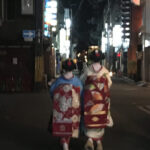
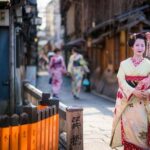
Geisha stories make Gion click at night. This walk takes you through Kyoto’s famous Gion district after the day crowds thin out, when lantern light and quieter streets make the area feel more understandable. I like how the tour uses the neighborhood itself like a living classroom, not a theme park.
I love the max 15 people group size. It stays conversational, and you get room to ask questions that show up in the details—geiko versus maiko, how appointments work, and what different buildings are telling you. I also love the stop-by-stop storytelling approach, with guides such as Shin, Deborah, and Melanie praised for making the connections clear and keeping things friendly and easy to follow.
One thing to plan for: it’s a night walk, and Kyoto weather can turn sharp. Bring warm layers, and note that bottled water is not included, so you’ll want to handle your own refresh breaks.
Key highlights at a glance
- After-dark timing in Gion so the streets feel calmer and more real
- Small-group cap of 15 for questions and a smoother pace
- Kabuki and geisha crossovers through key performance landmarks
- Hanamikoji Street at the right hour for better atmosphere and photos
- Gion Corner stop for a condensed taste of traditional arts
- Yasaka Shrine as a cultural reset before the walk ends
After-Crowd Gion at Night: Why This Walk Feels Different
Gion in daylight can feel like you’re watching a movie scene from behind glass. This tour changes the angle. You go after dark, when foot traffic eases and the district’s shapes—narrow streets, old machiya townhouses, and lantern-lit corners—start to explain themselves.
What I like most is that the guide isn’t just pointing at pretty buildings. You’re given context for what you’re seeing and why it mattered, including the world of geisha and the training tradition that feeds into it. Guides are repeatedly praised for answering questions clearly, and that matters because geisha culture can feel complicated at first.
The vibe is respectful, not sensational. You’re not there to hunt for performers. You’re there to understand the neighborhood and the art forms connected to it.
A few more Kyoto tours and experiences worth a look

The Small-Group Advantage (Max 15) for Real Questions
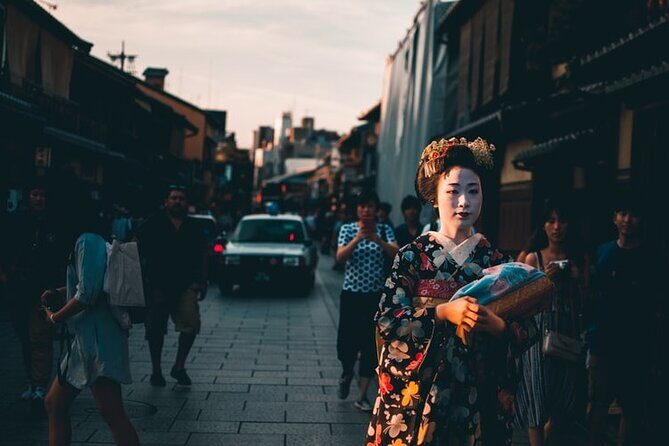
With a group capped at 15, you get a tour that feels more like a guided walk with a good teacher than a long line through landmarks. That small size shows up in pacing. Stops don’t feel rushed, and you can ask follow-ups without the guide having to flatten everything into sound bites.
In the guide lineup, names like Shin, Deborah, Joy, Nami, Kenji, and Ben come up again and again in the way people describe the experience: friendly, helpful, and ready to explain the smaller details. One review even called out the guide’s ability to connect the district’s hidden codes—the little rules and signals that shape life in the flower towns—to what you can actually see on the street.
If you want a first-pass orientation to Kyoto’s culture that doesn’t read like a textbook, this format works well. It’s also a strong choice if you’re traveling with mixed ages, since the tone stays accessible and the walking is short enough to manage.
The Basics That Affect Your Comfort: 2 Hours, Night Timing, and $25 Value
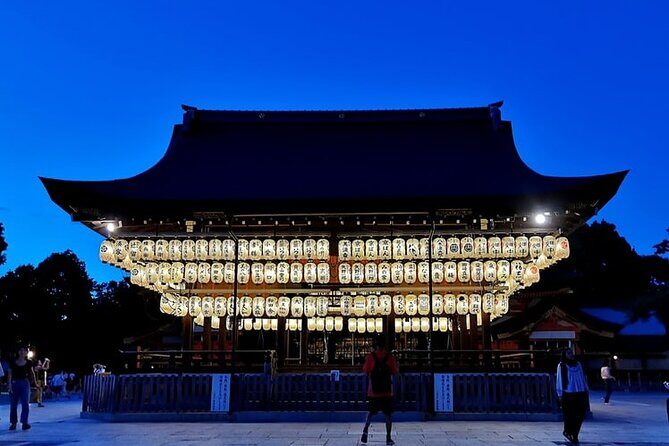
This is a 2-hour walk. The route is built around a handful of high-meaning stops, not a marathon. That matters because you’ll spend your energy on understanding rather than just covering ground.
For the price—$25 per person—you’re paying for two things that add up fast: a guided interpretation of Gion’s landmarks and an after-dark experience that’s harder to assemble on your own. Even if you know the big sights, a good guide helps you notice what you’d otherwise miss, like which performance traditions connect to certain locations, and how the district’s layout relates to its history.
Also: you don’t get bottled water. That’s not a dealbreaker, but in winter it matters. Several people noted how chilly it can be, and you’ll feel that too if you dress for daytime walking and not for evening temperatures.
Stop 1: Izumo-no-Okuni Statue in Gion and the Kabuki Origin Story
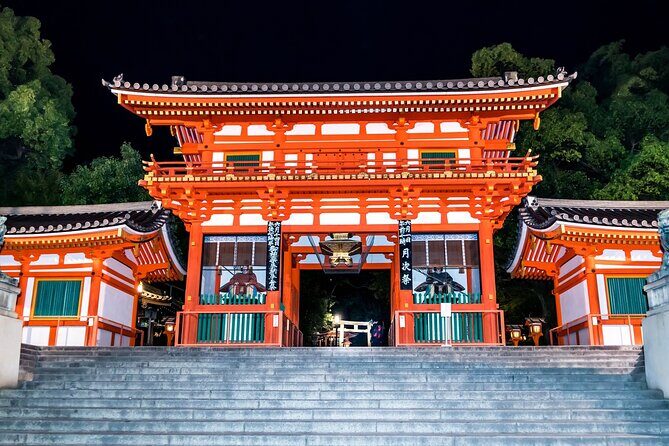
Your first stop is the Statue of Izumo-no-Okuni. This is one of those “wait, that’s connected?” moments. Okuni is remembered as a legendary figure often credited with founding kabuki theater. In other words, you’re starting the night with performance history, before you even hit the most famous street scenes.
Why this matters for your understanding of geisha culture: the arts in Kyoto aren’t separate boxes. Theater traditions, entertainment history, and the social world of performers overlap in how people lived, worked, and gathered. Starting at Okuni’s statue gives you a base point, so later explanations about culture and refined performance land with more meaning.
The stop is quick—about 10 minutes—and it doesn’t require any special entry fee. You’re basically getting the story and then walking onward with a new lens.
Practical tip: use this early moment to get oriented mentally. Ask your guide how to recognize the difference between what you see as a visitor and what people in that world would have understood right away.
Stop 2: Minamiza Theater (Kabuki’s Home Base)
Next comes Minamiza, a historic theater in Kyoto known for kabuki performances. Even if you’re not planning to see a show, this stop helps you connect the dots between Gion’s entertainment ecosystem and the broader performance arts of Japan.
Kabuki is famous for dramatic storytelling and elaborate costumes, and Minamiza represents that tradition in a concrete way. The value here isn’t just the building. It’s the cultural bridge your guide builds: why a performance space belongs in the same story as the entertainment district you’re walking through.
A theater stop also changes your walking rhythm. Instead of only street visuals, you get a moment of cultural framing. And because this tour stays short, those framing moments are designed to stick.
Possible drawback: if you’re hoping for a long sit-down explanation, this isn’t that kind of tour. It’s a walk with crisp stops, so keep expectations aligned with a night stroll plus guided context.
Other walking tours we've reviewed in Kyoto

Stop 3: Tatsumi Bridge and the Shinbashi Corner of Gion
After the performance-history start, you shift into the street geometry of Gion. One key stop is Tatsumi Bridge, connected with the Shinbashi area (often described as a charming neighborhood with tea houses and geisha culture).
Bridges and crossings sound minor until you’re told what they represent in how people moved and met. In a district like Gion, the small physical transitions often hint at social transitions too—where people gathered, how the area functioned, and how visitors would have encountered it.
Your guide’s role is to make those connections visible. Instead of “look, a bridge,” you get “here’s why this spot matters.” That’s what makes this tour feel more like learning than sightseeing.
Photo tip: nighttime lighting can be tricky. If you want crisp shots, pause before the bridge and let your camera lock focus. Short stops are common here, so have your phone or camera ready.
Stop 4: Hanamikoji Street After Dark (Machiya, Tea Houses, and Atmosphere)
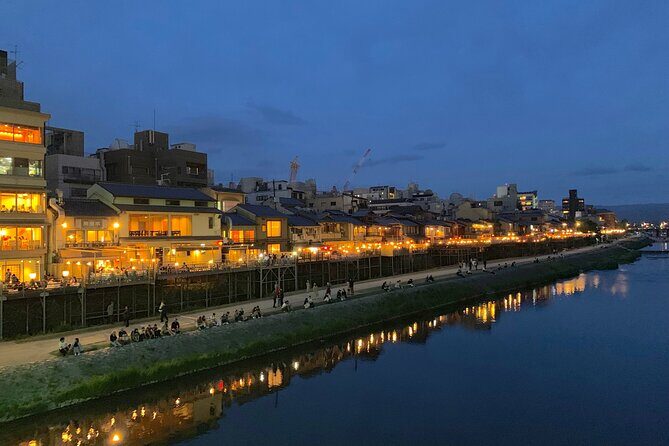
Hanamikoji Street is the postcard-famous spine of the Gion experience. But going after dark changes how it feels. You’ll see the traditional machiya houses, upscale restaurants, and teahouses in a setting where the street looks less like a daytime parade and more like a place with intention.
This is also where the explanations can turn practical. People in the world you’re studying lived by cues—signals in the way streets were used, in how spaces were arranged, and in what the neighborhood represented. Several guides are praised for explaining those subtle “codes” that a standard stroll usually ignores.
If you love walking tours for the stories behind the scenery, this is likely your favorite stretch. It’s the moment where the neighborhood stops being background and starts feeling like a text you can read.
What to watch for: even if you never see a performer, you’ll notice details like signage styles, the rhythm of storefronts and entrances, and how the street narrows toward certain corners. Your guide will help you translate those visual clues.
Stop 5: Gion Corner for a Condensed Taste of Traditional Arts
Next up is Gion Corner, a cultural center and performance venue in the district. Think of it as a concentrated sampler of traditional Japanese arts—short and structured, designed to give visitors an overview without a full-length production.
For this tour, the value is context. You’re not just walking past another building; you’re learning how the arts package for visitors and how tradition gets presented in a digestible format. That helps explain why entertainment in Kyoto has long attracted both insiders and curious outsiders.
Also, the stop gives your brain a short reset. You move from street reading into a cultural “here’s how to understand what you’re seeing” moment.
If you like structured shows: this part may help you decide whether you want to add an indoor cultural performance later in your trip.
Stop 6: Yasaka Shrine to Close the Loop Back to Kyoto’s Spiritual Life
You end at Yasaka Shrine, one of Kyoto’s prominent Shinto shrines and strongly associated with the Gion area. Ending here is a smart choice because it widens the lens. Geisha culture isn’t just about entertainment. It sits inside a larger Kyoto framework of faith, festivals, and neighborhood identity.
Yasaka Shrine gives you that broader sense of place. You finish the walk with a feeling that you’ve visited a district, yes, but also a city with layered traditions that keep influencing each other.
The route ends near Yasaka Shrine (the listed end point is at Gionmachi Kitagawa, Higashiyama Ward). From there, you’ll be close enough to keep exploring on your own if you want—without needing to retrace your steps in the dark.
Guides Make or Break It: What You Can Expect from the Teaching Style
This tour’s reputation is heavily tied to guides. People consistently describe guides like Shin, Deborah, Melanie, Joy, Nami, Kenji, Ben, Adrian, and Manny as friendly, engaging, and ready to explain the subject in a way that feels approachable.
A few patterns show up in how the experience is described:
- The guide answers questions without talking down.
- The stories connect geisha life and Japanese entertainment history to what you’re seeing outside your eyes.
- The tone stays down-to-earth, not overly formal.
That last point matters. Geisha culture can sound intimidating on paper. When your guide uses real examples and keeps the explanations organized, you’ll feel like you’re participating, not being lectured.
And yes, you’ll likely get better photos. Not because the guide hands you a tripod, but because you’ll learn where to look and why that corner matters.
What to Bring (So the Night Walk Stays Fun)
This is a night tour, and Kyoto nights in cooler seasons can be genuinely uncomfortable. People specifically mentioned needing big coats in winter. Plan for it like you live somewhere cold: warm layers, socks you trust, and shoes with decent grip.
Bring:
- Warm layers (even if the day felt mild)
- Comfortable walking shoes
- A small umbrella if rain is in the forecast
- Water you can grab before or after, since bottled water isn’t included
One more small strategy: if you get cold easily, take a tiny break when the guide offers a pause at a stop. Don’t wait until you’re miserable, or the stories won’t land.
Is This Worth Booking? My Honest Recommendation
Book it if you want:
- A short, guided introduction to Gion after dark
- Context for geisha and maiko culture without feeling overwhelmed
- A tour under 2 hours that doesn’t turn into a sprint
- A small group experience where your questions have space
Consider skipping it if you prefer:
- Long museum-style explanations with lots of sitting
- A tour focused purely on spotting performers (this walk is built around cultural context and landmark understanding)
If you’re a first-time visitor to Kyoto, this is a smart early orientation. It helps you see Gion as more than a photo spot. You’ll leave with a framework that makes later discoveries click.
FAQ
How long is the Kyoto Gion Geisha District Walking Tour?
It runs for about 2 hours.
What is the group size for this tour?
The tour has a maximum of 15 travelers.
Is admission included for the stops?
All fees and taxes are included.
What is included in the tour price?
The tour includes all fees and taxes.
Is bottled water provided?
No, bottled water is not included.
What happens if the weather is poor?
This experience requires good weather. If it’s canceled due to poor weather, you’ll be offered a different date or a full refund.