Night turns Gion into theater.
This 100-minute walk from Minamiza Theatre lets you experience Gion the way it feels after dark—quiet streets, warm lantern light, and a guide who explains the codes behind geisha culture. I love the small group setup (up to 10) because it keeps questions easy. I also love that you get more than street views: you’ll learn rules, legends, and respectful shrine practice, with guides like Shino, Pam, and Wasabi often praised for strong English and friendly energy. One thing to consider: the route includes stairs, so it’s not a good fit for wheelchairs or limited mobility.
I also like that this tour is timed for the mood, not just the schedule. The tour starts when the group leaves the meeting point, and at night Gion cools down fast, so you can actually take in details without shoulder-to-shoulder chaos. The mix of geisha-area streets, a matchmaking shrine, a Buddhist pagoda lit at night, and an end stop at a shrine over 1000 years old gives the walk a satisfying arc.
One practical note up front: you’re meeting in front of Minamiza Theatre (front side), and you’ll want to arrive about 5 minutes early because the clock starts when the group departs.
Key highlights you should notice
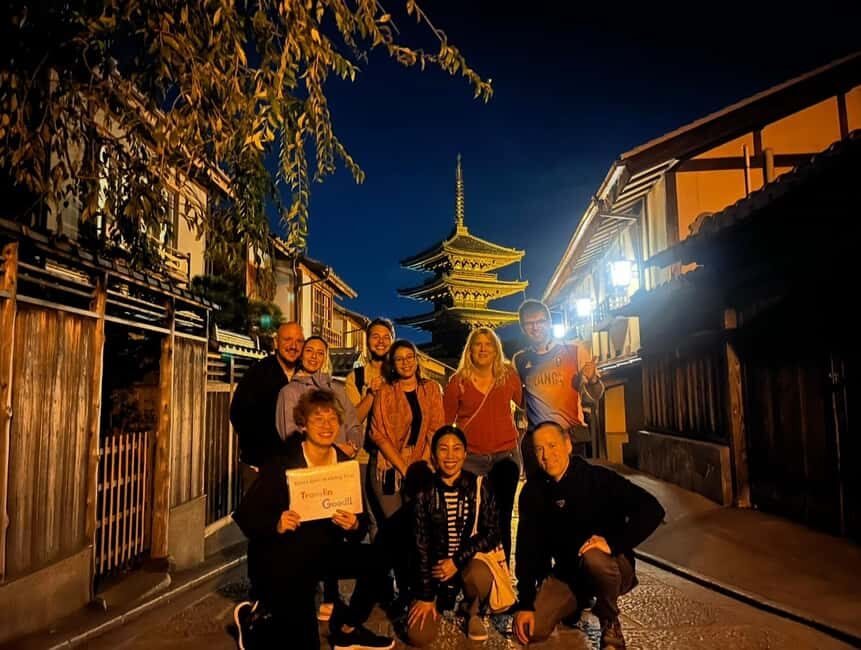
- Up to 10 people means you can ask real questions instead of waiting your turn
- Hanamikoji + geisha trivia focuses on rules and cultural context, not just photos
- Shrine stops with night lighting includes a matchmaking shrine and a glowing Buddhist pagoda
- Possible geisha or maiko sighting can happen, but it’s not the purpose of the tour
- Photography service is included, so you don’t spend the night hunting for someone to take your picture
Why a Gion Night Walk Beats Daytime Crowds
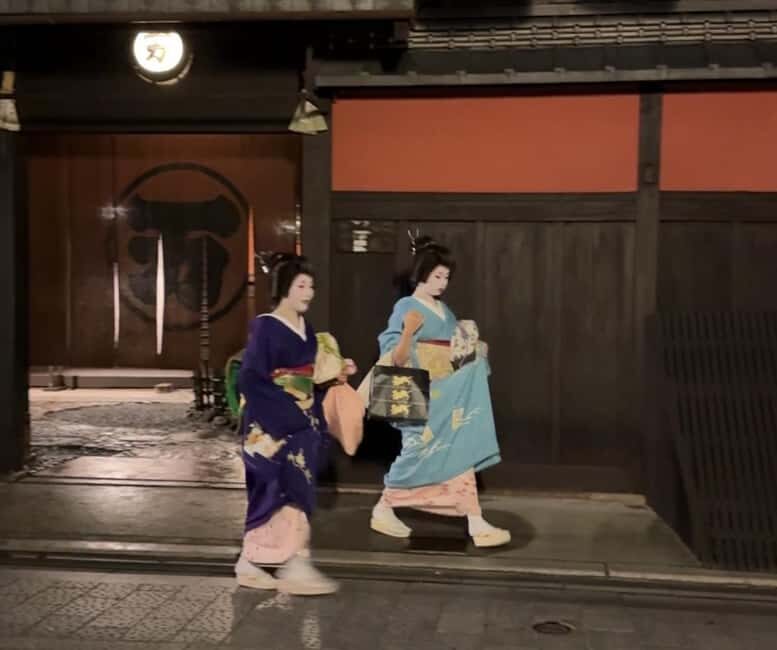
Gion at night is calmer, softer, and easier to read. The streets don’t just look pretty. They feel like they’re operating on a different rhythm, with lantern light turning corners into small scenes.
That matters for how you enjoy the district. During the day, you often spend energy threading through tour groups. On this tour, the goal is to help you slow down enough to understand what you’re seeing—especially the social rules around geisha culture.
A few more Kyoto tours and experiences worth a look

Minamiza Theatre Meet-Up: Start Time Means Depart Time

This tour’s starting time is the moment the group leaves the meeting point, not when you first show up. Your job is simple: meet in front of Minamiza Theatre on the front side, and look for a guide holding a sign that says TravelinGood.
Give yourself buffer time for buses and taxis. Kyoto traffic can be unpredictable, and being late can throw off the whole group pace. If you’re trying to do this right, show up at least 5 minutes early, then you can relax instead of rushing.
Hanamikoji Streets and Geisha Trivia That Actually Helps You Understand
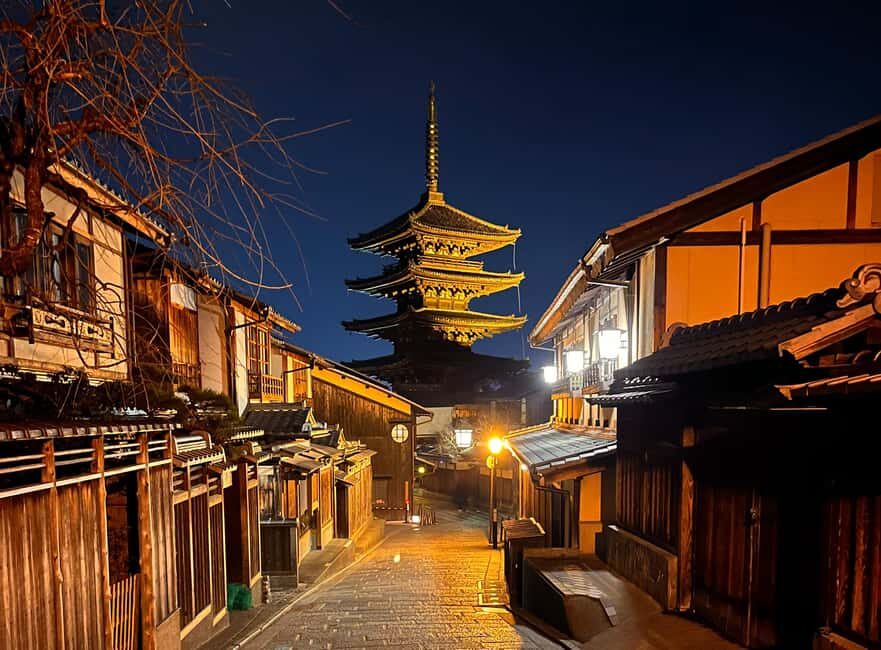
The first big pull is Hanamikoji, the famous lane in the geisha district. You’ll walk its traditional streets and learn the “mysterious rules” that outsiders often miss. That includes practical etiquette and cultural context—stuff that makes you feel less like you’re guessing and more like you’re following along.
I like how the tour frames geisha culture with respect. You may even be lucky enough to spot a real geisha on the street, but the tour isn’t about forcing a meeting. That’s a healthier way to experience it. You get to enjoy the possibility without the pressure.
A couple of guide styles stand out from what people reported: some guides shared visuals and clear explanations of differences between geisha and maiko, while others gave stories tied to specific lanterns and private spaces you pass. Either way, you’re not just walking. You’re learning what the area is trying to communicate.
Matchmaking Shrine Lore and the Buddhist Pagoda at Night
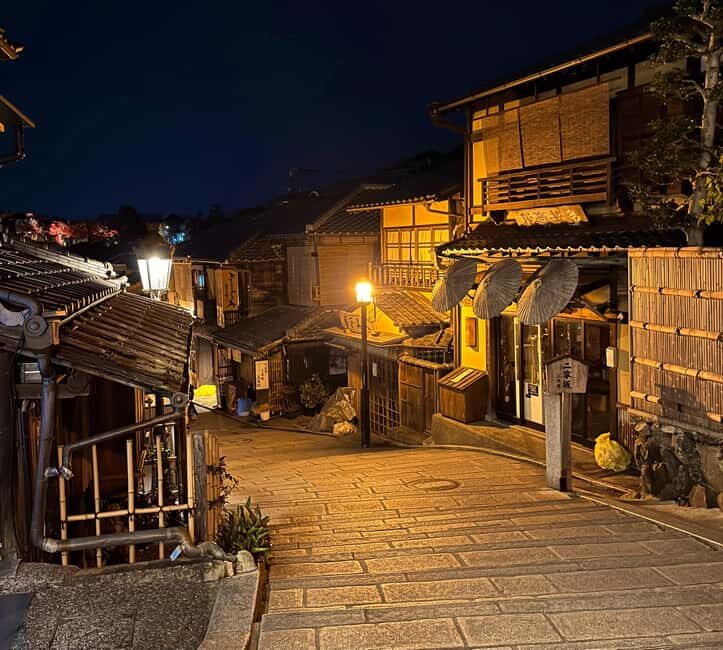
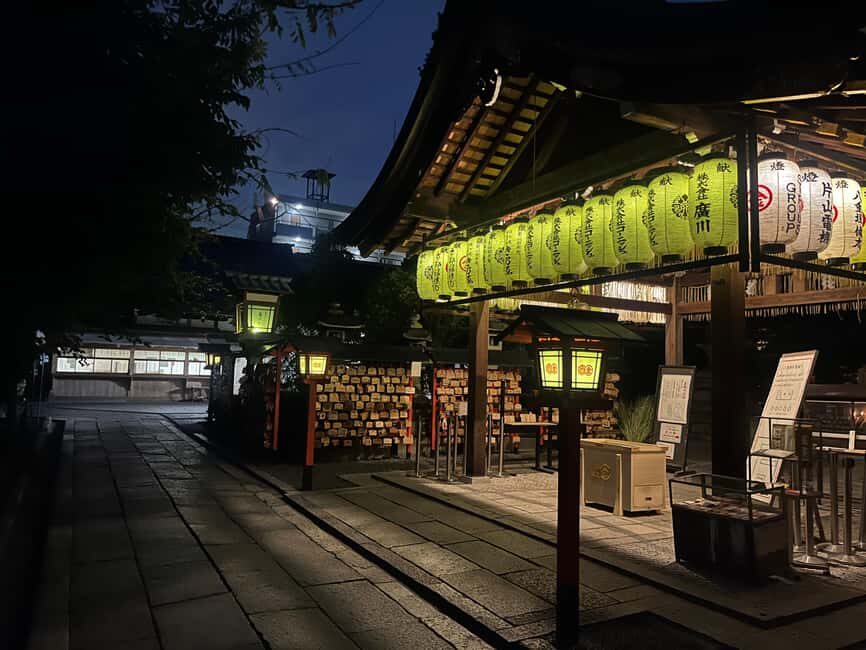
After Hanamikoji, the route turns into story mode. You’ll visit a shrine associated with matchmaking, which adds a human, everyday layer to the culture. In a place that can feel theatrical, it’s a nice reminder that religion and tradition are part of real Kyoto life.
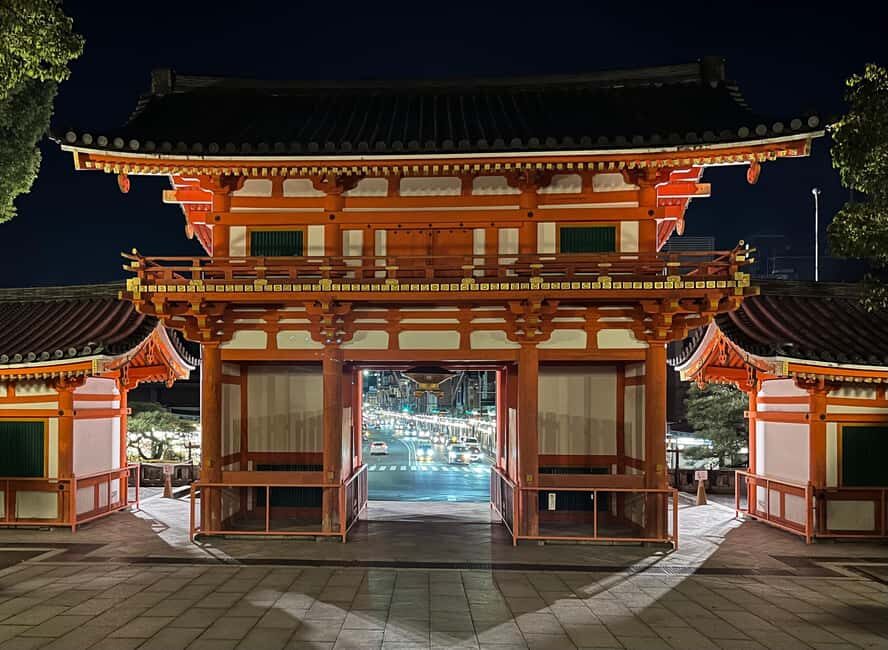
Then comes a highlight: a Buddhist pagoda outside the geisha district, illuminated at night. This is the kind of stop you’ll want your camera ready for, but the guide will also help you see what you’re looking at instead of just snapping and moving on.
One more detail worth your attention: you may practice a shrine prayer ritual with guidance. In Shinto contexts, small actions matter. People praised guides for explaining how to pray and what to do, which makes the stop feel meaningful instead of confusing.
Hidden Pathways: Where the Night Feels More Personal
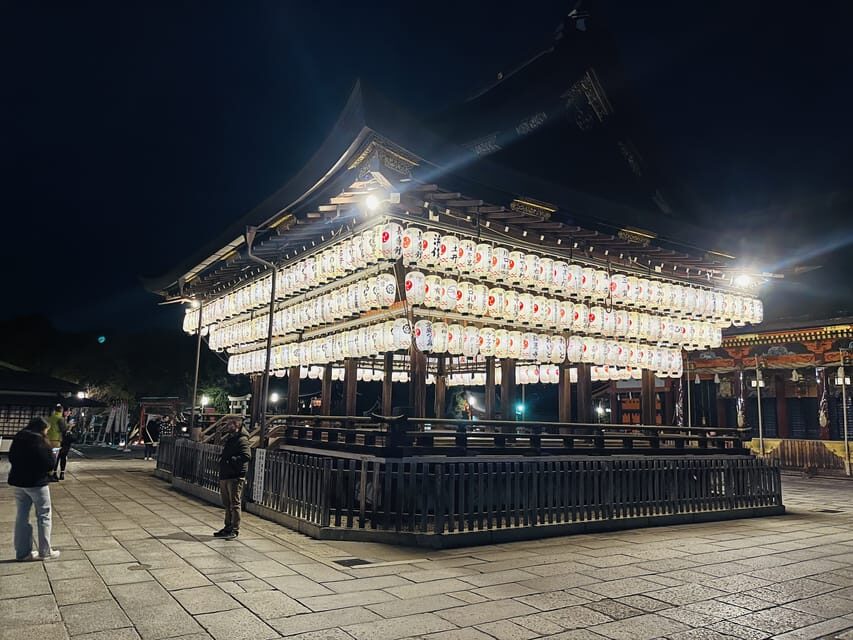
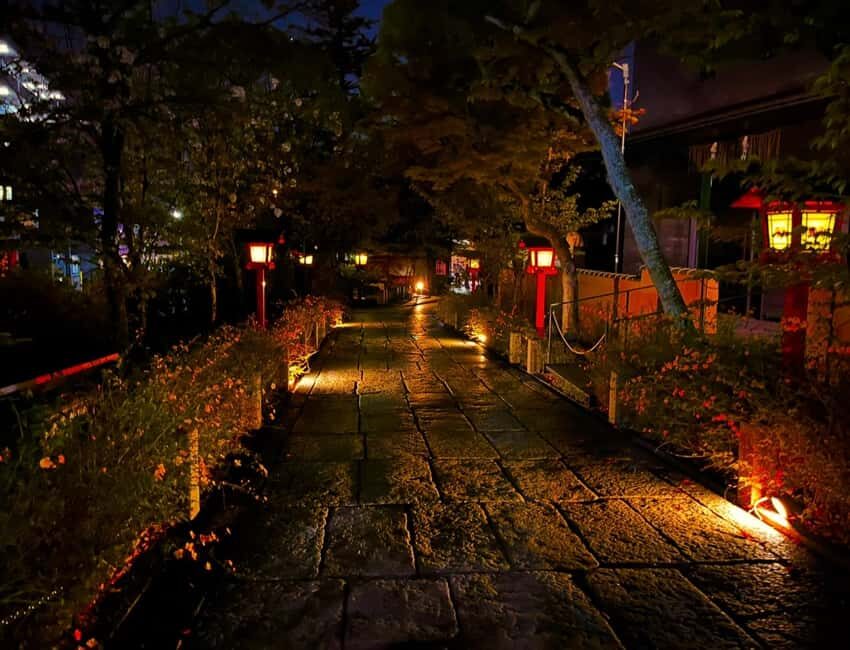
Gion is famous, but it’s also full of side streets. This walk includes hidden spots and pathways, so you’re not locked into only the most obvious lanes.
What you’ll notice is how the atmosphere changes when you step away from the main corridor. The lighting stays pretty, but the crowds drop. That’s when you can actually hear yourself think and see the texture of the neighborhood—wood, stone, small signs, and the way lanterns guide your eyes.
Pace is another plus. Several people noted it’s manageable even if you’re not a speed walker. Still, there are stairs, so if you have mobility challenges, this won’t work well.
Other walking tours we've reviewed in Kyoto

The 1000-Year-Old Shrine Finish: A Strong Emotional Close
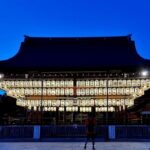
The tour ends with a visit to a shrine that’s over 1000 years old. That final stop gives the walk a sense of weight. You start in a district known for controlled elegance, and you end where Kyoto’s long timeline becomes obvious in a quiet way.
This is a good moment to slow down. Look for the details the guide points out—offerings, lighting, and the feel of the grounds at night. Even if you’ve been temple-hopping in Kyoto already, a late-night arrival at an ancient shrine can hit different.
And because the tour includes a photography service, you might also get help with photos at the places that matter most, without you having to guess where to stand.
Price and Value: $24 for a Guided Night, Not a Self-Walk
At $24 per person for about 100 minutes, the value comes from three places: the guide, the structure, and the small group size.
First, you’re paying for an English-speaking guide who explains geisha culture respectfully and clearly. People repeatedly praised guides for friendly energy and good communication, including strong English. That kind of interpretation is what turns a walk into an experience you remember.
Second, the walk includes multiple cultural stops: Hanamikoji, a matchmaking shrine, a lit pagoda, and an old shrine. You’re not just doing one photo stop.
Third, photography service is included. When you don’t have to coordinate with strangers or constantly ask someone to take a shot, the whole night feels smoother.
Is it the cheapest thing in Kyoto? No. But it’s one of the better “spend time wisely” options. You’re buying time at the right hour, with context attached.
Who This Kyoto Night Walk Is Best For
This is a strong pick if you want your first impressions of Kyoto to feel grounded in culture, not just sights. It’s also great if you like nights out but hate being swallowed by crowds.
It can work for families too. People mentioned they brought kids around 9 and 11 and the pace plus explanations kept them engaged. That said, it isn’t ideal for babies under 1 year, and the route has stairs.
It’s also not a fit if you have mobility impairments or limited mobility. And there’s a simple health note: it’s not suitable for people with a cold.
If you’re coming in winter, there’s a useful option. In February, tours may run at 3pm by limited request, which can be a smart choice if you have evening plans or you’d rather start while there’s still daylight.
Should You Book This Gion Magical Night Walking Tour?
Book it if you want an organized, respectful way to experience Gion after dark, with geisha trivia that explains the why behind what you see. Choose it when you want a smaller group, solid English guidance, and a route that goes past the obvious streets into shrines and a night-lit pagoda.
Skip it if stairs are a problem for you, or if you’re not up for walking at night. Also skip it if you’re hoping for a guaranteed geisha sighting. This tour can include a chance encounter, but it’s not designed to promise one.
If your ideal Kyoto evening includes lantern light, shrine stops, and a guide who can answer questions in a friendly way, this one is a strong match.
FAQ
Where do I meet for the tour?
Meet in front of Minamiza Theatre on the front side. Your guide will hold a sign that says TravelinGood.
Does the start time mean when I arrive, or when the tour begins?
The listed time is when the tour starts, meaning the group leaves the meeting point then. Arrive at least 5 minutes early.
How long is the Kyoto Gion Magical Night Walking Tour?
It runs for about 100 minutes.
What group size should I expect?
It’s a small group, limited to up to 10 participants.
Is the tour guided in English?
Yes. The live tour guide speaks English.
What’s included in the price?
You get a guide and photography service.
Is the tour accessible for wheelchairs or limited mobility?
No. Due to stairs along the route, it is not accessible for wheelchairs, baby carriages, or those with limited mobility.
Are young children allowed?
Children under 6 years old are not required to purchase tickets. Babies under 1 year are not suitable.
Can I cancel and get a refund?
Yes. You can cancel up to 24 hours in advance for a full refund.