Kyoto’s tea ritual can feel like a reset button. This 45-minute ceremony in Kiyomizu’s neighborhood pairs a quiet tea house with a careful matcha lesson, plus a tea master’s performance you can actually watch and learn from. I especially like the gardens created by Ogawa Jihei VII and the hands-on part where you brew your own bowl. The main drawback: you’re in the public Sannenzaka area, so it can feel busy outside the gate, even when the tea house itself is calm.
I also like that the whole thing is taught in English, with an instructor giving you a clear intro before the demonstration. And you get a traditional sweet and a photo moment to cap it off. One consideration: this isn’t a “wander around at your pace” activity—there’s a ceremony rhythm, and you’ll want to keep your movements low-key so everyone can enjoy it.
Finally, the basics are straightforward: $49 per person for a structured experience, rain or shine, and no big bags allowed. If you’re traveling with luggage, plan for that at Kiyomizu. And if your group includes kids under 7, this one’s not the right fit.
Quick, useful highlights
- Ogawa Jihei VII garden setting: calm views that make the tea feel extra special
- Tea master demonstration first, then you brew matcha
- English guidance through the steps and the meaning behind the ritual
- Two cups of matcha + a traditional sweet, plus a photo
- Small-group feel, with time to ask questions and get coached
Entering the Sakaguchian tea house off Sannenzaka
The meeting area is busy. Sannenzaka, near Kiyomizu-Dera, has that classic Kyoto foot-traffic energy. But the magic is what happens after you find the right entry.
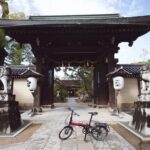
Head down Sannenzaka (this is the street area by Kiyomizu-Dera). Walk about 50 meters and enter the large gate on the right. From the gate, you can see the Japanese garden. Keep going: pass through that gate, walk straight about 10 meters, then go through the white gate on your left to find Sakaguchian.
That “step-by-step to the right gate” matters because the experience is designed around a calm, inward-feeling tea space. One review even called out that it’s set back from the street—exactly the point. Once you’re inside, the pace slows. Conversations soften. The garden becomes the background soundtrack.
If you're still narrowing it down, here are other tours in Kyoto we've reviewed.


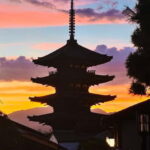
The garden by Ogawa Jihei VII: why it changes how the ceremony feels
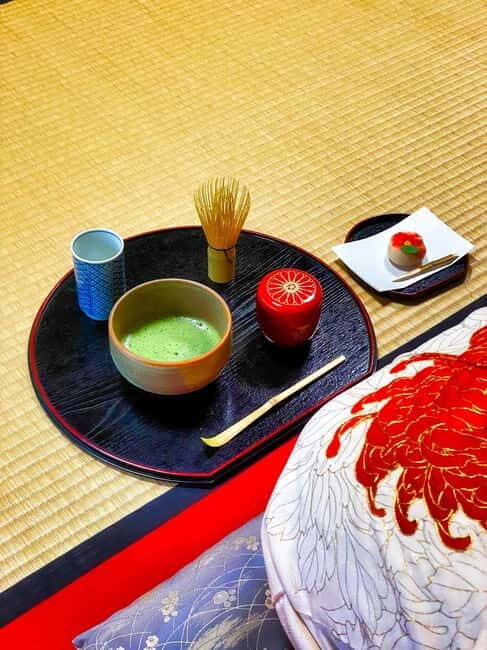
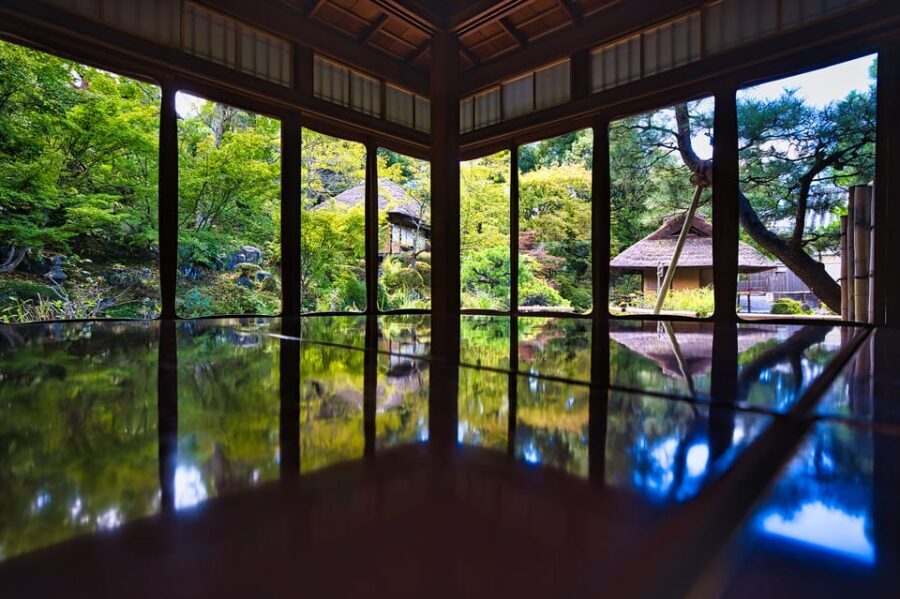
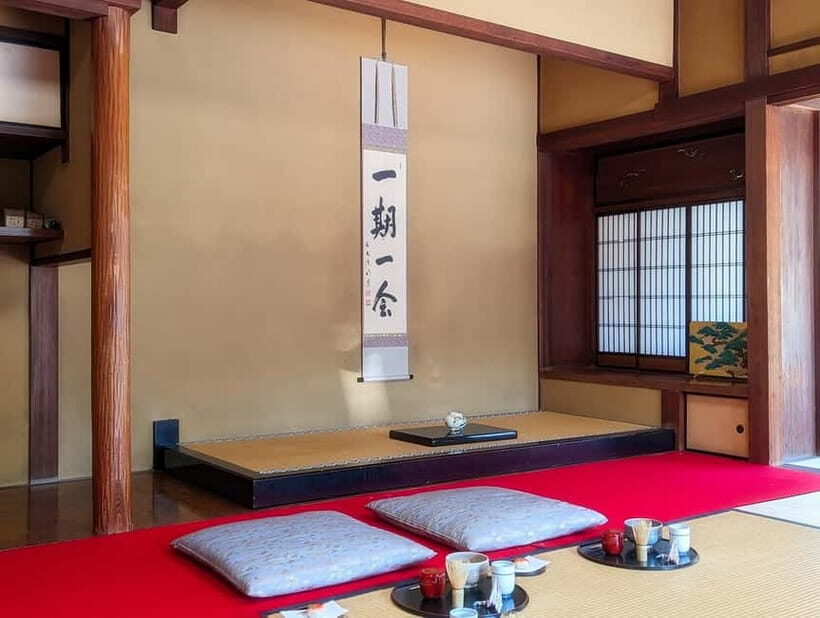
Before you even touch the matcha tools, you’re introduced to the setting you’ll be in. You’ll see the established garden where the tea house sits, created by the famous landscape artist Ogawa Jihei VII.
A garden isn’t just decoration here. In tea culture, the environment supports focus: quiet attention, simple gestures, and a sense that time has loosened its grip. Reviews strongly reinforce that the tea house feels peaceful even though you’re near one of Kyoto’s busiest sights. So you’re not choosing between calm and convenience—you’re getting both, if you arrive on time and follow the group flow.
The ceremony also includes context about its long tradition. You’ll get a brief introduction, including mention of a 500-year history behind the way tea is practiced. In other words, you’re not just learning how to whisk matcha. You’re learning where this form came from, and why the movements matter.
What happens in 45 minutes: show, lesson, sip, sweet
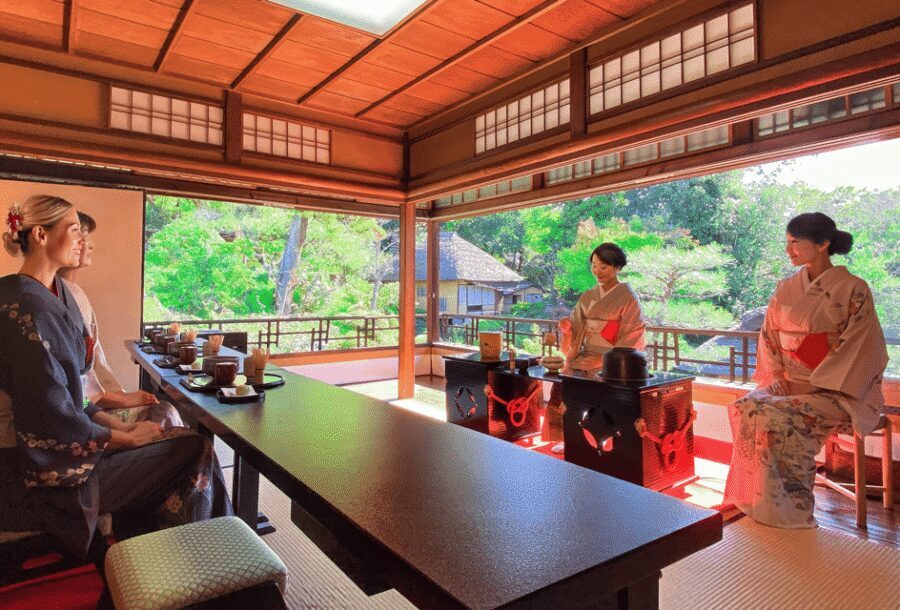
This is a tight timeline, which is good news if you don’t want to lose half your day in Kyoto. Expect a smooth sequence.
First, you’ll be greeted by your instructor. Then you’ll get a short intro while you look out at the garden. You’ll hear the basic background, including the history of the tea ceremony.
Next comes the best part for many people: watching the tea master perform. You’ll see the art of tea preparation as it’s done with practiced calm and correct technique. This isn’t random performance. You’re meant to pay attention to the steps and timing, because after the demonstration you’ll repeat the process yourself.
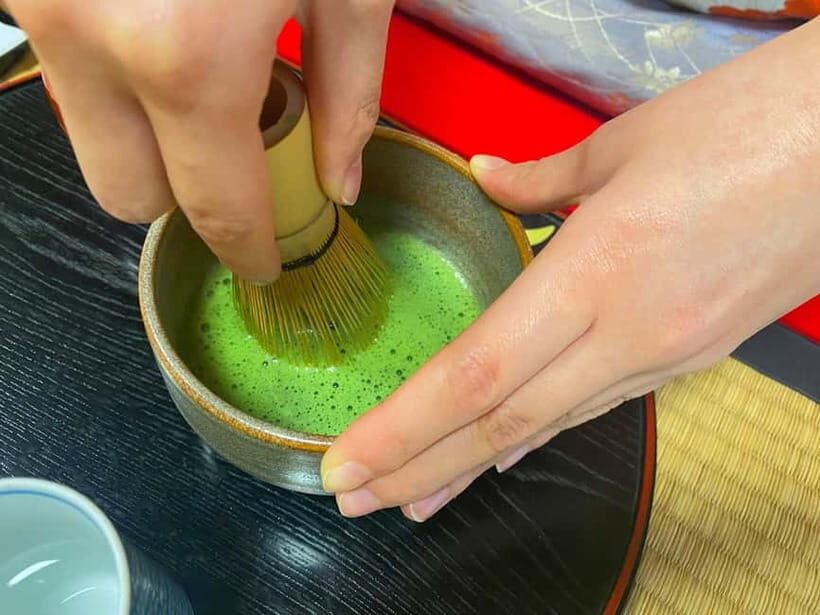
After that, you’ll learn how to brew your own matcha. The experience includes 2 cups of matcha, so you’re not just sampling. You’ll participate and then enjoy the bowl you made.
Then you’ll finish with a customary Japanese sweet and a group photo using the garden as your backdrop.
Tea master performance and your matcha practice (the part that sticks)
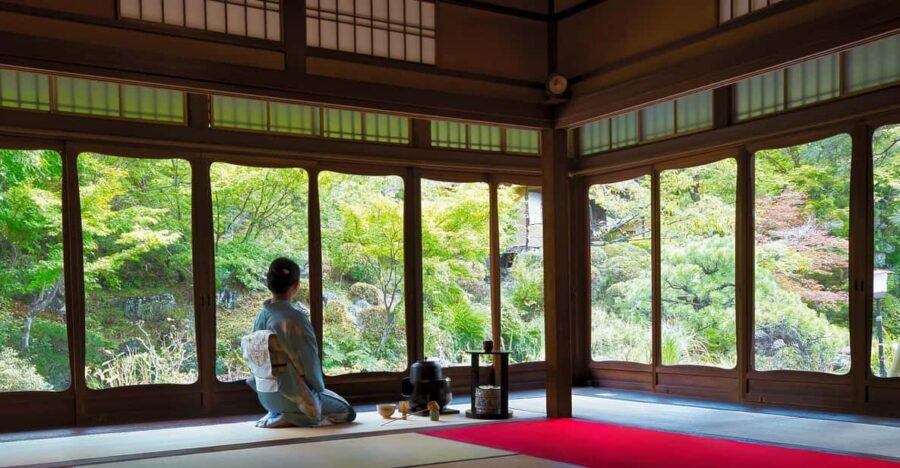
This ceremony is built around doing the ritual, not just watching it happen. The tea master demonstrates the proper way to prepare the tea, and the instructor explains what you’re seeing so it clicks.
A key detail: this is English instruction, which makes a difference with something this precise. Reviews repeatedly point to guides who explain the steps clearly and help you approach the ritual with the right attitude—not just the correct hand motion.
You’ll learn how to brew matcha, and you’ll get to try it yourself. People often talk about how good the matcha tastes afterward. And one practical note that can save you a lot of disappointment: matcha can taste bitter or harsh if it’s made wrong. Here, the whole point is that you’re being guided toward a better result.
Also, treat the ceremony space like a quiet classroom. One review urged people not to walk around or act disruptive during the ceremony. That’s more than etiquette—it helps you feel the calm and lets you actually see each step.
If you like hands-on activities, you’re going to like this. If you prefer passive sightseeing only, it may feel too structured. But even then, the garden view and the tea master’s precision make it worth it.
Matcha basics: how you’ll understand what you’re tasting
You’re going to taste matcha twice: two cups are included. That’s important because it gives you a chance to notice difference between the first serving and what you make yourself.
In the tea ceremony, matcha isn’t treated like a casual drink. It’s prepared carefully, served with intention, and paired with a sweet that balances the flavor. The goal is a smooth, focused experience rather than a sugar-and-caffeine hit.
From the way the lesson is described, you’ll learn the basic approach to brewing matcha. You won’t just be told what to do—you’ll be coached through it. And that’s why this can work even if you’ve never had matcha before.
One of the most satisfying parts for many people is the change in how they see matcha afterward. Some reviews say they weren’t fans before the ceremony and then ended up obsessed. That doesn’t mean matcha suddenly changes. It means preparation and technique change what ends up in the bowl.
A few more Kyoto tours and experiences worth a look
The sweet, the photo, and the calm exit
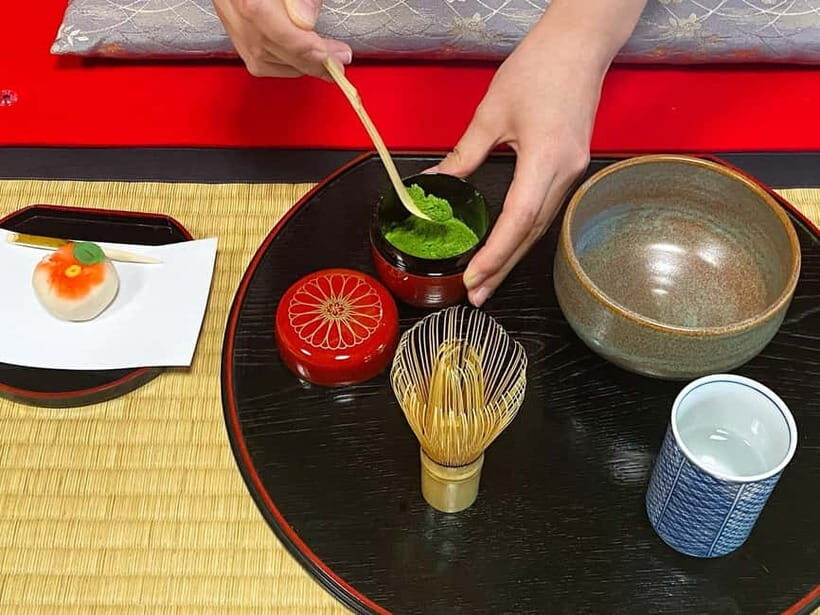
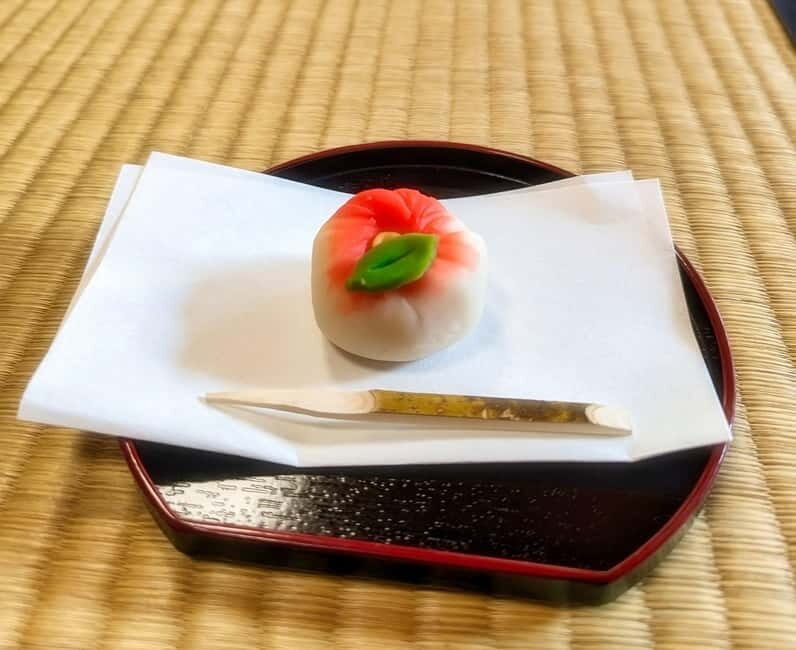
After your matcha moment, you’ll taste a traditional Japanese sweet. This is more than a snack. The sweet is customary in the tea ceremony flow, and it helps set the flavor balance before or alongside the matcha you’ve been preparing.
Then there’s the photo. You’ll pose with your group, with the garden as the backdrop. That’s one of those practical extras: it gives you a Kyoto memory that looks like it belongs in a tea house brochure, without you needing to hunt for a perfect angle on your own.
And then you wrap up. The best way to describe the ending is simple: you leave feeling calmer than when you arrived. It’s an hour-or-less reset, sandwiched between Kiyomizu-area walking.
Price and value: is $49 worth it?
$49 per person isn’t cheap, especially when Kyoto has plenty of free sights and low-cost food. But this isn’t a generic “tea tasting.” You’re paying for structure, a guided lesson in matcha preparation, and a tea master performance in a traditional tea house setting.
Here’s what makes it feel more like value than a splurge:
- You get two cups of matcha, not a tiny sip
- You do the steps yourself, instead of watching from across the room
- The experience runs 45 minutes, so you’re not stuck for hours
- The setting includes a garden created by Ogawa Jihei VII
- You also get a traditional sweet and a photo
If you’re the type who likes cultural activities that teach something practical—how to brew matcha with better technique—this price makes more sense. If you mainly want to photograph places and move on quickly, you might find it pricier than expected for the time.
Getting there without stress: meeting point tips that matter
This one is easy to miss if you’re speed-walking, because you need the correct gate and the tea house is set back from the street.
Here’s the simple approach:
- From Sannenzaka near Kiyomizu-Dera, walk about 50 meters and enter the large gate on the right
- From the gate view, pass through and go straight about 10 meters
- Enter the white gate on your left to reach Sakaguchian
If you’re arriving by cab, tell the driver to go toward Kodaiji Temple. Get off at the intersection of Sanneizaka and Ishin-no-michi. Then you’ll find the entry from there.
Also keep in mind: large luggage or bags aren’t allowed. If you’re carrying big items, plan to store them first. This is a small, quiet space, and bag restrictions keep it comfortable for everyone.
Who should book this tea ceremony in Kyoto
This experience suits:
- Adults and teens who want a calm, cultural activity in the Kiyomizu area
- Anyone who wants real matcha instruction, not just a sip
- Groups who appreciate quiet guidance in English
- People who like small-group, step-by-step activities
It’s also a strong pick for couples. A lot of the appeal is that it’s serene, structured, and not overly long—so it feels like a meaningful break during a busy day.
What to know before you go: it runs rain or shine, so bring the weather mindset and you’ll be fine.
Not suitable:
- Children under 7
If your group includes children older than that, you’ll likely be okay, since the ceremony is designed to be taught. But keep expectations realistic: this is a ritual with manners and stillness.
Should you book? My honest take
Book it if you want an experience that teaches you how to prepare matcha correctly, in a traditional setting with a serious tea master and a garden view that actually supports the mood. The hands-on matcha part is the reason many people walk away happy, not just impressed by the idea.
Skip it if you’re only interested in casual sightseeing and you don’t want a structured, quiet activity that asks you to follow instructions closely. Also, if carrying big luggage is your reality, you’ll want to rethink logistics since luggage or large bags aren’t allowed.
If you’re in Kyoto and you can spare 45 minutes, this is one of those cultural stops that feels like it gives more than it takes.
FAQ
How long is the Kyoto tea ceremony experience?
It lasts 45 minutes.
What does the price include?
You get the tea ceremony, 2 cups of matcha, traditional Japanese sweets, and a photo.
Where is the meeting point?
Go down Sanneizaka near Kiyomizu-Dera Temple, walk about 50 meters, enter the large gate on the right, then after passing through the gate go straight about 10 meters and enter the white gate on your left to find Sakaguchian.
Is there an English instructor?
Yes. The instructor speaks English.
Does the ceremony run in bad weather?
Yes. It happens rain or shine.
Are kimono rentals included?
No. Kimono rental is not included.
Are bags allowed?
Luggage or large bags are not allowed.
Is it suitable for children?
It’s not suitable for children under 7 years.
What should I tell the taxi driver?
Tell the driver to go toward Kodaiji Temple, then get off at the intersection of Sanneizaka and Ishin-no-michi.
Can I cancel my booking?
Yes. You can cancel up to 24 hours in advance for a full refund.