A fish shop class sounds simple. It isn’t. This hands-on fish cutting class in Honshu’s Nishiki Market has you start with whole fish, learn basic knife handling, and end with a meal from the cuts you made yourself. You’ll be working inside Kimura, a fishmonger shop that’s been around for 400 years, which turns a cooking lesson into something far more grounded than a demo.
I like two things most: first, the way your fish tastes better because you actually handle it—slowly and carefully. Second, the class format is practical: you watch, then you do, then you eat your results. One thing to consider is the “get it dirty” reality: you’ll want clothing you can stain, and the activity isn’t suitable for kids under 10.
In This Review
- 6 key things I’d circle on your plan
- Entering Kimura: Why This 400-Year Fish Shop Matters
- How the 150 Minutes Flow: Watch, Fillet, Then Make Lunch
- The Knife Skills You’ll Actually Remember
- Sashimi and Carpaccio: Why Your Lunch Tastes Different
- Dietary Options: Gluten-Free and Halal Soy Sauce
- What You’ll Be Provided (and What You Should Bring)
- Group Size, Instructor Support, and Pace
- Value for $77: Paying for Skill, Not Just a Meal
- Who Should Book This Class (and Who Might Skip It)
- Practical Notes Before You Go
- Should You Book Kimura’s Fish Cutting Class?
- FAQ
- Where does the class meet?
- How long is the fish cutting class?
- Is the class taught in English?
- How many people are in the group?
- What do you eat at the end?
- What should I bring or wear?
- Is this suitable for children?
6 key things I’d circle on your plan
- Kimura in Nishiki Market: a 400-year fish shop setting, not a kitchen studio
- Small group (up to 8): enough time for the instructor to correct your cuts
- You fillet first, then slice: sashimi and carpaccio come from your own work
- Knife, apron, and gloves provided: you show up ready, not over-equipped
- A commemorative photo with the fish you handled
- Dietary soy sauce available: you can inquire about gluten-free and halal soy sauce
Entering Kimura: Why This 400-Year Fish Shop Matters
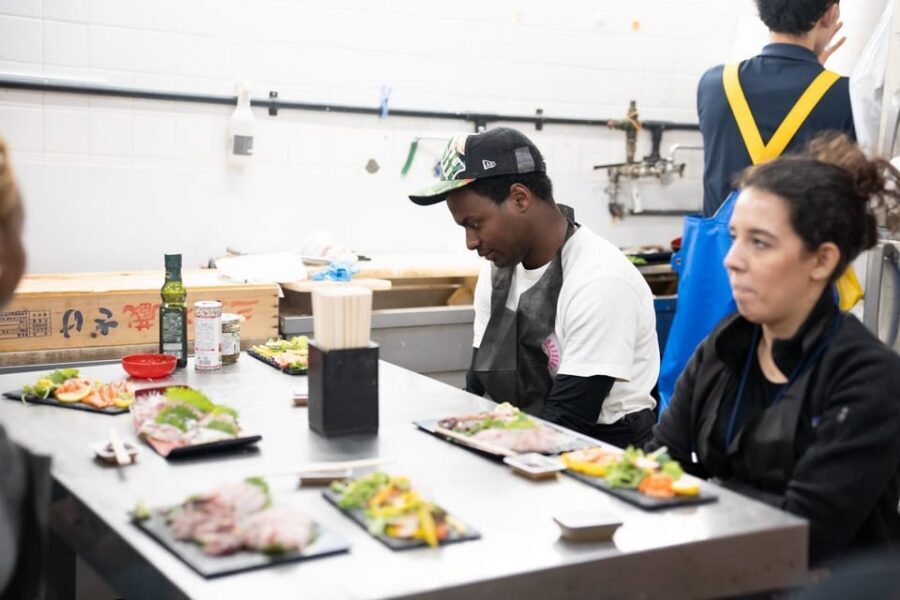
If you’ve done sushi classes before, you might be thinking, This is just another food workshop. The difference here is where you start. You’re not meeting the fish after it’s already been processed. You’re stepping into a working fishmonger environment and learning from the beginning: handling and filleting raw fish.
Kimura sits right in Nishiki Market, so the experience has real “food street” energy around it. But the class itself is focused and controlled—provided equipment, a small group, and an English-speaking instructor guiding what to do next. That balance is what makes this feel authentic without being chaotic.
And the 400-year shop detail isn’t just a decorative brag. It signals a place that has long-term habits: how fish is treated, how cuts are judged, and how careful work is valued. You’ll feel that in the pace—slow enough for technique, not so slow that it turns into a lecture.
A few more Kyoto tours and experiences worth a look


How the 150 Minutes Flow: Watch, Fillet, Then Make Lunch
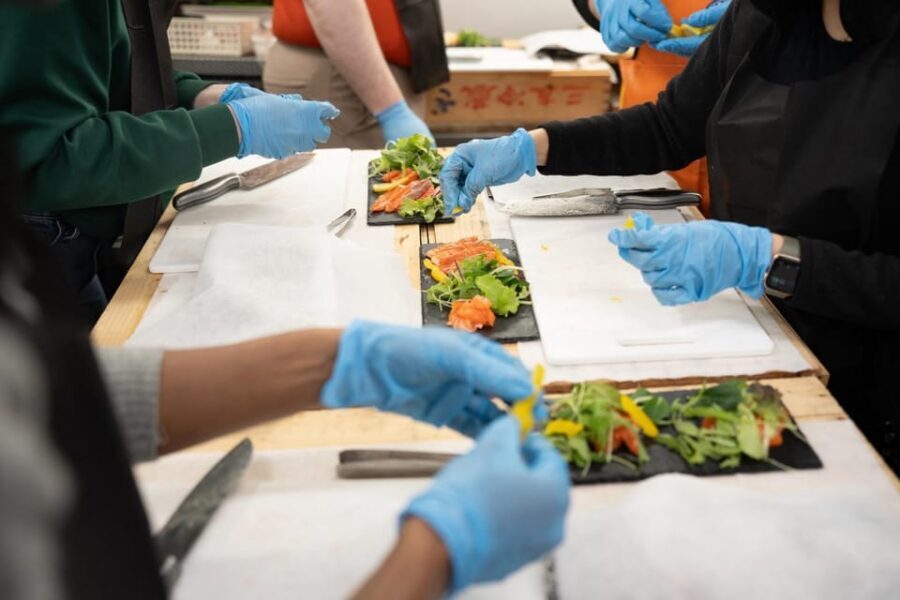
The schedule is structured like a good skill lesson: you learn the motion, practice it, then apply it immediately.
You start with an intro and a quick orientation. After that, you move into the core sequence:
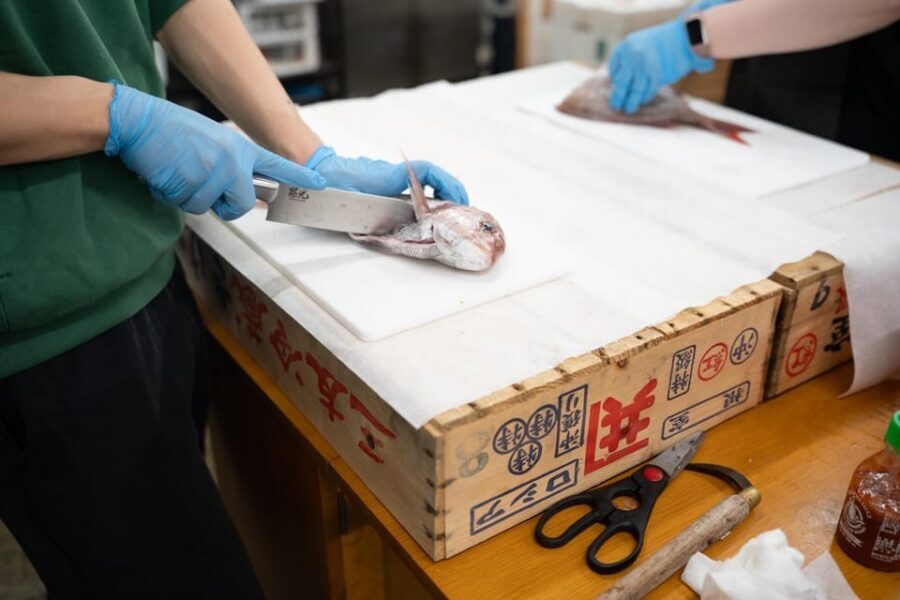
1) The fish gets filleted once, while you watch.
2) Then the participants fillet fish themselves.
3) The instructor teaches careful technique and corrects issues as you go.
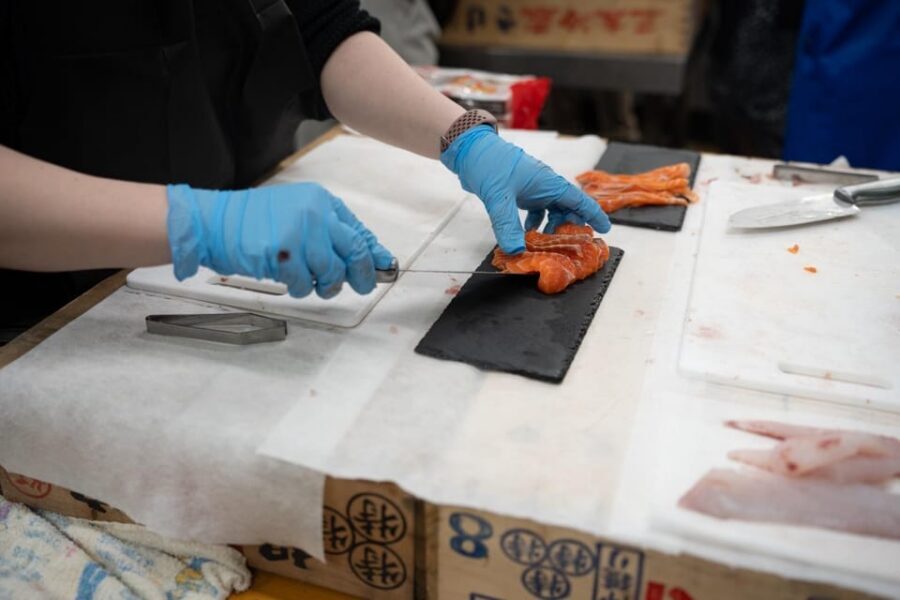
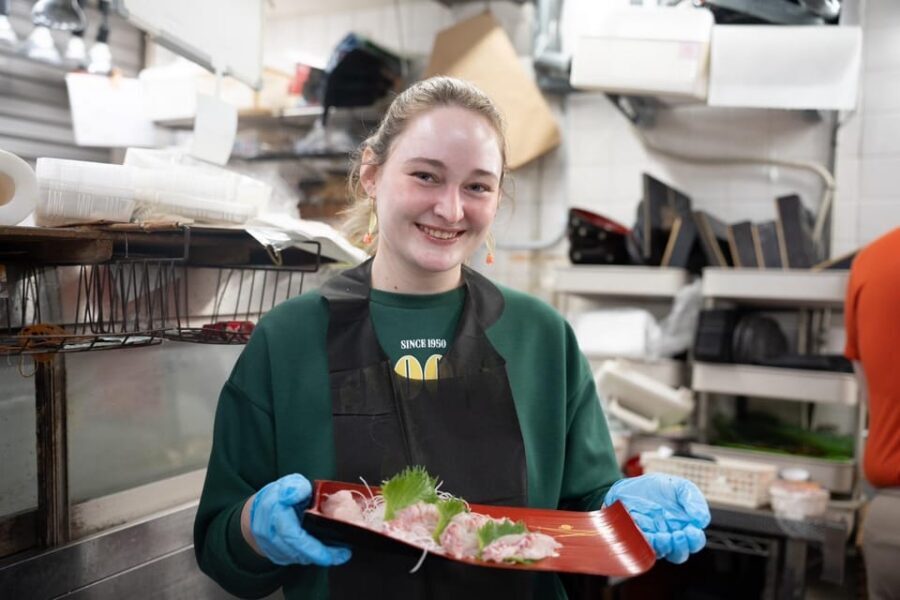
4) Next you make sashimi from the filleted fish, and also prepare carpaccio.
5) Finally, you eat what you made for lunch, with rice and sauces.
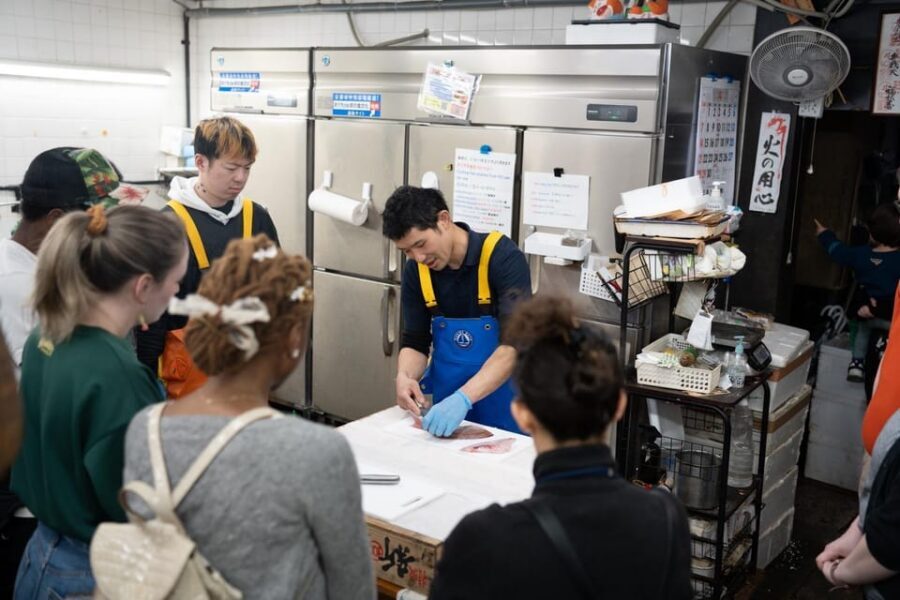
That order matters. Watching someone fillet is helpful, but the “you do it” part changes everything. You stop thinking of sashimi as a menu item and start understanding it as a series of precise decisions: how you position the fish, how you guide the knife, and how you separate parts cleanly.
There’s also a commemorative photo with the fish. It sounds small, but it’s a nice anchor point at the end. You’ll leave with a visual reminder that you didn’t just taste the result—you created it.
The Knife Skills You’ll Actually Remember
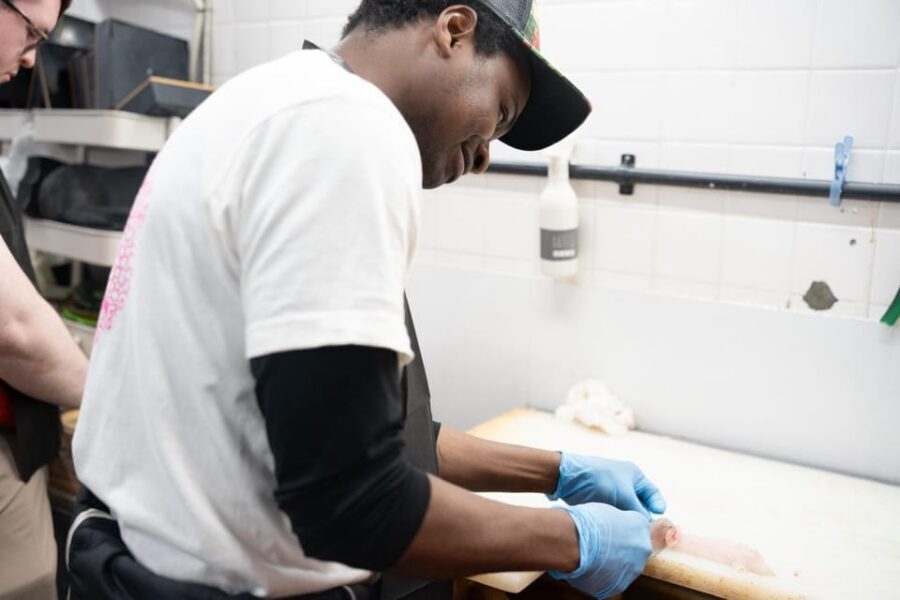
Sashimi looks simple when it’s served. The work behind it is not. This class uses that reality to teach you basics that are easy to practice again later.
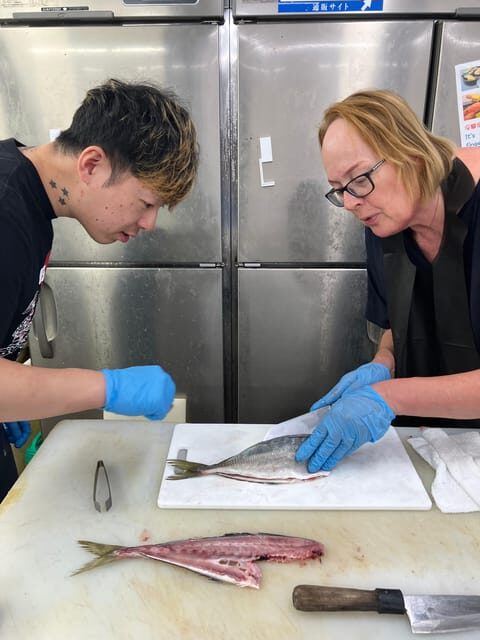
You’ll use the knife provided, plus an apron and rubber gloves. That setup lets you focus on technique rather than searching for gear or worrying about “doing it wrong” with the wrong tools. The instructor is English-speaking, and the class is limited to 8 participants, which means you aren’t lost in a big group.
Chef Masashi (as named in past sessions) is described as patient and detail-focused. When something isn’t working, you don’t just get a generic tip—you can get corrected on the spot. That immediate feedback is exactly why small groups matter. More time in one area means fewer repeated mistakes.
Also, this class isn’t only about making pretty cuts. You’re learning careful ingredient preparation and handling, which is the part most people never practice. When you understand how fish is processed from raw, restaurant sashimi suddenly makes more sense—especially how texture and cut shape affect taste.
Sashimi and Carpaccio: Why Your Lunch Tastes Different
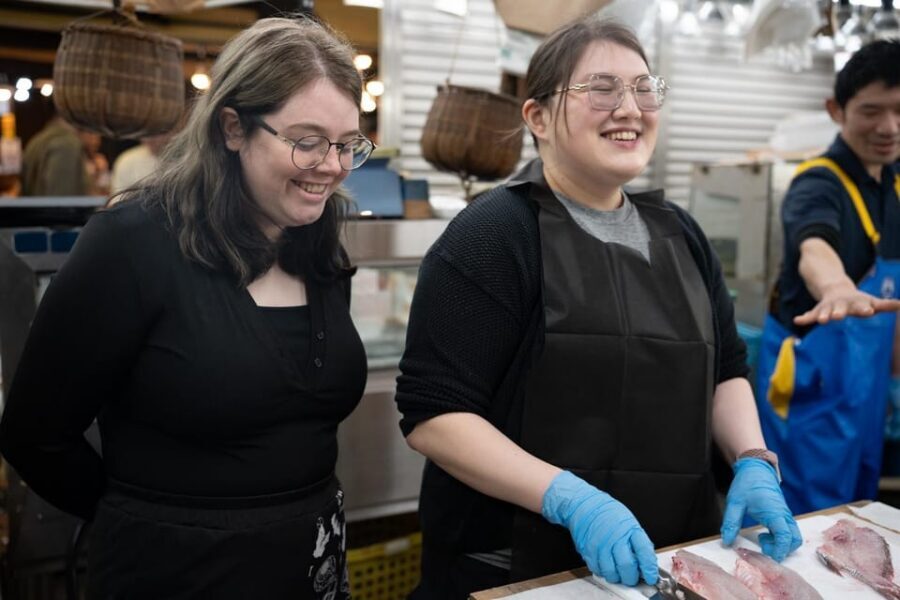
Here’s the core promise of the experience: the best sashimi is the one you make yourself. Even without fancy marketing, the logic holds.
When you fillet and portion the fish, you’re paying attention to freshness and handling. That care changes your perception. You also taste with the knowledge of what you did—where the cut came from and how it changed from whole fish to plated pieces. It turns lunch into a lesson you can actually feel.
You’ll prepare two styles:
- Sashimi from the fish you filleted
- Carpaccio, using carpaccio sauce
You’ll eat the fish you processed, alongside rice. Soy sauce and carpaccio sauce are provided as part of the class, and that’s another practical point: you’re tasting the fish in the same flavor system you prepared it with. Not “sushi sauce somewhere else,” but the exact pairing used in the workshop.
Some sessions may also include extra Japanese dishes beyond the sashimi and carpaccio lunch. In past experiences, people have noted miso soup and tempura included as additional hands-on items. If you care about those specifics, it’s smart to ask when you book so you know what your exact menu includes.
Dietary Options: Gluten-Free and Halal Soy Sauce
Food classes can be tricky if you have dietary needs. This one helps because gluten-free soy sauce and halal soy sauce are available. The important detail: you should inquire ahead so the class can plan accordingly.
Even if you don’t have restrictions, this matters because soy sauce can vary a lot. Being able to use the right version means your sashimi and carpaccio lunch stays true to the lesson. You’re not eating a workaround—you’re eating the food as intended, within your dietary limits.






What You’ll Be Provided (and What You Should Bring)
You don’t have to show up hunting for tools. Included in the class:
- the fish you handle
- rice
- the knife you use
- apron (and in the workshop you’ll wear blue and orange aprons)
- rubber gloves
- soy sauce
- carpaccio sauce
So what do you bring? Simple answer: clothes that can get dirty.
That’s not a throwaway line. Filleting involves water, fish oils, and the kind of mess that happens even when people are careful. If you wear your best outfit, you’ll spend the class thinking about your clothes instead of the technique. Choose something you can wash later and you’ll enjoy the session more.
Group Size, Instructor Support, and Pace
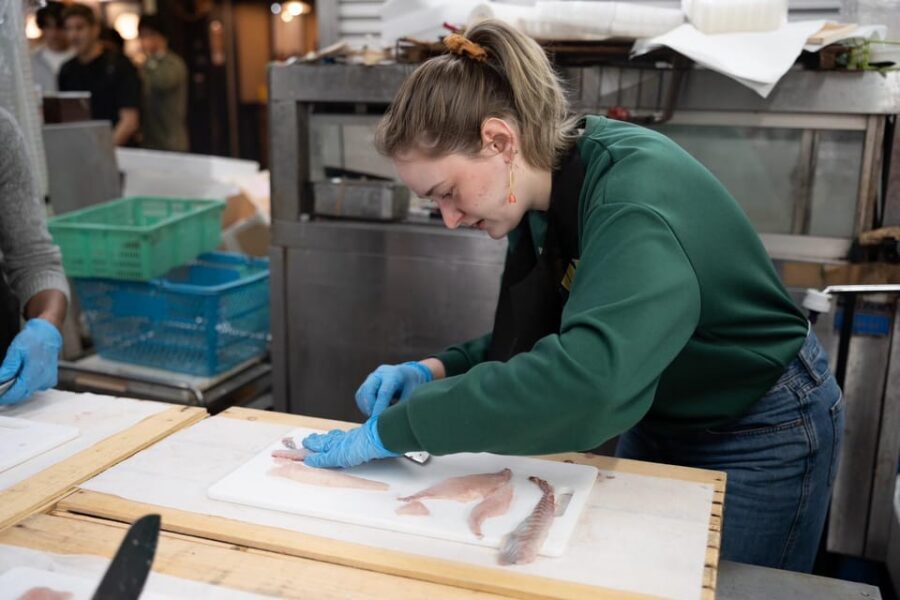
This class is limited to 8 participants, which creates a working rhythm. You get enough space to practice, and the instructor can correct technique without you feeling rushed.
The biggest benefit of the small group approach is not just personal attention—it’s momentum. You can keep moving through the steps: watch, then fillet, then cut for sashimi and carpaccio. When feedback is quick, you stay confident and avoid getting stuck.
The pacing is also built around a 150-minute total duration. That means you’re likely to finish with food you made, not just a half-finished project. It’s a complete loop: skill, creation, and eating.
Value for $77: Paying for Skill, Not Just a Meal
At $77 per person, you’re paying for more than lunch. You’re paying for a short, structured training session with equipment, fish, instruction, and the meal you produce at the end.
A restaurant gives you a finished plate. This gives you:
- hands-on raw fish processing
- knife practice with guidance
- immediate use of what you learn
- a meal where your effort is part of the flavor
If you love sashimi and want to understand why it tastes the way it does, this is a strong value. You’re not just consuming. You’re learning how the ingredients are treated, which makes the next time you eat Japanese fish far more satisfying.
One thing to consider is that you’re paying for activity time. If you’re looking for something mostly relaxed and observational, this may feel more work than you want. The payoff is real, but it’s hands-on.
Who Should Book This Class (and Who Might Skip It)
This fish cutting class fits best if you:
- love Japanese food and want to understand it at ingredient level
- enjoy cooking and don’t mind learning through practice
- like small-group experiences where you can ask questions and get corrections
- want a meal that feels earned
It’s also a great fit for beginners. The workshop is designed for newcomers, and the process is taught step by step—from watching technique, to trying it yourself, to making lunch.
It’s not suitable for children under 10. It also has a clear rule about no nudity, which is typical for workshops but still part of the stated guidelines.
If you’re planning a tight schedule in Nishiki Market, keep your timing realistic. You’ll need the full 150 minutes without rushing, because the best part is the learning curve: each step leads to the next.
Practical Notes Before You Go
A few quick reminders to help you enjoy it:
- Wear clothes that can get dirty.
- Expect raw fish work and a hands-on atmosphere.
- Plan around the full 150 minutes so you can finish with lunch.
- If you need gluten-free or halal soy sauce, inquire so they can accommodate you.
Also check that you’re comfortable with a knife-and-fillet style class. It’s beginner-friendly, but it’s still real technique work.
Should You Book Kimura’s Fish Cutting Class?
I think you should book if your goal is to go beyond “tasting good food” and actually learn how Japanese fish gets prepared. The combination of a traditional fish shop setting, small group size, and a meal built from your own filleting makes this feel memorable in a very practical way.
If your idea of a class is mostly watching and taking notes, you might find the hands-on approach a bit intense. But if you enjoy doing, cutting, and then eating right away, this is exactly the kind of experience that turns into a highlight—not because it’s fancy, but because it teaches you something you can use again.
FAQ
Where does the class meet?
The class meets at a fish shop called Kimura in Nishiki Market.
How long is the fish cutting class?
It lasts 150 minutes.
Is the class taught in English?
Yes. The instructor speaks English.
How many people are in the group?
The group is small, limited to 8 participants.
What do you eat at the end?
You eat sashimi and carpaccio that you make, plus rice. Soy sauce and carpaccio sauce are provided.
What should I bring or wear?
Wear clothes that can get dirty.
Is this suitable for children?
It is not suitable for children under 10 years old. Beginners are welcome.