Slow tea time in Kyoto is the real deal. This chanoyu experience in Uzumasa cuts through the noise and puts you in an authentic tea room where the atmosphere does the work for you, right down to the garden view. I especially like the pairing of top-quality matcha with carefully chosen Kyoto wagashi sweets, and how the host explains what you’re seeing instead of just handing you a cup.
There’s a catch: it’s about 1 hour, and it costs $586.38 per group (up to 6). If you’re traveling solo or as a duo, the price can feel heavy. If you can share the group cost, the value makes a lot more sense.
In This Review
- Key Things That Make This Kyoto Tea Ceremony Worth Your Time
- Why Uzumasa Chanoyu Feels More Real Than a Quick Tasting
- The 60-Minute Flow: Haori, Garden Views, and the Urasenke Procedure
- The Matcha and Wagashi Pairing: Marukyu Koyamaen Meets Kyoto Sweets
- Tea Utensils and Chado Hospitality: What You Learn Beyond the Cup
- Price, Group Size, and Timing: How the $586.38 Works in Real Life
- Where It Happens and How to Fit It Into Your Kyoto Day
- Who This Kyoto Tea Ceremony Is Best For
- Should You Book Chanoyu The KYOTO Uzumasa?
- FAQ
- How long is the Kyoto tea ceremony?
- Is this a private experience?
- What matcha and sweets are included?
- What’s included in the experience?
- What isn’t included?
- Can I cancel for a full refund?
Key Things That Make This Kyoto Tea Ceremony Worth Your Time
- Uzumasa setting with Heian-era atmosphere: a calmer pocket of Kyoto where the tea room feels removed from everyday rush.
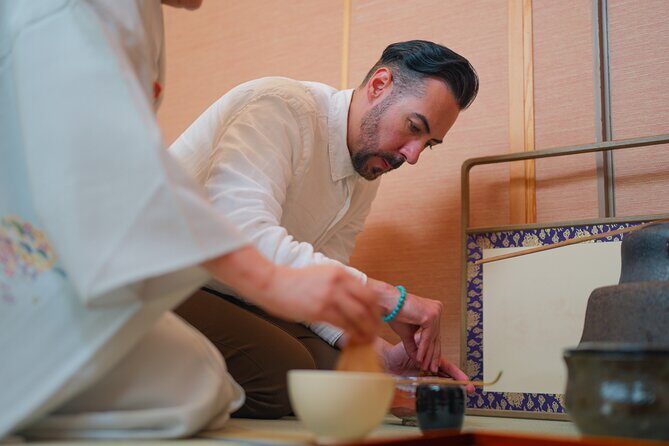
- Your turn at making matcha: you whisk your own bowl after watching the Urasenke tea procedure.
- Matcha from Marukyu Koyamaen: a well-known source of high-grade tea, not a random cup.
- Kyoto wagashi paired with each serving: sweets come from a long-established Kyoto wagashi shop.
- Haori provided: you dress in a traditional kimono-style jacket right in the experience.
- Meaning behind the tools and the ritual: you learn the culture of chado and the significance of the utensils.
Why Uzumasa Chanoyu Feels More Real Than a Quick Tasting
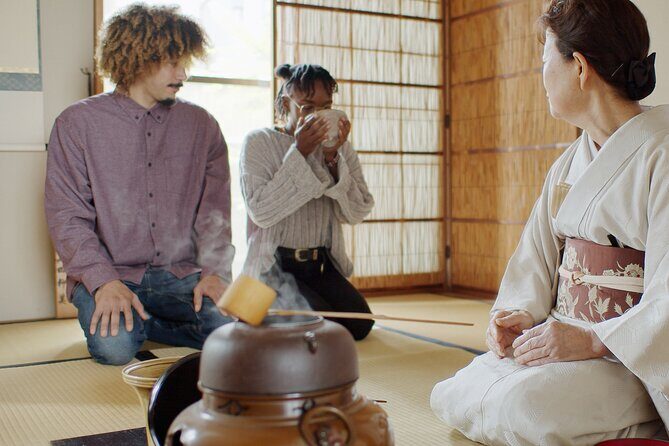
Kyoto has no shortage of tea experiences. What makes this one special is the setting and the pacing: you’re in the historic district of Uzumasa, where the refined mood associated with the Heian period is still present. Instead of rushing you through, the experience is built around quiet attention—enough time to look closely at what’s in front of you.
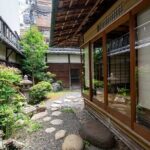
I like that it’s not trying to be trendy. You’re in a carefully designed space, with a garden arranged so you can appreciate it as part of the ceremony. One review mentioned being surprised to find both a garden and a tea room inside a stylish shop, which fits the vibe: the outside is normal, then you step into a different world.
And yes, it’s small-group by design. Your group is private, so you don’t get shoved into a crowd while everyone follows the same script. That matters because chanoyu works on calm focus, not noise.
A few more Kyoto tours and experiences worth a look


The 60-Minute Flow: Haori, Garden Views, and the Urasenke Procedure
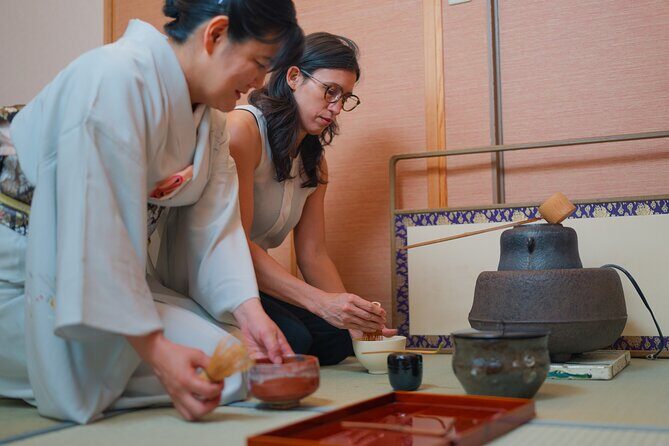
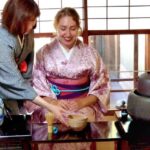
You’ll start by stepping into the space at Chanoyu The KYOTO Uzumasa and getting into the mood fast. One of the first things you do is wear a haori, a kimono-style jacket. It’s a small thing, but it helps you stop thinking of this as a performance and start treating it like a real ritual.
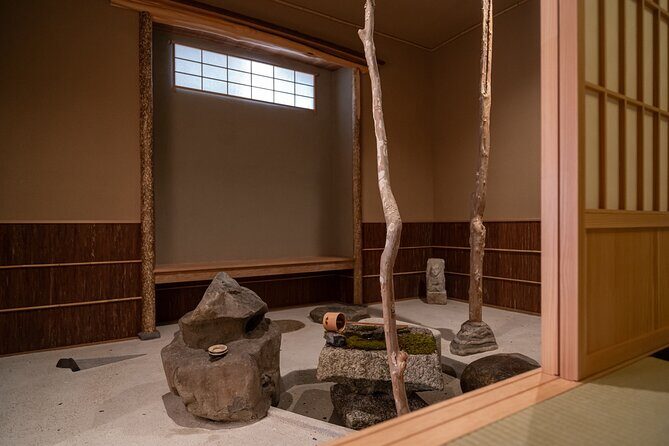
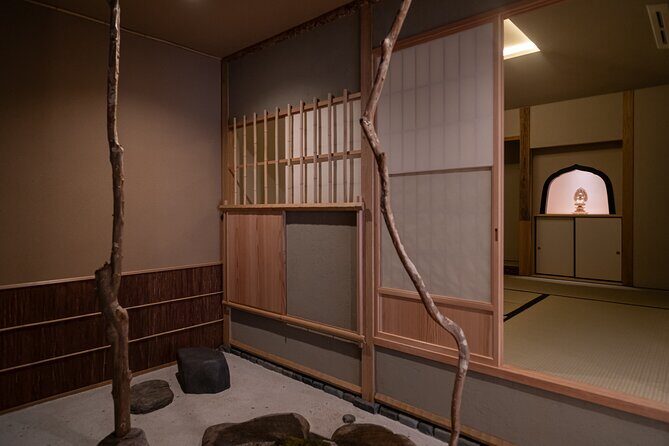
Next comes the garden. You’re invited to appreciate the meticulously arranged garden that’s presented as part of the tea room experience. It’s not a drive-by view through a window—it’s set up so you can slow down and notice details as they relate to the ceremony.
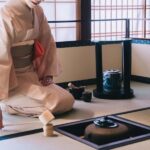
Then you watch the tea process in the Urasenke style. You’re not expected to already know what to do. Instead, you observe the graceful procedure first, which is a smart way to handle a first-time experience. It also gives you the right mental timing before you start whisking.
After that, the host brings context. You’ll get a brief explanation of the history and culture behind chanoyu, plus why the utensils matter. This is where the experience often becomes memorable for people. It turns the actions into meaning, so when you later pick up a tool or sip your matcha, it doesn’t feel random.
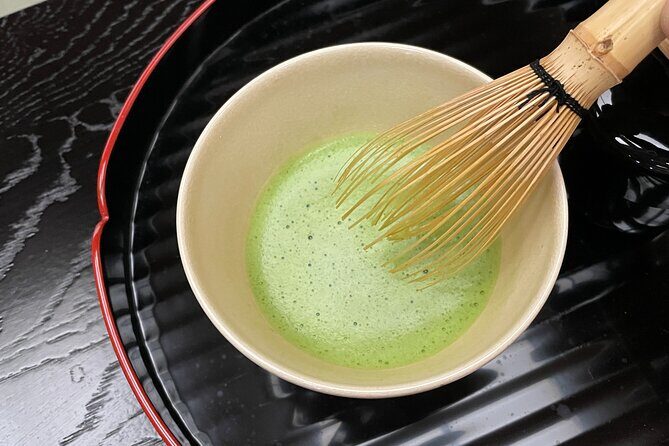
Finally, you whisk your own bowl of matcha and enjoy it alongside a second traditional sweet. The structure is simple, but it’s paced so you’re not just watching—you participate.
The Matcha and Wagashi Pairing: Marukyu Koyamaen Meets Kyoto Sweets
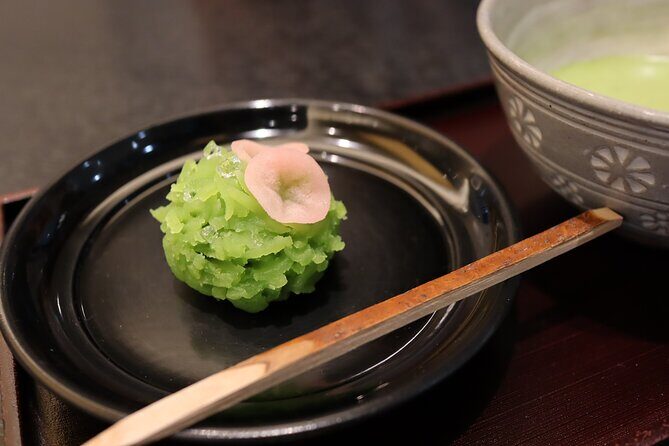
The biggest practical reason to care about this tea ceremony is quality. This isn’t positioned as a “try it once” tourist stop where everything tastes the same. You’re served matcha from Marukyu Koyamaen, and the sweets are described as coming from a long-established Kyoto wagashi shop.
Why that matters: matcha is one of those things where the first bite can change your expectations. Several comments praised the matcha as especially good, with more than one person saying it was unlike what they’d tasted before. That’s the sort of difference you feel when the tea is handled and matched thoughtfully.
The wagashi pairing is also important. Wagashi aren’t random cookies; they’re often shaped and flavored to harmonize with the season and the tea. Here, you’ll have exquisite Japanese sweets, and you’ll get one with your tasting while another comes with the second serving.
If you like food with a story, you’ll probably enjoy how the host connects what you eat with what you’re doing. Even if you’re new to the details, the experience aims to make the flavors feel intentional, not accidental.
Tea Utensils and Chado Hospitality: What You Learn Beyond the Cup
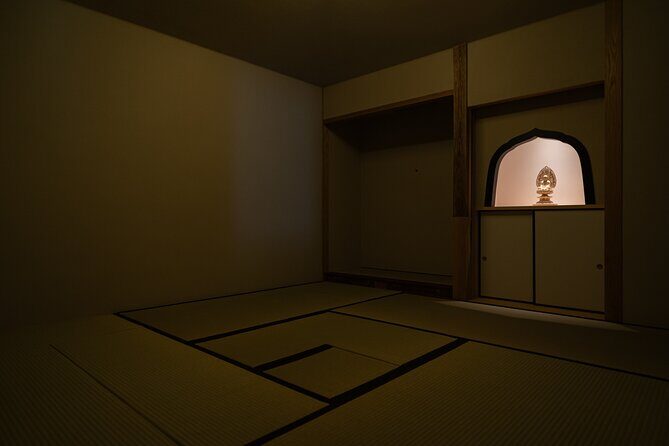
A lot of tea ceremonies focus on the steps and call it done. This one adds a cultural layer: you learn about chado, often described as the Way of Tea, as a form of hospitality. That doesn’t mean you’ll leave with a textbook. It means you’ll understand why the host is careful about the sequence, the utensils, and the pace.
You’ll also get an introduction to the traditional Japanese tea utensils used in the ceremony and a quick explanation of their history and cultural origins. The key word here is origins. The experience makes the tools feel less like props and more like objects with purpose.
One of the most praised parts from people who tried it is that the explanations are clear and the tone is polite and welcoming. That’s huge if you’re nervous about getting something wrong. When the host keeps things friendly while explaining what each moment means, your brain stops panicking and starts paying attention.
Think of it this way: you’ll taste the matcha, sure. But you’ll also learn how to “read” the ceremony—how to notice the quiet logic behind the actions.
Price, Group Size, and Timing: How the $586.38 Works in Real Life
Let’s talk money without hand-waving.
The price is listed as $586.38 per group, for up to 6 people, and the total experience is about 1 hour. If you fill all 6 spots, that works out to roughly $97–$98 per person. If you only have 2 people, it jumps to about $293 per person.
So the value depends on your group math.
What you get for that cost:
- A private group experience (only your group participates)
- Instruction on the ceremony steps, including Urasenke viewing and your own matcha whisking
- A guided explanation of chanoyu culture and utensil meaning
- High-quality servings: matcha from Marukyu Koyamaen and Kyoto wagashi
- Traditional dressing via a haori
- A miniature garden view built into the tea room experience
This is the kind of experience that can feel expensive if you treat it like a quick snack. But it makes more sense when you see it as a guided cultural session plus food plus a private setting. The fact that it’s already commonly booked about 27 days in advance is another clue: it’s popular, and spots may go fast during busy stretches.




Where It Happens and How to Fit It Into Your Kyoto Day
You meet at Chanoyu The KYOTO Uzumasa at:
Kyoto, Ukyo Ward, Uzumasa Izumishikibuchō, 19 北1階 (616-8101)
The good news is it’s described as near public transportation, and the experience ends back at the meeting point. Translation: plan a calm start or break mid-day, then head to your next activity without a complicated reroute.
Since the experience is about 1 hour, don’t schedule it right on top of another timed reservation. Build in a little buffer so you can arrive relaxed. Chanoyu is about slowing down. You’ll feel that more if your day isn’t sprinting.
Also, you’ll have a mobile ticket. So you can keep your phone ready and skip scrambling at check-in.
Who This Kyoto Tea Ceremony Is Best For
This is a strong fit if:
- You want a real Kyoto cultural experience, not just a tasting
- You’re curious about matcha and wagashi quality
- You’re a first-timer and want a guided, calm introduction
- You like food experiences where the “why” matters, not only the “what”
- You can travel with a small group and split the per-group cost
If you’re the type who gets impatient with quiet moments, you might not love the pace. But if you’re hoping for a peaceful hour with guided attention, this one is built for you.
Should You Book Chanoyu The KYOTO Uzumasa?
If you can share the group cost, I think this is a smart booking. The combination of private group time, haori dressing, a garden view, your own matcha whisking, and the specific quality mention (Marukyu Koyamaen matcha plus Kyoto wagashi) makes the price easier to justify.
One more practical note: the experience offers free cancellation if you cancel up to 24 hours in advance, so you’re not locked in if plans shift.
My bottom line: book it when you want calm Kyoto culture with real food and real instruction. If you’re solo and price is your biggest concern, consider pairing up with friends or looking for a different format—this one is designed to work best as a shared private group experience.
FAQ
How long is the Kyoto tea ceremony?
It lasts about 1 hour.
Is this a private experience?
Yes. It’s a private tour/activity, and only your group participates. The group size is up to 6.
What matcha and sweets are included?
You’ll enjoy matcha from Marukyu Koyamaen and traditional Kyoto sweets (wagashi) from a long-established Kyoto wagashi shop.
What’s included in the experience?
Included are Kyoto sweets and matcha, viewing a miniature garden, wearing a haori, an introduction to traditional tea utensils, and a brief explanation of the history and cultural origins of chanoyu.
What isn’t included?
Private transportation is not included.
Can I cancel for a full refund?
Yes. You can cancel up to 24 hours in advance for a full refund. If you cancel less than 24 hours before the start time, the amount paid is not refunded.