Kyoto’s prettiest streets come fast. I like this tour because it threads together the main sights without turning them into checkboxes, starting in Gion’s traditional lane world near Hanamikoji and Shirakawa. I also enjoy how the route includes both culture and scenery, with historic wooden machiya houses, tea-house atmosphere, and the feeling that you’re walking through Kyoto’s everyday stories.
My other favorite part is what you see at the big temple stop: Kiyomizu-dera’s wooden stage and panoramic views are the kind of payoff you remember. One possible drawback: the guide can focus more on the flow and photo moments than on deep ritual background, and the group can be smaller than you expect—so if you want extra detail, ask for it.
In This Review
- Key points I’d plan around
- Kyoto in Four Hours: what this route really delivers
- Starting at the Police Box: how to find your guide quickly
- Gion’s machiya lanes and geisha culture, up close but not staged
- Yasaka Shrine: 1400 years of ceremonies, explained in plain language
- Ninenzaka and Sannenzaka: craft browsing plus the Yasaka Pagoda view
- Kiyomizu-dera’s wooden stage: the reason many people plan Kyoto around this
- Price and guide quality: what $77 buys you (and what it doesn’t)
- Tips for making this tour feel personal and not rushed
- Who should book this Kyoto half-day tour?
- Should you book DeepExperience’s Kyoto Gion and Kiyomizu tour?
- FAQ
- How long is the tour?
- Where do I meet the guide?
- What’s included in the tour price?
- Is Zuigudo Hall entry included?
- What languages are available?
- Is this tour private or small group?
- Which areas does the tour cover?
- Is free cancellation available?
- Can I reserve now and pay later?
Key points I’d plan around
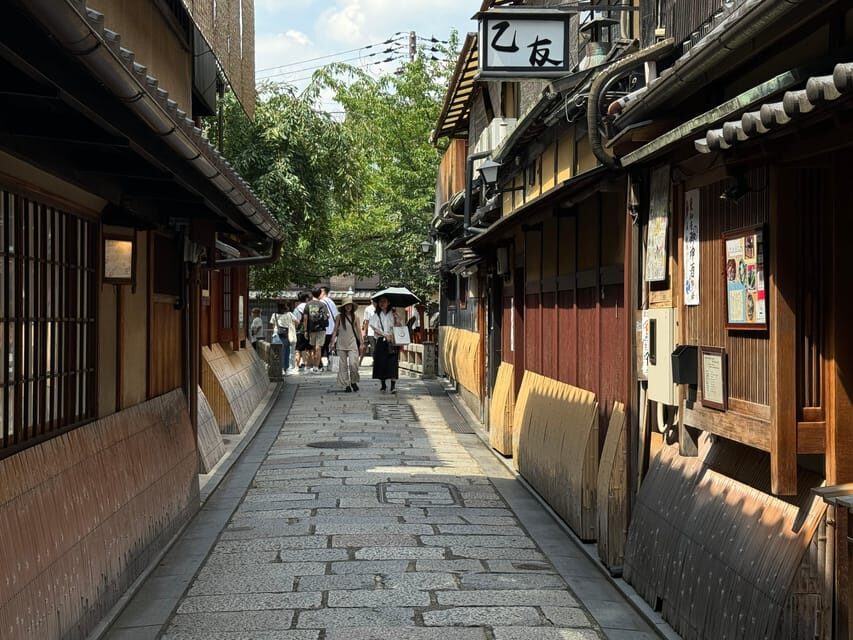
- Gion on foot: machiya houses, tea-house streets, and geisha culture context near the Kamo River
- Yasaka Shrine timing: a quick but meaningful stop with its 1400-year history in mind
- Photo-friendly lanes: Ninenzaka and Sannenzaka with craft shops and classic views
- Yasaka Pagoda sightline: you’ll see the five-story silhouette from nearby streets
- Kiyomizu-dera payoff: wooden stage + viewpoints, with temple entry included
Kyoto in Four Hours: what this route really delivers
This half-day tour is built for people who want Kyoto’s “you-know-it-when-you-see-it” hits, but still want a guide to explain what you’re looking at. The pacing is tight enough that you won’t get bored, yet slow enough to stop for photos and absorb why each place matters.
You’ll move through four distinct zones: Gion, Yasaka Shrine, the shopping streets of Ninenzaka/Sannenzaka, and finally Kiyomizu-dera. That sequencing is smart. You start in the old-neighborhood vibe of Gion, then shift into shrine and festival culture, and end with Kyoto’s most dramatic temple viewpoint.
Value-wise, the price is $77 per person for a 4-hour guided experience that includes temple entry at Kiyomizu-dera and a live guide. In Kyoto, that temple ticket alone can be a meaningful chunk of the total, so you’re not paying guide rates on top of extra fees for the big stop.
If you’re the type who likes to roam on your own, you can still use this as a shortcut: you get a guided framework, then you can wander afterward with better context.
A few more Kyoto tours and experiences worth a look

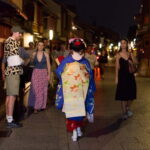
Starting at the Police Box: how to find your guide quickly
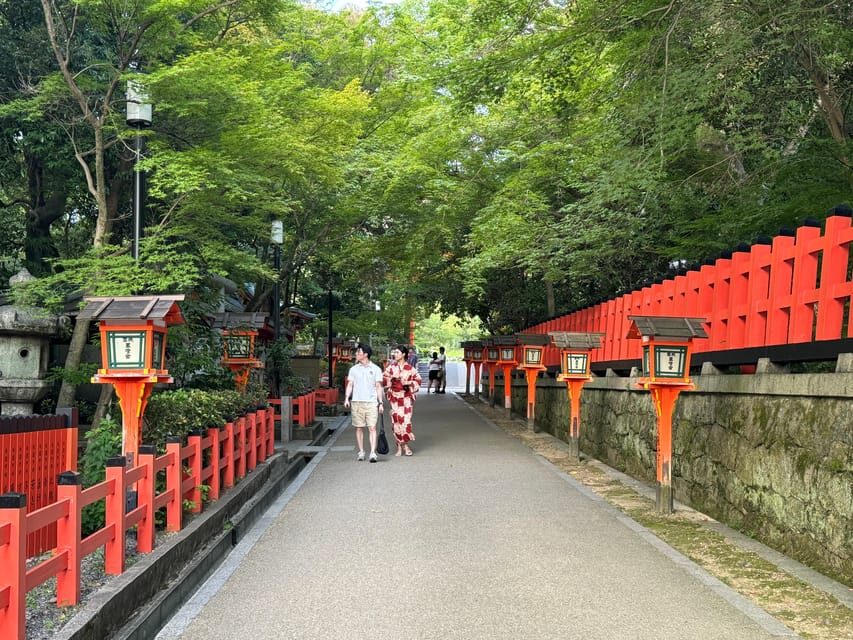
Meeting is at 中京警察署 四条交番 (a police box), right by Pontocho Street area. The guide will be holding a yellow sign with the DeepExperience logo.
This matters more than it sounds. Kyoto streets can look similar fast, especially around the river neighborhoods. If you arrive 10 minutes early and stand in the right spot, you’ll avoid that stressful moment of scanning every face while also trying not to block pedestrians.
Also note the tour runs in English or Japanese with a live guide. If you care about cultural context, lean into questions—your guide can only respond to what you ask for.
Gion’s machiya lanes and geisha culture, up close but not staged
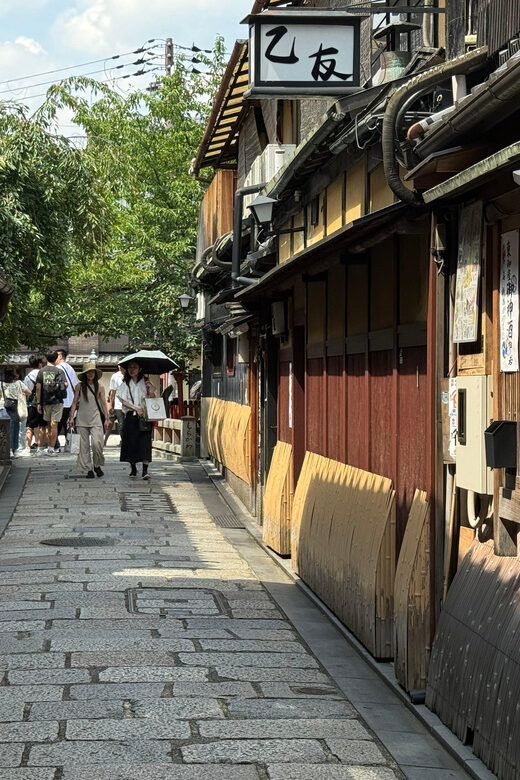
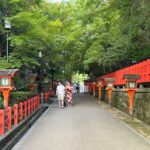
Gion is one of those Kyoto places where the “main character” is the street itself. You’re walking through lanes lined with traditional machiya houses—wooden facades that give the neighborhood its character long before anyone mentions geisha. Even if you’ve seen Gion photos before, it hits differently in person because you’re at human scale: narrow streets, old storefront rhythms, and the sense that this is still a living neighborhood.
Your guide starts you with a photo stop and guided walk focused on the geisha culture setting. Expect references to geisha and maiko culture, and the kinds of places where visitors often spot performers—especially around well-known streets like Hanamikoji and Shirakawa.
One smart thing about doing Gion with a guide: you’re not just looking for spectacle. You learn what makes the neighborhood historically important, why certain areas are associated with traditional arts, and how the architecture and street layout support that culture.
The practical downside is that Gion is also a tourist magnet. You may still see crowds at the classic pinch points. A good guide helps you keep the walk moving and find the best angles for photos without wasting time.
Yasaka Shrine: 1400 years of ceremonies, explained in plain language
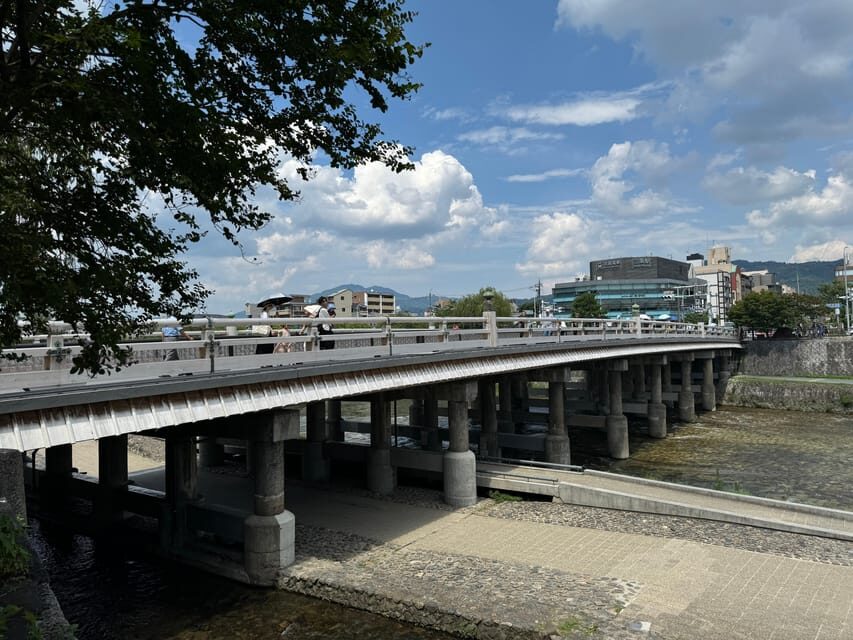
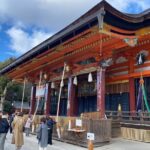
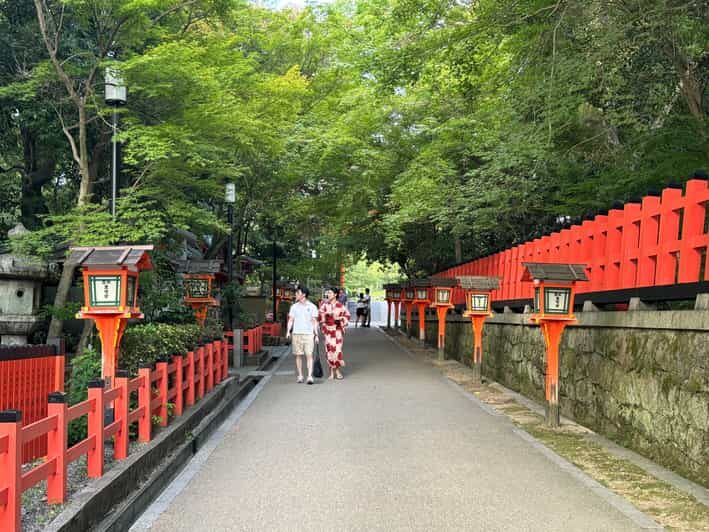
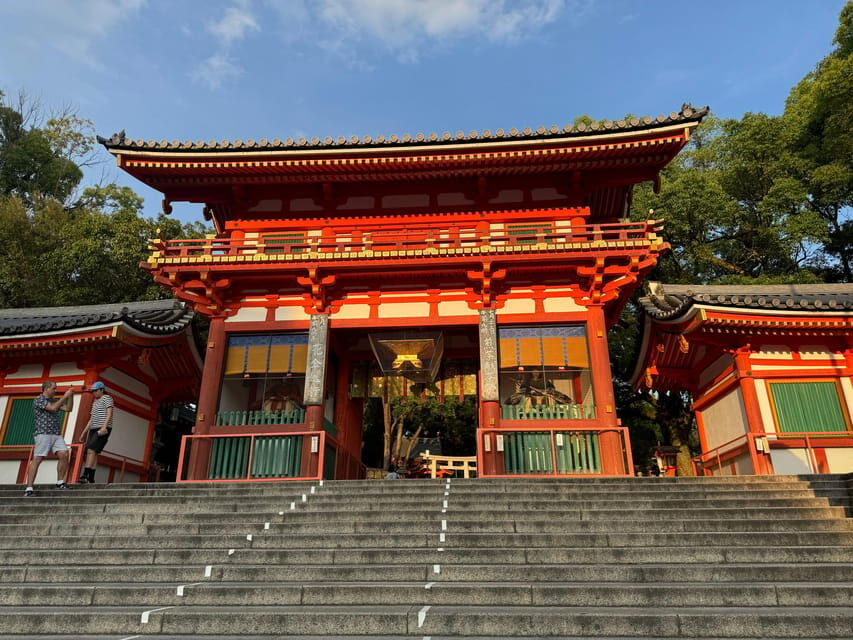
After Gion, you head to Yasaka Shrine. This is where the mood shifts from neighborhood charm into spiritual and festival significance. The tour frames the shrine with its 1400-year cultural background, and it also points out how the site connects to lively festivals and ceremonies.
Your visit includes a photo stop and a short guided time. That’s ideal if you’re traveling on a half-day window. You get enough orientation to understand what you’re seeing—then you’re free to keep walking with better context instead of just collecting photos.
Here’s the value for you: shrines in Kyoto can feel cryptic if you don’t know what to look for. Even a short, focused explanation can help you notice the details that communicate meaning—so your visit feels intentional, not random.
If you’re hoping for very deep ritual explanation, keep your expectations realistic. This is a guide-led introduction during a schedule that also includes other major stops. If rituals are your obsession, ask your guide to spend an extra moment on what you’re most curious about.
Ninenzaka and Sannenzaka: craft browsing plus the Yasaka Pagoda view
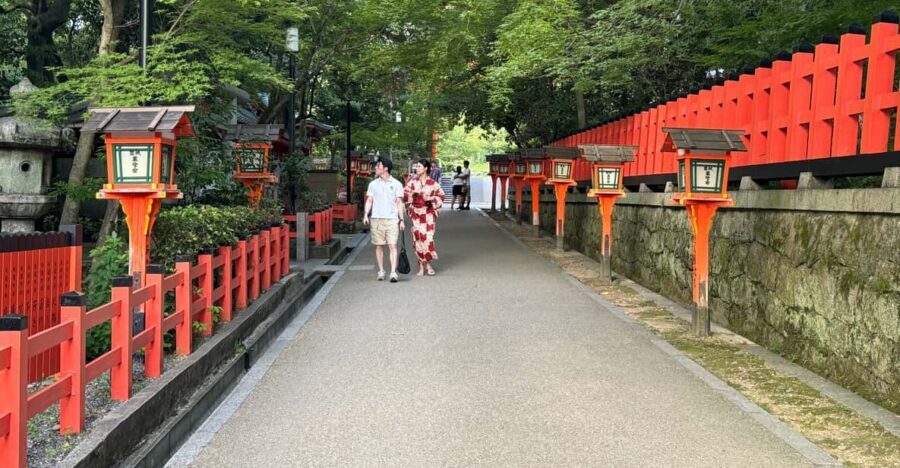
Then comes the lanes many visitors love for a reason: Ninenzaka and Sannenzaka are picture-perfect streets packed with small shops, tea-house atmosphere, and local craft browsing. This part works especially well when you want to slow down but don’t want a long museum-style stop.
You’ll do a photo stop and a short guided stroll, which usually gives you just enough time to:
- spot the kind of souvenirs and crafts worth looking for
- understand how this area functions as part of the tourist-to-local transition
- appreciate the street perspective before you move on
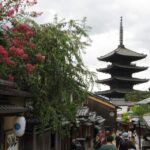
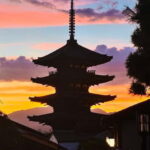
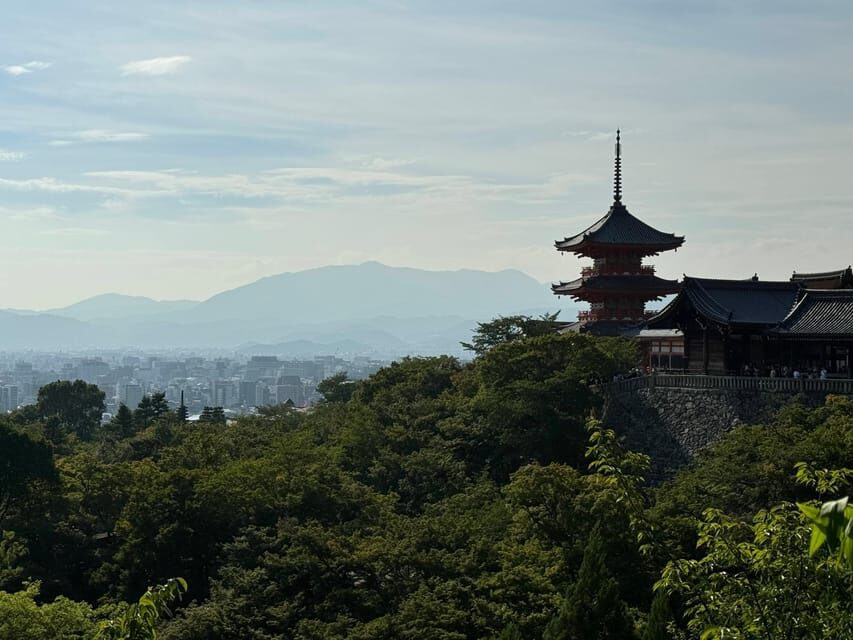
The best visual moment here is the view of the Yasaka Pagoda, the five-story landmark. You’ll see it from nearby streets in a way that makes the pagoda feel like part of the street-scene, not an isolated postcard.
Practical tip: wear shoes that handle uneven stone streets and crowds. This section is short, but it can still feel like a lot of walking because the pavement and the density of people make slow movement the norm.
Also, if you want less shoulder-to-shoulder time, don’t assume the “best” photo angle is the same as the easiest walkway. A guide who understands pedestrian flow can help you choose where to pause.
A few more Kyoto tours and experiences worth a look



Kiyomizu-dera’s wooden stage: the reason many people plan Kyoto around this
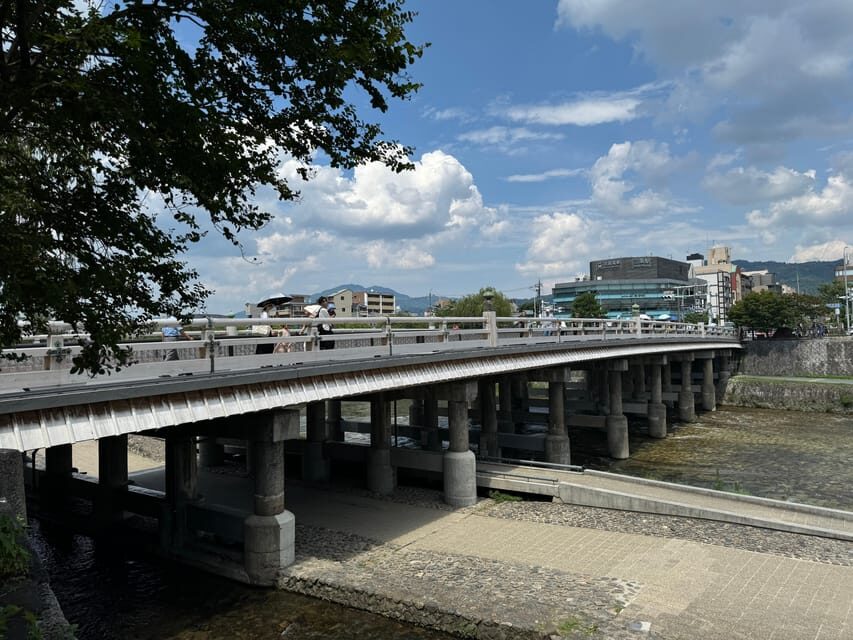
The tour ends at Kiyomizu-dera, with a photo stop and about an hour of guided time. This is the big finale.
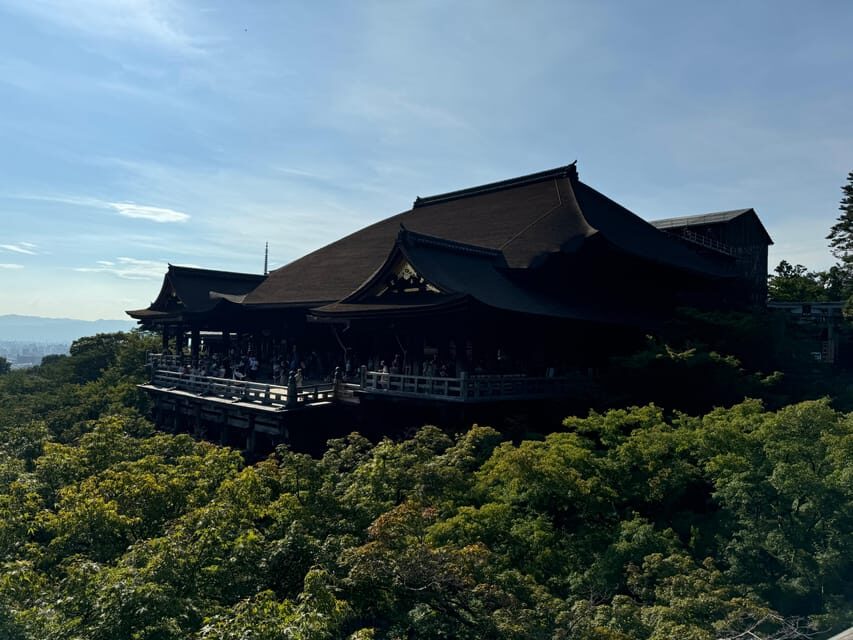
Kiyomizu-dera is famous for its wooden stage and the way it frames views. The tour highlights the iconic wooden platform and the panoramic scenes from the temple area. Even if you’ve seen it in pictures, you’ll likely feel the scale when you’re standing there—because it’s not just a structure, it’s a viewpoint with atmosphere.
You also get entry to Kiyomizu-dera included, which is a clear value point. You’re not paying extra just to access the main temple area with your guide.
One important limitation: Zuigudo Hall isn’t included. If Zuigudo Hall is on your personal must-see list, plan for the possibility that you’ll want to add that time on your own, after the guided portion.
For most people, Kiyomizu’s main stage and viewpoint are already enough. But knowing what’s included helps you avoid a last-minute surprise when you’re ready to keep exploring beyond the guided time.
Price and guide quality: what $77 buys you (and what it doesn’t)
At $77 per person for 4 hours, this tour sits in the category of paid guidance that’s meant to save you time and improve the experience. You’re paying for:
- a live guide (English or Japanese)
- a structured route with photo stops
- temple entry at Kiyomizu-dera
What you’re not paying for is a multi-hour, deep specialization on every single shrine detail. This tour is designed to hit the major hits with context. If you want to spend half a day doing only shrines, you might prefer something more shrine-focused. If you want both streets and viewpoints, this is a strong fit.
Guide quality seems to matter a lot here. Some guides are warm hosts who share Kyoto knowledge and even personal stories from Japan. Others may lean more toward walking logistics and fast explanations. That’s why I recommend you pick the tour based on your style:
- If you like chatting and asking questions, you’ll likely get more from the guide.
- If you mainly want a smooth route and you’ll research later, the guided pacing works well.
And yes, group size can vary. Some people end up with what feels like a more individual experience, while others expected a small group. If that difference matters to you, confirm group-size expectations before you book.
Tips for making this tour feel personal and not rushed
Here are a few ways to get more out of the time you’re paying for:
Ask one focused question per stop.
At Gion, ask what to notice in the machiya streets. At Yasaka Shrine, ask what makes the site significant beyond the basics. At Kiyomizu-dera, ask what view angle is most worth your time.
Use the guide to pick photo angles, not just subjects.
Ninenzaka/Sannenzaka is all about perspective. If you pause in the wrong spot, you’ll get blocked or spend time waiting. Let your guide point you to places where you can frame the pagoda view cleanly.
Plan for walking comfort.
Even with stops, you’re moving through historic streets. Wear shoes that can handle stone and light crowds.
If you want deeper ritual context, say so early.
One of the common complaints is that explanations may not go as far into rituals and culture as some people hope. If that matters to you, tell the guide right away so they can adjust their pace and detail.
Who should book this Kyoto half-day tour?
I think this works best for you if:
- it’s your first time in Kyoto (or you want your second trip to be more efficient)
- you want a guided route that combines old neighborhoods, shrine culture, and major viewpoints
- you like photo stops, but also want the “why” behind what you’re photographing
It may not fit if:
- you’re traveling with a very strict schedule and need zero walking time
- you prefer long stays at one site over a mix of four places
- you’re the type who needs ultra-deep ritual study at every stop (this is more overview than specialization)
Still, for most visitors, it’s an excellent “foundation tour.” You finish with a clear sense of where Kyoto’s key cultural elements show up—and that makes your remaining time feel smarter.
Should you book DeepExperience’s Kyoto Gion and Kiyomizu tour?
Yes, I’d consider booking if you want a well-paced sampler with professional guidance at the places that define Kyoto. The route gives you the right mix: Gion’s traditional streets, Yasaka Shrine’s long cultural story, the classic shopping lanes of Ninenzaka/Sannenzaka, and the big visual finale at Kiyomizu-dera.
Book it with clear expectations: you’re getting highlights and context in about four hours, not an all-day, professor-level course on every ritual. If you want extra depth, ask for it. If your biggest priority is Kiyomizu-dera’s extended areas beyond what’s included (like Zuigudo Hall), plan for optional add-on time after the tour.
If that sounds like your travel style, this is a strong, practical choice for Kyoto.
FAQ
How long is the tour?
The tour runs for 4 hours.
Where do I meet the guide?
Meet your guide in front of the police box next to Pontocho Street, at 中京警察署 四条交番. The guide will be holding a yellow sign with the DeepExperience logo.
What’s included in the tour price?
The included items are the guide and entry to Kiyomizu-dera temple.
Is Zuigudo Hall entry included?
No, entry to Zuigudo Hall is not included.
What languages are available?
The live tour guide is available in English and Japanese.
Is this tour private or small group?
Both private and small groups are available.
Which areas does the tour cover?
You’ll visit Gion, Yasaka Shrine, Ninenzaka, and Kiyomizu-dera, with photo stops along the way and a view of the Yasaka Pagoda from the nearby streets.
Is free cancellation available?
Yes. You can cancel up to 24 hours in advance for a full refund.
Can I reserve now and pay later?
Yes. You can reserve your spot and pay later.