Two Kyoto icons, one well-paced day. This walking tour strings together the city’s major layers of power and everyday life, from temple faith to shogun rule and imperial residence. You’ll spend real time at Nijo Castle and Kyoto Imperial Palace, then add the hit of local food culture at Nishiki Market.
I like that it’s built for people who want a lot of Kyoto without juggling trains all day. I also love the private-group feel and the strong English skills people note, with guides such as Naoko, Chie, and Fuji making history feel clear and question-friendly. The itinerary also gives you breaks for shopping and refreshments, not just photo stops.
One thing to consider: Nijo Castle admission and transportation are not included, and the tour involves quite a bit of walking. If you’re not comfortable on your feet for most of the day, you’ll want to plan your pace (and shoes) carefully.
In This Review
- Key points before you go
- How this Kyoto day moves: temples, markets, and power
- Higashi Hongan-ji Temple: a major faith stop that sets the tone
- Nishiki Market: Kyoto’s kitchen, plus real time for food and shopping
- Nijo Castle: shogun-era Kyoto with an admission ticket
- Kyoto Imperial Palace: not a European-style showpiece
- The guide is the real engine (and you may get Naoko, Chie, or Fuji)
- Walking, timing, and comfort: how to set yourself up well
- Price and value: where the money actually goes
- Who this tour suits best
- Should you book this Kyoto Imperial Palace and Nijo Castle walking tour?
- FAQ
- What time does the tour start?
- How long is the tour?
- Is this tour private?
- What’s included in the price?
- Are admission tickets included?
- Is transportation included?
Key points before you go
- Private group format means the tour can match your questions and pace.
- A 7-hour day covers temple, market, shogun history, and the emperor’s former home.
- Mobile ticket helps you move through entry points with less fuss.
- Mix of stops: Higashi Hongan-ji for faith, Nishiki Market for food culture, Nijo Castle for shogun-era details, and Kyoto Imperial Palace for imperial life.
- Guide focus stands out in the experience reports, with several named guides (Naoko, Chie, Fuji) praised for explaining clearly in English.
How this Kyoto day moves: temples, markets, and power
Kyoto rewards slow travel, but not everyone has the time. This tour is a practical answer to the classic problem: you want the big-name sights, but you also want the city to feel like a living place, not a checklist.
You start near JR Kyoto Station at the Hotel Granvia Kyoto, meeting at the Central Entrance. That’s a smart start because it keeps the day simple. The tour then builds a storyline: first you see a major Buddhist temple, then you hit Nishiki Market, and only after that do you shift into the political heart of past Japan with Nijo Castle and the Kyoto Imperial Palace.
The biggest value here is compression without chaos. With a guide walking you through the meaning of each place, the time you spend at each stop doesn’t feel wasted. You’re not just looking at buildings; you’re getting the why behind them.
A few more Kyoto tours and experiences worth a look


Higashi Hongan-ji Temple: a major faith stop that sets the tone
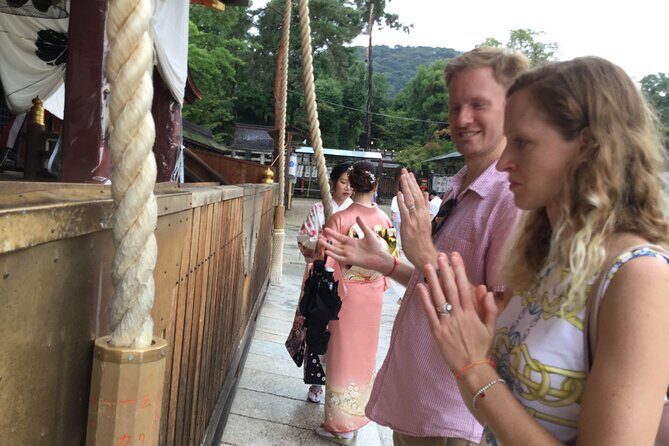
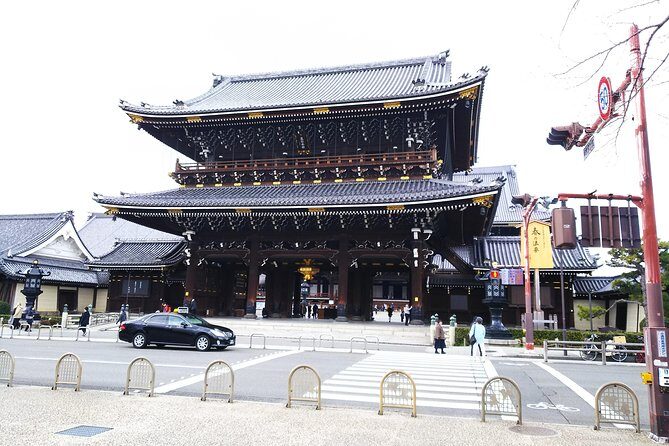
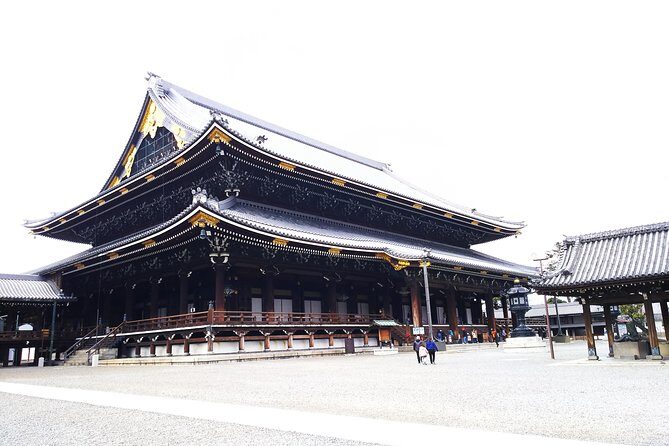
The day begins at Higashi Hongan-ji Temple, with about 30 minutes on site. This isn’t a tiny “quick look” stop. It’s one of Kyoto’s major Buddhist centers, and it’s included without an admission ticket on the tour plan.
The time limit is short, so treat it like orientation. You’ll get a sense of the scale and role of Buddhism in Japan, and you’ll get enough context to make the later stops land harder. It helps if you go in with a simple mindset: you’re here to understand place first, and details second.
If you like architecture, you’ll probably enjoy noticing how religious spaces work in layers—movement from one area to another, and the way visitors experience the site as a whole. The guide’s job is to help you not feel lost during that quick visit.
Practical note: even with a short stop, this is still part of your walking day. Wear shoes you can trust.
Nishiki Market: Kyoto’s kitchen, plus real time for food and shopping
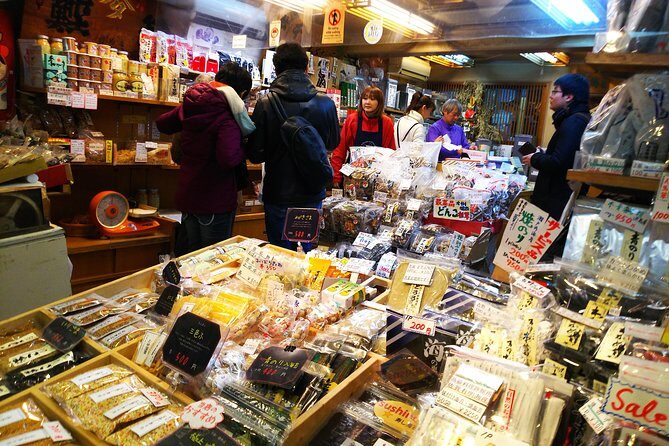
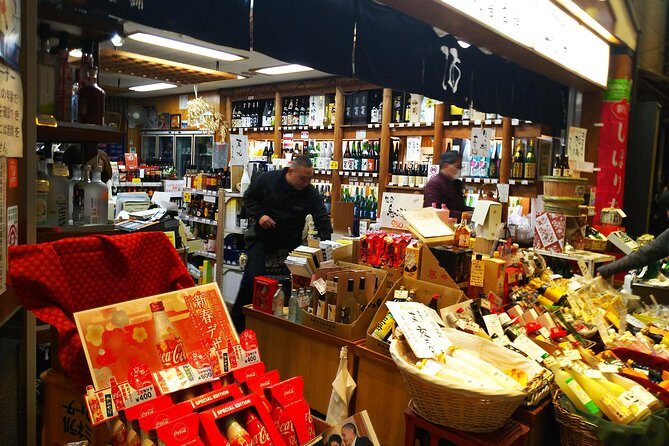
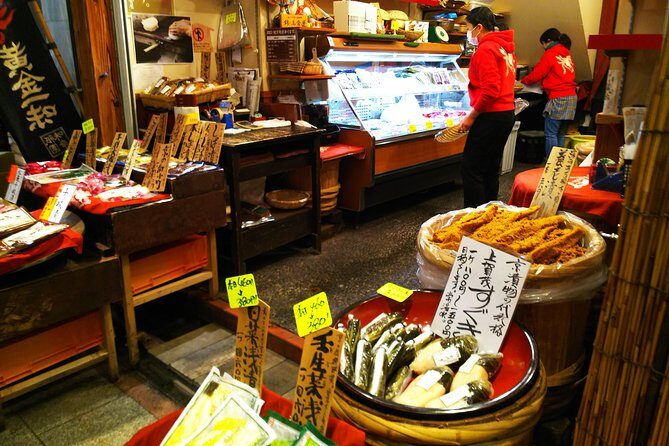
Next comes Nishiki Market Shopping District for about 30 minutes. The best way to think of Nishiki is simple: it’s a concentrated slice of Kyoto’s daily life. The tour approach gives you a focused window to browse and snack without turning it into a two-hour detour.
This stop is included without an admission ticket, so you’re not paying extra for the experience itself. You’re paying in time, and you get what you need: a chance to see what locals mean when they talk about Kyoto’s food culture.
A good guide experience here matters because Nishiki can overwhelm you fast—lots of stalls, lots of smells, lots of people. In the reports, guides like Fuji are praised for food recommendations at the market, which is exactly what you want if you’re short on time and don’t want to gamble on random picks.
If you plan to shop, bring small bills or a card you feel comfortable using. Also, keep some energy for later. Your “shopping bag” can be heavier than you think by the time you reach the castle.
Nijo Castle: shogun-era Kyoto with an admission ticket
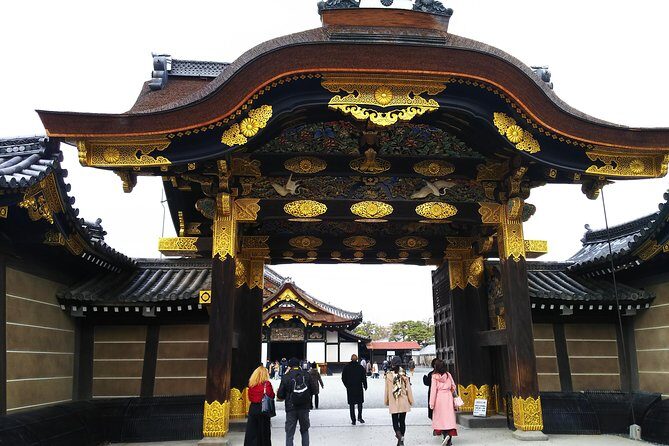
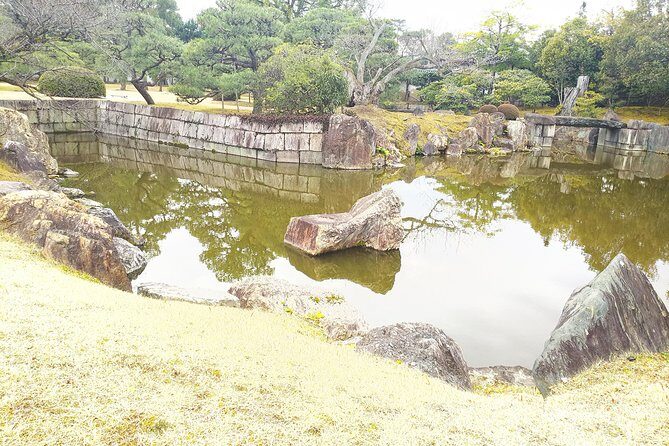
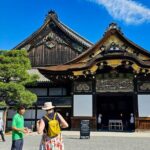
Nijo Castle is where the day shifts into political history. You’ll get about 1 hour here, but admission is not included. The tour listing sets the castle admission at ¥1,300 per person.
The castle is tied to how power worked in Japan at the time—specifically, the shogun’s residence when he visited Kyoto. That context helps, because otherwise a visitor might see rooms and walls and just think, cool architecture. With a guide, you start to see the castle as a system: spaces designed for authority, ceremony, and control.
The tour plan also hints at the decorative intensity—there are said to be more than 1,000 gorgeous paintings inside. You don’t need to memorize them. What you want is the feeling of how art and design were used to communicate status.
One consideration: because the ticket isn’t included, you’ll want to have yen ready or be prepared to pay on arrival. If you hate that kind of friction, double-check your transport plan and payment options before you go.
Kyoto Imperial Palace: not a European-style showpiece
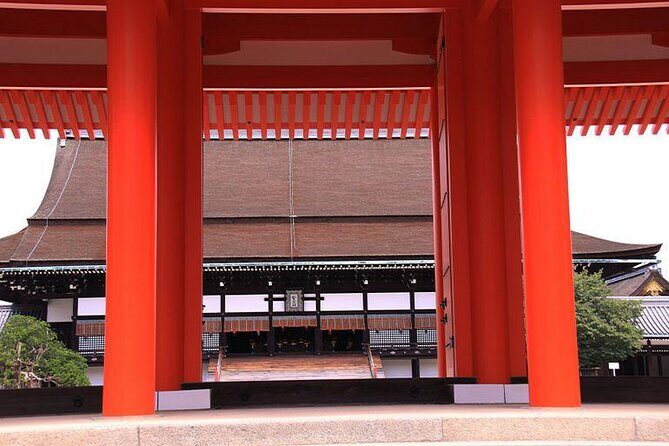
After the castle, you step into Kyoto Imperial Palace, with about 1 hour 15 minutes on site. The palace stop is listed as free in the tour plan, which is a nice bonus.
A common mistake is expecting something like many European palaces—gold, furniture, and a museum-like display everywhere. The better expectation is: this was the imperial home before the capital moved to Tokyo in 1868, so the value is in how the space reflects earlier court life.
You’ll be in a large complex, and you’ll likely notice that the palace experience feels different from the castle experience. One is about shogun power and rule. The other is tied to the emperor’s family and the ceremonial side of governance. The contrast is part of the payoff.
Give yourself permission to appreciate the atmosphere. Even if you don’t catch every detail, having the historical frame makes your photos and your memories more meaningful.
A few more Kyoto tours and experiences worth a look

The guide is the real engine (and you may get Naoko, Chie, or Fuji)
This tour stands or falls on the guide, and the experience reports for this program are strongly guide-led. Names like Naoko, Chie, and Fuji show up with praise for clear English and for making the material work for kids and adults alike.
What that means for you in plain terms: you’ll get answers to questions, not just speeches. You also get route help—how to move through each site efficiently and how to use the allotted time without feeling rushed.
If you like asking “why” questions, you’ll probably enjoy this format. For example, the palace and castle are different enough that a guide’s comparison can help you avoid the classic tourist confusion of mixing up timelines and roles.
Also, the market stop benefits from a guide who can recommend what to try. Nishiki can be chaotic, so having a person point you toward good options saves time and prevents decision fatigue.
Walking, timing, and comfort: how to set yourself up well
This is a 7-hour tour with quite a bit of walking, and the listing asks for moderate physical fitness. That doesn’t mean it’s extreme, but it does mean you should dress like you’ll earn your photos.
Start time is 9:00 am, and the tour ends back at the meeting point near Kyoto Station. That return matters. You won’t end your day stranded in the middle of nowhere; you’ll be back near your transit hub.
My practical checklist:
- Wear comfortable walking shoes with solid grip.
- Bring a small layer for temperature swings and a light rain cover if weather is iffy. The experience requires good weather, so expect changes if conditions are poor.
- Carry water. Your market stop may tempt you with snacks, but hydration still wins.
- If you’re traveling with kids, the guided explanations can help break the day into digestible pieces—exactly how the reported experience with families describes it.
Service animals are allowed, and the tour is near public transportation, which helps if you need a quick reset break.
Price and value: where the money actually goes
The listed price is $111.03 per person for the Kyoto Imperial Palace and Nijo Castle walking tour. What makes this feel fair is the structure: you’re paying for the guide fare, and the stops are a mix of free entries and one ticketed site.
Here’s the cost reality check:
- Included: guide fare
- Not included: Nijo Castle admission (¥1,300 per person) and public transportation fare (¥1,000 per person)
- Free per the tour plan: Higashi Hongan-ji Temple and Kyoto Imperial Palace, plus the Nishiki Market shopping district
So you’re not paying admission for every stop; you’re paying for a guided day that covers multiple key areas. For first-timers, that’s often the best value: your guide saves you from wasting time figuring out what matters and what doesn’t.
Also, this tour offers group discounts and uses a mobile ticket. That matters because it reduces friction, especially if you’re juggling Japan transit and entry times.
One more timing note: it’s commonly booked about 56 days in advance on average. If you’re traveling in peak seasons, you may want to book earlier rather than later.
Who this tour suits best
This is ideal if you want one day that hits the core Kyoto storyline:
- faith and major temple presence (Higashi Hongan-ji),
- food culture and browsing (Nishiki Market),
- shogun-era power (Nijo Castle),
- and imperial residence context (Kyoto Imperial Palace).
You’ll likely enjoy it most if you’re:
- on a first visit and want the big contrasts in one schedule,
- traveling as a small group and prefer a private experience format,
- comfortable walking for most of the day at a steady pace.
If you’re the type who wants long, slow wandering with no structure, you might feel the time limits. This tour is about smart coverage, not unlimited roaming.
Should you book this Kyoto Imperial Palace and Nijo Castle walking tour?
I’d book it if your goal is to understand Kyoto quickly and clearly—temple life, market culture, and the historical seats of power—without spending your vacation wrestling with logistics.
I’d think twice if walking is tough for you, because the itinerary expects moderate physical fitness and a day of movement. I’d also plan for the extra ¥1,300 castle admission and ¥1,000 transport cost, so you aren’t surprised mid-day.
Bottom line: if you want a guided, efficient Kyoto day with real historical context at the two biggest landmarks, this one makes strong sense.
FAQ
What time does the tour start?
It starts at 9:00 am.
How long is the tour?
It runs for about 7 hours.
Is this tour private?
Yes. It’s listed as a private tour/activity, meaning only your group participates.
What’s included in the price?
The tour includes the guide fare. The listing also notes mobile ticket use and group discounts.
Are admission tickets included?
Not all of them. Nijo Castle admission (¥1,300 per person) is not included. Higashi Hongan-ji Temple, Nishiki Market, and Kyoto Imperial Palace are listed as free stops in the tour plan.
Is transportation included?
No. Public transportation fare is not included and is listed as ¥1,000 per person.