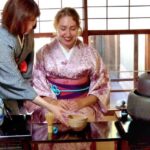
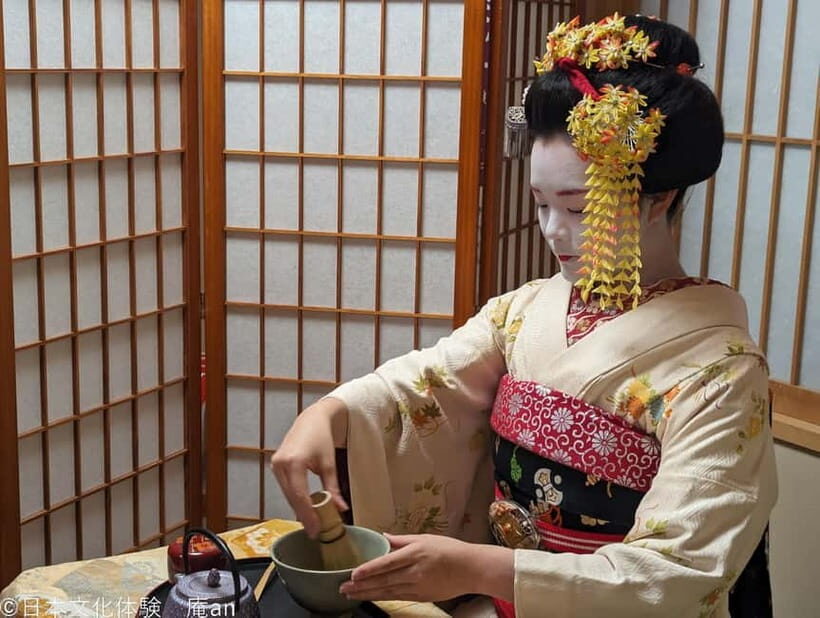
A Kyoto tea moment that fits any schedule. This 45-minute experience pairs a real Maiko (or sometimes Geiko) with hands-on matcha making, a short lecture, and a calm photo moment near Gojo Station. I especially like that you’re not spending half a day chasing a ceremony—you’re getting the key idea of Kyoto in one compact stop. A small downside: it’s not held in a classic ochaya house, and the venue is a building with stairs.
Two things I’d put at the top. First, the matcha lesson is practical: you’ll make your own cup, not just watch. Second, the Q&A part gives you context on daily life and the world around performance arts, plus photo time that feels respectful rather than awkward. You should also know that the schedule is tight and late arrivals aren’t covered.
If you have limited time in Kyoto, this is a smart way to get close to the craft. Just keep your expectations realistic: it’s a short program, not a full-length traditional tea-house evening with hours of course dishes and pacing. Still, for the price and the access, it’s a lot of Kyoto for one sitting.
In This Review
- Key Points You Can Count On
- Entering Kyoto’s Tea World From Gojo Station
- Maiko or Geiko: Who You’ll Meet (and Why It Changes the Vibe)
- The 45-Minute Program: Matcha, Ohigashi, Questions, Photos
- Greeting and a short lecture
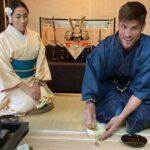
- Tea ceremony with Maiko/Geiko
- Q&A session (a real highlight)
- Photo opportunity right beside the host
- Senjafuda lucky charm gift
- Matcha and Ohigashi: What You’re Actually Learning
- Up-Close Photos Without the Awkwardness
- Senjafuda: A Small Charm With Big Meaning
- Price and Logistics: Is $28 Worth It?
- Venue Reality Check: Not an Ochaya, But Still Comfortable
- Who Should Book This Kyoto Tea Ceremony
- FAQ
- FAQ
- How long is the Kyoto tea ceremony with Maiko?
- Where do I meet the host?
- What’s included in the $28 price?
- Do I take part in making the matcha or just watch?
- Is there elevator access at the venue?
- Is there English translation?
- What if the host is a Geiko instead of a Maiko?
- Are late arrivals accommodated?
- Can I cancel and get a full refund?
- Should You Book Kyoto Tea Ceremony With Maiko?
Key Points You Can Count On
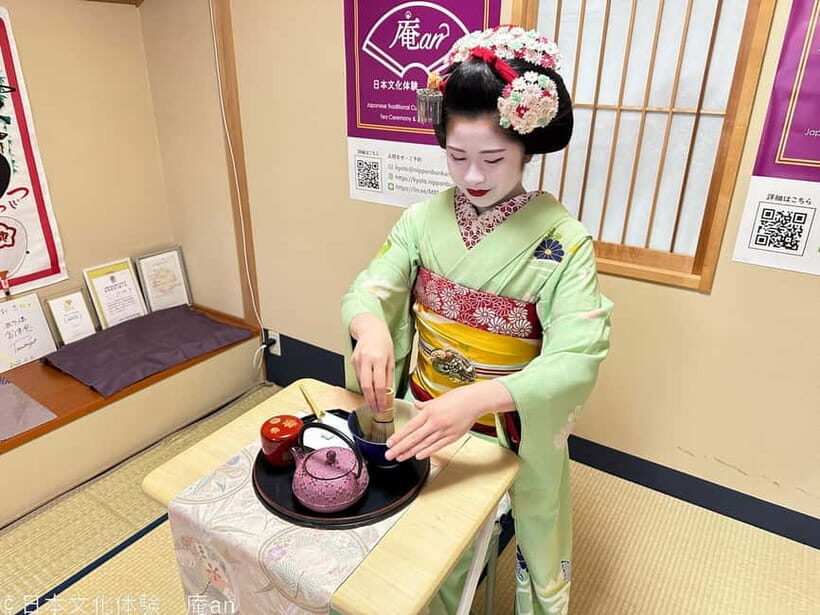
- Hands-on matcha: you’ll make matcha yourself, with guidance from your host
- Two dried Japanese sweets (Ohigashi): a small but classic sweet pairing
- Up-close photos: a commemorative photo right beside the Maiko/Geiko
- Senjafuda lucky charm: you receive a charm called Senjyafuda after the photo
- Q&A with a performer: direct questions about her world and how she fits it
- Short and convenient: about 30–40 minutes at a reasonable price near Gojo Station
Entering Kyoto’s Tea World From Gojo Station
Kyoto can be intense. Temples, lines, buses, and that one street where you suddenly realize you’ve been walking for 40 minutes. This experience is built for people who want a Kyoto cultural hit without turning their day into a scavenger hunt.
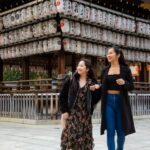
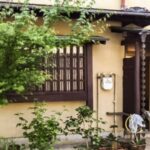
The location is simple: it’s a 1-minute walk from Exit 1 of the Karasuma Line Gojo Station. The store entrance faces Gojo-dori, so you’re not hunting hidden doors all over an alley. That matters because tea ceremony experiences are timing-sensitive, and getting there fast reduces stress.
The program runs from 10:00 AM to 5:00 PM. If you book after 5:00 PM, it’s processed the next day, so double-check your confirmation and show up with a little buffer.
A few more Kyoto tours and experiences worth a look
Maiko or Geiko: Who You’ll Meet (and Why It Changes the Vibe)
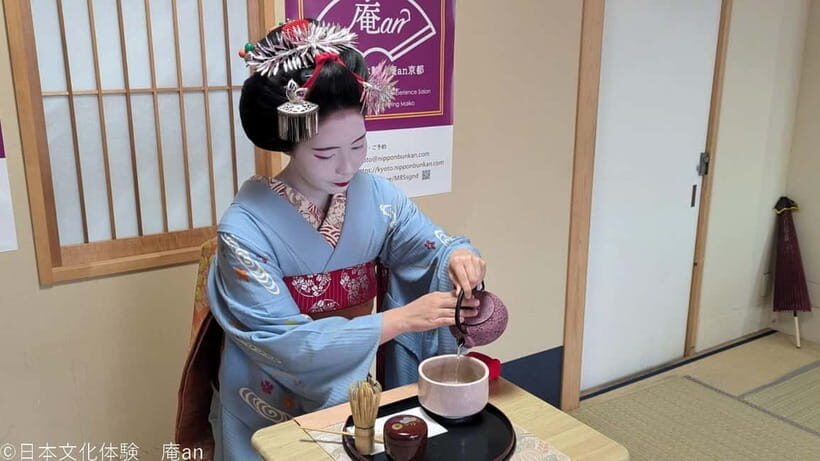
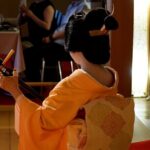
This program is centered on meeting a Maiko, but it can also be hosted by a Geiko depending on the date and situation. In real life, that flexibility matters because performer availability can shift. The experience content stays similar—tea ceremony, explanation, Q&A—but the tone can feel a bit different depending on who’s in the room.
From the info I have, the host gives a lecture, guides you through matcha, and answers questions. Some sessions can also include extra ceremonial details that fit the moment—one guest noted their host poured sake, for example. You should treat those extras as possible rather than guaranteed, since the core promise is matcha, sweets, Q&A, and the lucky charm.
If you’re specifically hoping to meet a Maiko, go in with that goal—but don’t let the “what if” ruin the day. Either way, you’ll be talking with someone who lives the culture you came to see.
The 45-Minute Program: Matcha, Ohigashi, Questions, Photos
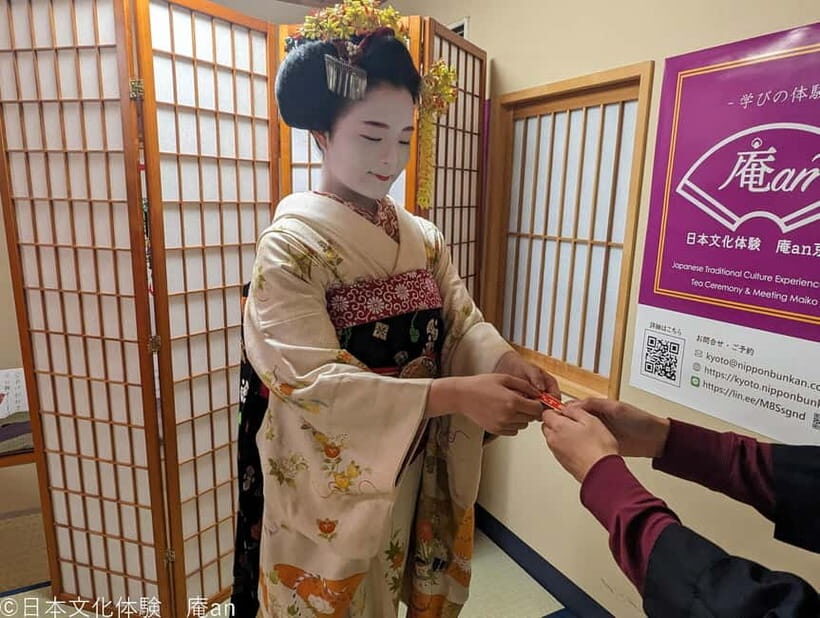
This is a compact schedule, which is a good thing when your Kyoto hours are limited. You’re looking at about 30 to 40 minutes of active program time, plus the full booking window listed as 45 minutes.
Here’s how the flow typically works:
Greeting and a short lecture
It starts with a greeting from the Maiko/Geiko. Then your host explains what you’re about to do—what matcha is, how the ritual works, and what you’ll be doing at the table. This lecture piece is where the whole experience turns from entertainment into understanding.
Tea ceremony with Maiko/Geiko
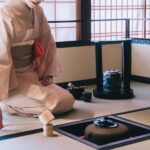
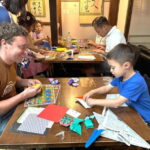
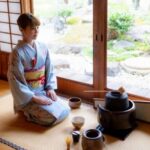
You’ll get matcha and learn to make it. Your host shows you the steps, then you make your own tea by following the guidance. Alongside the tea, you’ll be served two dried-type Japanese sweets called Ohigashi.
This is one of the best parts for many people because matcha can feel mysterious until someone slows it down for you. Once you handle the bowl and go through the process yourself, the ceremony stops being a “look but don’t touch” thing.



Q&A session (a real highlight)
Next comes the Q&A. This is where the experience becomes personal. Instead of a generic script, you’re asking questions directly and getting answers about the host’s daily life and the world around becoming a Geiko.
In some cases, translation support is available. One guest specifically mentioned an interpreter helping ensure they understood everything. If you want to maximize this part, write down 3 to 6 questions before you go, focusing on things like training, daily routine, or what the performance lifestyle feels like.
Photo opportunity right beside the host
After the Q&A, you’ll take a commemorative photo right beside the Maiko/Geiko. You’re close enough for it to feel like a moment you’ll remember, not a distant “tour group line” photo. You don’t need special staging; it’s handled.
Senjafuda lucky charm gift
Finally, you’ll receive a lucky charm called Senjafuda (often spelled Senjyafuda in the program notes). It’s given after the photo moment—more than just a souvenir, it gives the program an ending you can hold onto.
Matcha and Ohigashi: What You’re Actually Learning
The program’s value is in what you do, not just what you see. You get matcha instruction, and you also get the chance to experience the pairing with Ohigashi.
Here’s what I like about that pairing for first-timers: matcha is earthy and intense, and sweets help you taste the tea in a fuller way. Even if you can’t name the flavor components, you’ll notice the difference in how the tea feels once the sweet is in the rhythm.
Also, the sweets are described as dried-type Japanese sweets. That means you’re not dealing with complicated handling while you’re learning the tea steps, so it stays stress-free. You can focus on the matcha technique and the flow of the ceremony.
If you’re curious about the etiquette side, the host’s teaching style matters. One guest named Masaya San praised her confident answers and simple explanations. Even if your host’s approach is different, the goal stays the same: you leave understanding how to participate without feeling clumsy.
Up-Close Photos Without the Awkwardness
There’s a particular kind of frustration in big cities: you want the moment, but you don’t want to intrude. This program handles that tension better than most “stand near and hope” sightseeing.
You get an organized photo opportunity beside the Maiko/Geiko, and the host also leaves the room at the end. That structure keeps the interaction respectful. Instead of feeling like you’re chasing someone down the street, you’re participating in a timed, guided encounter.
One guest also pointed out the advantage of proximity without stalking. That’s exactly what you’re buying here: closeness with boundaries.
Tip for the photo: decide in your head what you want to communicate. A calm smile and a relaxed posture go a long way. No need to overthink it.
Senjafuda: A Small Charm With Big Meaning
A lot of experiences end with a generic take-home item. Here, the Senjafuda is tied directly to the ceremony moment, handed over by the Maiko/Geiko as a gift.
Lucky charms are a common theme in Japan, but what makes this one feel special is that it’s not separated from the experience. You’re learning tea, chatting in Q&A, taking the photo, then receiving the charm at the end. It feels like a closing ritual, not a checkout line.
If you like souvenirs that actually reflect the activity you did, this is the type of item you’ll use—either as a keepsake or as a reminder that you participated, not just watched.
Price and Logistics: Is $28 Worth It?
At $28 per person for a roughly 45-minute experience, you’re not paying for hours of access. You’re paying for structured attention: tea ceremony with a trained performer, matcha instruction, sweets, Q&A time, a close photo, and the Senjafuda charm.
In practical terms, here’s how I think about value:
- You’re saving time. The meeting point is near Gojo Station, and the total program is short. That’s a real cost saver in Kyoto.
- You get participation, not observation. Making your own matcha is the difference between a show and a lesson.
- You get interaction. The Q&A is a big part of why people rate this experience highly.
Potential drawback on value: it depends on what you want. If you want a long, slow, traditional tea-house evening, this will feel brief. If you want a compact Kyoto moment with direct access to a performer, it’s a good match.
Venue Reality Check: Not an Ochaya, But Still Comfortable
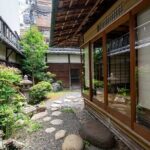
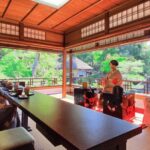
The venue isn’t an ochaya or a traditional Japanese house. It’s in a building, with a relaxed atmosphere and friendly staff. That doesn’t mean it’s sterile or unpleasant—it just means you shouldn’t expect the full exterior-and-interior look of an old tea house.
There’s also no elevator. You’ll need stairs to reach each venue. If you’re carrying bags, go light. If stairs are an issue, plan for it before you commit.
Also note that your schedule is firm. The event can’t be held for delays, and latecomers won’t be entitled to a refund. That’s not meant to be harsh; it’s what keeps the room timing and the performer’s schedule workable.
Who Should Book This Kyoto Tea Ceremony
This is a strong fit for:
- First-timers who want matcha practice instead of just watching
- People who like cultural access with respectful boundaries
- Travelers who want a short activity near public transport
- Anyone interested in the performer’s world through Q&A
It may not be ideal if you:
- Want a full, multi-course tea experience that takes most of the afternoon or evening
- Struggle with stairs or need step-free access
- Need a very flexible schedule due to tight connections or unpredictable plans
If your Kyoto day is already full, this is exactly the kind of activity that helps you fit in something meaningful without wrecking the rest of your plans.
FAQ
FAQ
How long is the Kyoto tea ceremony with Maiko?
The experience is listed as 45 minutes, with the program taking about 30 to 40 minutes.
Where do I meet the host?
Meet at a spot 1-minute walk from Exit 1 of the Karasuma Line Gojo Station. The store entrance faces Gojo-dori.
What’s included in the $28 price?
You get the tea ceremony with Maiko/Geiko, two dried-type Japanese sweets (Ohigashi), matcha, a photo opportunity, and a Senjafuda lucky charm.
Do I take part in making the matcha or just watch?
You’ll make your own matcha tea after the host demonstrates the steps.
Is there elevator access at the venue?
No. There is no elevator, and you’ll need to use stairs.
Is there English translation?
English translation is provided as much as possible. If you want to request translation support, you should contact the operator.
What if the host is a Geiko instead of a Maiko?
The experience may be hosted by either a Maiko or a Geiko depending on the date. The program still follows the tea ceremony, Q&A, photo, and Senjafuda gift format.
Are late arrivals accommodated?
No. The event can’t be held to accommodate delays, and latecomers are not entitled to a refund.
Can I cancel and get a full refund?
Yes. You can cancel up to 8 days in advance for a full refund.
Should You Book Kyoto Tea Ceremony With Maiko?
If you want a Kyoto experience that’s short, well organized, and interactive, I’d book it. For $28 you’re getting more than a performance: you’re learning matcha, tasting Ohigashi, asking questions, taking a close photo, and leaving with a Senjafuda charm.
The main reason to pass is if you’re specifically chasing a long, traditional ochaya-style evening. This is Kyoto made compact and approachable. If that fits your day, it’s an easy win.