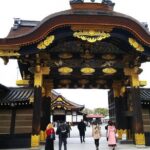
Kyoto’s palace grounds have a quiet power. This guided visit helps you read the imperial family traditions in a place you can actually walk through—architecture, ceremony halls, and garden paths all tied to how court life used to work. It’s also one of those stops where your guide’s explanations matter; the palace feels far more meaningful when you understand why each building was used.
I especially love how the tour connects the big, ceremonial rooms to everyday court rhythms—so you’re not just looking at pretty structures. Second, I love the focus on the gardens inside the palace grounds, where the details feel surprisingly personal and calm.
One possible drawback: if you’re hoping to treat this like a fast, mostly self-guided stroll, you may find the pacing a little guided. The experience can also vary depending on how talkative and prepared your guide is, since some explanations are clearly better than others.
In This Review
- Key Highlights You Can’t Miss
- Why Kyoto Imperial Palace Still Feels Like a Living Court
- Finding Hamaguri Gomon Gate (and Why Your Meeting Point Matters)
- Inside the Ceremony Power of Shishinden and Major Halls
- Serene Gardens in Gyoen National Garden: Calm With Purpose
- How Daily Imperial Court Life Comes Through in Real Explanations
- Price and Time: Is a $38 Tour Worth It?
- Who Should Book This Tour (and Who Might Skip It)
- Quick Booking Checklist Before You Pay
- FAQ
- FAQ
- What is the duration of the Kyoto Imperial Palace tour?
- Where do I meet the guide?
- Is the tour in English?
- What’s included in the price?
- Is this tour a private or small-group experience?
- Do I need to pay right away?
- Can I cancel for a full refund?
Key Highlights You Can’t Miss

- Hamaguri Gomon Gate meetup at the front entrance, with a clear handoff to your guide (yellow sign, DeepExperience).
- Shishinden and ceremony-hall context that explains what went on in the spaces where major imperial rites happened.
- Gyoen National Garden setting that makes the palace feel like part of a living historical compound, not a standalone monument.
- Serene inner gardens that many people remember for their beauty and atmosphere.
- Daily court-life explanations that help you connect imperial tradition to real routines and roles.
- Small-group/private options for more direct questions and a less rushed pace.
Why Kyoto Imperial Palace Still Feels Like a Living Court

The Kyoto Imperial Palace is in Kyoto for a reason: before Japan’s capital moved to Tokyo in 1869, this complex functioned as the imperial residence. That matters because the site isn’t just an architectural showpiece—it’s a place built for ceremony, authority, and the daily systems that supported the imperial household.
What makes a guided visit valuable is the way your guide helps you “see” the rules behind the spaces. You’ll hear why certain halls were used for formal events, and how the layout supports order and etiquette. When you understand that, the palace starts to make sense in layers: not only where things are, but what they were for.
I also like that the tour doesn’t treat the palace like museum glass. You’re walking through outdoor gardens and moving from building to building, so the explanations land better. In places like this, passive sightseeing can feel confusing. With a guide, the story becomes a route you can follow.
If you’re into history, Japan’s imperial family, or traditional design, this is a straightforward way to get context without turning your day into homework. You don’t need a degree in Japanese architecture—you just need a guide who can connect the dots between ceremony and space.
A few more Kyoto tours and experiences worth a look
Finding Hamaguri Gomon Gate (and Why Your Meeting Point Matters)

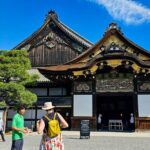
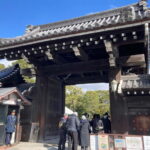
Your tour starts at the Hamaguri Gomon Gate, the main front point for meeting your guide. The guide is waiting in front of the Hamaguri Gate (Hamagurigomon) with a yellow sign that says DeepExperience, so you’re not wandering around guessing where “the tour” begins.
This sounds like a small thing, but it changes your whole experience. When you start in the right place, you get the palace context faster because you begin at the correct entrance and first view. You also avoid the common early-day frustration of showing up late to something that starts promptly.
Plan on arriving with a bit of buffer time. The palace grounds can take a moment to settle into visually—especially if you’re coming in from a busier Kyoto street scene. Once you’re inside the Gyoen National Garden environment, the atmosphere softens. That first shift is part of the value: the tour begins as a transition from city noise to ritual space.
Also note the tour language is English and it’s a live guide. That means you can ask questions as you go. If you care about details—like how ceremony differs from daily court function—this format is worth it because the answers can adjust to what you’re actually looking at.
Inside the Ceremony Power of Shishinden and Major Halls

The palace complex includes several buildings tied to ceremonial and official functions, and the tour’s biggest “wow” moments come from learning what went on inside. A central focus is the main hall, the Shishinden, which is associated with important imperial ceremonies.
Even from outside (and depending on how the grounds are presented on your day), Shishinden is visually commanding. Your guide’s job here is to translate that visual authority into meaning: why that hall mattered, what ceremonies were tied to it, and how the imperial court used architecture to reinforce order.
This kind of context is exactly what makes a difference between simply seeing a famous structure and understanding it. Without explanation, a hall is just a hall. With explanation, you start noticing the logic—how formality is built into space, and how tradition is reinforced through the way people moved and gathered.
One more practical point: the palace buildings are part of a set. So as you move across the grounds, the tour helps you connect what you’re seeing to the broader complex. That keeps the experience from turning into a list of landmarks. Instead, it feels like a guided walkthrough of how imperial life expressed itself through spaces designed for ritual.
If you love architecture but want the story too, this stop is where the tour justifies its price. It’s not only about the structure—it’s about why the structure mattered.
Serene Gardens in Gyoen National Garden: Calm With Purpose

The Kyoto Imperial Palace sits within the Gyoen National Garden, and that surrounding setting is not just decorative. It’s part of the imperial world the palace was built to support. During the walk, you’ll likely notice how the gardens create a sense of separation—an orderly calm that contrasts with the city outside.
What I find especially useful is that the guide doesn’t treat the garden like a break from history. Instead, the garden is framed as part of how the residence functioned—where quiet movement and carefully maintained natural elements reinforced the court’s sense of ritual and continuity.
Garden time can also be your best photo time, but with a twist: you’ll want to photograph with understanding, not just with angles. When your guide points out what makes certain sections meaningful (or how the grounds were designed to support daily and ceremonial life), your photos turn into more than snapshots. They become visual reminders of the story you heard.
Many people come away impressed by the inner garden atmosphere—quiet, composed, and beautiful in a way that feels almost intimate once you slow down. That’s another reason a guided pace helps. If you rush it, you miss the garden’s “readable” details.
A potential downside here is timing: the overall tour is short. If gardens are your top priority, keep your expectations aligned. You’ll see what’s there and hear what matters, but you won’t have hours to wander at your own pace.
How Daily Imperial Court Life Comes Through in Real Explanations

The palace isn’t just about ceremonies; it’s also about daily routines. A strong part of this tour is the way it explains what court life looked like at the Emperor’s personal residence—how tradition shaped behavior, and how the imperial household’s structure supported everything from formal events to everyday functioning.
When that section of the tour lands well, it does something simple and powerful: it turns “imperial history” from a distant concept into lived routine. You start to understand the difference between what the world sees (ceremony) and what actually keeps the household running (daily roles, etiquette, and how spaces support those rhythms).
This is also where you’ll benefit most if you like asking questions. Because the guide is live and English-speaking, you can steer the conversation toward what you care about: hierarchy, tradition, or how Japanese imperial culture evolved over time.
That said, this is also the part most vulnerable to uneven guiding. If your guide is less prepared or less engaged, you may feel like you’re mainly passing through instead of learning. Some sessions clearly provide solid, thoughtful answers, while weaker ones can feel too surface-level.
My advice: be ready with at least one question before you start walking. Something like how daily court life differed from ceremonial life at the palace. If your guide can answer, you’re in for a great tour. If they can’t, you’ll quickly know whether the experience is going to work for you.




Price and Time: Is a $38 Tour Worth It?

At about $38 per person for roughly an hour overall (with a guided visit window listed around the 1.5-hour mark), this isn’t the kind of tour where you pay for transportation or a big production. You’re paying for guided context inside Kyoto Imperial Palace—especially the ceremony-focused interpretation and the explanation of day-to-day court life.
So the value question comes down to this: do you want the palace story explained while you’re standing there?
If you’re the type who likes to understand what you’re looking at, this is good value. The palace is famous, but it can be confusing without guidance. Your guide helps you tie together the Shishinden and ceremonial halls with the broader logic of court tradition. That turns a short walk into something you can actually remember.
If you’re more independent and prefer to read signage quietly (or already know a lot about Japanese imperial history), you might feel the tour is “just” a guided pass through familiar-looking spaces. In that case, a guided option might not feel necessary.
One more value factor: the tour offers private or small groups. That matters because it’s easier to ask follow-up questions, and you can get more out of a short visit when you’re not competing with a large crowd. If you’re traveling as a couple or small group, this setup often feels like the sweet spot.
Who Should Book This Tour (and Who Might Skip It)

This tour is a strong fit if you want:
- Real explanations of imperial ceremonies and palace function, not only photo stops
- A short, efficient palace visit that gives you historical context fast
- A calm garden experience with meaning behind the scenery
- An English-speaking live guide you can ask questions to
It may be less ideal if you:
- Want a long, free-form wander through the grounds
- Prefer to learn entirely through self-guided reading
- Get frustrated if a guide’s communication is weaker (because the tour’s value depends on the explanation)
You’ll likely enjoy this most in the first half of a Kyoto history-focused day. It pairs well with other classic Kyoto cultural stops because it gives you the imperial/court angle that many other sites don’t cover in detail.
If your schedule is tight, the short duration is also a plus. This is the kind of tour that fits neatly without consuming your whole afternoon.
Quick Booking Checklist Before You Pay

Here’s how I’d decide in five minutes:
- If you like learning why things are arranged the way they are, book it.
- If you care about the imperial ceremony spaces, book it for Shishinden-focused context.
- If you want peaceful garden time but also want an interpretation so it feels more than pretty, book it.
- If you only want a casual stroll and you’ll be satisfied without strong historical narration, you might reconsider.
Also, keep an eye on the guide experience quality on the day you book. The same tour framework can feel excellent or flat depending on how much the guide can explain. When you get a guide who’s energetic and prepared, you’ll feel the difference quickly as questions start getting answered with clarity.
FAQ

FAQ
What is the duration of the Kyoto Imperial Palace tour?
The tour is listed at 1 hour, with the guided palace visit window noted at around 1.5 hours.
Where do I meet the guide?
Meet in front of the Hamaguri Gate (Hamagurigomon) of the Kyoto Imperial Palace. The guide will be waiting with a yellow sign that says DeepExperience.
Is the tour in English?
Yes, the tour includes a live guide in English.
What’s included in the price?
The price includes a guide and entry to the Kyoto Imperial Palace (free).
Is this tour a private or small-group experience?
The experience is offered as private or small groups.
Do I need to pay right away?
You can reserve now & pay later, so you won’t pay nothing today.
Can I cancel for a full refund?
Yes. There is free cancellation up to 24 hours in advance for a full refund.