Kyoto turns into a story when you walk it. This private route links Kiyomizu Temple with Gion’s backstreets and ends with time at Nishiki Market for real snack-and-sightseeing energy. You get a live English guide who brings the places to life with clear explanations, plus the comfort of a private pace that actually lets you ask questions.
I especially like two things here: the step-by-step way the day is built around iconic sites, and the fact that you’re not just sightseeing. You learn how to pray at Yasaka Shrine and you also get guided context for what you’re seeing at Kiyomizu and in Gion. The biggest consideration is the walking: plan for more than 3 miles (over 5 km) and comfortable shoes, and skip it if mobility is a concern for you.
In This Review
- Key Things You’ll Remember From This Kyoto Walk
- Private pacing in Kyoto’s Kiyomizu-to-Gion route
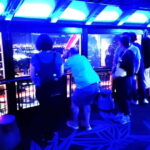
- Kiyomizu Temple, the main gate, and the big observatory
- Ninenzaka and Sannenzaka lanes before Yasaka Shrine prayers
- Gion backstreets: Hanamikoji, Minamiza, and ochaya areas
- Nishiki Market food crawl along Ponto street
- Price and logistics: what you’re paying for
- Who this tour suits best (and who should skip it)
- Should you book this Kyoto private walking tour?
- FAQ
- How long is the Kyoto private walking tour?
- What is included in the price?
- Is Kiyomizu Temple entrance included?
- Do I need to pay for transport to Kiyomizu Temple?
- Where does the tour start?
- How much walking will I do?
- Will I see geisha or maiko during the day?
- Is the tour suitable for people with mobility impairments?
- What should I bring?
- Are bags allowed?
Key Things You’ll Remember From This Kyoto Walk
- Kiyomizu Temple in layers: gate, main building, then the famous observatory stop
- Yasaka Shrine ritual coaching: learn how to properly pray and what the underground-water touch is said to do
- Gion without the tourist crush moments: Hanamikoji, Minamiza Kabuki theatre, plus quiet backstreets and ochaya areas
- Nishiki Market as the finale: snack stops across seafood, karaage, takoyaki, pickles, and more
- A guide worth leaning on: reviews highlight detailed, friendly explanations, including an English-speaking guide named Phillip
Private pacing in Kyoto’s Kiyomizu-to-Gion route
This is a private walking tour designed for a small group (priced per group up to 2). That matters more than you might think. Kyoto can be tight, crowded, and confusing if you’re bouncing between landmarks on your own. Here, your guide strings the day together logically, so you move with purpose instead of just following signs.
The tour runs about 210 minutes, which is roughly 3.5 hours. That’s a sweet spot for a “big day” without ending it exhausted in the worst way. You’ll do more than 3 miles (5 km) on foot, though, so think comfort first: good soles, breathable clothes, and a light bag. The tour also doesn’t allow luggage or large bags, so plan to travel with only what you need for a few hours.
One more practical note: pickup is included, and you’re asked to wait in the hotel lobby about 5 minutes before the scheduled pickup time. That helps you start smoothly, especially if your hotel isn’t right by the first stop.
A few more Kyoto tours and experiences worth a look


Kiyomizu Temple, the main gate, and the big observatory
Kiyomizu Temple is where the tour finds its gravity. You start with history and context, then move through the site in a way that makes it easier to understand what you’re looking at.
You’ll get time around:
- the main gate
- inside the main building
- and then the massive observatory
That order helps. The gate gives you a sense of arrival and layout, the main building grounds you in what this place is, and the observatory is the moment you feel the scale. Even if you’ve seen photos before, the observatory is the kind of view that resets your expectations for how dramatic temples can feel in motion.
Two budget details to keep in mind. Entrance fees to Kiyomizu Temple are not included, and transportation cost to get there is also not included (taxi or public transit isn’t part of the package). In real terms, this means you should bring extra money for entry and be ready for the fact that your hotel pickup won’t magically erase the cost of reaching the temple.
If you like taking photos but hate standing around, this is a good fit. The guide keeps you moving, but you’re not rushed through the highlights.
Ninenzaka and Sannenzaka lanes before Yasaka Shrine prayers
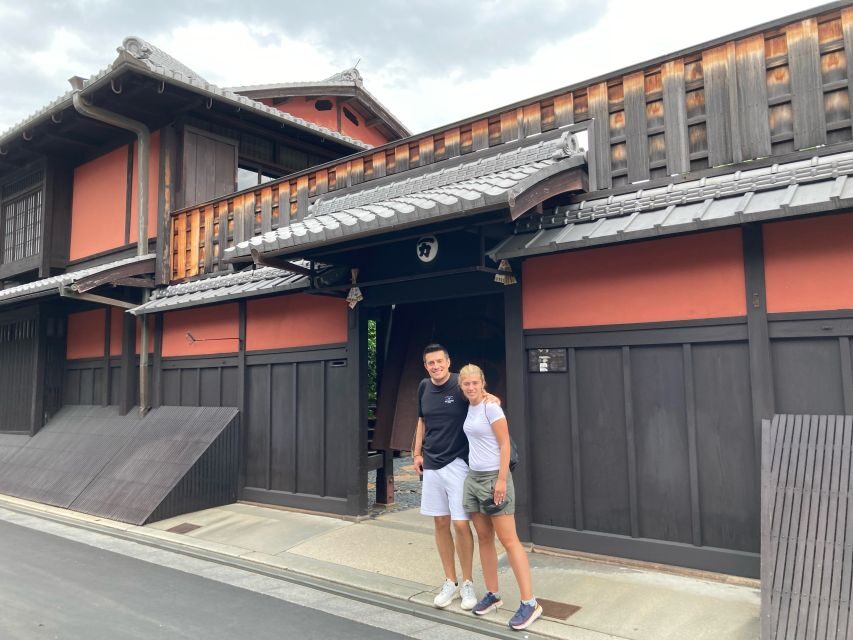
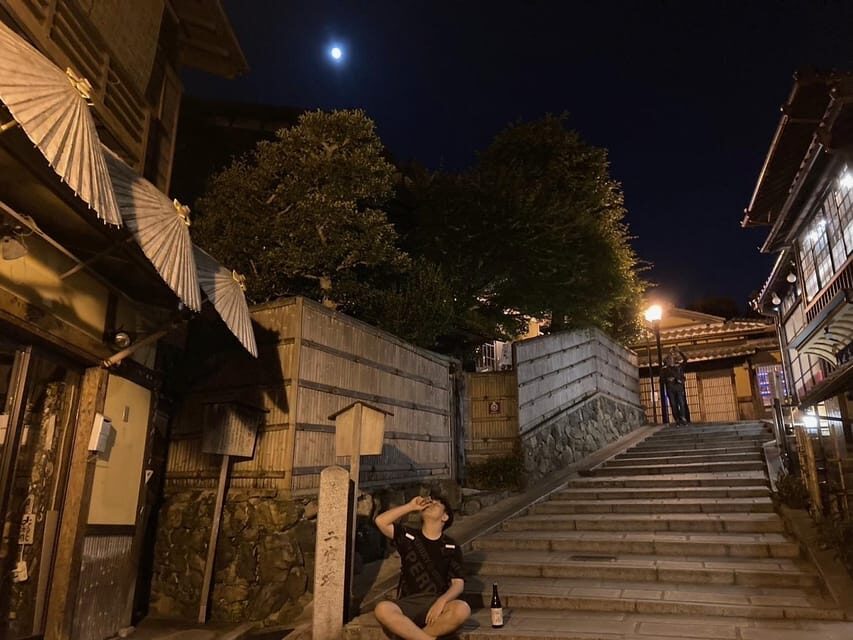
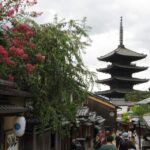
After Kiyomizu, the tour shifts gears from temple scale to street-level Kyoto. You walk to Ninenzaka and Sannenzaka, two lanes known for the mix of food and souvenir shops that feel like Kyoto in miniature.
This is a nice breathing period. The streets are where you can:
- slow down for snacks,
- browse small crafts and local items,
- and reset your legs before the next major stop.
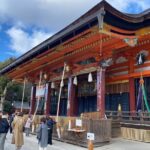
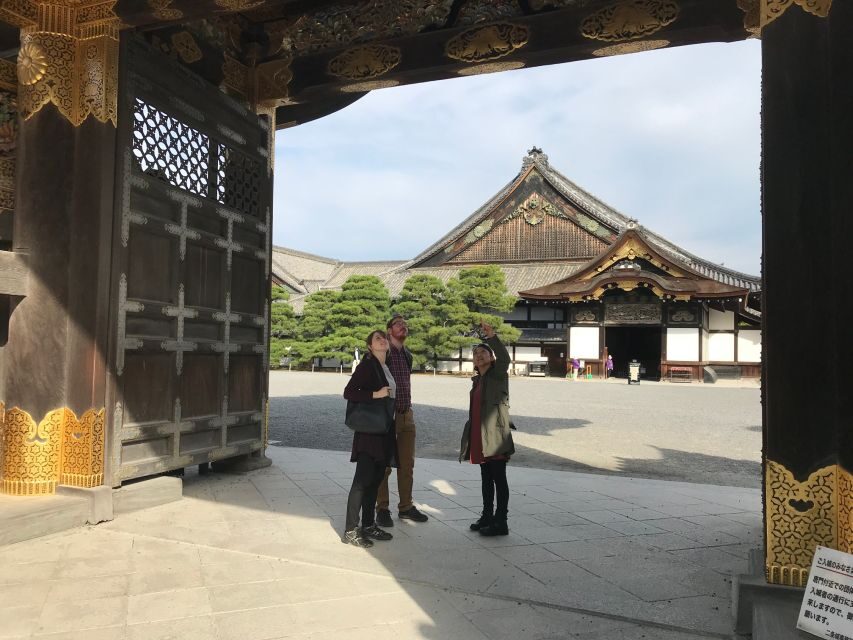
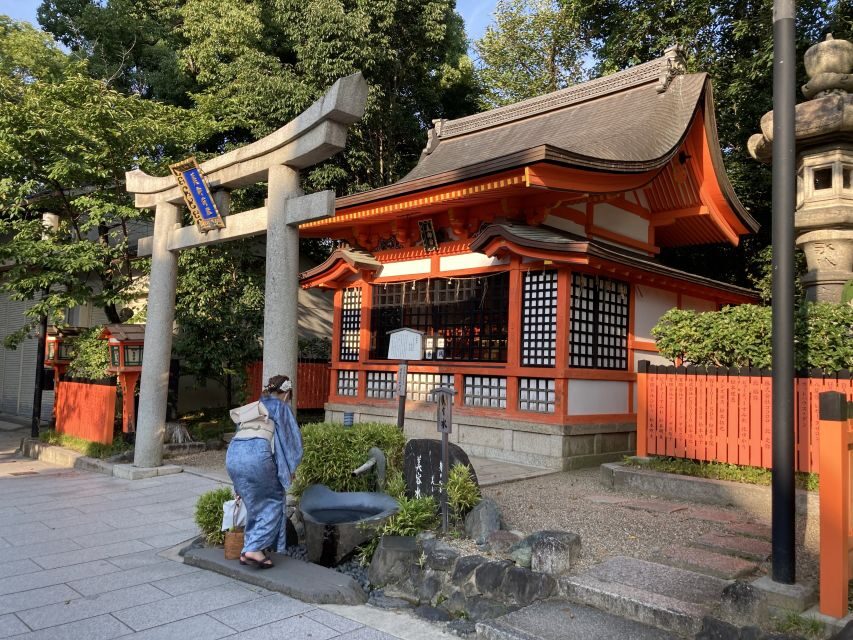
Then comes Yasaka Shrine, located at the eastern end of the Gion district. This isn’t only a scenic stop. The guide talks you through the proper way to pray at a Japanese shrine, which is exactly the kind of cultural context that turns a quick photo into something you actually understand.
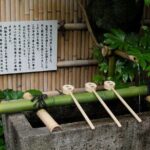
Inside Yasaka Shrine, you’ll visit the main stage and learn about the setup used there. You’ll also do one of those iconic actions people talk about: touching the underground water, which is said to enhance the beauty of body and mind. You don’t need to treat it as magic to enjoy it. It’s still a meaningful, hands-on tradition, and it’s the kind of detail that makes the shrine feel lived-in rather than decorative.
One consideration: since this is a walking tour, you’ll want to keep your hands free for small purchases. There’s no luggage allowed, so plan to carry a small day bag or whatever your hotel gives you that day.
Gion backstreets: Hanamikoji, Minamiza, and ochaya areas
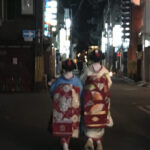
From Yasaka Shrine, you head into Gion, the neighborhood most people associate with Kyoto’s geisha culture. Here’s the key reality check: the tour is daytime-focused. You will not meet maiko or geisha in the daytime, but you may see them if you come back in the evening.
That’s not a disappointment. It’s actually a better way to experience Gion because daytime gives you something quieter and more street-level. You can study the architecture, watch daily rhythms, and walk the lanes without feeling like you’re chasing people.
Your guide takes you along:
- Minamiza Kabuki theatre
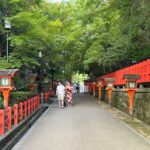
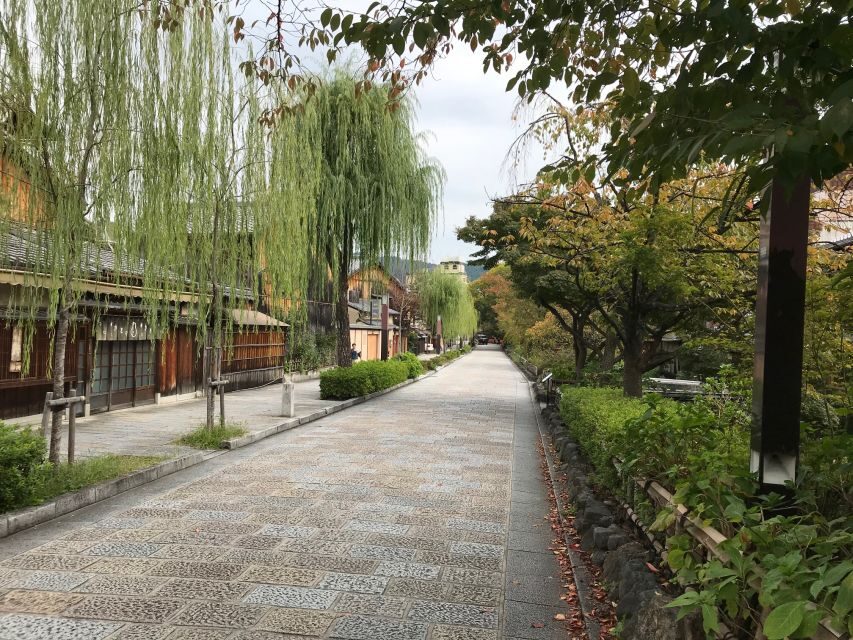
- Hanamikoji street
- and into some of the backstreets where you’ll find ochaya teahouses
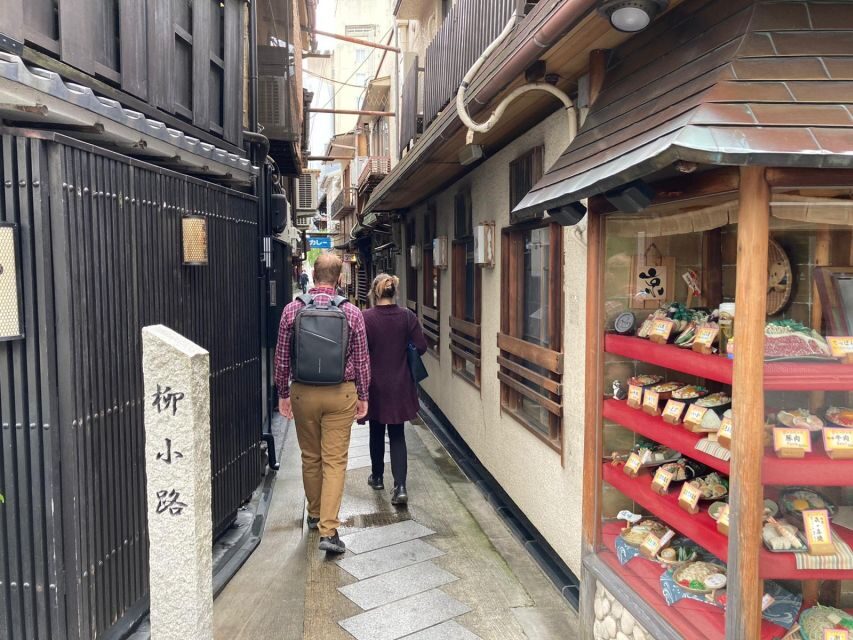
Those backstreets are where the tour earns its name. From the main streets, Gion can feel like a postcard loop. The side lanes show the texture of the neighborhood, and the guide helps you understand what you’re seeing—especially around places tied to traditional evening entertainment.
If you care about cultural respect and not being a nuisance, this is also the right approach. The tour gives you the context so you know where to look, how to behave, and what not to expect in daylight.
Nishiki Market food crawl along Ponto street
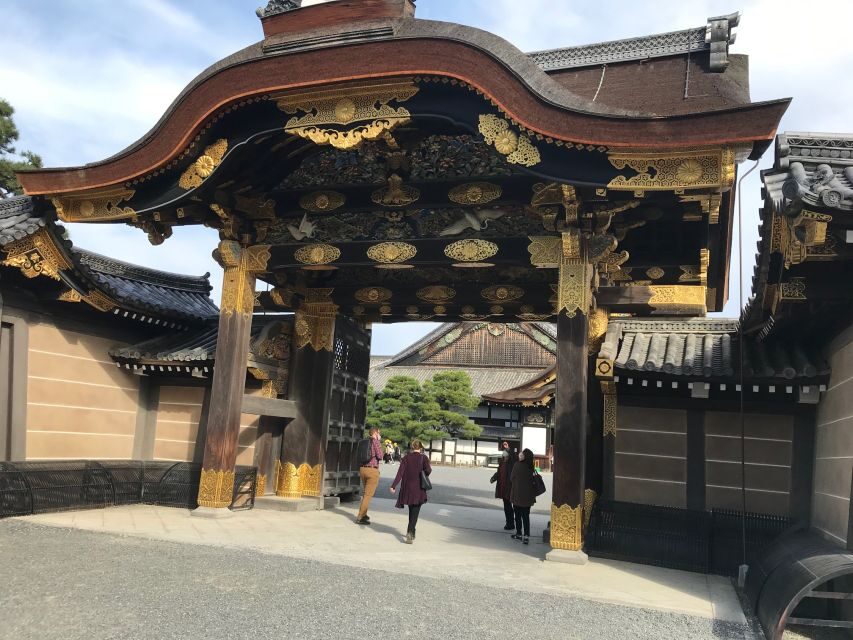
The day ends with a lively payoff: Nishiki Market in downtown Kyoto. Before you hit the market itself, if time permits, you’ll walk through Shin Kyogoku street, Sanjo street, and Kiyamachi street to reach Ponto street. This is where you can grab a coffee break or lunch if you need it.
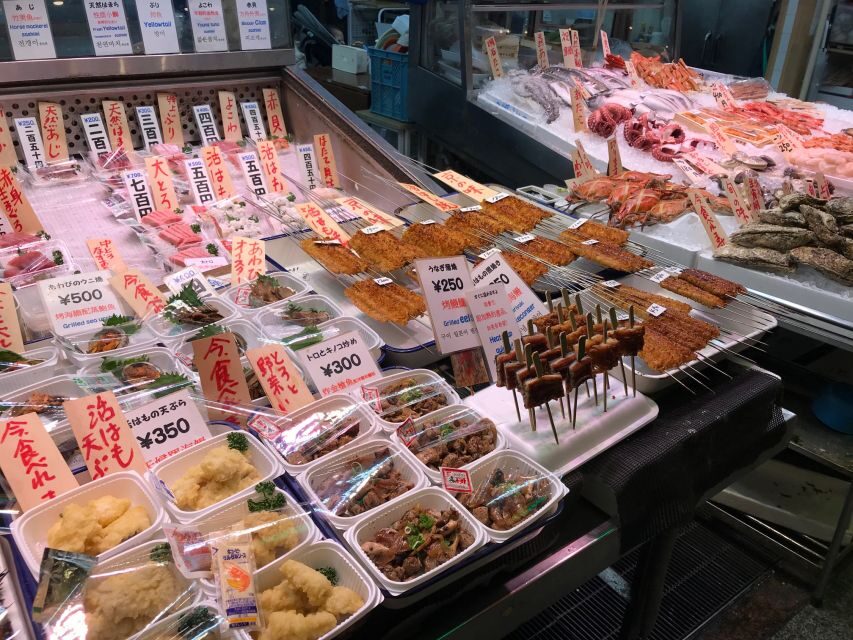
Then the focus becomes food. Nishiki Market is a classic “walk, taste, decide” kind of place. You’ll see stalls and shops selling items like:
- seafood
- deep-fried foods
- Japanese pickles
- karaage
- takoyaki
- Japanese spice
- ice cream
- green tea
- egg roll
- and more
The vibe is simple: stop, taste what you’re curious about, and buy what you want as you go. The tour description strongly suggests you’ll do hands-on sampling rather than only looking.
There’s also a shopping angle beyond food. You’ll have a chance to purchase Japanese knives, teacups, and plates. That’s great if you want one practical souvenir rather than just a few small trinkets.
One practical tip for this part of the day: plan your appetite. If you stop for coffee along the way, you might cut your market portion. On the other hand, if you arrive hungry, you’ll be in that happy state where everything looks worth trying. Either way, keep your expectations flexible—this is more about choices than a strict list of tasting portions.
A few more Kyoto tours and experiences worth a look




Price and logistics: what you’re paying for
The price is $174 per group (up to 2) for a 210-minute private walking tour. That’s not cheap in absolute terms, but it can be good value in Kyoto because private guiding saves time and stress. You’re also getting a tour that blends multiple major neighborhoods rather than doing one site and calling it a day.
What’s included is straightforward: the services of a guide. Pickup is included, but other costs are not.
Not included:
- taxi or public transportation cost to get to Kiyomizu Temple
- entrance fee to Kiyomizu Temple
- food and drinks you choose to taste or buy at Nishiki Market (you’ll have time to taste, but the tour doesn’t say food is covered)
So how should you budget? I’d plan for:
- entry fee(s) at Kiyomizu,
- transit if you need it to reach the starting point,
- and a food budget for market snacks and any lunch or coffee stop you add.
On a private tour, you’re paying mainly for access plus interpretation. The guide quality is the make-or-break item—and the reviews back that up. Multiple top ratings point to a guide who explains history and details clearly and makes the tour interesting. One reviewer specifically praised Phillip for being friendly, knowledgeable in a practical way, and easy to recommend.
Who this tour suits best (and who should skip it)
This tour fits best if you want a guided day that connects three big Kyoto experiences: temple architecture, shrine practice, and Gion streets with a market finale.
You’ll likely enjoy it most if you:
- like walking tours and can handle over 3 miles / 5 km
- want cultural context, not only landmarks
- appreciate structured stops (gate to observatory, shrine to Gion, streets to market)
- prefer a private pace for photos and questions
It may be a poor match if:
- you have mobility limits that make longer walking hard (the info says not suitable for mobility impairments, even though wheelchair accessible is listed—so don’t assume it will work smoothly)
- you’re traveling with large bags or luggage (not allowed on this tour)
- you want a low-step, slow stroll with minimal walking
Should you book this Kyoto private walking tour?
I think you should book it if you want a well-paced, private 3.5-hour route that ties together Kiyomizu Temple, Yasaka Shrine practice, Gion backstreets, and Nishiki Market food. The biggest reason is the guide impact: reviews highlight detailed explanations and a friendly, accommodating approach, with Phillip mentioned by name.
I’d hold off only if walking distance is a hard limit for you, or if you expect all costs beyond the guide to be included. This tour is about guidance and timing, not about covering temple entries or the food you’ll taste at the market.
If you’re aiming for an efficient Kyoto day that still feels authentic and human, this is a strong pick.
FAQ
How long is the Kyoto private walking tour?
It lasts about 210 minutes (around 3.5 hours).
What is included in the price?
The tour includes the services of a live English guide and hotel pickup.
Is Kiyomizu Temple entrance included?
No. The entrance fee to Kiyomizu Temple is not included.
Do I need to pay for transport to Kiyomizu Temple?
Yes. Taxi or public transportation cost to Kiyomizu Temple is not included.
Where does the tour start?
It includes hotel pickup. You should wait in the hotel lobby about 5 minutes before the scheduled pickup time.
How much walking will I do?
You’ll be walking more than 3 miles (5 km).
Will I see geisha or maiko during the day?
You will not meet maiko or geisha in the daytime, though you may see them if you come back in the evening.
Is the tour suitable for people with mobility impairments?
The information says it is wheelchair accessible, but it also says it’s not suitable for people with mobility impairments. Because this is a walking tour with over 5 km on foot, it may be difficult for many mobility needs.
What should I bring?
Comfortable shoes are strongly recommended.
Are bags allowed?
Luggage or large bags are not allowed.