Kyoto changes when you shop in a dojo. This experience takes katana shopping out of a storefront and into a working dojo setting, where sword knowledge is taught—not just displayed. I like that you’re shown real, carefully selected blades, including very old pieces, with explanations built around how they’re handled and cared for.
I especially like having Shogo translate and guide the conversation, and I like how the session stays practical, including maintenance and follow-up guidance if you purchase. One drawback: this is strictly for people who are seriously considering buying a Japanese katana, not for casual lookers or just meeting Shogo—so if you’re shopping for fun, you may feel out of place.
In This Review
- Key highlights to know before you go
- A private dojo turns katana shopping into real learning
- Meet the team: Shogo translates, Yushin Sensei anchors the expertise
- What actually happens during your 1-hour private session
- Why the “serious buyers only” rule improves the experience
- Price and value: what $65.32 buys you here
- Shopping for a katana isn’t like buying a souvenir
- Where logistics can trip you up (and how to avoid it)
- Who should book this dojo-based katana session
- Should you book Katana Shopping with Professional Guidance?
- FAQ
- How long is the katana shopping experience in Kyoto?
- Is this a private tour or shared group?
- Where do we meet in Kyoto?
- Do I need to speak Japanese?
- Is this meant for people who want to buy a katana?
- If I buy a katana, do they help after the purchase?
Key highlights to know before you go
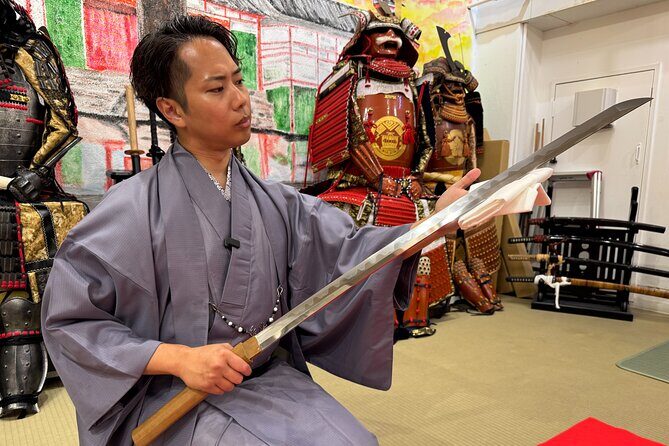
- Dojo access instead of a tourist shop: you see the sword world in a training environment, not a showroom.
- Hand-selected blades by a master: the session focuses on quality matches, including very old katana.
- Shogo + Yushin Sensei teamwork: translation and martial arts context come together in one smooth flow.
- Built for real buyers: the guide intentionally keeps it focused on people who are prepared to consider a purchase.
- Education that doesn’t stop after buying: you get guidance on care and preservation, and can receive purchase follow-up.
A private dojo turns katana shopping into real learning
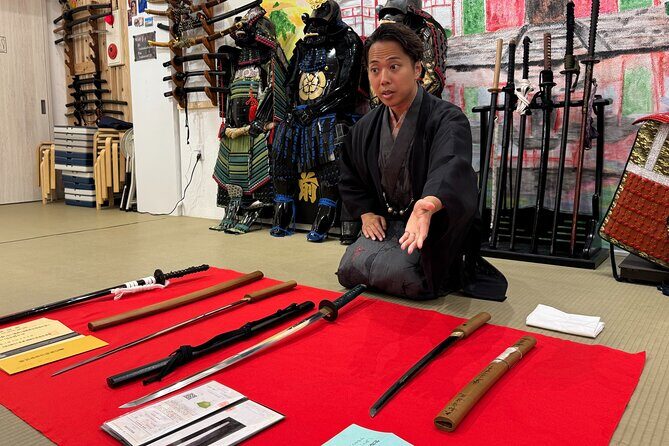
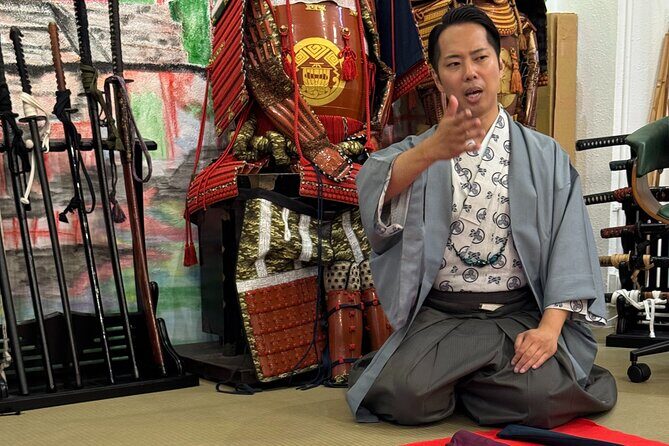
Most katana shopping in Japan is built for browsing: glass cases, polished marketing, and a lot of questions met with short answers. This one flips the script. You’re not just walking around looking at swords. You’re stepping into a private Kyoto dojo setting and being guided there by martial arts professionals.
That matters because a katana isn’t only a collectible. It’s also a tool with cultural rules around handling, preservation, and appreciation. In a dojo, the explanations tend to connect to technique and mindset. You’ll be guided through what makes a blade worth your attention and how to think about fit, not just appearance.
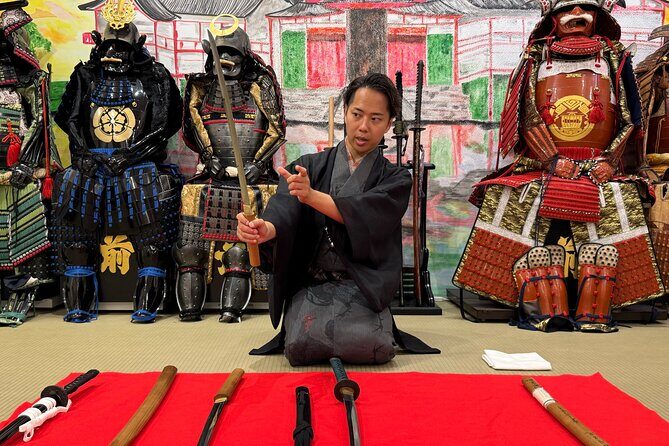
You’re also working with a master who trains a class of over 20 students in Kenjutsu. Even if you know nothing about the arts, you’ll feel that the environment is serious. This isn’t about a fast sales pitch. It’s about understanding what you might buy and what it will require from you afterward—especially if you’re the type who plans to keep it for years.
Finally, the setting helps you see old blades as living history rather than museum props. The experience includes blades that are reportedly hundreds of years old, and the way they’re presented aims to respect that age.
Other shopping tours in Kyoto

Meet the team: Shogo translates, Yushin Sensei anchors the expertise
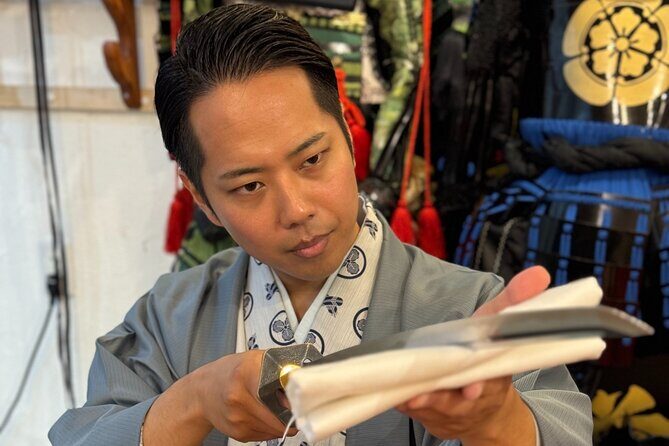
The human side is a huge part of the value here. Shogo is a popular YouTuber from the Let’s Ask Shogo channel, with 1.8M+ subscribers and 10+ years of Iai (katana budo) experience. For many visitors, translation is what turns a confusing purchasing process into something calm and clear.
Shogo also isn’t just acting as a voice. The experience is set up so you can ask questions and get them answered in a way that connects to sword use and sword buying decisions. The goal isn’t to overwhelm you with terms. It’s to get you to the point where you can judge what you want.
The martial arts anchor is Yushin Sensei, the dojo leader behind the Kenjutsu instruction. In the experience framework, he’s described as training students in Kenjutsu and bringing deep experience with iaido and katana use, along with history, collection, and preservation. That combination is important. When you’re dealing with historically significant swords, you want someone who understands both the art and the care.
The best practical benefit: you’re less likely to make a purchase based only on how something looks in photos or how it’s displayed. With translation and dojo expertise together, you can ask follow-up questions without feeling stuck.
What actually happens during your 1-hour private session
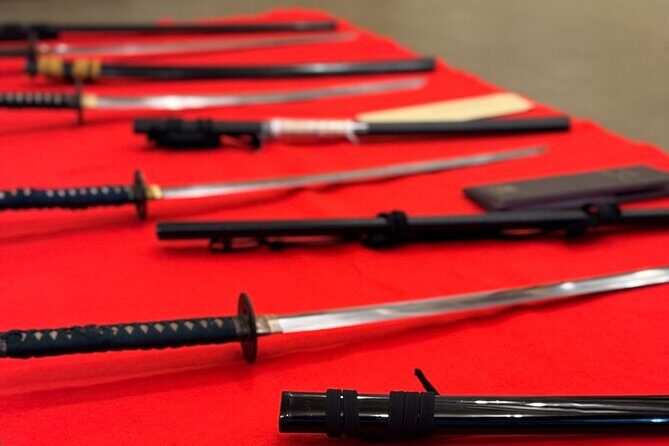
The total duration is about 1 hour, and it’s a private activity for your group (up to 10). That time limit changes the pacing. Instead of an open-ended browsing experience, you get a focused consult-style visit in which the guides steer you toward blades that fit what you’re aiming for.
Here’s the flow you can expect, based on how the experience is designed and described:
1) You enter the dojo setting and start with guidance
You’ll meet at 452-2 Matsugaechō, Nakagyo Ward, Kyoto, 604-8034, Japan. From there, the session is guided rather than self-directed. The guides help frame what you’re looking at and why certain blades are worth your attention.
2) You review hand-selected katana
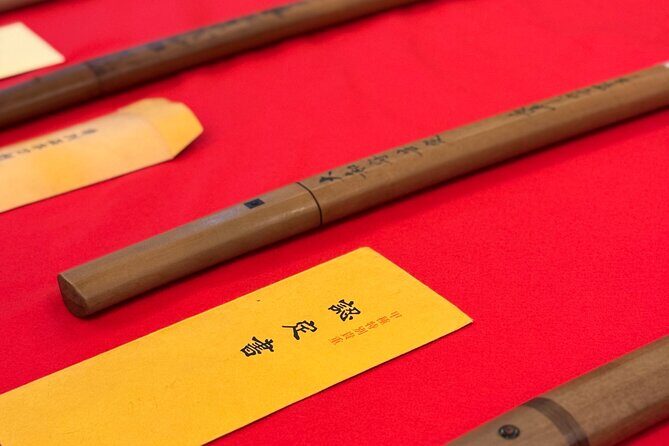
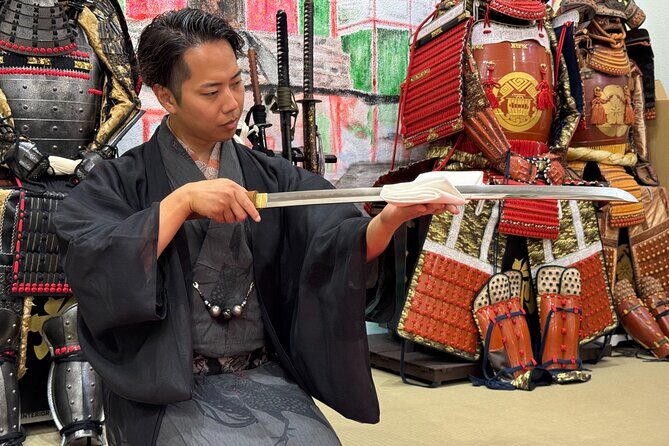
The katana you see are described as hand-selected by a master. Some are said to be crafted over 600 years ago. That doesn’t mean every visitor will see the same items, but it does mean the selection process is meant to be serious and curated by an expert.
3) You talk through your priorities
With Shogo translating, you can connect your preferences to what you’re looking at. One detail that shows up in the purchase stories: buyers describe matching criteria beyond the blade itself, down to fittings like fuchi, kashira, and menuki. If you have a personal taste for design details, the session is built to help you connect that taste to an actual sword selection.
4) You get practical education and buyer-focused context
Even when you’re not buying that moment, the experience aims to explain what matters. When purchases are made, guidance includes maintenance and how to think about preservation. This is where the dojo angle really pays off. You’re not only being told it’s special. You’re being told what it takes to care for it.
5) Wrap-up and next steps if you purchase
If you buy, follow-up is mentioned, including updates up to arrival. That kind of buyer support can reduce anxiety if you’re shipping internationally or coordinating timing while traveling.
Because the session is about an hour, don’t expect an all-day shopping marathon. Think of it as an expert consult with time to focus, ask targeted questions, and seriously consider next steps.
Why the “serious buyers only” rule improves the experience
This experience has a clear boundary: it’s intended for people seriously considering buying a Japanese katana. It also explicitly asks you not to book if your only goal is meeting Shogo or simply looking.
At first, that might sound strict. But practically, it protects your time and makes the session smoother. When an expert team isn’t spending most of the visit fielding casual curiosity, they can instead do what they’re best at: connecting you to the right decision.
So if your goal is to buy, great. You’ll likely get more value per minute. If your goal is only entertainment, you might end up feeling like you’re watching someone else work, without the context that explains the process.
The best way to prepare is to know what “serious consideration” means for you:
- Are you ready to discuss budget?
- Do you care about specific parts of the sword, like fittings?
- Are you planning to learn care and storage basics after?
If yes, you’re in the right place.
Price and value: what $65.32 buys you here
The listed price is $65.32 per group (up to 10), with mobile ticket delivery and an approximate 1-hour duration. That’s low for the amount of expert time implied here, especially with dojo instruction context and translation support.
But there’s an important value distinction: the price is for the guided experience. Any katana purchase would be separate. If you end up buying, the overall cost can rise quickly because you’re moving from “tour fee” territory into “collector investment” territory.
Still, even if you don’t purchase, you’re paying for expert filtering and education. Instead of hopping from shop to shop, you get a guided selection process and care guidance from people who train in sword arts and understand preservation.
In plain terms: this is good value if you’re turning interest into action—because the guidance helps you avoid wasted time and bad matches.




Shopping for a katana isn’t like buying a souvenir
A lot of first-time buyers make the same mistake: they choose based on how something looks in a photo or how it’s displayed in a shop. Katana shopping is different. You’re buying something with history and requiring long-term care.
This is why the dojo setting and the focus on preservation matter. The experience is framed as help for choosing a blade that can become part of your long-term life—either as a collector’s piece or as an art-related purchase.
One thing I found especially convincing from the purchase stories: buyers describe the team helping them match not just the sword body, but also the details of the fittings. People mention criteria like personal interests and even zodiac-related preferences when selecting. That tells me the process isn’t only technical—it’s also personal.
So if you like the idea of owning something with meaning, not just owning “a sword,” this kind of guidance is what makes the purchase feel right.
Where logistics can trip you up (and how to avoid it)
The experience is designed to be smooth, but there are a couple of realistic considerations.
First, time is tight: about an hour. If you show up with vague intentions, you’ll lose momentum. If you can, come with a short list:
- what kind of katana you’re imagining (collector vs martial arts context),
- your budget range,
- what details you care about most.
Second, the purchasing process can take time. One account mentions payment authorization trouble and then a few days to complete things. That’s not unusual in international purchasing, but it’s worth keeping in mind if you’re traveling with a packed schedule. Build in flexibility.
Finally, remember the experience is private for your group, and it’s meant for serious intent. That makes it less “walk in and wander out” and more “meet an expert and make progress.” Plan accordingly.
Who should book this dojo-based katana session
This tour fits best if you:
- are seriously considering buying a Japanese katana in Kyoto,
- want translation so you can ask real questions,
- care about preservation and long-term care, not only the purchase price,
- prefer a focused consult instead of a casual showroom experience.
It may not fit if you:
- only want photos, a look-around visit, or to meet Shogo without purchase intent,
- are hoping for a broad menu of random inventory and lots of free wandering,
- aren’t ready to discuss your priorities and budget.
If you’re a collector, martial arts enthusiast, or someone who genuinely wants the cultural and care context, this is the kind of session that can change your approach to buying.
Should you book Katana Shopping with Professional Guidance?
If you’re in Kyoto and you’re leaning toward buying a katana, I’d book it. The combination of dojo context, Shogo’s translation, and Yushin Sensei’s martial arts and preservation framing is exactly what you want when making a serious purchase.
Book it now if:
- you can commit to the session’s serious-buying focus,
- you want guidance that goes beyond looks,
- you want to understand maintenance and what comes after the purchase.
Skip it if:
- you’re hoping for a casual tourist katana stop,
- you don’t want to consider buying during your visit,
- you’re expecting a long browsing time.
Think of this as a decision-making session with real experts, not a souvenir shopping detour. If you’re ready for that, it’s one of the smarter ways to spend time in Kyoto—especially when you’re chasing a blade that actually fits your life.
FAQ
How long is the katana shopping experience in Kyoto?
The session is about 1 hour.
Is this a private tour or shared group?
It’s a private activity. Only your group participates, up to 10 people.
Where do we meet in Kyoto?
You meet at 452-2 Matsugaechō, Nakagyo Ward, Kyoto, 604-8034, Japan, and the activity ends back at the meeting point.
Do I need to speak Japanese?
No. Shogo is part of the experience as your translator and guide, so you won’t be left trying to interpret things on your own.
Is this meant for people who want to buy a katana?
Yes. It’s strictly intended for people seriously considering purchasing a Japanese katana, and it asks you not to book if your goal is only to meet Shogo or simply to look.
If I buy a katana, do they help after the purchase?
The guidance includes maintenance education, and there is mention of post-purchase follow-up with updates up to the arrival of the item.