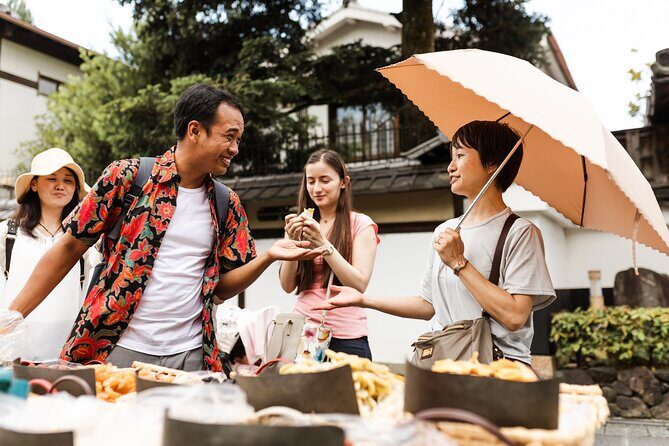
Kyoto food tastes better with a local beside you. This small-group Nishiki Market tour is built for street-food sampling in Kyoto’s best-known food street, with a guide who connects flavors to everyday life in the city. I especially love that you get 5 carefully selected specialties (not just random bites), and you walk through the historic market that’s been serving locals for centuries.
One thing to plan for: this tour doesn’t accommodate dietary restrictions, including vegetarian, halal, kosher, gluten-free, or allergy-related requests, so you’ll want to go in knowing the menu is fixed.
In This Review
- Key highlights you’ll feel on day one
- Nishiki Market: Kyoto’s Kitchen, on foot
- The 3-hour route: market, shrine, and shopping lanes
- Nishiki Market: the main tasting stretch
- Nishiki-Tenmangu Shrine: a short reset with context
- Shinkyogoku Shopping Arcade and Teramachi Street
- A hidden gem stop (short, but intentional)
- The five tastings: what you’re really paying for
- Guides make the difference: stories, patience, and real answers
- Tea ceremony option: kimono dressing and a tight schedule after the tour
- Practical stuff that affects your comfort
- Who this tour suits best (and who might skip it)
- Should you book the Kyoto Nishiki Market food tour?
- FAQ
- How long is the Kyoto Nishiki Market Local Food Tasting Tour?
- What foods are included in the tastings?
- Is it a small group tour?
- Can the tour accommodate dietary restrictions or allergies?
- What is included with the tea ceremony option, and when does it start?
- Is the tour wheelchair accessible?
Key highlights you’ll feel on day one
- A guide-led route through Nishiki Market’s 400-year-old lanes (around 130 stalls)
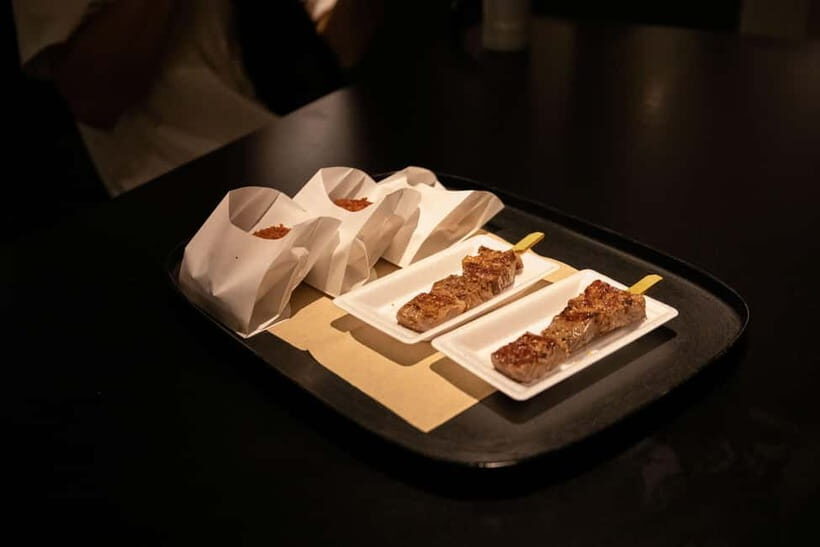
- Five distinct Kyoto tastings, including yuba, obanzai-style bites, hamo tempura, and WAGYU steak skewers
- Short, focused culture stops beyond food, including Nishiki-Tenmangu Shrine
- Time for shopping streets like Shinkyogoku Arcade and Teramachi Street
- Small-group size (max 6), so questions land fast and the pacing stays manageable
- Optional tea ceremony add-on with kimono dressing near Nishiki Market after the tour
Nishiki Market: Kyoto’s Kitchen, on foot
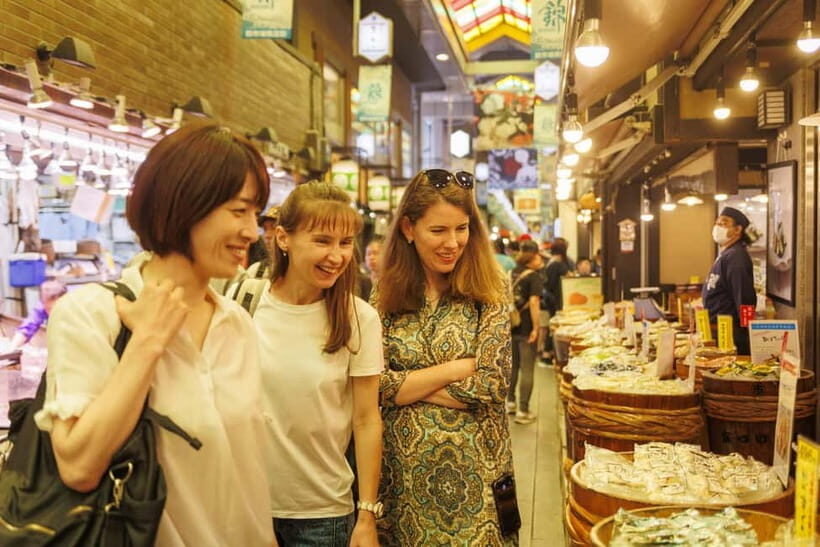
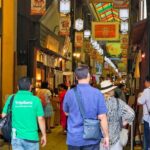
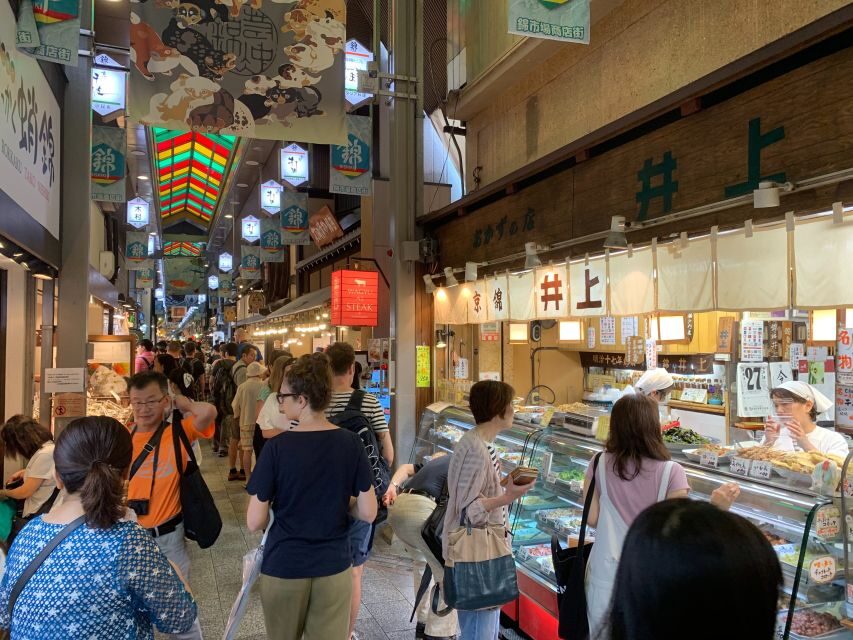
If Kyoto is a city of seasons and small rituals, Nishiki Market is where that shows up in edible form. This tour centers on Nishiki Market, often called Kyoto’s Kitchen, and it’s easy to see why once you’re in it. The market is about 400 years old, and it’s packed with roughly 130 food stalls, so even a quick glance feels like a crash course in local ingredients and how people shop for meals in real life.
What makes this experience work is that it’s not you wandering alone, trying to decode menus and smell every sample from the sidewalk. You’re guided through a route that balances “wow” with “how do I eat this like a local?” That matters because Nishiki can feel overwhelming fast—crowds, signage, and tempting displays moving in every direction.
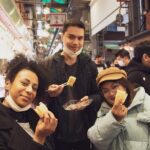
The tour keeps you moving in small, intentional steps. You’ll hit the market for about 1.5 hours of guided walking and tastings, which is long enough to taste multiple styles of Kyoto food without feeling like you got dropped into a food court and told to figure it out.
And the pacing is built for tasting, not a sit-down meal. Expect small portions that let you sample a spread—think textures, sauces, and seasonal choices—rather than one big plate that slows you down. This is a great format for first-time visitors because you get a sense of Kyoto’s flavor identity right away.
A few more Kyoto tours and experiences worth a look
The 3-hour route: market, shrine, and shopping lanes
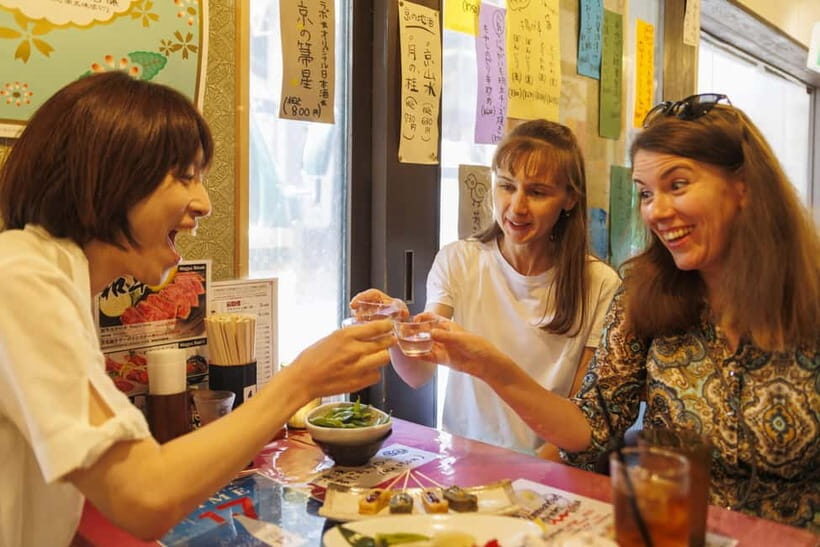
This isn’t a one-stop food grab. It’s a walk that gives you a real “Kyoto day” rhythm: eat, learn a bit, then wander streets that locals actually use.
Here’s how the flow typically feels:
Nishiki Market: the main tasting stretch
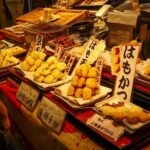
You’ll spend roughly 90 minutes in Nishiki Market with your English-speaking local guide. This is the portion of the tour where you’re most likely to notice the difference between a random snack and a deliberate Kyoto specialty. You’ll be tasting five special foods plus additional samples such as Kyoto seasonings, crackers, and Japanese flavored honey.
That combo is smart. Seasonings teach you what makes Kyoto food taste like Kyoto. Sweet condiments and honey help you recognize how flavors balance—especially when you’re comparing savory bites. Crackers and small extras are the “bridge” that helps you keep moving without getting full too quickly.
Nishiki-Tenmangu Shrine: a short reset with context
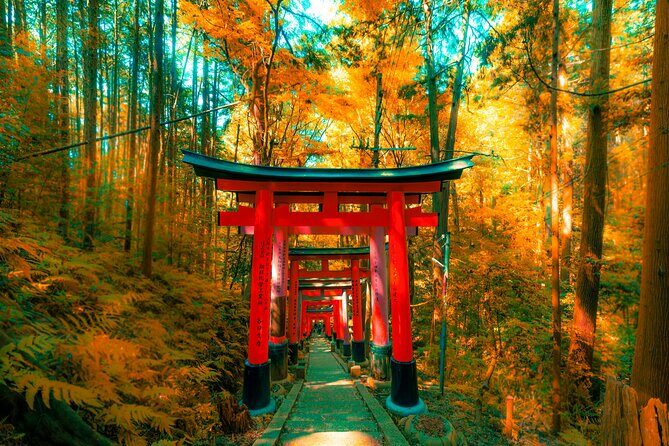
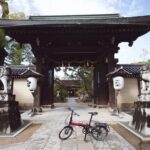
After the densest part of the market, you’ll visit Nishiki-Tenmangu Shrine for about 10 minutes. It’s not a long temple tour, but it changes the feel of the day. Instead of only eating and shopping, you get a quick cultural breather and a little historical framing.
Even short shrine stops can help you understand why food traditions matter in Japan. Food isn’t just taste; it’s linked to community routines, seasonal belief, and daily life.
Shinkyogoku Shopping Arcade and Teramachi Street
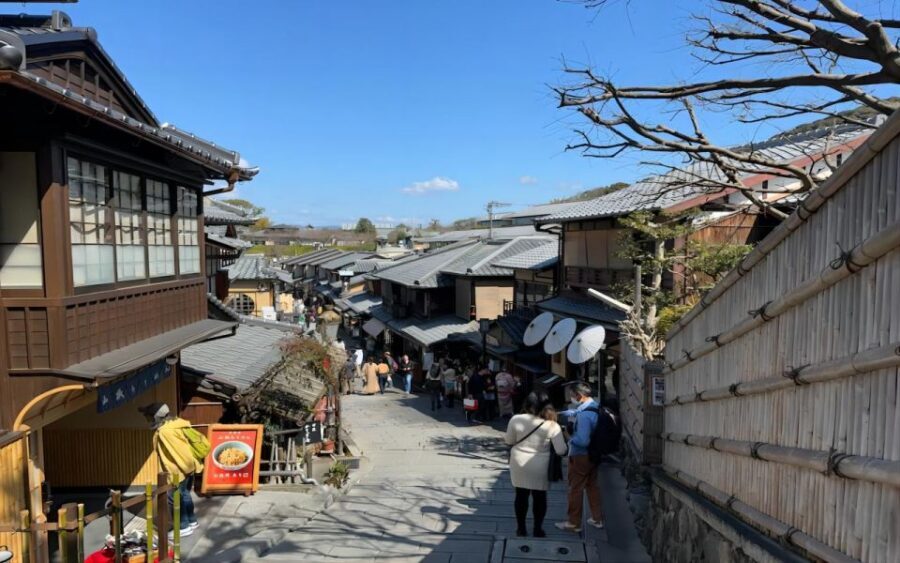
You’ll also spend time in the Shinkyogoku Shopping Arcade (about 45 minutes) and the Teramachi Street Shopping District (about 30 minutes). These stretches are great for two reasons:
- You get a break from the concentration of stalls in Nishiki Market.
- You see how shopping and snacking blend into everyday street life.
This part works particularly well if you like “walk and look” tourism. You’re not only eating; you’re also learning how locals move through neighborhoods and browse.






A hidden gem stop (short, but intentional)
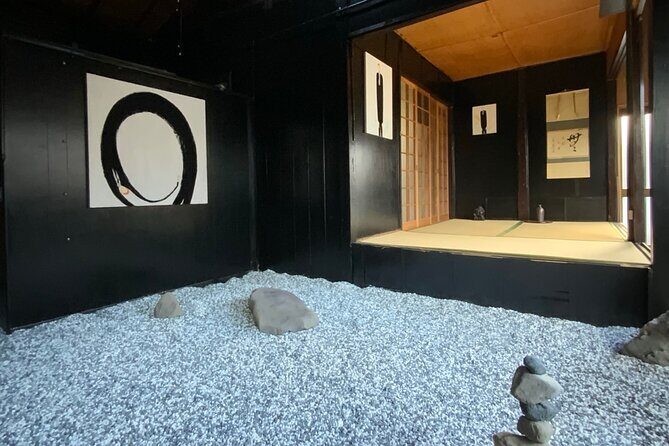
There’s also an additional guided 10-minute hidden gem stop. Since it’s short, it’s likely designed to show you something you’d miss if you were strictly on your own schedule—often a smaller shrine corner, a less obvious food related spot, or a place where the vibe shifts.
If you like surprises without losing time, this format is a win.
The five tastings: what you’re really paying for
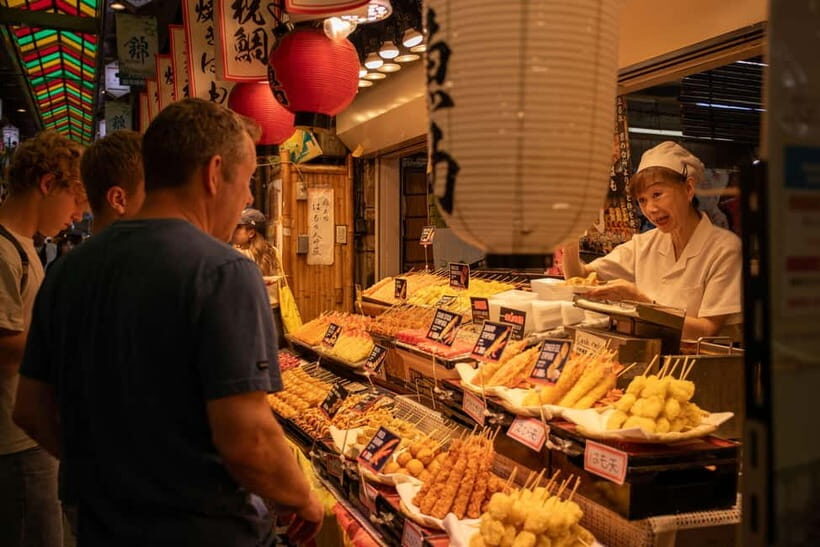
At $78 per person for a roughly 3-hour (270-minute) experience, the value isn’t just that you get food. You’re paying for:
- A guide who picks spots that make sense together
- Portions that teach variety, not just quantity
- Access to places you might not choose on your first pass
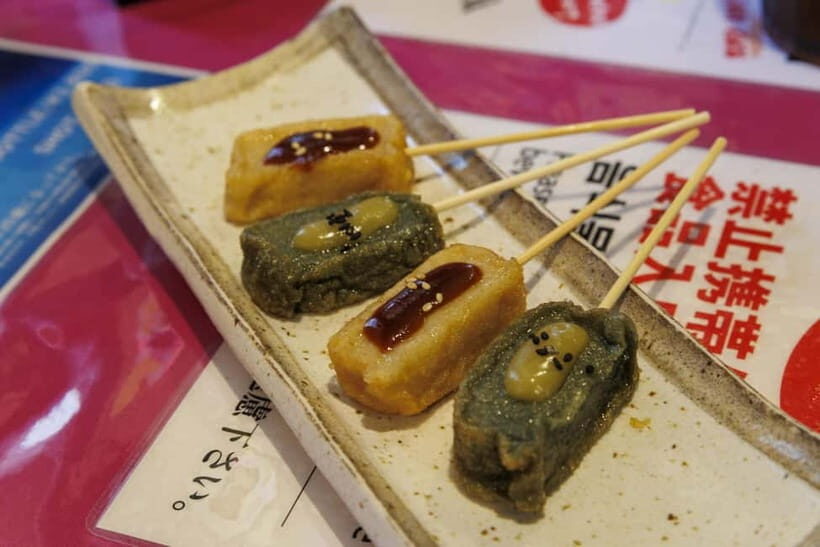
The listed specialties include:
- Yuba
- Obanzai (Kyoto home cooking)
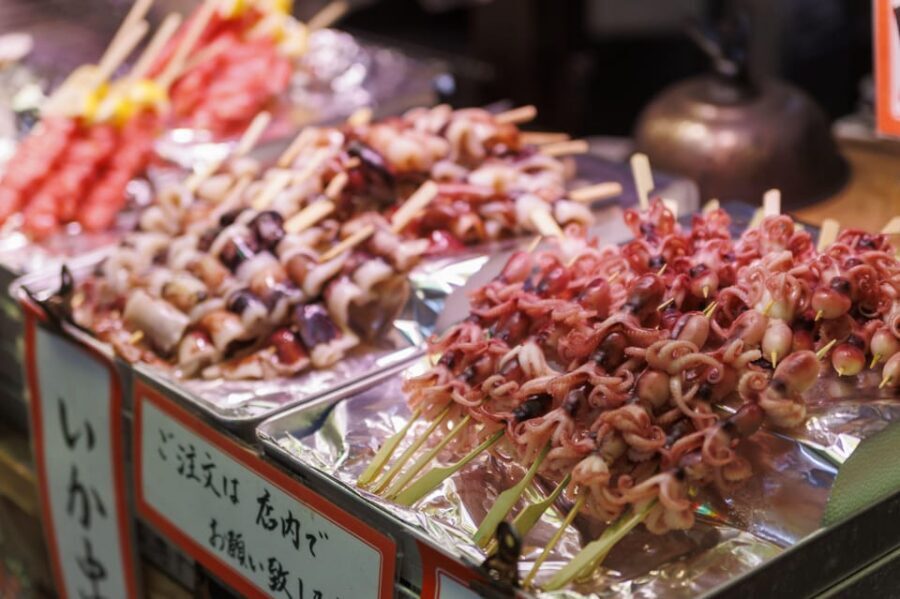
- Hamo tempura
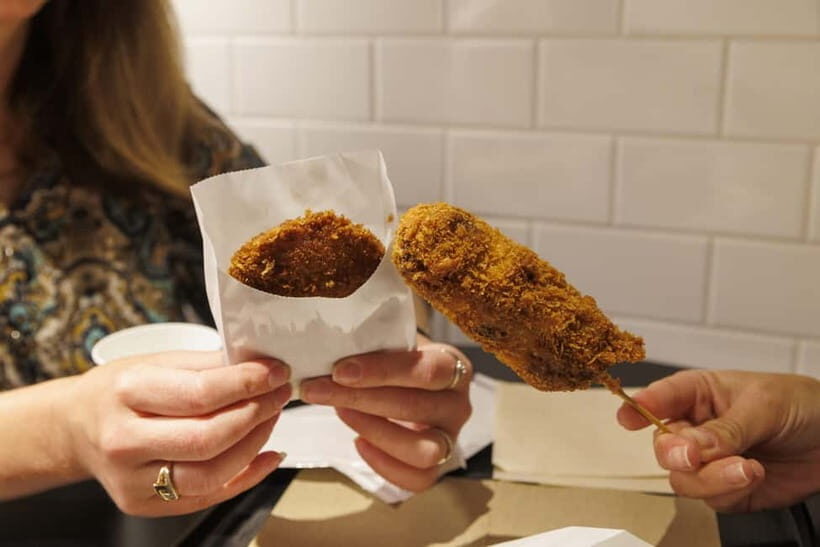
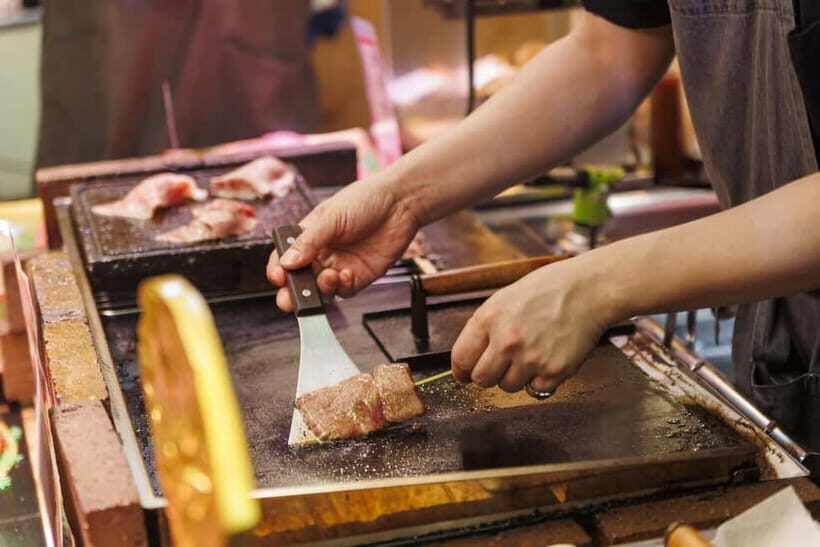
- WAGYU steak skewers
- Plus additional Kyoto seasonings and snack-style tasting items like crackers and Japanese flavored honey
Even without a full menu in front of you, you can think of the tastings in categories. Yuba gives you a texture lesson. Obanzai helps you understand the “home base” side of Kyoto cooking—dishes shaped by what’s available and what families make. Hamo tempura brings in a seasonal seafood element. Wagyu skewers add the rich, salty-savor depth that makes many visitors go, okay, I get it now.
The tour also includes food tastings of special Kyoto seasonings and other small items, which is where you can start replicating the flavors later on your own. If you shop after the tour, you’ll know what to look for because you’ve tasted the end result.
One practical note: this is a tasting tour, so you’ll likely want to keep your day’s meals lighter around it. The structure is designed for multiple small bites, and going in with a big breakfast can dull the experience.
Guides make the difference: stories, patience, and real answers
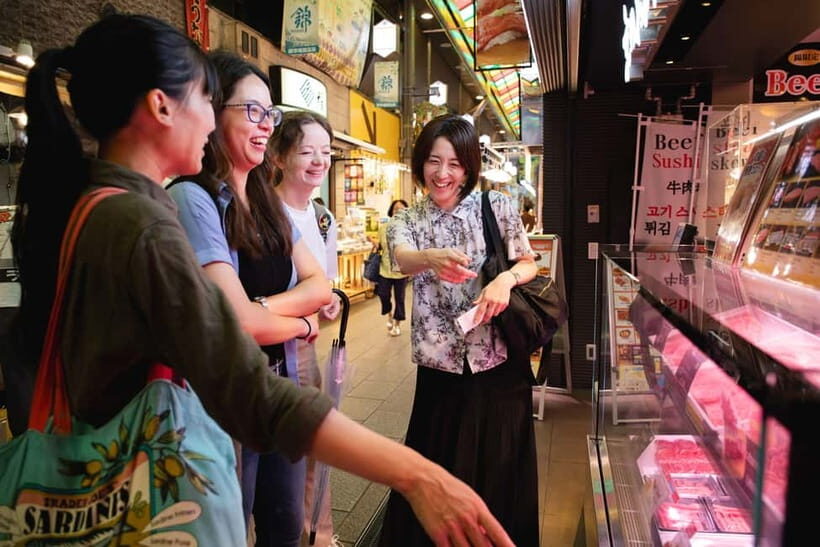
Food tours live or die on the guide, and this one gets consistently strong feedback for guide quality. You’ll be with an English-speaking local guide, and the overall pattern from named examples is the same: they keep things friendly, they answer questions, and they explain more than just what you’re eating.
For example, a guide named Takuna is praised for sharing context not only about the tour foods but also about Japan generally, and for being happy to answer questions. Hide is mentioned for kindness and patience, including waiting at a slightly confusing meeting spot so the group could start smoothly. Yume and Ayu (with guide Iku also mentioned) are praised for providing lots of information while keeping the pace comfortable.
What I like about this approach is that it turns the tastings into a learning experience that feels practical. Instead of memorizing trivia, you understand why a dish exists, what it tastes like in its ideal form, and how Kyoto’s food culture fits into daily routines.
A bonus: people often finish this tour with questions about what to do next. Several guides named in the feedback are described as giving suggestions beyond the market, which helps you turn a single outing into a better overall Kyoto plan.
Tea ceremony option: kimono dressing and a tight schedule after the tour
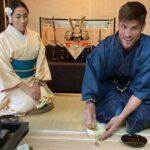
If you choose the tea ceremony option, you’re adding a traditional experience that starts at 2:00 PM, right after the food tour. The tea ceremony runs about 90 minutes.
Here’s what’s included in the tea ceremony portion:
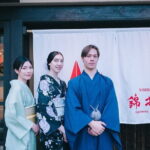
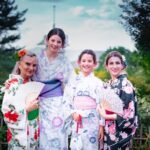
- Professional kimono dressing
- A guided tea ceremony led by a seasoned tea master
- Learning the meaning behind each movement and gesture
- Time for commemorative photos in a traditional setting
The biggest thing to understand is timing. Because you take the tea ceremony after the tour, you need to make your own way to the venue near Nishiki Market. The good news is that it’s close enough to be realistic, but you should still plan to move directly after the tour wraps.
Also, the kimono dressing part is a fun “reset” after food. It slows the pace and gives you a different kind of Kyoto cultural focus—one where the visuals and rituals matter as much as the story behind them.
Practical stuff that affects your comfort
A few details can make or break the experience, especially in a place as packed as Nishiki Market.
- Wear comfortable shoes. This is a walking tour, and you’ll be moving through market lanes and shopping streets.
- Bring rain gear, since weather can change quickly and you’ll still be walking.
- The tour is a small group limited to 6 participants, which helps keep things personal and manageable.
- Your guide will be English live, so you can ask questions and get clear answers without relying on translation apps.
- No luggage or large bags, and pets aren’t allowed. Pack light and keep space for what you may buy.
- It’s not suitable for wheelchair users or people with mobility impairments, so if mobility is a concern, this one may be a tough fit.
Meeting point notes: the meeting point can vary depending on which starting option you book. Some guests mention it can be a little confusing to find the exact spot, so arrive early and double-check your specific start location.
Who this tour suits best (and who might skip it)
This is a strong match if:
- You’re a first-time Kyoto visitor and want the easiest route into the city’s food culture.
- You love street food but don’t want to guess which stalls to trust.
- You prefer tasting + walking + short cultural context over a heavy sit-down meal.
- You travel solo or with a small group and want questions answered in plain English.
It’s also a good pick for families in at least some cases, since a review mentions an 11-year-old enjoying it and the pace being friendly enough to keep up.
You might consider skipping if:
- You need vegetarian, halal, kosher, gluten-free, or allergy-friendly options. The tour data is clear: it cannot accommodate those dietary restrictions.
- Mobility is limited. Since it’s not set up for wheelchair access, you’d likely struggle with uneven streets and crowds.
Should you book the Kyoto Nishiki Market food tour?
Yes, if your goal is to leave Nishiki Market with a clear sense of Kyoto’s flavors and a confident way to keep exploring after the tour. For the price, you’re getting far more than snacks: you’re getting a guided path through a historic market, five featured specialties (yuba, obanzai, hamo tempura, and WAGYU skewers among them), a shrine stop, and shopping time in nearby districts. The small group size also makes a real difference when you want to ask questions and hear the story behind the food.
If you have dietary restrictions, don’t assume you can negotiate it. This tour is designed for tasting a set selection, and the data says restrictions can’t be accommodated. If that fits your needs, it’s a very solid way to spend a half-day in Kyoto without wasting time or energy sorting out where to start.
FAQ
How long is the Kyoto Nishiki Market Local Food Tasting Tour?
The tour lasts about 3 hours (270 minutes), with 1.5 hours spent in Nishiki Market for the guided food tasting.
What foods are included in the tastings?
The tour includes 5 special foods, including yuba, obanzai (Kyoto home cooking), hamo tempura, and WAGYU steak skewers, plus additional tastings such as special Kyoto seasonings, crackers, and Japanese flavored honey.
Is it a small group tour?
Yes. It’s a small-group walking tour limited to 6 participants, with an English-speaking live guide.
Can the tour accommodate dietary restrictions or allergies?
No. Dietary restrictions are not accommodated, including vegetarian, halal, kosher, gluten-free, and allergy-related requests.
What is included with the tea ceremony option, and when does it start?
If you select the tea ceremony option, it starts at 2:00 PM and lasts about 90 minutes. It includes professional kimono dressing, a tea ceremony guided by a tea master, meaning behind the movements and gestures, and time for commemorative photos.
Is the tour wheelchair accessible?
No. The tour is not suitable for wheelchair users or people with mobility impairments.