Kyoto goes high-tech today. This tour stitches together three very different moods: Nishi Honganji temple atmosphere, Kyoto Station’s Daikaidan light show, and TeamLab Kyoto’s hands-on digital world. It’s an efficient way to see Kyoto’s spiritual side and modern design in the same half-day.
I love how clearly you’re guided through each stop, so you’re not just standing there guessing what you’re looking at. I also like that TeamLab Biovortex is ticketed and built into the flow, so you can focus on the experience instead of juggling more plans.
One possible drawback: you only get about 3 to 4 hours total, with time carved into set blocks, so if you want to linger for a long temple session or a super-slow photo day, this schedule may feel a bit tight. And food and drinks are not included.
In This Review
- Key things to know before you go
- A fast Kyoto mix: temple calm, a light-show screen, and TeamLab’s digital play
- Getting started at Amida-do-mon Gate (and why the meeting point matters)
- Stop 1: Nishi Honganji and the Amidadomon Gate walkthrough
- Stop 2: Kyoto Station Daikaidan light show on the Great Staircase
- Stop 3: TeamLab Kyoto Biovortex—interactive art with nature and the human body themes
- Price and logistics: what you get for $72
- Timing: why the order works (and what to watch for)
- What to bring (so you’re comfortable in every kind of space)
- Who this Kyoto TeamLab Biovortex & walking tour suits best
- Should you book this tour?
- FAQ
- How much does the Kyoto TeamLab Biovortex & Kyoto Walking Tour cost?
- How long is the tour?
- What’s included in the price?
- What is not included?
- Where does the tour start and where does it end?
- Is the tour refundable if I cancel?
Key things to know before you go

- Small-group feel (max 25 travelers) helps keep the pace comfortable and the guide’s attention more practical.
- Nishi Honganji’s Amidadomon Gate is a standout start point, and you’ll get a structured introduction before free strolling.
- Daikaidan at Kyoto Station turns the famous staircase into a light show, giving you a quick modern Kyoto hit.
- TeamLab Biovortex includes entry time for interactive, sensory digital art inspired by nature and the human body.
- Bilingual Spanish/English guide keeps the cultural context clear even if your Japanese is limited.
A fast Kyoto mix: temple calm, a light-show screen, and TeamLab’s digital play
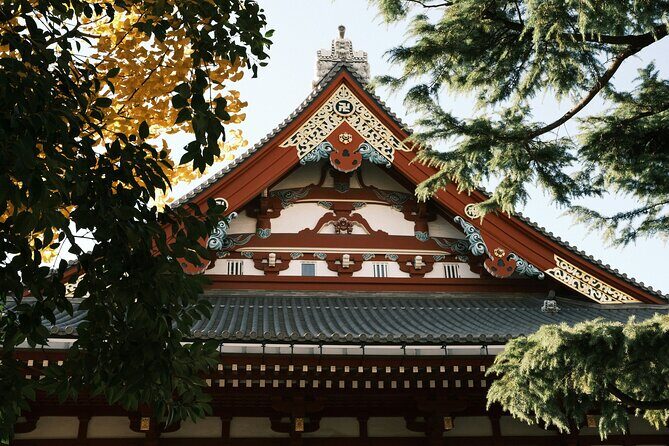
This is the kind of Kyoto day that works when you don’t have a full day to spend on just temples—or just tech. You start in a historic setting, shift to a modern architectural landmark, then end in a space that treats art like a physical experience.
I like that the tour doesn’t try to turn Kyoto into a single theme park. Instead, it gives you three separate “worlds” in one route: traditional halls and gardens first, then a projection-style spectacle, then TeamLab’s interactive installations. It’s a good match for travelers who enjoy variety and want the highlights without spending hours searching for what’s worth your time.
Other walking tours we've reviewed in Kyoto



Getting started at Amida-do-mon Gate (and why the meeting point matters)
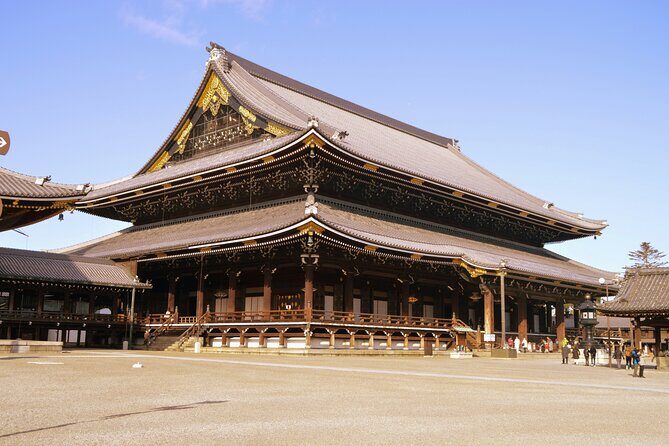
The tour begins at Amida-do-mon Gate (Tokiwacho, Shimogyo Ward, Kyoto 600-8167). This matters because Nishi Honganji is large, and arriving near the gate makes it easier to begin at the real “front door” rather than circling around looking for your bearings.
From there, you’ll be led into the temple area, then given time to stroll and take photos. That combo is helpful: you get the explanation first, then you can walk at your own pace while it’s all still fresh.
Also, the tour includes transportation, which is a real value in Kyoto. City navigation is easy with the right route, but included transport keeps your afternoon from turning into commute math.
Stop 1: Nishi Honganji and the Amidadomon Gate walkthrough
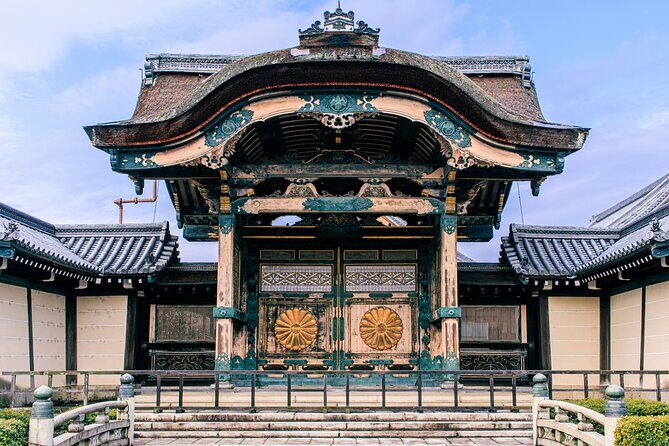
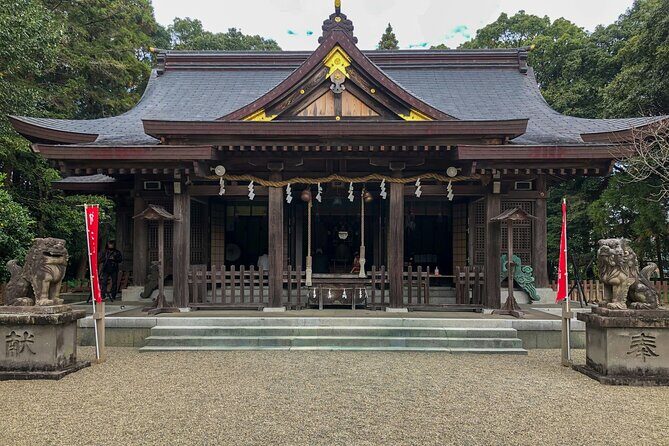
Your first stop is Nishi Honganji, starting at the impressive Amidadomon Gate. This gateway is described as one of Honganji’s major cultural treasures and UNESCO World Heritage–listed, which sets the tone immediately. It’s not just a pretty entrance; it’s the kind of site that rewards slowing down for a few minutes and noticing details.
What I find useful is that the visit begins with the gate and the main temple grounds, then gives you free time afterward. You’re not trapped in a single lane. You can look around the halls, see the older structures up close, and spend time with the traditional garden area.
Time on this stop is about 50 minutes, and that feels right. In 50 minutes you can get a meaningful overview without the fatigue that comes from longer temple marathons—especially if your next stops include a light show and TeamLab.
Practical tip: Wear shoes you can walk in comfortably. Temple grounds are usually fine underfoot, but you’ll still want stability for photos and slow walking.
Stop 2: Kyoto Station Daikaidan light show on the Great Staircase

Next, you head to Kyoto Station for the Daikaidan (Great Staircase) light show. The key idea here is simple: Kyoto Station’s central stairway becomes a luminous screen that celebrates Japanese culture.
This stop is short—about 15 minutes—but it works because it’s timed like a quick palate cleanser between temple history and modern digital art. Kyoto Station can be a lot all at once (people, signage, crowds, movement). Having a defined window for the show helps you avoid spending your time there just trying to find the right viewpoint.
Even if you’re not usually a “light show person,” Daikaidan is a clever way to understand how Japanese design can be playful without losing precision. It’s architecture doing storytelling.
Consideration: Since this is only about 15 minutes, plan on being ready to move when the group does. If you want extra time photographing the staircase from multiple angles, you may not get it here.
Stop 3: TeamLab Kyoto Biovortex—interactive art with nature and the human body themes
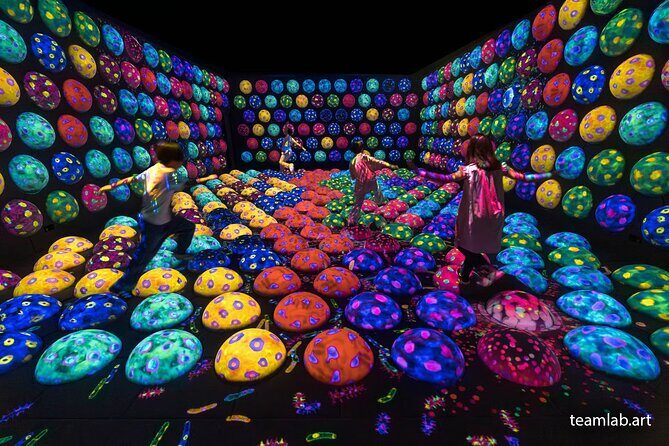
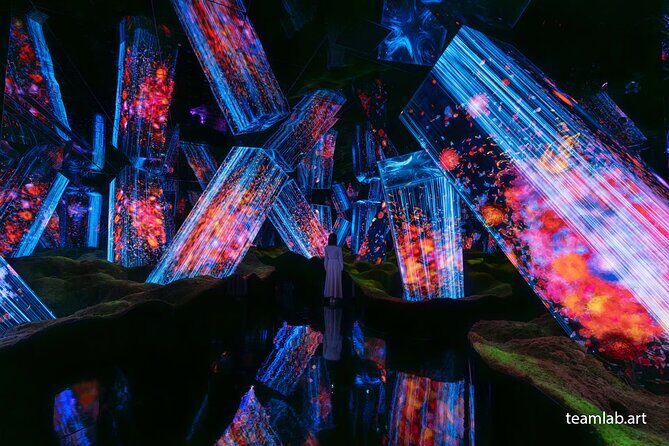
The day ends at TeamLab Kyoto Biovortex, with about 2 hours on site. This is where the tour becomes less about seeing and more about experiencing.
TeamLab Biovortex is described as an immersive digital world that mixes art, technology, and imagination. The works are inspired by nature, the human body, and traditional Japanese art. Translation: you’re looking at digital creations, yes—but the installations also involve your presence and movement, so it feels less like watching and more like participating.
What makes this a strong pairing after the temple stop is contrast. Nishi Honganji gives you stillness, geometry, and quiet focus. TeamLab pushes you into motion, light, and sensory interaction. If you’re the kind of traveler who gets bored when every stop is “quiet and historical,” this is your payoff.
The ticket to TeamLab is included in the price, which is a big deal for convenience. It also keeps your schedule smooth since you don’t need to scramble for entry timing at the end of the day.
Practical tip: Expect to spend most of your time inside the installations, so treat it like a real event, not a quick photo stop. If you’re wearing layers, choose what you can move around in comfortably.





Price and logistics: what you get for $72
The price is $72.00 per person, for roughly 3 to 4 hours. That sounds like a lot until you break down what’s actually bundled.
You get:
- Transportation included
- A bilingual guide (Spanish and English)
- Entry to TeamLab Biovortex included
The first two stops also list admission ticket free:
- Nishi Honganji at the Amidadomon Gate stop
- The Kyoto Station Daikaidan light show
So the money is mostly going toward guided time, transport, and TeamLab entry—plus the structure that gets you through three big experiences without turning your afternoon into a scavenger hunt.
For me, the best part of this pricing model is the guide. One review specifically praised the guide as friendly and helpful, and that matches what this itinerary needs. Kyoto is full of meaningful details that are easy to miss if you’re wandering alone—having someone explain what you’re looking at makes the time feel earned.
Timing: why the order works (and what to watch for)

This route is built with an intentional rhythm:
- Start with Nishi Honganji when you’re fresh and can enjoy the calm.
- Head to Kyoto Station for a short, high-impact light show.
- Finish with TeamLab Biovortex, where you’ll need more time to actually participate.
If you flip it—TeamLab first and temple last—you’d likely feel rushed at the end. The guide-led flow prevents that.
Still, consider one practical point: you’ll cover multiple zones of Kyoto in one afternoon. That’s normal, but it means you’ll want to keep your belongings simple and be ready to move between locations.
What to bring (so you’re comfortable in every kind of space)
You’re mixing temple grounds, a major transit hub, and an indoor digital art venue. Keep your packing lean and practical.
Bring:
- Comfortable walking shoes
- A phone with enough battery for both photos and navigation
- Something light for layers, depending on the season
- If you care about snacks, plan for it—because food and drinks are not included
Small humor, big truth: TeamLab is the kind of place where you’ll think, I should have brought better photo lighting—then you’ll accept that the art is the lighting.
Who this Kyoto TeamLab Biovortex & walking tour suits best
This tour is a great fit if:
- You want major Kyoto highlights without spending your whole day coordinating logistics
- You enjoy guided context, especially for temples and cultural sites
- You want both traditional Kyoto and modern digital art in one afternoon
- You’re traveling with limited time and want a plan that feels organized
It may be less ideal if:
- You prefer to spend long, unhurried time in one place
- You dislike structured itineraries where stops are time-boxed
- You’d rather not spend part of your day at Kyoto Station, even briefly
Should you book this tour?
I’d book it if you want a smart, efficient Kyoto afternoon that covers both sides of the city: temple heritage at Nishi Honganji, a modern design spectacle at Kyoto Station’s Daikaidan, and TeamLab Biovortex with interactive digital art.
If you’re on the fence, the deciding factor is your tolerance for a packed schedule. This is a tight route by design, and that’s exactly why it works for travelers who want value in time. Bring snacks, wear comfy shoes, and lean into the contrast—you’ll end the day with a temple memory and a digital art story, not just one or the other.
FAQ
How much does the Kyoto TeamLab Biovortex & Kyoto Walking Tour cost?
It costs $72.00 per person.
How long is the tour?
The duration is about 3 to 4 hours.
What’s included in the price?
Transportation is included, there’s a bilingual guide in Spanish and English, and the ticket entrance to TeamLab Biovortex is included.
What is not included?
Food and drinks are not included.
Where does the tour start and where does it end?
It starts at Amida-do-mon Gate, Tokiwacho, Shimogyo Ward, Kyoto 600-8167, Japan and ends at teamLab Biovortex Kyoto, 21-5 Higashikujō Higashiiwamotochō, Minami Ward, Kyoto 601-8006, Japan.
Is the tour refundable if I cancel?
No. This experience is non-refundable and cannot be changed for any reason.