Taiko sounds loud. This workshop turns it into a hands-on cultural moment. You’ll hear a quick Taiko history talk, then you’ll physically play along with guidance from an English-speaking instructor (names you might see include Michiko and Aoi, depending on the session). Two things I really like: you get that up-close professional taiko performance, and you make a personal hachimaki with your own wish kanji before you start drumming. One consideration: you have to arrive on time, because you can’t join after the start, and late arrivals aren’t waited for.
Logistics are refreshingly simple. You meet at JR Takatsuki Station (central ticket gate, 2nd floor) between Kyoto and Osaka, so it’s an easy hop either way. The session runs about 2 hours total, including travel time, and it includes a simple group piece plus a commemorative photo in traditional costume.
If you’re thinking of watching only, plan ahead. Observers pay a separate fee (8000 yen) and transportation may not be arranged unless you notify the organizers in advance.
In This Review
- Key Points Before You Go
- Taiko in Osaka-Range: Why This Workshop Works
- Getting There: JR Takatsuki Station Details That Matter
- The 2-Hour Flow: From History to Your First Real Beat
- A short Taiko history and cultural context
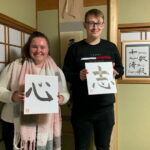
- Write your wish kanji on a hachimaki
- Watch a powerful professional taiko demonstration
- Learn the basic movements and techniques
- Play a simple piece with the group
- Commemorative photo in happi and hachimaki
- The People Behind It: Guides and Instructors Make or Break It
- Price and Value: Is $103 Worth It?
- Who This Workshop Fits Best (and Who Should Think Twice)
- Practical Tips to Get the Most Out of It
- Should You Book Osaka: Japanese Drum Taiko Workshop?
- FAQ
- Where do I meet for the taiko workshop?
- How long is the experience?
- Is there a fee for people who only watch?
- What language is the tour guide?
- Is prior taiko experience required?
- Are there age restrictions?
Key Points Before You Go
- JR Takatsuki Station is your anchor point: the JR station, not Hankyu Takatsuki Station.
- Your hachimaki gets your wish kanji: you’re not just a spectator, you make something personal.
- You get a pro performance first: you’ll learn faster because you’ve seen what good taiko sounds like.
- No experience needed: the basic movements and techniques are taught in a friendly way.
- Group drumming is the payoff: you finish by playing a simple piece together.
- Photos in happi and hachimaki: the memorable part is built into the experience.
Taiko in Osaka-Range: Why This Workshop Works
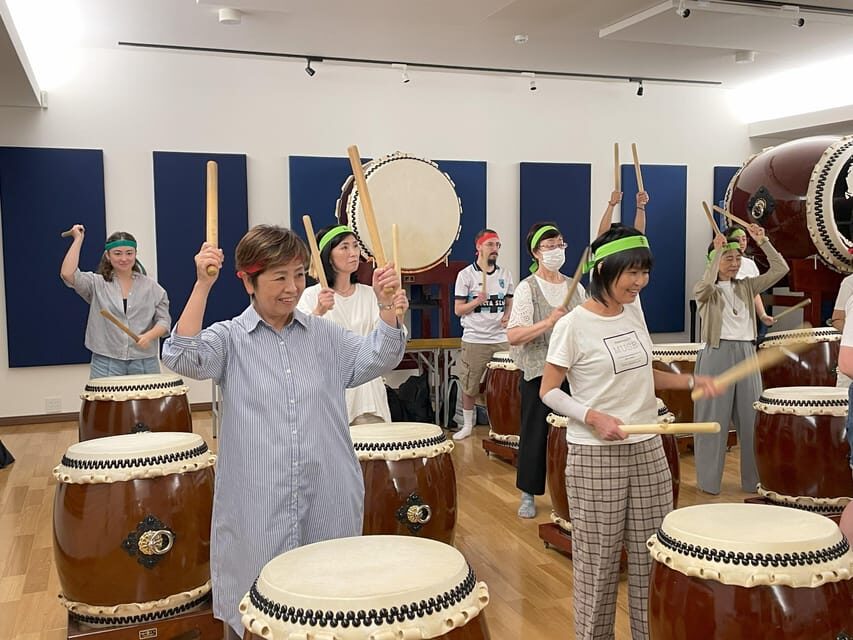
Taiko can feel intimidating from afar. Big drums, big energy, and that wall of rhythm. This workshop flips the script. It gives you context first, then hands you a drum, then builds you toward playing together.
The setup also feels designed for real people, not performers-in-training. You start with a short cultural explanation, then you make a hachimaki tied to your own wish. That little ritual matters. It turns the session from a single activity into a small cultural experience with meaning.
And the energy isn’t just noise. The workshop pacing lets you learn the fundamentals, then use them immediately. By the end, you’re not reciting about taiko—you’re doing taiko.
A few more Kyoto tours and experiences worth a look


Getting There: JR Takatsuki Station Details That Matter
The meeting point is JR Takatsuki Station Central Ticket Gate, 2nd floor. You stay on that level. Don’t go downstairs. The guide will be waiting with a banner showing a taiko (Japanese drum).
Two Takatsuki stations exist. This matters a lot:
- The meeting place is JR Takatsuki Station
- Not Hankyu Takatsuki Station
If you’re coming from Osaka or Kyoto, the train ride is about 15 minutes. Taxis from Osaka are not recommended due to time and cost, so keep it simple and use the JR line.
Practical timing note: arrive 15 minutes early. They can’t wait for late arrivals, and once the session starts you can’t join.
The 2-Hour Flow: From History to Your First Real Beat
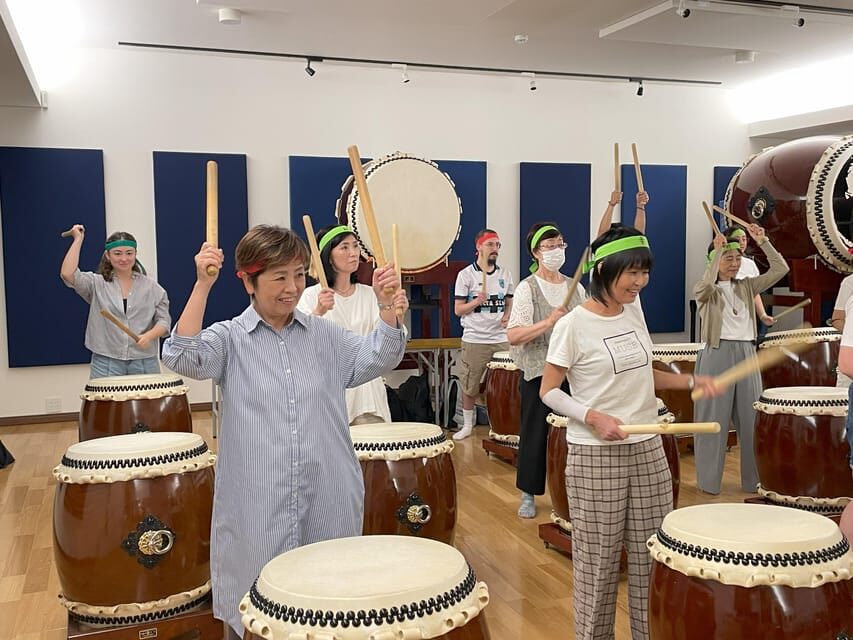
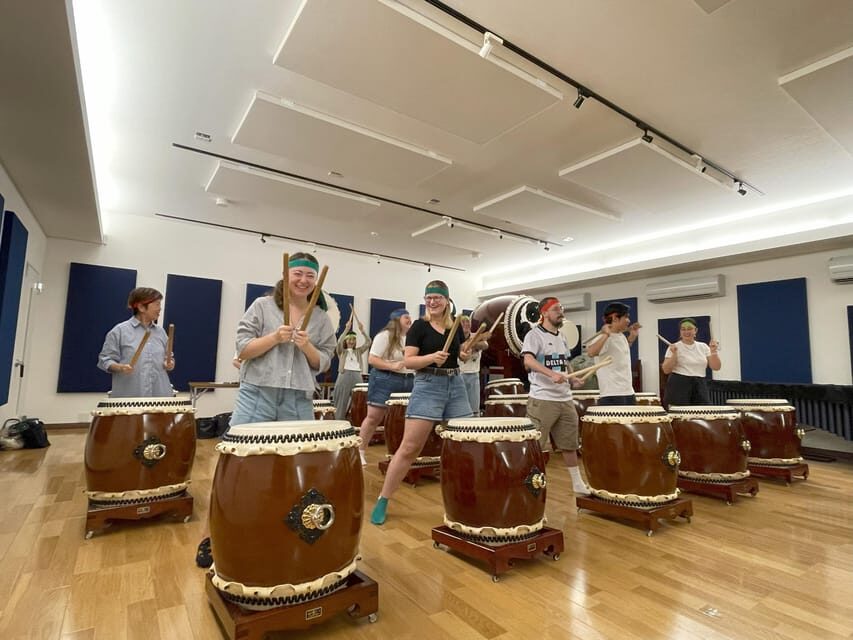
This is a compact experience. You should plan on it taking the full time window, since the total duration includes travel, and returning early isn’t recommended.
Here’s the sequence you can expect:
A short Taiko history and cultural context
You’ll begin with a brief explanation of Taiko’s history and why it matters in Japanese life. It’s not a lecture that stretches on. It’s the kind of orientation that helps you understand what you’re doing once your hands are on the drum.
Why this is valuable: taiko isn’t just percussion. The rhythm style, body movement, and ensemble feel connected to tradition. Even a basic “here’s what it represents” helps you appreciate the performance you’ll see next.
Write your wish kanji on a hachimaki
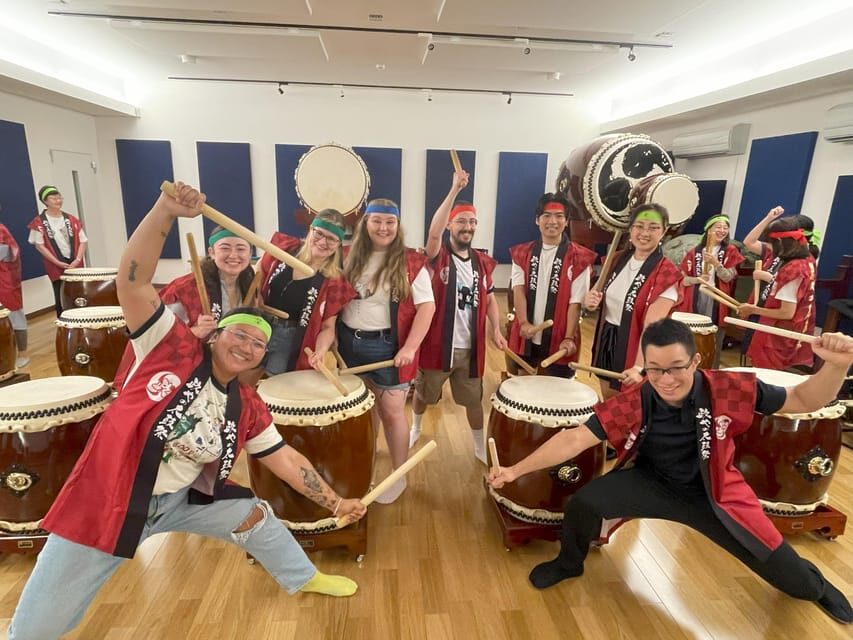
Next comes a hands-on cultural moment. You’ll write kanji (Japanese characters) of your wishes onto a hachimaki, a traditional headband.
This part is personal. You’ll walk away with something you made, not just something you held for 30 minutes. It also sets the tone: you’re participating in the cultural framing of taiko, not only the technique.


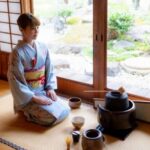

Watch a powerful professional taiko demonstration
Then you’ll watch a powerful taiko performance by a professional player/instructor. Watching first does two things:
- You get an idea of the sound and intensity you’re aiming for.
- You learn visually how timing and body movement work together.
From the experience details and session feedback, this performance is often the moment people remember most.
Learn the basic movements and techniques
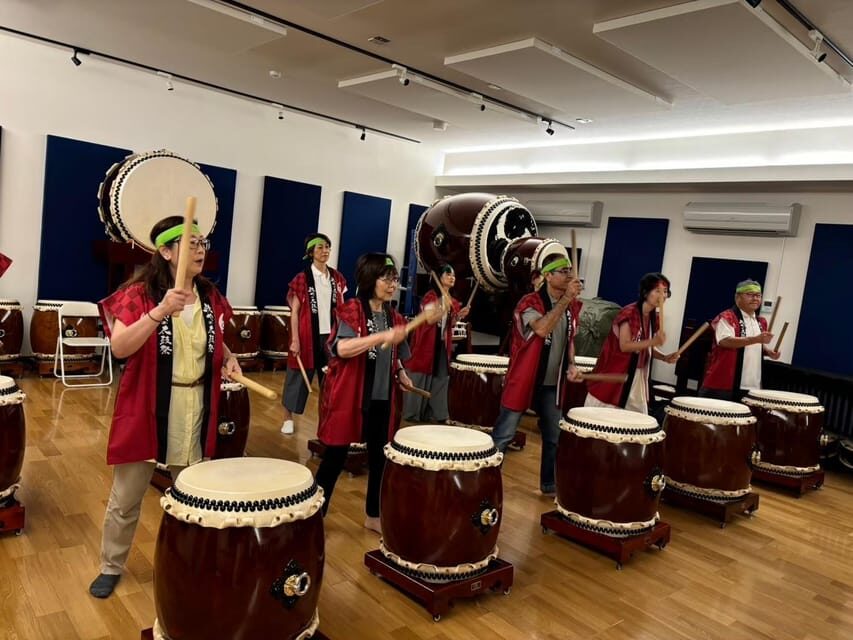
After the demo, a friendly instructor teaches you the basics. You’ll practice the fundamental movements and how to strike and control your drumming.
Good news for first-timers: this workshop is structured to be doable even if you’ve never touched taiko before. If you play another percussion instrument, you may recognize similarities in rhythm and coordination, but the physical technique and ensemble style can feel different—in a useful way.
Play a simple piece with the group
Finally, you play a simple piece of music together with your fellow participants. This is where the workshop earns its keep.
It’s not a solo audition. It’s team timing—call-and-response energy, plus the satisfaction of making one rhythm with others. Even if you feel a little shaky at first, the group element helps you lock into the beat.
Commemorative photo in happi and hachimaki
To close, you get a commemorative photo in traditional costume, including a happi and your hachimaki. The photos are part of the experience package, and you should expect plenty of picture time because the workshop experience is designed to leave you with a souvenir that looks like a memory, not a blur.
The People Behind It: Guides and Instructors Make or Break It
This workshop runs on two roles: the English guide and the taiko instructor.
Your English guide helps with the history explanation and keeps everything smooth—examples of guides you may see include Michiko or Naru. The taiko instructor teaches the drumming itself; examples include Aoi.
What I look for in an activity like this is clarity. You’ll want instructions that are simple enough to follow while you’re holding a drum and trying to get timing right. The structure here seems built for that, and the tone from the staff is meant to be encouraging.
Price and Value: Is $103 Worth It?
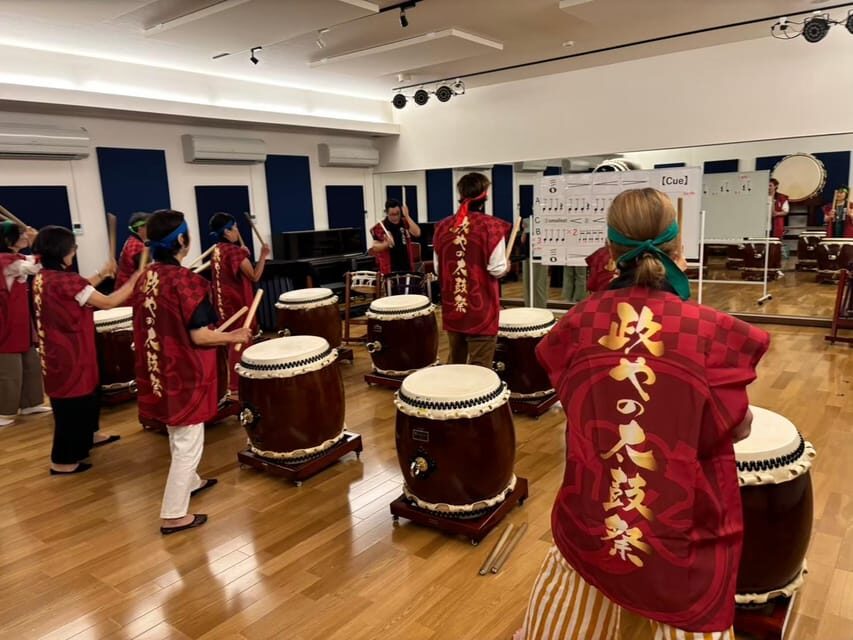
At $103 per person, this is more than a quick souvenir stop. You’re paying for:
- instruction from a taiko instructor,
- a pro performance,
- cultural context and a workshop craft (your hachimaki with wish kanji),
- round-trip transport between JR Takatsuki Station and the studio,
- and the commemorative photo experience.
If you compare it to paying for a guided cultural activity plus a separate hands-on class, this blends several pieces into one set time block. The biggest “value lever” is that you actually play—then you play as a group. A history talk alone wouldn’t justify the cost. A performance ticket alone wouldn’t either. Here you get both, plus instruction and a personal ritual item.
The only pricing complication is observers. If someone in your group wants to watch only, the fee is 8000 yen per observer, paid in cash at the studio the day of the tour. Also, transportation may not be arranged unless you tell them beforehand. So if you’re traveling with non-participants, message ahead and plan your group roles early.
Who This Workshop Fits Best (and Who Should Think Twice)
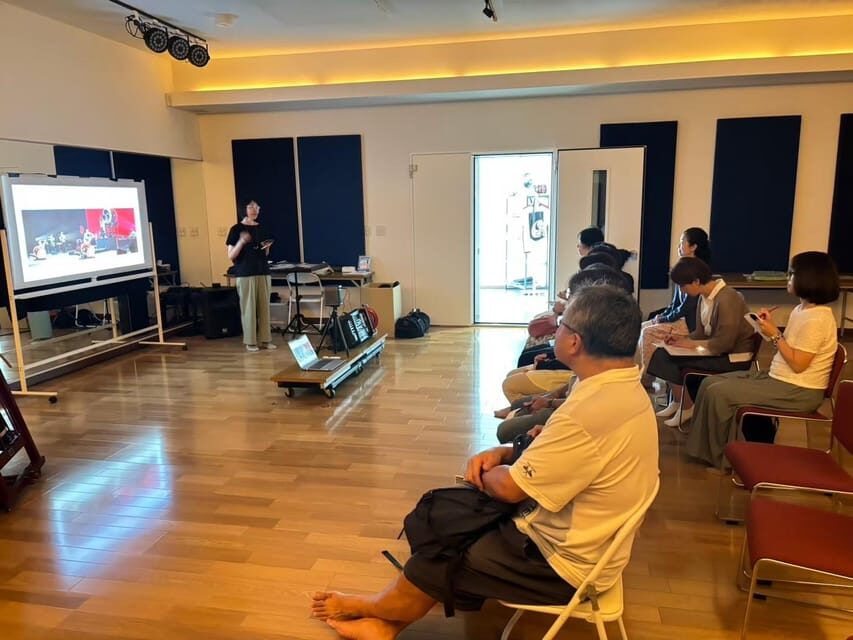
This is a great fit if you want something active, cultural, and genuinely memorable in a short window.
It works well for:
- first-timers to Japan who want a “do it” experience, not just photos,
- families (one session had a family group of five),
- people who play music but want to compare rhythm styles and technique,
- anyone who wants a workout that doesn’t feel like a workout.
It’s not a fit if:
- you’re bringing kids under 7 (they can’t participate),
- you need a strictly passive observing experience without arranging observer details,
- you hate tight timing. You must arrive early enough to start on schedule.
There’s also a note about single-participant booking on some days. If single spots aren’t available, you may need to book and pay for two participants to join.
Practical Tips to Get the Most Out of It
A few small things can make this way smoother:
- Arrive early and double-check JR vs Hankyu. This is the most common way to lose time at a station.
- Wear comfortable clothes you don’t mind moving in. Taiko technique uses your whole body, and the session can feel physically energetic.
- Bring patience for coordination. You don’t need to be athletic; you do need to listen, watch, and follow the basics until they click.
- If you’re sensitive to noise, remember taiko is loud by design. That’s part of the art form, and the workshop is built around it.
- If you want video/photo memory, be aware that recording specifics aren’t stated here. Photos are included via the commemorative picture, so you’ll still leave with something solid.
Should You Book Osaka: Japanese Drum Taiko Workshop?
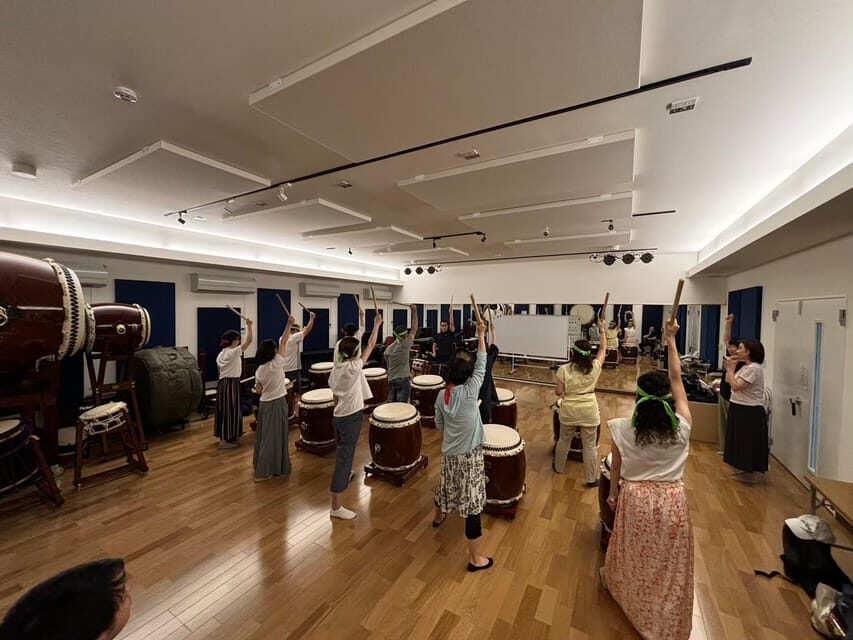
Book it if you want an activity that’s equal parts rhythm practice and cultural participation. The combination of a professional taiko performance, a guided history, a personal hachimaki craft, and then group drumming makes this feel like a complete experience rather than a quick class.
Skip it only if you’re looking for a sit-and-watch cultural show with zero participation. Even the observing option requires planning and extra cost, and the workshop energy is centered on doing the drumming.
If your schedule is tight around Osaka or Kyoto, this workshop is also efficient. Takatsuki sits right between those travel plans, and the JR hop is simple.
FAQ
Where do I meet for the taiko workshop?
You meet at JR Takatsuki Station Central Ticket Gate, 2nd floor. The guide will be holding a banner with a taiko (Japanese drum). Make sure you are at the JR station, not the Hankyu station.
How long is the experience?
The duration is 2 hours total, including travel time. Plan not to return early.
Is there a fee for people who only watch?
Yes. Observers pay 8000 yen per person and should pay in cash at the drum studio on the day of the tour. You also need to notify the organizers if you have observers so transportation can be arranged.
What language is the tour guide?
The workshop is offered with an English live tour guide.
Is prior taiko experience required?
No. The workshop is designed so everyone can enjoy playing taiko, with basic movements and techniques taught during the session.
Are there age restrictions?
Yes. Children under 7 cannot participate.
If you tell me your group size and whether anyone plans to observe, I can help you sanity-check timing and roles before you book.