Flowers can slow you down fast. In Kyoto, HanaYou’s ikebana workshop lets you shape fresh seasonal stems into a thoughtful arrangement, step by step, in about 90 minutes. I love the beginner-friendly pace, and I also love that you get fresh flowers to take home. One heads-up: the studio is on the 2nd floor, so expect some stair climbing.
This class is also a nice change from the usual Kyoto rush. You’ll get light refreshments (traditional tea and a seasonal sweet), choose guidance in English or Japanese, and use a simple photo setup so your finished creation is easy to capture. Plus, it’s a small group format with a maximum of 4 people, which keeps the help personal.
In This Review
- Key Things I’d Bookmark Before You Go
- Why Make Ikebana in Kyoto at HanaYou?
- The Workshop Flow: Tea, Step-by-Step Guidance, and Your Finished Arrangement
- Meet Ryoko Arnwine and Learn the Point of Flower Placement
- What You Use in Class—and What You Take Home
- Price and Value: Is $97.73 Worth It?
- Logistics That Actually Matter in Kyoto
- What to Wear and Bring (So You Don’t Fight the Day)
- Who This Workshop Suits Best
- Should You Book the Ikebana Class With HanaYou?
- FAQ
- How long is the Ikebana Floral Design Workshop?
- Where does the workshop take place?
- Do I need any experience to take this class?
- What language will the instructor use?
- What’s included in the price?
- What can I take home afterward?
- Are the tools available to take home?
- Is transportation provided?
- What is the cancellation policy?
Key Things I’d Bookmark Before You Go
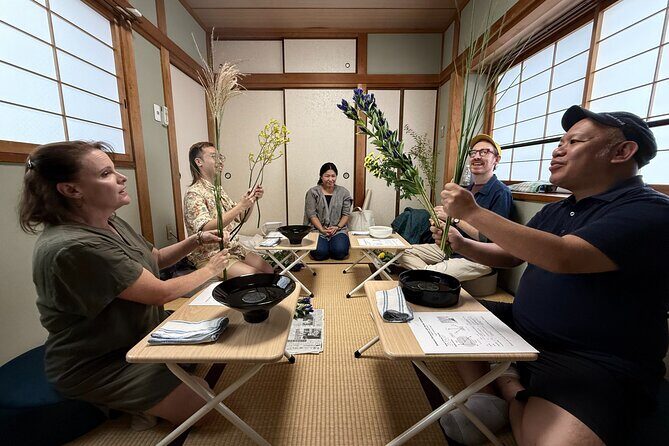
- Small group size (max 4) means more time with the instructor and fewer awkward delays
- Ryoko Arnwine leads the class at HanaYou, so you’re learning directly from the founder
- Beginner-ready instruction with real, hands-on arranging from start to finish
- Photo corner included so you can document your arrangement right away
- Flowers you arrange are yours to take home, perfect for bringing Kyoto’s calm back to your room
- Tea and a seasonal sweet help set the slow, focused mood of ikebana
Why Make Ikebana in Kyoto at HanaYou?
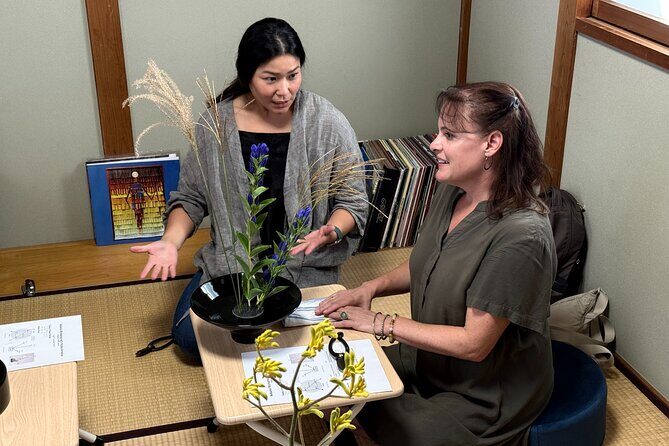
Kyoto already feels designed for quiet attention. HanaYou’s ikebana workshop fits that vibe perfectly because it asks you to do one simple thing well: place flowers with intention.
You don’t need a background in Japanese crafts, and you won’t be handed some complicated art history quiz. Instead, you’ll build an arrangement in a studio setting with guidance throughout. In a city full of must-see sights, this is the kind of activity that gives your day a different rhythm. You get to slow down, look closely at the stems you’re given, and make choices based on balance and harmony.
And there’s something practical here too. This isn’t just viewing ikebana. You’ll handle the materials, make the arrangement, and then take your finished flowers back to your hotel. That means you leave with a memory you can actually see on your table.
The overall feel is calm, but not precious. The goal is that you can create something you’re genuinely proud of, even if it’s your first time.
A few more Kyoto tours and experiences worth a look


The Workshop Flow: Tea, Step-by-Step Guidance, and Your Finished Arrangement
The class runs about 1 hour 30 minutes, and it’s structured to move you from explanation to hands-on building without leaving you stuck.
Here’s the typical flow you should expect:
- Arrive at HanaYou’s studio and get settled on the 2nd floor
- Welcome refreshment: traditional Japanese tea plus a seasonal sweet
- Instruction starts right away, led by HanaYou founder Ryoko Arnwine
- You begin arranging using the studio-provided flowers and tools
- Ongoing coaching as you work, including guidance in English or Japanese based on your preference
- Photo corner time once your arrangement is done
- Take-home wrap-up, where your fresh flowers go home with you
What makes this flow work is that it respects real travel schedules. You’re not committing to half a day. You’re also not being asked to show up hours early. Ninety minutes is long enough to learn the fundamentals and finish something, short enough to fit neatly into a Kyoto day.
Also, the workshop is designed for beginners. That matters because ikebana can sound intimidating from the outside—like you need special training or years of practice. In this class, you’re taught the approach in a way that’s meant to land on the first try.
Meet Ryoko Arnwine and Learn the Point of Flower Placement
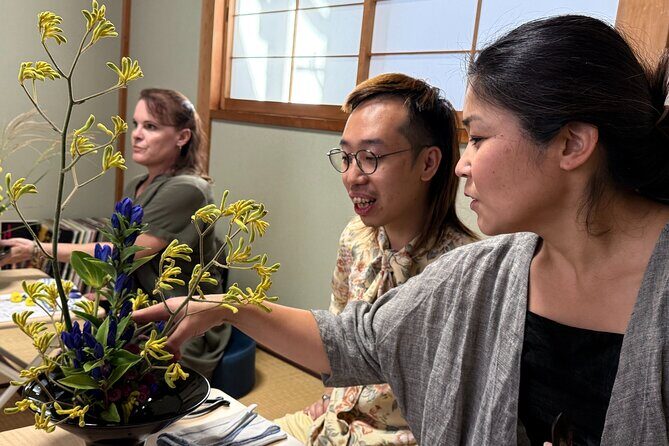
One of the best parts of this workshop is how it connects technique to meaning. Ryoko Arnwine isn’t just showing you what to do; she’s helping you understand why.
From the kinds of lessons people describe, you’ll likely focus on ideas like:
- how to think about balance as you arrange
- how harmony shows up through angles and spacing
- the basic meaning behind where you place each part of the arrangement
That’s the real value: you’re not only copying a design. You’re learning a way to make choices. And that makes your arrangement feel personal instead of random.
The guidance style is also a big deal. Several people highlight how patient Ryoko is and how she explains things clearly. That’s exactly what you want when you’re doing something hands-on with delicate materials. No rushing. No feeling like you’re behind.
And since the session includes both cultural and historical context alongside the practical skills, you’ll probably understand the craft better as you work—not just at the end.
What You Use in Class—and What You Take Home
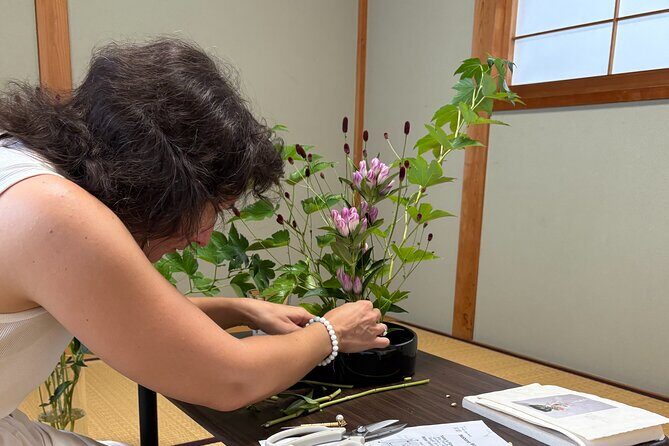
This is not one of those classes where you pay, do some art, and leave empty-handed. The workshop includes fresh seasonal flowers to take back to your hotel, so your effort becomes something you can actually enjoy later.
Here’s how the materials are handled:
- You’ll receive real flowers that you arrange during the class
- The studio provides the key supplies you need to build your arrangement
- Studio tools and equipment (like vases, scissors, and pins) are for in-class use only
- Your take-home part is the fresh floral arrangement (the flowers themselves)
That tool detail is practical. It means you should plan on transporting only what you’re given and taking home the flowers. Don’t expect to come away with specialty equipment.
Also, because you’re taking fresh flowers to your hotel, you’ll want to think like a traveler. Bring a bag you can manage one-handed if needed. Plan where you’ll keep the arrangement so it doesn’t get crushed on the way.
The class also includes a photo setup, which is helpful because fresh arrangements look best when you can see them clearly right away. Even if you’re not a photographer, you’ll appreciate having a dedicated spot to capture your work.
Price and Value: Is $97.73 Worth It?
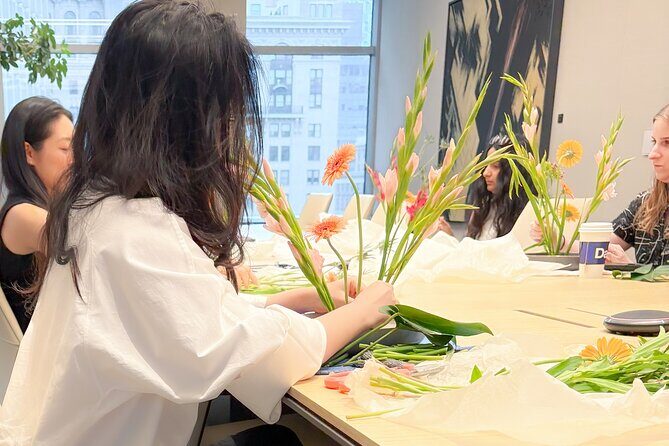
At $97.73 per person, this isn’t the cheapest activity in Kyoto. But it’s priced in line with a hands-on workshop where you’re not just watching—you’re learning with an instructor, using real materials, getting refreshments, and leaving with flowers.
Here’s the value breakdown that matters:
- Hands-on instruction for about 90 minutes with Ryoko Arnwine
- All materials included, so you’re not shopping for supplies before you start
- Fresh seasonal flowers to take home, which turns the class into a tangible keepsake
- Light refreshments (tea and a seasonal sweet)
- A photo corner, which saves you time hunting for a decent background afterward
- Small group cap (max 4), which usually means less waiting and more direct help
And there’s another quiet value: this workshop helps you leave the city’s crowds behind for a short time. When you choose an activity that slows your pace, it changes the quality of the whole day. For many people, that’s worth more than a low-cost ticket.
If you’re trying to build a Kyoto trip that feels balanced—temples in the morning, hands-on craft in the afternoon—this is a strong fit.






Logistics That Actually Matter in Kyoto
Let’s talk about the stuff that can make or break a workshop day.
Meeting point is at Kawaramachi Marutamachi Iseyacho, Kamigyo Ward, Kyoto (602-0873). The activity ends back at the same meeting point. The studio is described as near public transportation, which is great for planning.
One practical catch: the studio requires walking up stairs to the 2nd floor. It’s not a long-distance walk obstacle, but it does mean you should wear shoes you’re comfortable in, especially if you’re carrying a tote already.
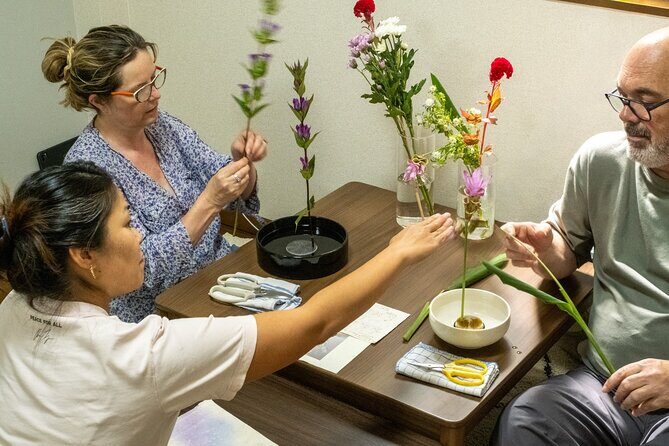
Group size is limited to up to 4 travelers. That’s ideal if you want interaction without feeling like the instructor is too busy for you. It also means scheduling is usually tighter—if you see a good time slot, grab it.
Finally, you’ll receive a confirmation at booking time and your ticket is mobile. That’s convenient because Kyoto can mean lots of last-minute checking. You won’t need paper tickets.
What to Wear and Bring (So You Don’t Fight the Day)
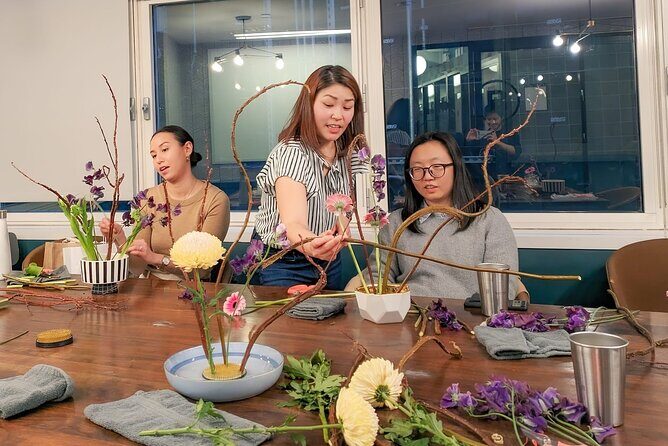
This is a craft class, so you’ll want to dress for handling flowers and moving around a studio.
Practical suggestions:
- Wear comfortable clothes and shoes for a short stair climb
- Bring a small bag you can keep close—your flowers are fresh and you’ll want to keep them safe
- If you have a preferred language, choose English or Japanese guidance when offered
- Plan your day so you have time after the workshop to get your arrangement back to your hotel without rushing
One more thing: because the studio equipment is for in-class use only, don’t worry about bringing your own scissors or tools. Focus on being ready to learn.
Who This Workshop Suits Best
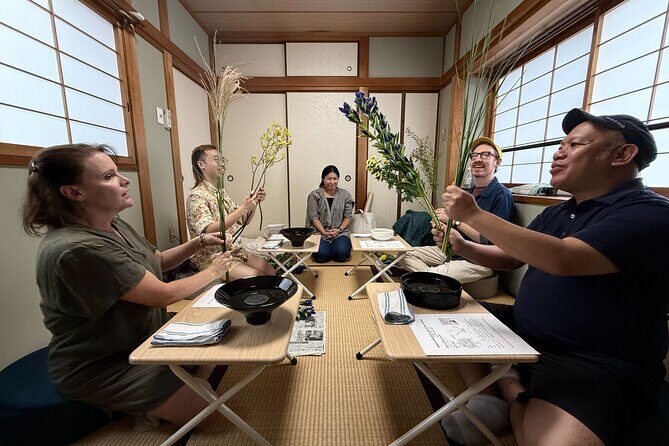
This class is a great match if you want:
- a beginner-friendly creative activity in Kyoto
- a hands-on way to understand Japanese craft culture
- a small-group session with real instructor attention
- something you can take home, not just photos
It’s especially good for couples or small groups who want a shared, calm experience. Since the max group size is 4, it can also be a good solo option if you prefer a quieter setting.
This workshop may be less ideal if you:
- strongly dislike stairs (it’s on the 2nd floor)
- want an activity that involves lots of walking outdoors
- prefer purely sightseeing over hands-on making
Should You Book the Ikebana Class With HanaYou?
I’d book it if you want Kyoto to feel human-scale for a little while. For the price, you’re getting more than an activity. You’re getting instruction, a guided mindset for arranging, refreshments, a photo setup, and fresh flowers to take home.
What clinches it for me is the combination of beginner readiness plus small group size. If you’ve ever tried a creative class while feeling self-conscious, this setup is the kind that usually keeps things relaxed. And if you want a souvenir that doesn’t clutter your luggage, take-home flowers do the job.
If you’re short on time, don’t overthink it. Ninety minutes is a realistic commitment. Just plan a smooth return to your hotel so your arrangement stays happy.
FAQ
How long is the Ikebana Floral Design Workshop?
The class runs about 1 hour 30 minutes.
Where does the workshop take place?
It takes place at HanaYou’s ikebana studio in Kyoto, and the meeting point is Kawaramachi Marutamachi Iseyacho, Kamigyo Ward, Kyoto 602-0873, Japan.
Do I need any experience to take this class?
No. It’s designed for beginners, and no prior experience is needed.
What language will the instructor use?
Guidance is available in either English or Japanese based on your preference.
What’s included in the price?
Included are hands-on ikebana instruction, fresh seasonal flowers to take back to your hotel, use of a photo corner, traditional Japanese tea and a seasonal sweet, and studio equipment (vase, scissors, pins, etc.) during the class.
What can I take home afterward?
You take home the fresh flowers you arrange, and you can also capture photos using the studio’s photo setup.
Are the tools available to take home?
No. The studio equipment is for use during the class only, not for take-home.
Is transportation provided?
Transportation to and from the studio is not included.
What is the cancellation policy?
Free cancellation is available up to 24 hours before the experience’s start time for a full refund.