Origami can slow your brain down. In the heart of Kyoto, GojoParadiso turns a simple paper fold into a mindfulness practice, right by the Takase River on Kiyamachi Street.
I really like two things here. First, the professional instructor (English and Japanese) makes the steps feel doable, even when you get stuck. Second, you end with something you can actually keep—a finished origami piece plus a commemorative group photo.
One thing to consider: it’s a 1-hour class, so it’s best if you want a relaxed taste of the craft rather than a deep, multi-session skill course.
In This Review
- Key things I’d mark on your Kyoto plan
- A calm hour by the Takase River (and why that setting helps)
- Mindfulness origami: what you actually do in the room
- The folding lesson: basics you can use right away
- Paper choices: colorful fun or traditional Japanese-designed sheets
- When it turns into a shared moment: group photo and display time
- What you take home (and why the keepsake feels more personal)
- Price and value: is $29 fair for a 1-hour class?
- Who this Kyoto origami workshop is best for
- How to plan it into your day (without overthinking)
- Should you book GojoParadiso’s Mindfulness Origami Workshop?
- FAQ
- FAQ
- How long is the Kyoto mindfulness origami workshop?
- Where is the workshop located?
- How far is it from Keihan Kiyomizu Gojo Station?
- How far is it from Keihan Shichijo Station?
- What language is the instructor?
- What is the group size?
- Are origami supplies included?
- Can I choose what kind of paper I use?
- What do I get to take home?
- Is there anything besides the folding?
Key things I’d mark on your Kyoto plan
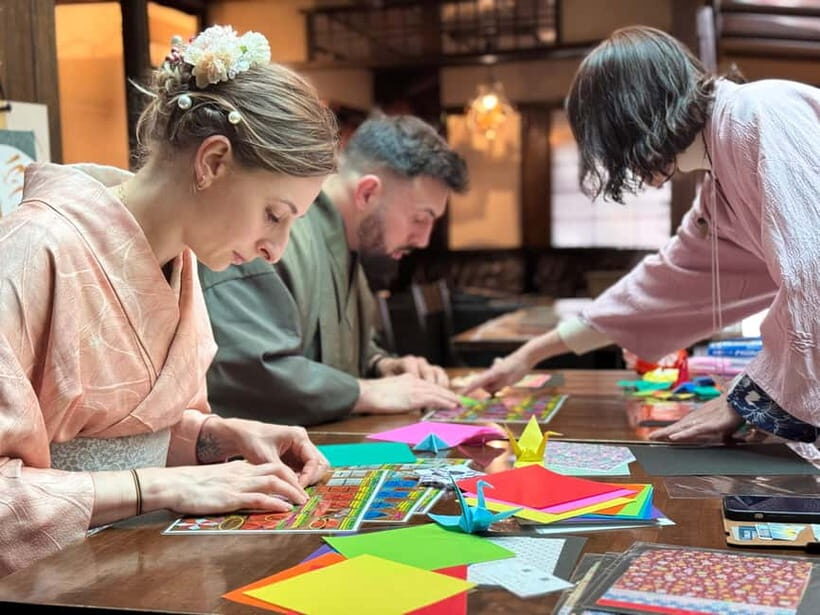
- Small group (max 10 people): more attention when paper starts fighting back.
- Mindfulness by design: the pace is set around focus and the rhythm of folding, not perfection.
- Traditional + beginner-friendly: expect basics like crane-style folding and easy-to-follow techniques.
- Paper choice matters: you can pick colorful paper or Japanese-patterned paper to match your mood.
- You leave with keepsakes: a take-home piece and a group photo to remember the hour.
A calm hour by the Takase River (and why that setting helps)
Kyoto is great at draining your schedule. This workshop works because it gives you a controlled little pocket of calm. You’re not sprinting between temples or buying souvenirs that vanish into a bag. Instead, you’re sitting down with paper and slowing things down on purpose.
The location also does something subtle. Gojo Paradiso sits along the Takase River on Kiyamachi Street, just a short walk from Keihan Kiyomizu Gojo Station (about 386 meters) and Keihan Shichijo Station (around 10 minutes). That makes it easy to plug into a day without turning it into a transit puzzle.
And because it’s a small group capped at 10, the space doesn’t feel like a cram class. You can hear instructions, ask for help, and keep your focus on the fold rather than the crowd.
A few more Kyoto tours and experiences worth a look



Mindfulness origami: what you actually do in the room
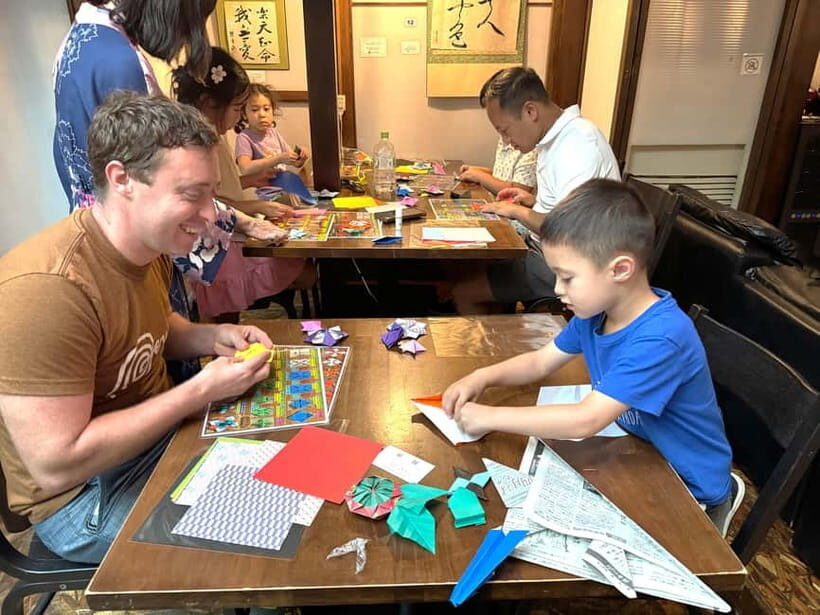
This isn’t craft class where the main goal is to make something fancy. The whole point is the mental shift you get while folding: paying attention to what your hands are doing, and returning to the present moment when your mind wanders.
Here’s the practical version of what that means during class:
- The instructor shows basic techniques and a simple traditional design (crane-style is mentioned as an example).
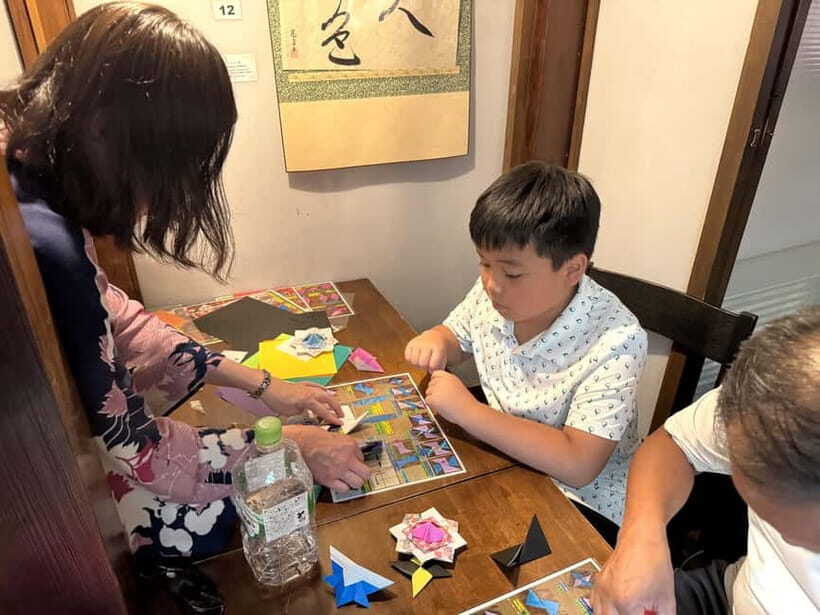
- You follow along step by step, using the rhythm of folding as your attention anchor.
- You’re encouraged not to chase perfection. The process matters more than flawless paper engineering.
That detail is important for you, especially if you’re traveling and your head is full. Kyoto walking can be relentless. This workshop gives you a different kind of effort—quiet, fine-motor work. It’s the type of activity that can feel surprisingly restorative after busy sights.
I also love that it’s framed for different experience levels. You don’t have to be “good at origami.” You just need paper and patience.
The folding lesson: basics you can use right away
In a one-hour format, you’re not going to become the next origami master. But you will learn a set of fundamentals that let you keep going on your own later.
You can expect:
- An introduction to traditional origami folding techniques
- Learning simple designs (cranes are specifically called out)
- Hands-on practice as the instructor guides you through the steps
The best part is the teaching style. Several class experiences point to the same theme: the instructor is patient, kind, and gives clear explanations. For example, Lara (Italy) highlighted that the Japanese guide explained how to make the origami really well. And Helimar (Japan) noted that the teacher guided them with patience when they got stuck on a step. That’s exactly what you want from a class like this: help before frustration takes over.
So when you’re choosing whether this is worth it, think less about the final product and more about the momentum you leave with. If you walk out able to recreate even a basic crane fold, you’ve gained a small skill you can use anywhere.
Paper choices: colorful fun or traditional Japanese-designed sheets
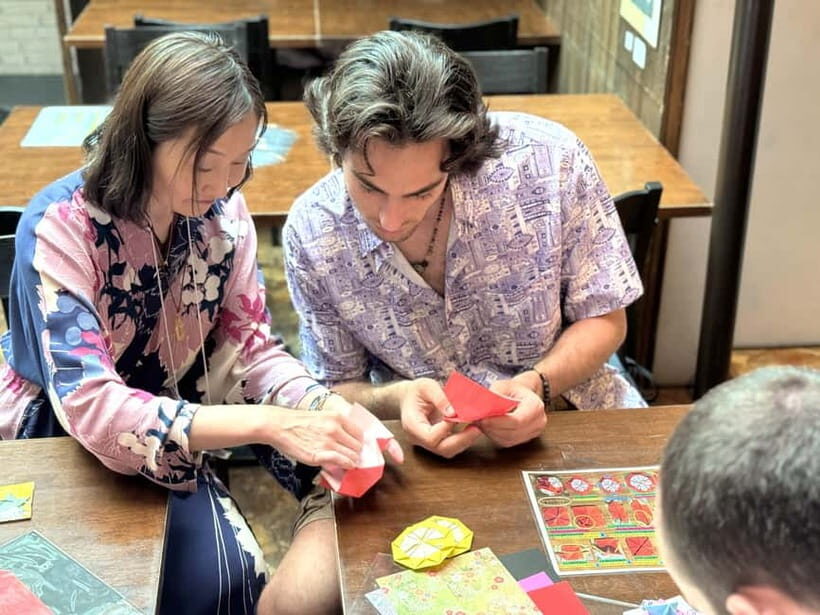
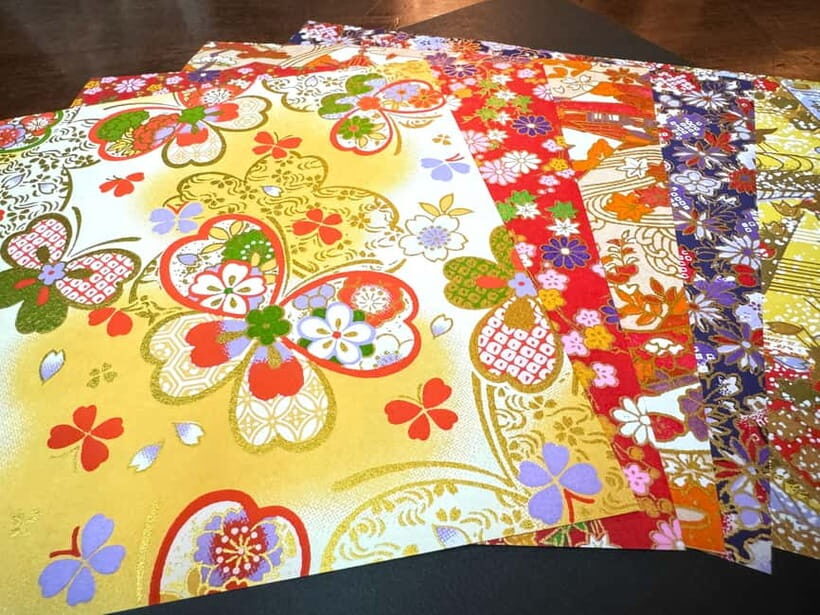
You get to choose your paper, and that’s more meaningful than it sounds. Paper affects how the folds behave and how your finished piece looks on display.
You can pick from:
- Colorful paper
- Traditional Japanese-designed paper
Colorful paper tends to feel playful and forgiving. Japanese-patterned paper tends to look more “intentional,” like an object you’d want to hang or photograph right away. Either way, you’re customizing the experience instead of accepting whatever’s handed to you.
And because supplies are included, you’re not hunting for specialty sheets or worrying about bringing something delicate on a travel day. You show up, choose your style, fold, and go.
When it turns into a shared moment: group photo and display time
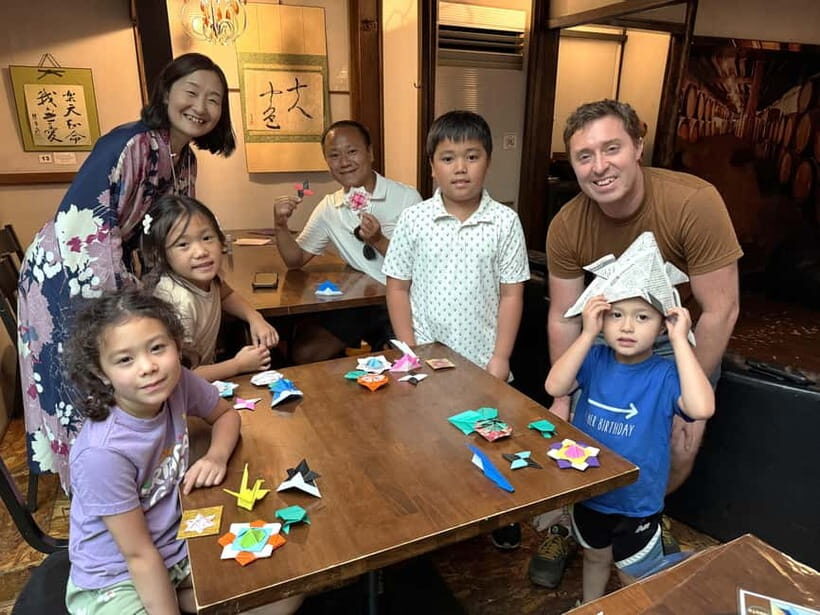
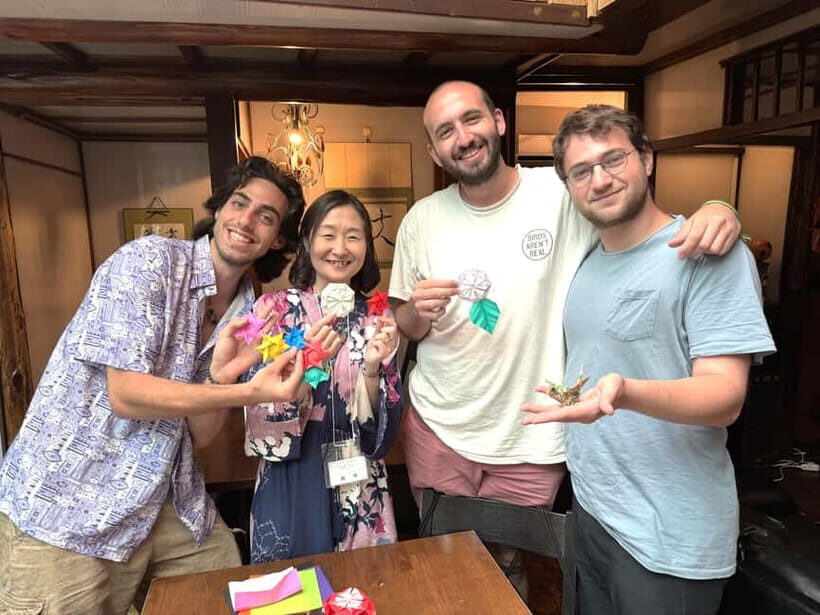
Even though the workshop is calm, it isn’t lonely. Part of the experience is completing your piece and then celebrating it together.
The class includes:
- Time to finish your origami
- A moment where you can display or interact with what you made
- A commemorative group photo
That group photo is a small but real value-add. Kyoto is full of “we saw it” photos. This is “we did something together” energy, and it gives you a clean memory of your time in the city beyond temple selfies.
I also like that the workshop naturally creates conversation without forcing it. When you’re all dealing with the same little folding challenge, people tend to help each other in simple, friendly ways.






What you take home (and why the keepsake feels more personal)
You leave with your completed origami piece as a souvenir. That matters because it’s made during the hour you booked. It’s not something you buy, wrap, and forget.
Michael (Japan) shared that they loved the origami they could keep. Lily (Japan) said the experience was amazing and recommended it, and Joanna (Germany) specifically called it calming and said the teacher was very kind and helpful. Those comments point to the same takeaway: the final piece isn’t just a craft output—it’s proof you slowed down and learned something real.
For you, that means you can bring home:
- A tangible reminder of a calmer side of Kyoto
- Something personal you can gift or keep without it feeling like another tourist purchase
Price and value: is $29 fair for a 1-hour class?
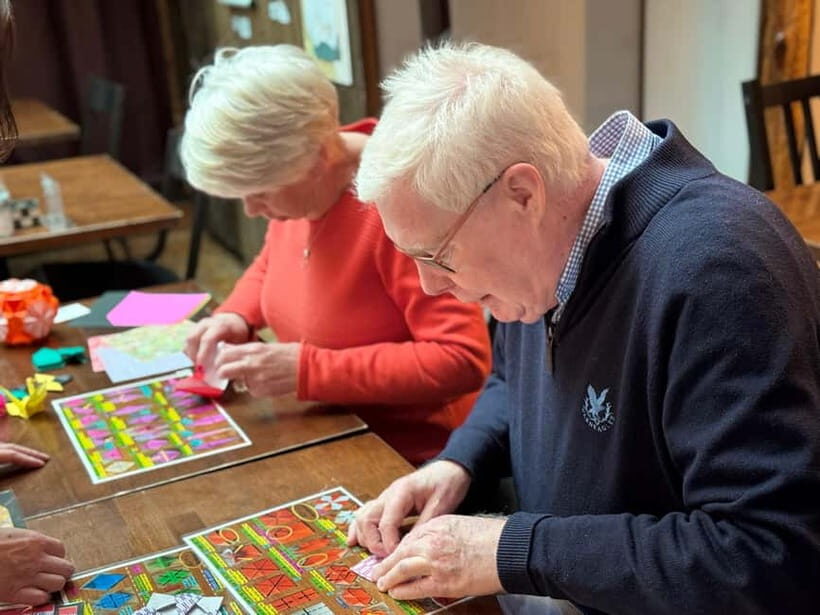
At $29 per person for a 1-hour workshop, this is priced in that sweet spot where you’re paying for instruction and materials, not a show.
Here’s what you’re getting for your money (based on what’s included):
- Origami supplies provided
- A professional instructor guiding you in real time
- Small-group attention (limited to 10 participants)
- A group photo
- A take-home finished origami piece
If you’re thinking in travel terms, the value comes from two things:
- You’re buying time with a skilled teacher, not just paper.
- You’re buying a calm experience you can’t really replicate on the fly in a busy day.
Could you fold origami for free at home? Sure. But in Kyoto, with an instructor and the mindfulness framing, this is the kind of activity that feels like an intentional pause. For many people, that pause is exactly what makes it worth it.
Who this Kyoto origami workshop is best for
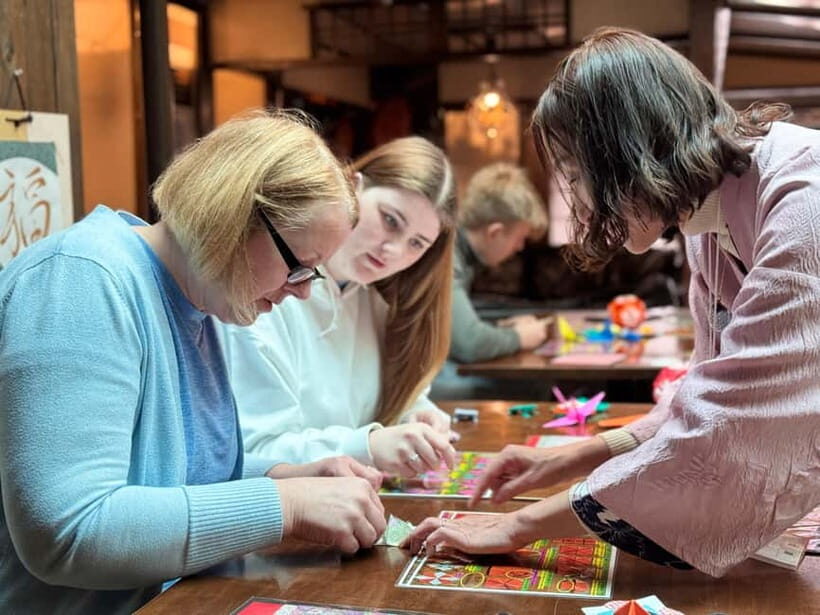
This works well for a lot of travelers, but it’s especially strong for these groups:
- Families: It’s described as fun for the whole family, and the hands-on structure keeps kids engaged without turning it into chaos.
- First-timers who want calm: If you’re intimidated by origami, you’ll likely appreciate the patient guidance and beginner-focused approach.
- Solo travelers who want a break: It’s social enough to feel connected, but quiet enough to reset your brain.
- People who want a cultural activity that is actually hands-on: Origami is Japanese art you can do, not just watch.
If you’re the type who loves craft but also needs structure, this hits both. If you’re the type who needs constant action and new places, you might find it too slow. That’s not a flaw; it’s just a mismatch to watch for.
How to plan it into your day (without overthinking)
Because it’s one hour, you can slot it after morning sightseeing or as a midday reset. The central walkability helps. You’re near two Keihan stations, so you can combine it with other plans without building an elaborate route.
A practical tip: wear something comfortable. You’ll be sitting, folding, and concentrating on small movements. Comfortable shoes matter less than comfortable clothing, since you’re not doing huge distances during class.
Also, come ready to be okay with mistakes. This is built around the idea that it’s not about perfect results. If you treat it like a calm practice, you’ll get more out of the hour.
Should you book GojoParadiso’s Mindfulness Origami Workshop?
Book it if you want:
- A calming activity in Kyoto that doesn’t require prior skills
- Patient instruction in English or Japanese
- A hands-on cultural experience with a take-home piece
- A small-group class where you’re not lost in the shuffle
Skip it if:
- You’re looking for a full-day itinerary or multiple major stops
- You only want sightseeing and don’t like sitting for an hour
- You already have a strong origami routine and want something more advanced
If you’re on the fence, I’d lean toward booking. $29 for materials, a skilled instructor, and a finished souvenir you made yourself is a very reasonable deal—especially when you’re traveling and you need something that actually slows you down.
FAQ
FAQ
How long is the Kyoto mindfulness origami workshop?
It lasts 1 hour.
Where is the workshop located?
Gojo Paradiso is along the Takase River on Kiyamachi Street, near Keihan Kiyomizu Gojo Station.
How far is it from Keihan Kiyomizu Gojo Station?
It is about a 5-minute walk and roughly 386 meters from Keihan Kiyomizu Gojo Station.
How far is it from Keihan Shichijo Station?
It’s about a 10-minute walk from Keihan Shichijo Station.
What language is the instructor?
The instructor works in English and Japanese.
What is the group size?
It’s a small group limited to 10 participants.
Are origami supplies included?
Yes. Origami supplies to use during class are included.
Can I choose what kind of paper I use?
Yes, you can choose between colorful paper or traditional Japanese-designed paper.
What do I get to take home?
You leave with your completed origami piece as a souvenir.
Is there anything besides the folding?
Yes, there’s also a commemorative group photo.