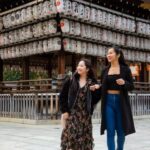
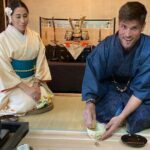
Kyoto gets quiet fast.
This private Japanese sound bath turns a busy day into a slow, meditative rest, using Japanese-made instruments built to create harmonics you feel more than hear. You lie down, get your eyes covered, and let the sound work through your body in a calm, controlled room—no waiting with a crowd, no awkward “is this over yet?” energy.
Two things I really like: the Singing Ring craftsmanship, and the fact that Junichiro keeps the session personal. I also like that you’re set up with a heated mat, plus an eye mask and blanket, so you’re comfortable enough to actually let your body drop its guard.
One consideration: the Traditional Tatami Room is at a separate venue from the main meeting point, so you’ll need to follow the directions you receive after booking.
In This Review
- Key Highlights You’ll Actually Care About
- How the Singing Ring Sound Bath Works in Kyoto
- Private by Design: Up to 2 Guests, No One Else Added
- Your Setup: Heated Mat, Eye Mask, and Blanket
- The Session Flow: Listening Near You, Then Feeling Vibrations
- Junichiro and the Craft Angle: It’s More Than “Relax, Lying Down”
- Meeting Point and Finding Your Way in Kyoto Without Stress
- The Traditional Tatami Room Option (Separate Venue)
- Price and Value: What $97.73 Gets You
- Who This Experience Fits Best
- Tips to Get the Most From Your Sound Bath Day
- Should You Book This Private Kyoto Sound Bath?
- FAQ
- How long is the private sound bath session?
- Is this experience truly private?
- What instrument is used during the sound bath?
- Where does the experience start in Kyoto?
- What is the Traditional Tatami Room option?
- What do I receive for the booking?
- What’s the cancellation window?
Key Highlights You’ll Actually Care About
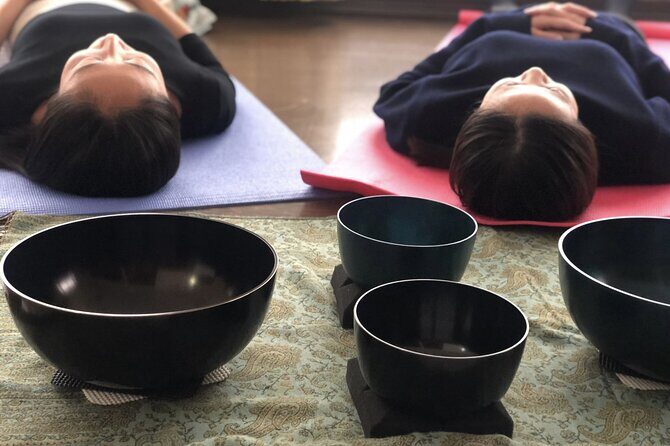
- Fully private session: you and your group only, up to 2 guests per time slot
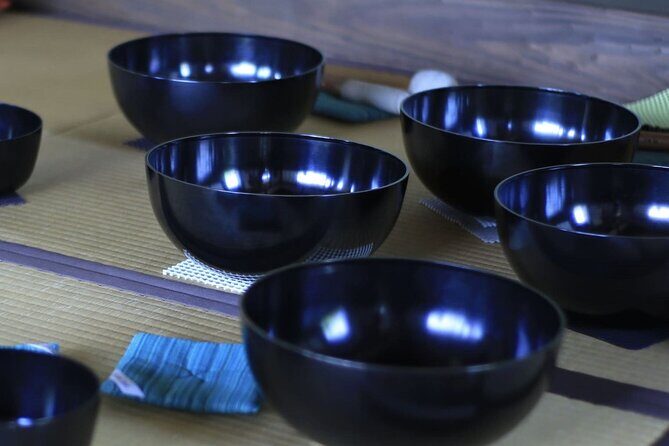
- Japanese Singing Ring: a handcrafted harmonic instrument made one by one by artisans
- Heated comfort setup: you lie on a heated mat with an eye mask and blanket
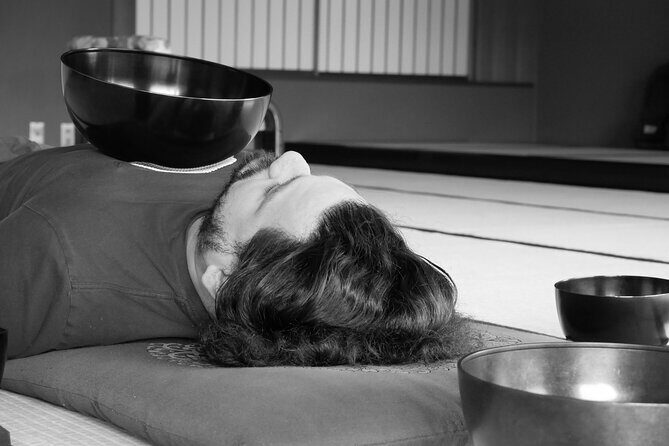
- Vibrations on your body: the guide may place instruments/bowls on you so you can feel it
- Optional tatami setting: available in a Traditional Tatami Room (separate venue), up to 3 people
How the Singing Ring Sound Bath Works in Kyoto
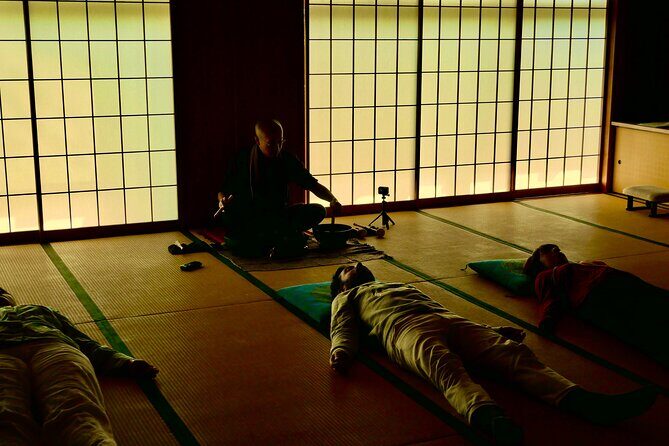
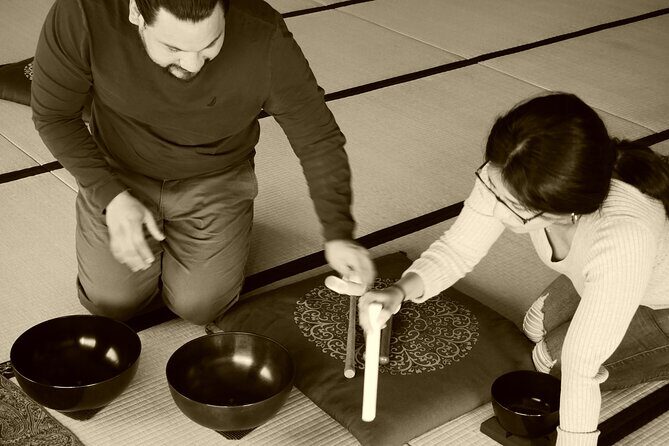
A sound bath is simple on paper: you lie down and listen. The difference here is what you’re listening to and how it’s delivered. The star instrument is the Singing Ring, a harmonic device made by Japanese artisans, built specifically to produce resonant vibrations.
In a typical sound bath, you might just sit or lie while instruments play nearby. In this Kyoto setup, you’re not just hearing music. You’re being tuned into it. The point is stress relief—letting tension soften—through layered sound and physical resonance. If you like the idea of a Zen-style reset without doing a full yoga class or formal meditation, this format is built for that.
Also, Kyoto is a great place to do something slow. You can hit shrines all day, then come back to a room where the goal is to reduce noise—outside noise and inside noise. The whole session is designed to feel like an uninterrupted calm block.
Other private tours in Kyoto



Private by Design: Up to 2 Guests, No One Else Added
This experience is private, and that matters more than you’d think. You’re not sharing space with strangers, and the guide can keep the pace and setup focused on your group.
Here’s the practical part: each session is limited to up to 2 guests. Once your booking is confirmed, no other guests should be added to your time slot. That usually means fewer interruptions, less chatter, and a smoother “switch off” moment when you lie down.
If you’re traveling as a couple, coming with a friend, or wanting a quieter wellness break on your own, this format is strong value. You pay per person, but what you’re buying is privacy and attention, not just background music.
Your Setup: Heated Mat, Eye Mask, and Blanket
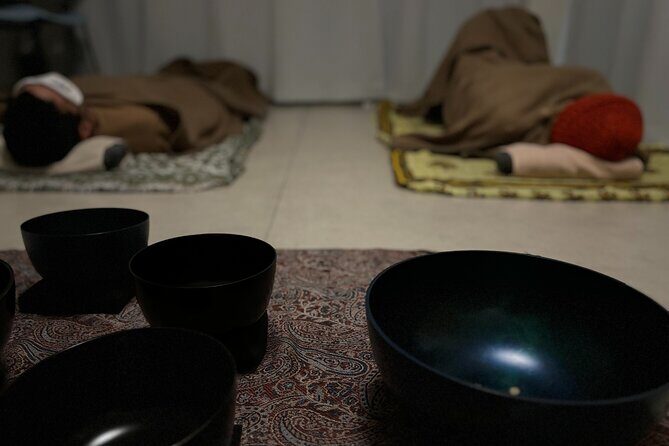
This is not a standing-around experience. From the start, you’ll be placed in a comfortable lying position with a heated mat. Then you’ll get an eye mask and a blanket.
That comfort package is more than nice-to-have. Heated mats help your body stop doing its own little “cold check” routine. The eye mask reduces visual input, which makes it easier to go from thinking mode into receiving mode. You can treat this like a guided rest: you don’t have to guess what to do next.
If you’re the type who worries you’ll be restless, the setup helps. You’re not trying to meditate through discomfort. You’re supported first, sound works second.
The Session Flow: Listening Near You, Then Feeling Vibrations
The session lasts about 60 minutes (and the overall activity window is about 1 hour 20 minutes). That extra time usually covers getting settled and transitioning in and out, while the main work is the 60-minute sound bath.
From descriptions of how sessions run, you’ll likely notice a pattern:
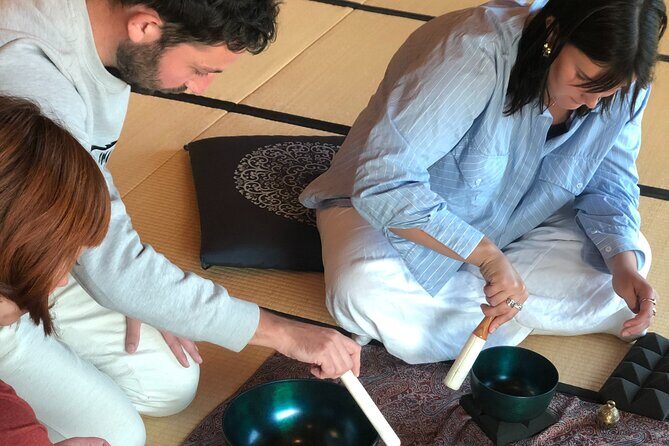
- The guide begins by playing next to you. This gets you oriented and lets the sound “arrive” before it’s placed on or through your body.
- Then the instrument/bowls may be placed on you so you can feel vibrations directly. Many people describe this as the moment things click—because your whole body becomes part of the sound.
The guide (Junichiro) is described as friendly and professional, with a strong focus on sharing the craft behind what he does. That matters because even though the experience is relaxing, it’s not totally disconnected. You’ll usually get enough context to understand what you’re feeling, without turning it into a lecture.
Junichiro and the Craft Angle: It’s More Than “Relax, Lying Down”
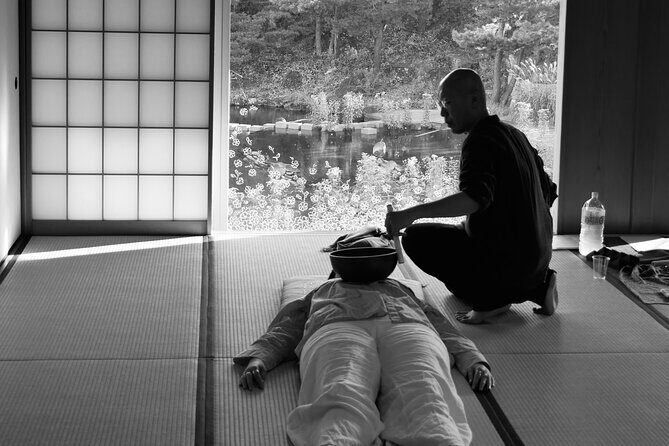
One of the best parts is that the guide brings pride in the instruments and an ability to explain what’s going on. In multiple comments, Junichiro is described as kind, professional, and eager to share.
That doesn’t mean you’ll be quizzed. It just means the session feels intentional. When you understand that the sound is coming from specific Japanese instruments made by hand, the experience feels less like a generic spa trick and more like a cultural craft translated into relaxation.
There’s also a practical comfort in having a guide who can adjust. You’re lying down and trusting the process. A confident guide helps that trust happen quickly.




Meeting Point and Finding Your Way in Kyoto Without Stress
The meeting point is Little Granmy Kyoto, located at 600-8208 Kyoto, Shimogyo Ward, Koinarichō, 85-10-203. The activity ends back at the meeting point.
Two helpful points from how people found the session in real life:
- Your guide may meet you at a nearby familiar spot to help you avoid getting lost.
- The location is near public transportation, so it’s easier to build into a sightseeing day without adding complicated transit.
My advice: give yourself a little buffer time on arrival. Kyoto streets can be calm, but they can also be winding, and it’s not the day to sprint for a perfect schedule.
The Traditional Tatami Room Option (Separate Venue)
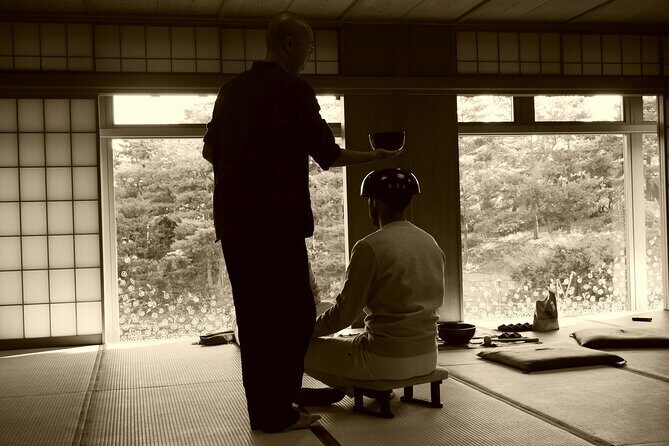
You can also do this in a Traditional Tatami Room, but there’s a catch: the tatami room is at a separate venue. After you book, you’ll receive guidance that clarifies where to go. The map link in the listing may not set correctly, so don’t rely on your phone map alone—follow the message you’re sent.
If you choose the tatami room, the group limit may increase. The host notes they may be able to accommodate up to 3 people in that option (so it’s worth asking if you’re a small group that doesn’t fit the standard 2-person limit).
Tatami can be a nice fit for sound work because it’s quiet and grounded. Just plan for the slight venue change so you don’t waste time.
Price and Value: What $97.73 Gets You
At $97.73 per person, this isn’t bargain-basement wellness. But it’s also not overpriced if you look at what’s included: a private session, a 60-minute sound bath, comfort setup (heated mat, eye mask, blanket), and a guide working with a specific Japanese instrument (the Singing Ring).
Here’s how I’d think about value:
- Privacy is expensive in Kyoto. You’re paying for time that isn’t diluted by a group.
- Hands-on placement (described as bowls/instruments placed on your body) increases the impact compared with experiences that only play nearby.
- The instrument is described as crafted one by one in Japan, which adds a “this is the real thing” factor versus generic wellness sound items.
Also, the booking lead time is strong: it’s commonly booked about 38 days in advance. If you have specific dates, you’ll save stress by reserving early.
Who This Experience Fits Best
This works well if you:
- Want a quiet wellness reset in the middle of a Kyoto itinerary
- Prefer privacy over a shared class setting
- Like Japanese craftsmanship and don’t mind spending an hour being guided into calm
- Are traveling with a partner or small group and want a shared experience that’s not food- or museum-centered
It might be less ideal if you:
- Hate being still for long periods (even though the setup is comfortable)
- Want an active class with lots of movement instead of lying down
- Need heavy cultural storytelling beyond the session itself (this is mainly relaxation plus explanation, not a full cultural deep lesson)
Tips to Get the Most From Your Sound Bath Day
You don’t need to “prepare” in a complicated way, but a few choices can improve your results.
- Treat it like real downtime. Plan for a slower pace afterward rather than rushing into dinner reservations immediately.
- Wear comfortable clothes that make lying down and relaxing easy. You’ll be on a mat for an hour.
- Arrive a few minutes early so you can settle without feeling rushed.
- If you’re sensitive to sensations, let the guide know you’d like a gentler approach early on. A good guide can help you find your comfort zone.
And yes, this is the rare activity where your job is mostly to let sound do the work. That’s the whole point.
Should You Book This Private Kyoto Sound Bath?
If you want a Japanese sound bath that feels intentional and private, I think it’s worth booking. The heated setup, eye mask, and the focus on instrument craft make it feel more like a carefully made wellness ritual than a generic spa activity.
Skip it only if you’re looking for something high-energy or you strongly prefer group experiences. Otherwise, this is the kind of Kyoto break that helps your trip feel balanced—less “one more thing,” more “I can breathe.”
If you’re deciding between times, pick the slot that gives you the most calm afterward. Sound baths work best when you don’t immediately refill your brain with noise.
FAQ
How long is the private sound bath session?
The sound bath session lasts about 60 minutes. The total activity time is listed at about 1 hour 20 minutes.
Is this experience truly private?
Yes. It’s a private tour/activity, and only your group participates. Each session supports up to 2 guests, and no other guests will be added to your time slot once confirmed.
What instrument is used during the sound bath?
The main instrument described is the Singing Ring, a harmonic instrument crafted by Japanese artisans. The experience also involves vibrations that can be felt directly while instruments are used during the session.
Where does the experience start in Kyoto?
The meeting point is Little Granmy Kyoto at 600-8208 Kyoto, Shimogyo Ward, Koinarichō, 85-10-203. The activity ends back at the meeting point.
What is the Traditional Tatami Room option?
The Traditional Tatami Room is a separate venue. The Google Maps pin may not work as expected, so you’ll receive guidance after booking. It may be able to accommodate up to 3 people in that option.
What do I receive for the booking?
You’ll have a mobile ticket.
What’s the cancellation window?
You can cancel for a full refund if you cancel up to 24 hours in advance of the experience start time (local time).