Nara feels like a time machine compared with Kyoto. This private day trip turns that idea into a simple, well-timed route, with a licensed English guide translating and guiding you through the big hitters like Todai-ji and Kasuga Taisha. I like that the plan is built around practical movement (train first, then a tight temple-shrine circuit) instead of wasting your day hopping around. I also like the human touches that show up in guides’ styles, like helping with station logistics and adjusting to your pace—one guide named Fumi even made sure the group felt comfortable right at Kyoto Station.
Here’s the one watch-out: the experience quality depends heavily on the specific guide assigned. One review complained the guide was too new to the sites to provide the historical and cultural depth people expect from a private guide, so if you care most about storytelling, confirm what kind of focus you want when you book.
In This Review
- Key Highlights of This Kyoto to Nara Day Trip
- How the Day Flows: Kyoto Pickup, Train Ride, Temple Circuit
- Kyoto Station to Nara: The Part Most People Underestimate
- Nara Park: Deer, Temples, and a Real Slice of Nara Life
- Todai-ji Nandai Gate: First Big Wow Moment
- Inside Todai-ji: The Temple That Dates Back to 752
- Kasuga Grand Shrine: Sacred Shinto, Long Walk Energy
- Isuien Garden: Short, Calm, and Done the Japanese Way
- What’s Included (and Why That Matters for Value)
- Guides and Real-World Experience: What the Reviews Signal
- Price Check: Is $340 per Person Actually Reasonable?
- Who This Tour Fits Best
- Should You Book This Nara Day Trip from Kyoto?
- FAQ
- How long is the Nara day trip from Kyoto?
- Is hotel pickup included?
- Is this tour private?
- What language is the guide?
- Are admission fees included?
- Is lunch included?
- Can the tour accommodate dietary restrictions?
- Do I need a certain fitness level?
- What is the cancellation policy?
Key Highlights of This Kyoto to Nara Day Trip
- National Licensed English-speaking guide to keep the day meaningful, not just sightseeing
- Hotel pickup plus train support so you avoid the first-station confusion
- Todai-ji + Kasuga Taisha admissions included for real value versus buying tickets one by one
- Nara Park deer time with crackers available for feeding (expect a fun, chaotic-cute moment)
- Kasuga Taisha and Isuien Garden to balance big landmark energy with calmer grounds
- Private format (only your group), with flexibility for your pace
How the Day Flows: Kyoto Pickup, Train Ride, Temple Circuit
This trip is designed as an efficient day loop from Kyoto. You meet your guide in Kyoto (pickup is offered), then you head to Kyoto Station. From there, you’ll take the train to Nara with your guide handling the practical flow. That matters more than it sounds. Japan’s rail stations are excellent, but they can still feel like a maze when you’re tired, carrying a bag, or navigating ticket gates for the first time.
The total duration is about 8 hours. That’s a sweet spot for Nara. Too short, and you’ll see only one temple and spend the rest of the day commuting. Too long, and you’ll feel temple-fatigue before you even reach the second shrine. Eight hours lets you hit the main sites plus a garden without rushing like you’re chasing a train after the train.
The tour is private—only your group participates. If you’re traveling as a couple, family, or small group, private is where the day pays off. You can ask questions as you walk, and you’re not stuck waiting for the slowest—or stuck being tugged along by the fastest—within a mixed crowd.
A few more Kyoto tours and experiences worth a look

Kyoto Station to Nara: The Part Most People Underestimate
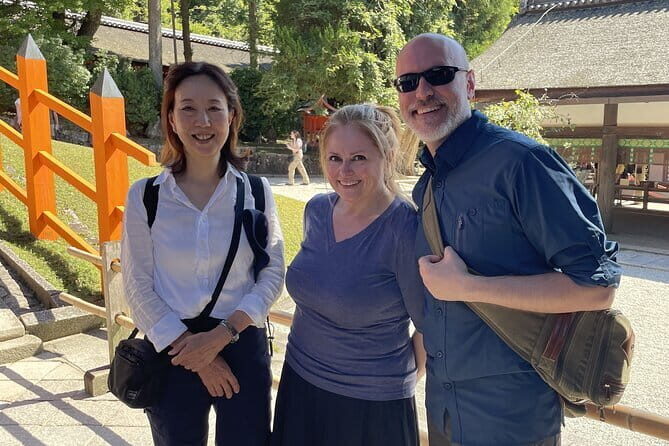
The itinerary begins at Kyoto Station Building. You’ll meet your guide, then take the train to Nara. This is the section many independent travelers underestimate. Nara is reachable, sure, but learning the route, timing, and station layout while also trying to enjoy your trip is where energy disappears.
What I like about having a guide here: you’re not just getting transport. You’re getting orientation. Several reviews praised guides for making station logistics easy and ensuring the group felt comfortable. That’s the difference between arriving in Nara relaxed versus arriving already stressed.
Also, your transport costs are included through the public transportation fee. That helps the budget feel clean: you’re not counting yen receipts all day. And since the trip uses a mobile ticket, it typically reduces the hassle of managing multiple paper tickets.
Nara Park: Deer, Temples, and a Real Slice of Nara Life
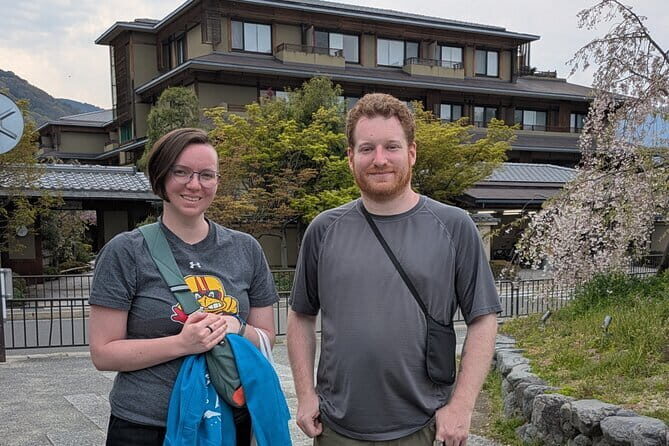
Once you’re in Nara, the day opens up in Nara Park, one of the most famous areas in the city. The park covers about 660 hectares and is known for two things: free-roaming deer and historic temples nearby.
You get about 1 hour here. That’s enough time to do the classic Nara moment—buy special crackers and feed the deer—without turning it into an all-day detour. The park’s scale means your guide can also help you move efficiently toward the next temple stops, so you don’t wander off in the deer’s gravitational pull.
Practical reality check: the deer are not stage props. They’re curious and bold. Keep your crackers secure, watch where you step, and keep expectations light. If you treat it like an animal encounter and not a photo-op, you’ll have more fun.
Nara Park is also where the city’s different vibe shows through. Compared to Kyoto’s dense and curated feel, Nara gives you a more traditional, wide-open atmosphere—less apartment-street energy, more old-city calm mixed with tourist chaos in the best way.
Todai-ji Nandai Gate: First Big Wow Moment
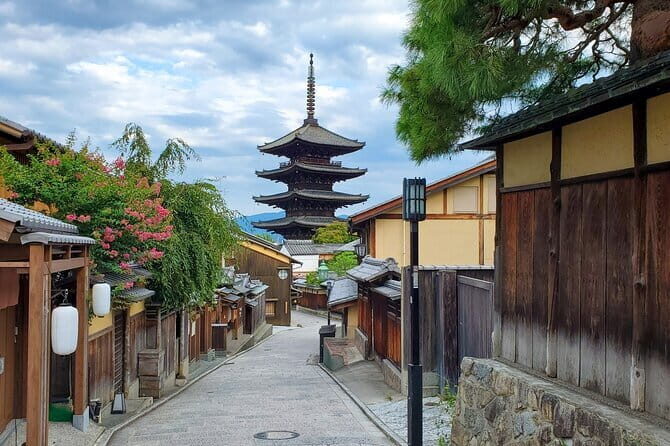
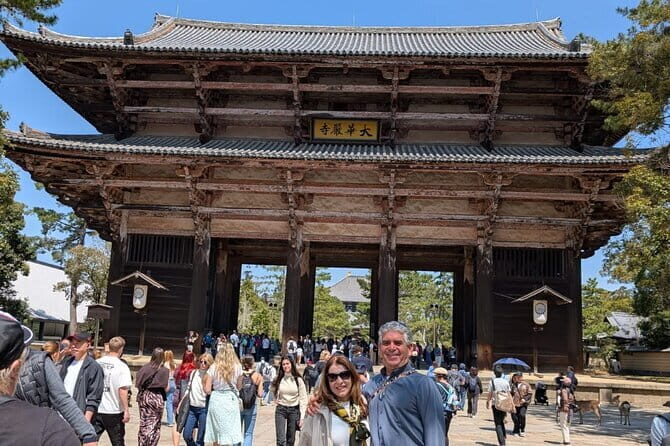
Next comes Todai-ji Temple’s Nandai Gate. You’ll spend about 30 minutes here, and it’s a smart stop early in the temple sequence. This gate is huge—about 25 meters high—and it has guardian kings stationed in dark alcoves on both sides. Those details add drama fast.
Even if you’re not a “gate person,” this is the kind of structure that helps you understand why Todai-ji is one of Japan’s major historical temple sites. The gate isn’t just architecture. It’s a threshold, and walking into that space changes your mindset from street-level to sacred-site mode.
Admission is listed as free for this specific stop, which is nice because you’re building toward the paid sections rather than hitting ticketed locations immediately.
Inside Todai-ji: The Temple That Dates Back to 752
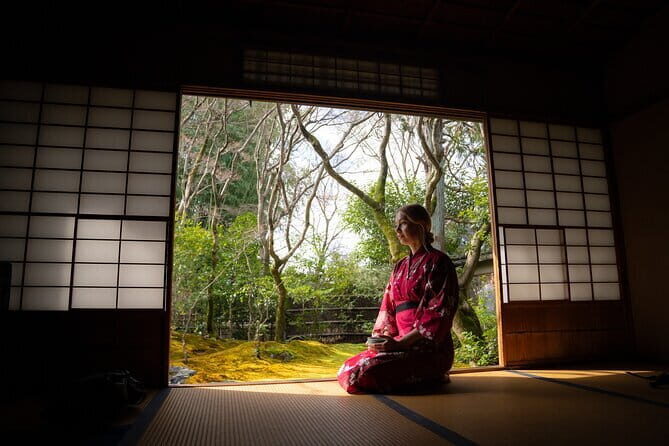
Then you’ll move into Todaiji itself for about 1 hour 30 minutes, with the admission fee included. Todai-ji is famous historically: it was built in 752 and became the head temple of Buddhist temples in Japan.
This is the stop that tends to create the biggest “wow” energy. It’s also the stop where a guide’s value shows. One of the common praises from reviews was that guides made the day full of history and culture rather than just walking you from point to point. A guide named Akiko Okada was specifically highlighted for sharing history and culture, and another guide, Jun, was praised for being friendly and flexible while walking temples and shrines.
If you love context, I’d focus your questions here. Ask what makes this temple historically significant and what you’re looking at—especially if the guide can connect what you see now to what it represented long ago.
Other guided tours in Kyoto




Kasuga Grand Shrine: Sacred Shinto, Long Walk Energy
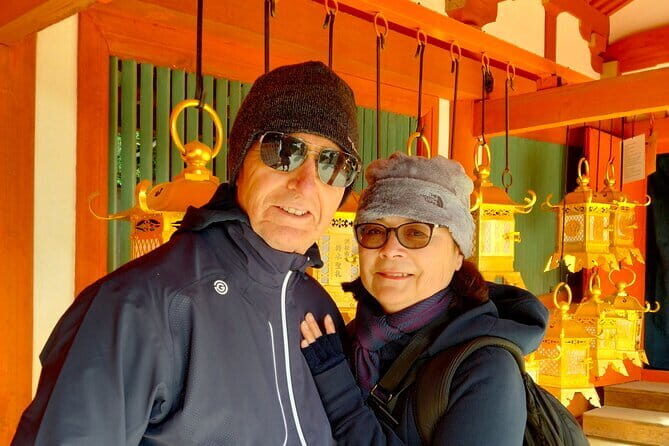
After Todai-ji, the itinerary shifts to Shinto at Kasuga Grand Shrine (Kasuga Taisha) for about 2 hours. Admission is included here too.
Kasuga Taisha is known as one of Japan’s most sacred shrines. It’s also a place where numerous gods are enshrined, and it attracts both locals and tourists looking for that iconic Shinto atmosphere. Two hours is a generous amount of time for a shrine visit. It gives you room to stroll rather than simply line up and rush.
This stop is valuable because it balances your day. You start the morning in Buddhist heritage at Todai-ji, then you switch to a Shinto environment that feels different in mood and pacing. That contrast is a big reason Nara works so well as a day trip: you get multiple spiritual “worlds” without needing to move cities.
One practical note: shrines often involve walking. The tour lists moderate physical fitness as a requirement, so wear comfortable shoes and expect some steady movement.
Isuien Garden: Short, Calm, and Done the Japanese Way

The final stop is Isuien Garden, listed at about 30 minutes with admission included. This is your palate cleanser after temple and shrine intensity.
Isuien is known for shakkei, a Japanese garden technique often described as borrowed scenery. The idea is that the garden’s view lines incorporate the surrounding landscape—here, including Mt. Wakakusa—so the outside becomes part of the composition.
Thirty minutes is short, but it fits the overall schedule. You’ll likely get enough time to appreciate the design and the perspective without needing to carve out half a day. If you’re the type who could happily linger for an hour or two in gardens, you might want to add extra free time in Nara on your own before or after this tour.
What’s Included (and Why That Matters for Value)
This tour includes:
- A National Licensed English speaking guide
- Public transportation fee
- Hotel pickup
- Admission fees for the paid attractions on the route
It also uses a mobile ticket, which tends to reduce friction at entry points.
The big value angle isn’t only the price tag. It’s that you’re buying a package where the expensive-looking parts are covered: guide time, transport, and admissions to major sites like Todai-ji and Kasuga Taisha. You’re also buying time. Having a guide who can keep the flow moving saves you from spending the day managing logistics.
That said, lunch is not included, so you’ll want to budget time and money for food yourself. The tour provider says they can accommodate dietary restrictions like vegetarian, vegan, and gluten-free, as long as you note it at booking.
Guides and Real-World Experience: What the Reviews Signal
The overall rating is 4.3 based on 6 reviews, which suggests a generally good experience with a few clear lessons.
The highest praise themes are practical and human:
- Friendly, accommodating guides who make the day feel comfortable from the start (Fumi was specifically mentioned for pickup and comfort at the station).
- Good organization with flexibility, like adjusting pacing and adding helpful extras (Jun was praised for being flexible and even making time to help find a souvenir).
- Historical and cultural context, as seen in the Akiko Okada feedback where the day felt rich in history rather than a simple walk-through.
- Positive recommendations beyond the script, like a great ramen spot noted in one review.
The main negative theme is also important: one review criticized a guide mismatch where the guide was too new to provide the historical insights expected in a private tour. Since this is private, you’ll feel that more sharply than you would on a group tour.
My advice: when you book, be clear about what you want most—temple architecture, religious context, everyday-life stories, or just an efficient highlights route. That clarity helps guide selection and sets you up for a better match.
Price Check: Is $340 per Person Actually Reasonable?
At $340 per person, this is not a budget day trip. But it’s also not priced like a pure “driver only” service.
You’re paying for:
- A national licensed guide in English
- Hotel pickup
- Train and transit costs
- Admissions for several major sites
Whether it’s worth it depends on how you travel. If you and your group prefer to avoid planning, ticket-hunting, and translating, the price can feel fair quickly. If you’re the type who loves independent exploration and you’re comfortable figuring out rail tickets and entry fees, you may find cheaper options.
For couples and families, private can be the best “value per stress” option. You’re buying smoother pacing and better explanations, not just transportation.
Who This Tour Fits Best
This is a strong fit if:
- You want a structured Nara day without feeling rushed or lost
- You care about understanding what you’re seeing at Todai-ji and Kasuga Taisha
- You want hotel pickup and guided help at Kyoto Station
- Your group prefers a private pace rather than sharing time with strangers
It might be less ideal if you’re on a strict budget or if you only want a quick photo run. Also, because the itinerary is a sample and can shift due to weather or other reasons, you should keep a flexible mindset.
Should You Book This Nara Day Trip from Kyoto?
I’d book it if you want Nara highlights done with less friction and more meaning. The combination of licensed English guiding, included admissions, and the temple-to-shrine flow makes it a good “effort-to-reward” setup for one day.
I’d hesitate if your top priority is deep, highly detailed historical storytelling and you’re worried about guide matching. In that case, put your expectations in writing when you book so the company can assign the best-fit guide for your interests.
If you’re deciding between doing Nara on your own versus paying for this private structure, ask yourself one question: Do you want your guide’s explanations to be the main event, or do you just want to arrive and wander? This tour is built for the first option.
FAQ
How long is the Nara day trip from Kyoto?
The tour is about 8 hours (approximately).
Is hotel pickup included?
Yes. Hotel pickup is included, and you’ll meet your guide in Kyoto before traveling.
Is this tour private?
Yes. This is a private tour, and only your group participates.
What language is the guide?
The tour includes a National Licensed English speaking guide. You can also ask about other languages.
Are admission fees included?
Yes. Admission fees are included for the stops where admission is listed as included (including Todaiji, Kasuga Grand Shrine, and Isuien Garden). Nara Park and the Todai-ji Nandai Gate are listed as free admissions.
Is lunch included?
No. Lunch is not included.
Can the tour accommodate dietary restrictions?
Yes. The provider says it can accommodate diets such as vegetarian, vegan, and gluten-free, if you mention it at booking.
Do I need a certain fitness level?
The tour lists moderate physical fitness as the requirement.
What is the cancellation policy?
You can cancel for a full refund up to 24 hours before the experience starts.
If you’d like, tell me your travel dates and whether you want more temple history or more relaxed strolling, and I’ll suggest a simple plan for how to handle lunch and timing around this tour.