Nara hits different when you start early. This guided half-day mixes UNESCO shrine lanes, the scale of Todaiji’s Great Buddha, and the chaos-cute deer roamings in Nara Park. You’ll ride there on an air-conditioned coach with free Wi-Fi and get an audio guide in multiple languages.
I really like two things about this tour: first, the sheer impact of Todaiji Temple and the Great Buddha Hall (Daibutsuden). Second, the time in Nara Park where you can interact with the deer up close, as long as you follow the simple rules. The Kasuga Taisha stop also adds a calm, early-morning Shinto contrast.
One drawback to plan for: this is a morning tour that ends at Kintetsu Nara Station around 12 PM, not back in Kyoto. You’ll need to handle your own return.
In This Review
- Key things I’d mark on your map
- Getting to Nara: Kyoto Avanti departure at 8:00
- Kasuga Taisha: UNESCO lantern lanes and shrine atmosphere
- Nara Park deer time: sacred messengers with sharp manners
- Todaiji Temple: walking into the Great Buddha Hall
- Tour flow: coach, guide, and multilingual audio headsets
- Price and value: what $77 covers in real terms
- Final stop at Kintetsu Nara Station: your return to Kyoto
- Who this tour suits, and who should skip it
- Should you book this Nara morning tour?
- FAQ
- FAQ
- Where is the meeting point?
- What time does the tour start?
- When and where does the tour end?
- Is transportation included?
- What’s included in the ticket price?
- Are meals included?
- Can I feed the deer in Nara Park?
- What should I bring?
- What languages are available for the audio guide?
Key things I’d mark on your map
- Todaiji Temple admission included so you don’t waste time at the ticket line
- Nara Park deer time with clear cracker guidance (and safety tips)
- Kasuga Taisha UNESCO lantern routes that feel especially serene in the morning
- Air-conditioned coach with free Wi-Fi for a smoother start
- Multilingual audio headsets in several languages to match your comfort
- Small windows for photos and wandering, but enough to actually enjoy the sights
Getting to Nara: Kyoto Avanti departure at 8:00
Your morning begins at Tully’s Coffee on the Kyoto Avanti side. The meeting time is 7:50 AM and the coach leaves at 8:00 AM, so treat it like a real start, not a casual stroll.
You ride about an hour in a comfortable, air-conditioned coach with free Wi-Fi. Along the way, you’ll pass by familiar historic landmarks such as Fushimi Castle and the Heijokyo Palace, which helps you ease into Nara without feeling like you’re just stuck on a bus.
This tour does not include meals. That’s fine, but come ready with water, a hat, and sunscreen. If the weather turns, you’ll want something for sun or rain, since you’ll be walking outside during the temple and park segments.
A few more Kyoto tours and experiences worth a look
Kasuga Taisha: UNESCO lantern lanes and shrine atmosphere
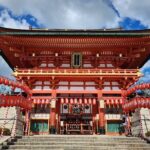
Kasuga Taisha is one of Nara’s most important and beautiful shrines, and the UNESCO status is earned. On this tour, you get a guided visit of about 40 minutes, which is enough to understand what you’re seeing without dragging the day out.
What you’ll notice fast: the paths lined with stone lanterns—around 3,000 of them. They’re famous for being lit during special festivals, but even without the festival glow, the lantern-lined approach has a calm, “early morning” feel.
A practical note: you’ll be walking some paths around the shrine and you may climb stairs and hills during the day. Also, flash photography is not allowed, so plan your shots with natural light and steady timing.
One more thing to keep in mind: the order can shift depending on weather or traffic. So you might see Kasuga Taisha before Todaiji, or in a different sequence. Either way, you should still get the same core experience.
Nara Park deer time: sacred messengers with sharp manners
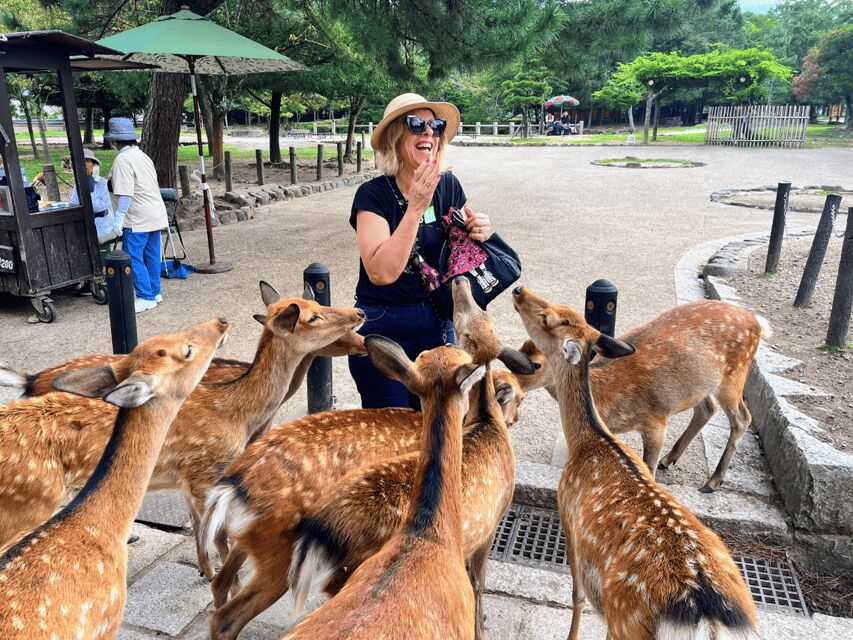
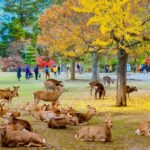
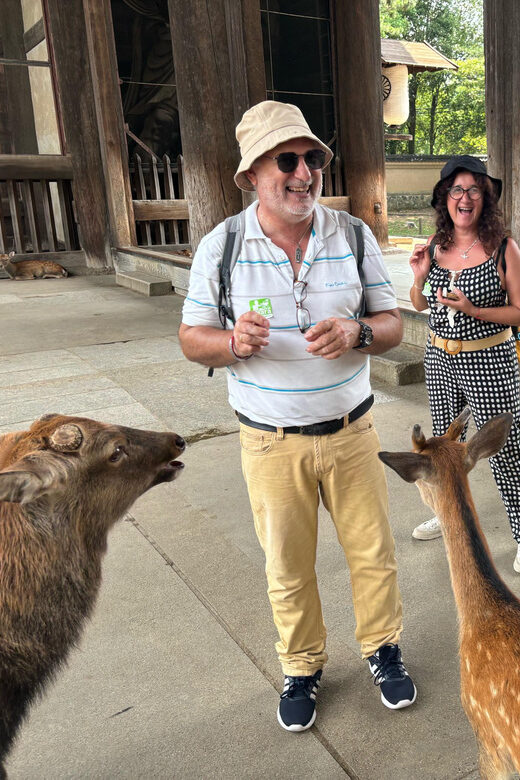
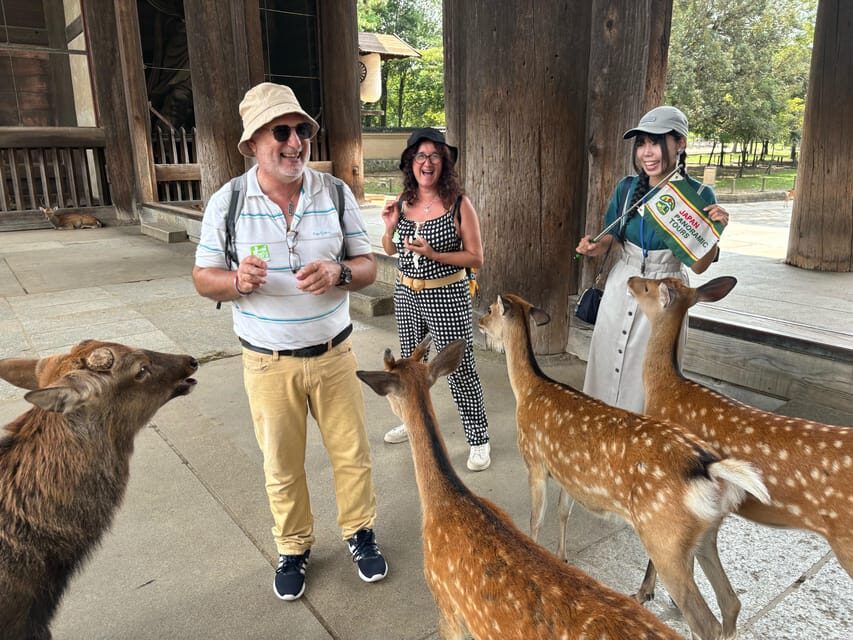
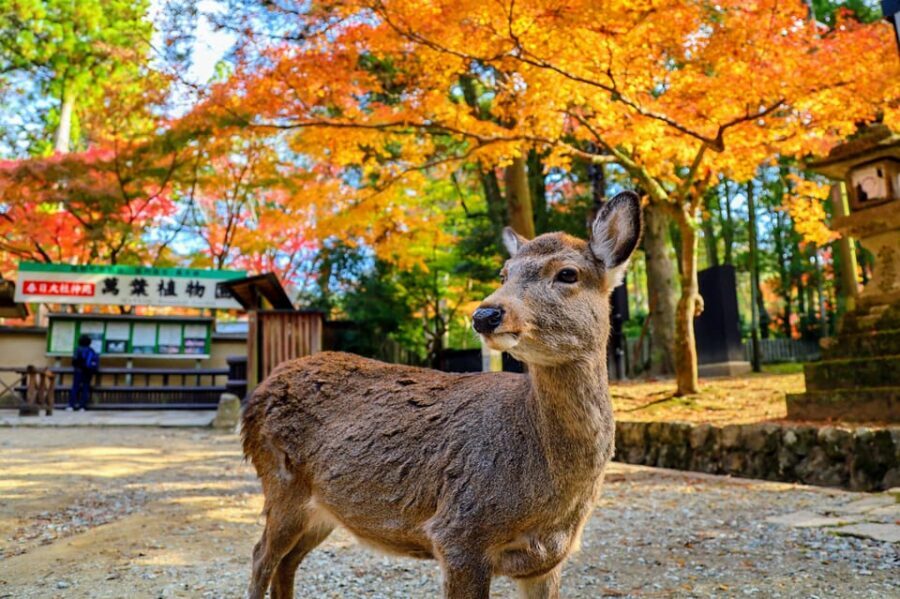
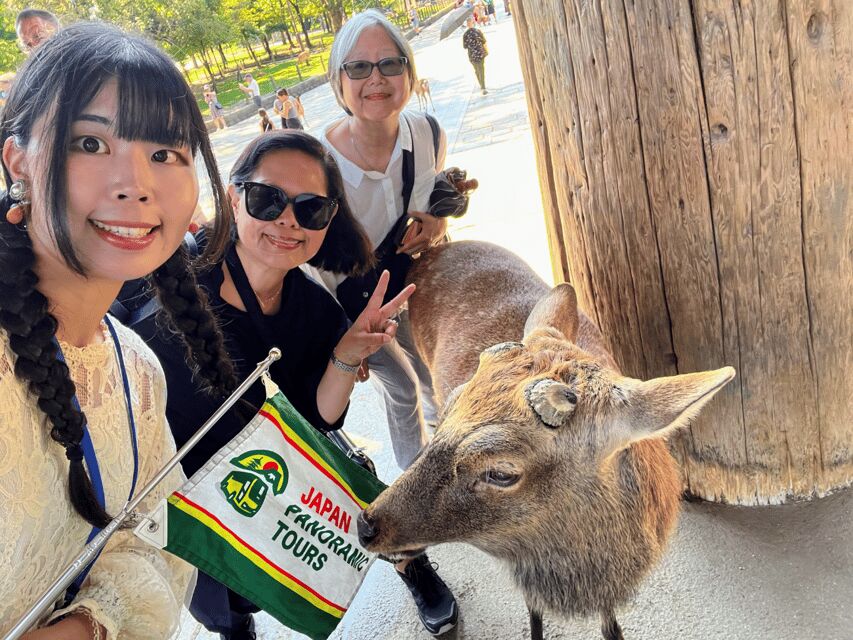
This is where Nara turns into a story you’ll remember. Nara Park spreads out with over 1,400 wild deer, and they roam freely, close enough that the photos go from distant tourist snaps to real moments.
Your park segment is about 30 minutes of free time, not a guided lecture. That’s a good thing. You’ll be able to wander, look for open paths, and—if you want—do the famous deer interaction.
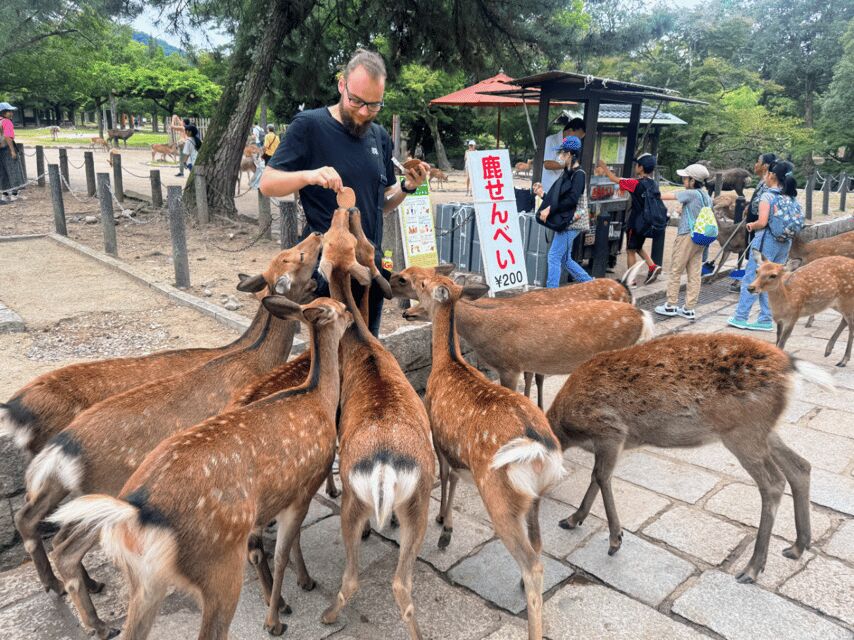
Feeding is allowed, but only with the special crackers sold in the park. Don’t bring outside food for this. And don’t treat the deer like harmless lawn ornaments. The deer can get pushy. In real-world moments people note they can nip or head-butt when they think you have crackers, and some deer behavior can look aggressive if you’re not careful.
Here’s the simple safety rule I’d follow: keep your hands visible. If you have no crackers, let the deer know by showing open hands. If you do have crackers, keep them controlled and don’t wave them around.
Todaiji Temple: walking into the Great Buddha Hall
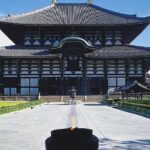
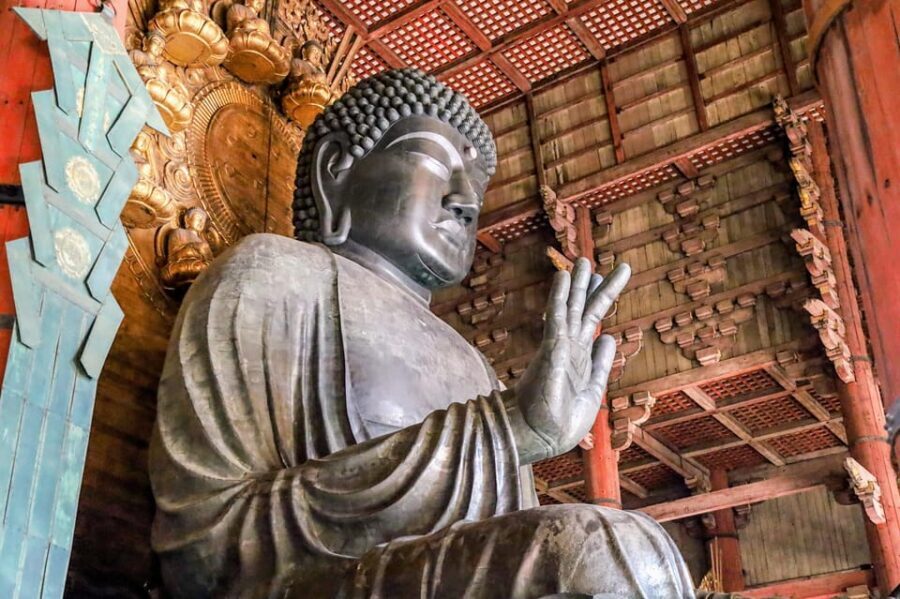
Todaiji Temple is the main event, and the tour gives it the time it deserves: a guided visit of about 50 minutes. You’ll also see the approach through the complex, including Nandaimon Gate with its guardian statues flanking the entrance.
Then comes Daibutsuden, the Great Buddha Hall. This is where Nara stops being a list of sights and becomes an actual sense of scale. The hall is a huge wooden structure, and the Great Buddha of Nara inside is the kind of stop that makes you automatically look up and take a beat.
Because admission to Todaiji is included, you’re not juggling extra tickets or entry lines during your short window. That matters on a half-day tour. You want your time inside the major moments, not spent waiting.
Photo note: flash photography is prohibited, so rely on ambient light and your camera’s settings. If you’re photographing people, keep things respectful and don’t block the flow.
Tour flow: coach, guide, and multilingual audio headsets
The backbone here is organization. You get a professional English-speaking tour guide, plus audio headsets so you can follow even when you’re a little behind the group.
Audio headsets are available in Spanish, French, Italian, German, Portuguese, and Ukrainian. That’s useful if someone in your group likes to hear every detail at their own pace, or if you’d rather read the guide through the headset than rely only on what’s said aloud.
The guides themselves often get praised for energy and humor. People mention guides like Ciel and Tommy, Nagomi, Sakura, Den, Mai San, At-chan, Harry, and Rina in particular. While you can’t control who you get, it’s a strong sign that the experience isn’t just “here’s the schedule” and out.
A few guide-level tips you can take with you:
- Ask your guide how to handle the deer interaction safely before you start feeding.
- If you’re unsure about timing, listen to the guide’s photo and return reminders carefully; the park part moves fast.
- If you want lunch ideas after the tour, ask. Many guides share restaurant suggestions.
And yes, this coach includes free Wi-Fi. It’s not essential, but it’s handy for planning your next stop once you’re dropped at Nara.
Other guided tours in Kyoto


Price and value: what $77 covers in real terms
At $77 per person for about 4 hours, this tour isn’t just paying for a seat on a bus. You’re paying for three things that are hard to bundle when you do it alone: guided context, transportation, and a major site admission.
Here’s the value math in plain language:
- Air-conditioned coach with free Wi-Fi reduces stress versus figuring transit with bags and timing.
- Professional English-speaking guide helps you understand what matters at each site, especially the cultural meaning behind what you’re seeing.
- Todaiji Temple admission is included, which saves time and extra transaction friction.
- Audio headsets give you a better chance of hearing details even in crowded areas.
What’s not included is meals and drinks. That’s the main budget variable you’ll manage on your own. If you’re the type who hates planning, this half-day structure still wins, because it concentrates the “big three” into one morning.
Also, the tour ending point is part of the pricing logic. Because you’re not returning to Kyoto on the coach, you need a plan for getting home. If that would stress you out, consider whether a full-day option would fit better.
Final stop at Kintetsu Nara Station: your return to Kyoto
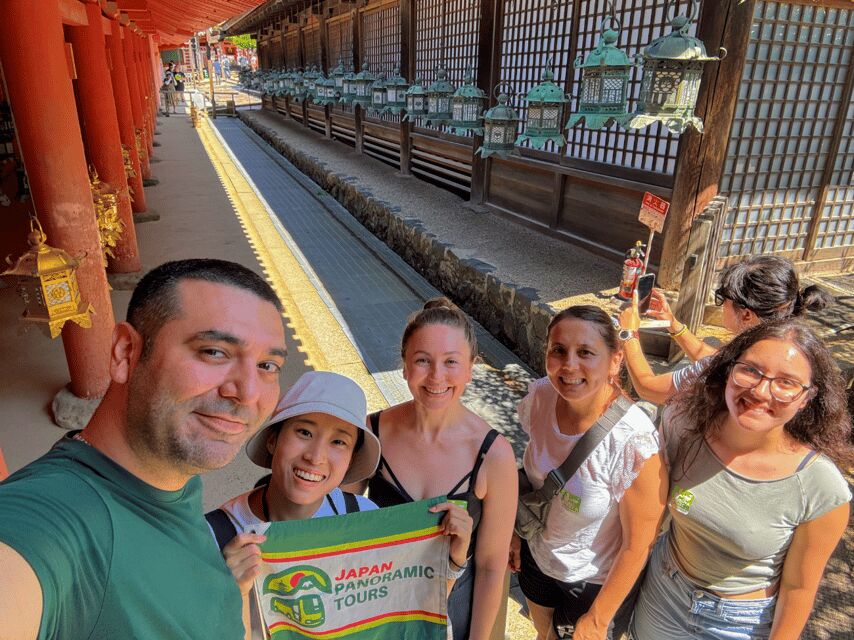
This tour concludes at Kintetsu-Nara Station around 12 PM. It does not include the return to Kyoto by bus, and you’ll need to take care of it yourself from there.
That’s the one detail I’d highlight to anyone booking. Even if the sights are worth it, return logistics can turn into a second trip if you’re not ready.
The upside: the Nara station area is where you’ll naturally find help, signage, and regular transit connections. If you’re nervous, use your time right after the tour ends. Ask your guide for the simplest direction to your next step, then follow the station flow.
If you’re tight on timing later that day, build in extra buffer. Half-day tours are fun, but they’re not “I’ll wander and still be calm” experiences.
Who this tour suits, and who should skip it
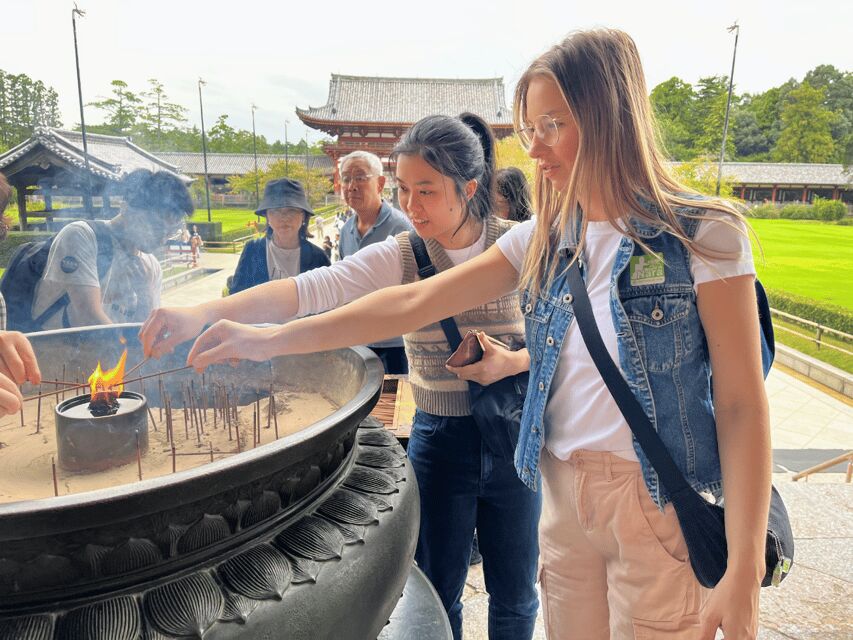
This is a strong fit for:
- First-timers to Nara who want the headline experiences quickly
- People who like a blend of temple + nature + culture
- Travelers who prefer a guide to reduce decision-making time
- Solo travelers and small groups who want structure without feeling trapped
It’s not a great fit if:
- You need mobility accommodations. This tour is listed as not suitable for people with mobility impairments or wheelchair users.
- You don’t want to do moderate walking and stairs/hills. Even within four hours, you’ll be on your feet.
If you do go, wear comfortable shoes. Bring cash (for things like snacks or any on-site purchases such as deer crackers). Keep your belongings secure since the area can get crowded.
Should you book this Nara morning tour?
I’d book it if you want your Nara plan to be simple and high impact: Kasuga Taisha’s lantern routes, Todaiji’s Great Buddha Hall, and deer park time in one morning. The included Todaiji admission, the guided explanations, and the coach comfort make it feel efficient for the money.
I would think twice if you hate managing transit on your own right after a trip. Because the tour ends at Kintetsu Nara Station around noon, you need a return plan that doesn’t rely on being driven back to Kyoto.
If you go, do two things and you’ll feel smart fast: follow the deer cracker rules and plan your return from the station in advance.
FAQ
FAQ
Where is the meeting point?
You meet in front of the Kyoto Avanti building at Tully’s Coffee, on the Tully’s side. The address is 〒601-8003 Kyoto City, Minami Ward, Higashikujo Nishiyamao-cho 31 AVANTI.
What time does the tour start?
Meeting time is 7:50 AM, and departure time is 8:00 AM.
When and where does the tour end?
The tour ends at Kintetsu-Nara Station around 12 PM.
Is transportation included?
Yes. You ride in an air-conditioned coach, and it includes free Wi-Fi.
What’s included in the ticket price?
Included items are a professional English-speaking tour guide, air-conditioned transportation with free Wi-Fi, admission to Todaiji Temple, and audio headsets for multiple languages.
Are meals included?
No. Meals and drinks are not included.
Can I feed the deer in Nara Park?
Yes, feeding is allowed, but only with the special crackers sold in the park, and you should do it responsibly.
What should I bring?
Bring comfortable shoes, a hat, camera, sunscreen, water, and some cash.
What languages are available for the audio guide?
Audio headsets are available in Spanish, French, Italian, German, Portuguese, and Ukrainian.