Your morning workout comes with Kyoto sights. I love the history mixed into the run, and I love the river-side route that keeps the scenery moving instead of stopping every two minutes. You’ll hit Kyoto’s better-known highlights while also getting time in spots that feel quieter and more local than the main tourist stampede.
One thing to consider: this is not a sightseeing stroll. Expect Tabata-style effort plus jogging for about 10 kilometers, so you’ll want decent stamina and comfortable shoes.
In This Review
- Key Things I’d Pay Attention To
- Kicking Off at Nijojo-mae Station: Start Where Kyoto Power Begins
- Nijō Castle Outside and Imperial Palace Park: Warm-Up to Tabata
- Heian Shrine and Kamogawa Crossings: Story Stops Without the Standstill
- Shirakawa River Jog to Maruyama Park: Willows, Bridges, and a Torii Moment
- Yasaka Shrine, Gion En Route, and the Kamogawa Stretch Finish
- Effort Level and What You’ll Want to Bring for This 10 km Workout
- Price and Value: Is $97.55 Worth a 3-Hour Kyoto Run?
- Should You Book Kyoto Heritage Run?
- FAQ
- How long is the Kyoto Heritage Run?
- Where do I meet, and where does the tour end?
- About how far will we jog?
- What fitness level do I need?
- What kind of workout is included?
- What landmarks are part of the tour?
- Is lunch or bottled water included?
- What happens if weather is poor?
- Are service animals allowed?
Key Things I’d Pay Attention To
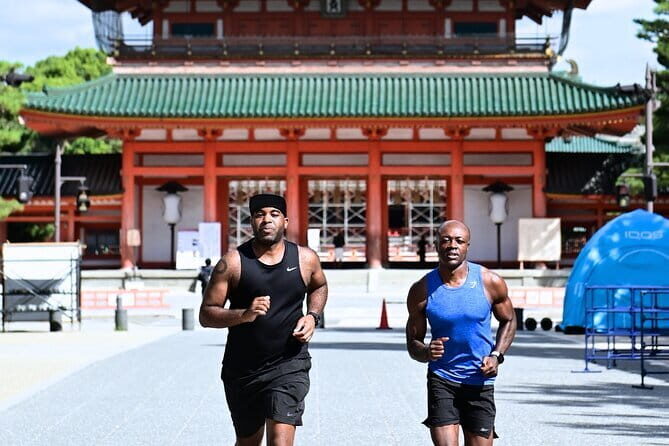
- About 10 km in ~3 hours means you cover serious ground without wasting time in transit.
- Small group size (up to 12 people) helps the pace and route stay controlled.
- Warm-up + coached intervals turn landmarks into a workout you can actually manage.
- Stops like Nijō Castle (outside) and the Imperial Palace Park put you close to Kyoto power centers.
- Shirakawa River jogging gives you willows, stone bridges, and a big torii-gate moment.
- Finish near Gion Shijo Station on Kamogawa so you can roll into dinner plans easily.
Kicking Off at Nijojo-mae Station: Start Where Kyoto Power Begins
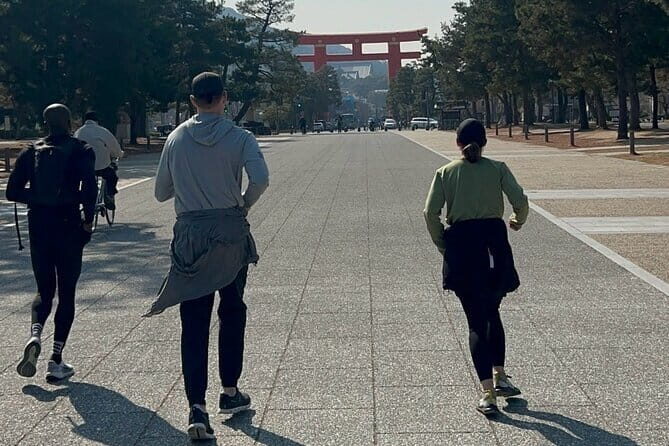
The tour begins at Nijojo-mae Station, right by Nijō Castle (outside). That’s a smart first move, because you start in the Kyoto center of gravity: political authority, then quickly onward to the imperial story of the city.
At the start, you meet the guides, including a fitness professional and an experienced tour guide. Before you jog, you do a warm-up and get a brief history of Kyoto City. I like this approach because it helps your brain switch on, not just your legs. You’re not guessing why you’re passing what you’re passing.
Also, the route is set up for convenience. It’s near public transportation, and you’ll have a mobile ticket. That combination matters when you’re trying to keep your whole day from turning into logistics.
Other historical tours in Kyoto

Nijō Castle Outside and Imperial Palace Park: Warm-Up to Tabata
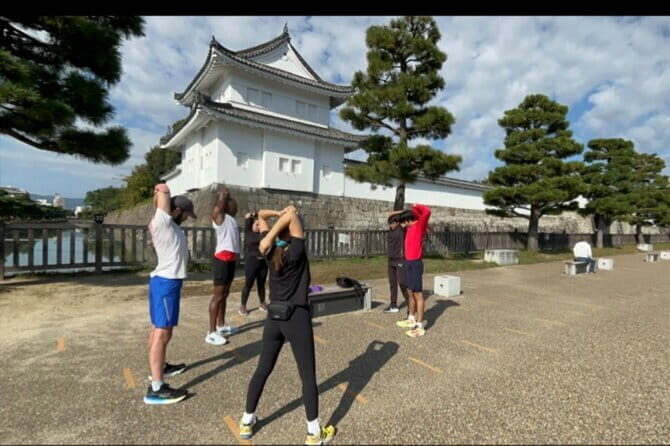
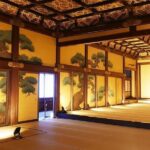
Right away, you’ll see Nijō Castle from the outside. The big takeaway here is the connection to the Tokugawa shoguns, who ruled for centuries from 1603 to 1868. Even without going inside, the setting gives you context for why Kyoto could switch between courtly ceremony and hard political control.
Then comes the real workout highlight: the Imperial Palace Park stop, where you jog east and settle into coached effort. The tour includes Tabata-style exercises on the Imperial Palace grounds. If you’ve never done Tabata intervals, think short bursts with structured intensity, not random running around.
This part is valuable because it breaks the usual tour pattern. Instead of standing still for every photo, you build a rhythm: move, learn, reset your breath, then move again. You also get chances to spot quieter areas and lesser-known details in a place most people treat as a one-photo stop.
Practical note: Imperial areas can feel open and exposed, especially if the weather shifts. Wear layers you can adjust and plan your pace so you’re not red-lining early.
Heian Shrine and Kamogawa Crossings: Story Stops Without the Standstill
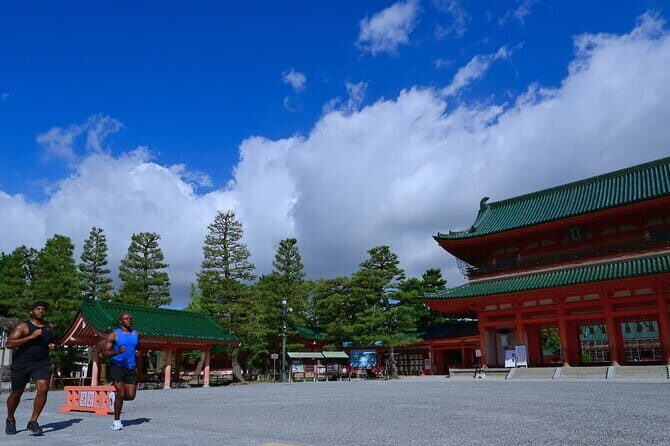
After leaving the palace grounds, you cross the picturesque Kamogawa. The tour frames this river as more than a pretty divider, pointing to echoes of past battles. That kind of context makes the river feel like part of Kyoto’s timeline instead of just a walking corridor.
Next up is Heian Shrine, where you’ll make a brief stop. This is the moment where the tour slows just enough to connect architecture and meaning to what you’re seeing. Since you’re moving in between stops, your attention stays sharper than it would on a bus tour.
The mid-run pacing is key. You’re not stuck in long lectures, and you’re not pushed so hard that you miss the point of the landmarks. It’s a balancing act, and when it works, you end up learning while still feeling like you did something active.
And because the tour crosses major areas of the city center, you get a sense of the geography. Kyoto’s layout can feel confusing at first. A route like this helps you build a mental map fast.
Shirakawa River Jog to Maruyama Park: Willows, Bridges, and a Torii Moment
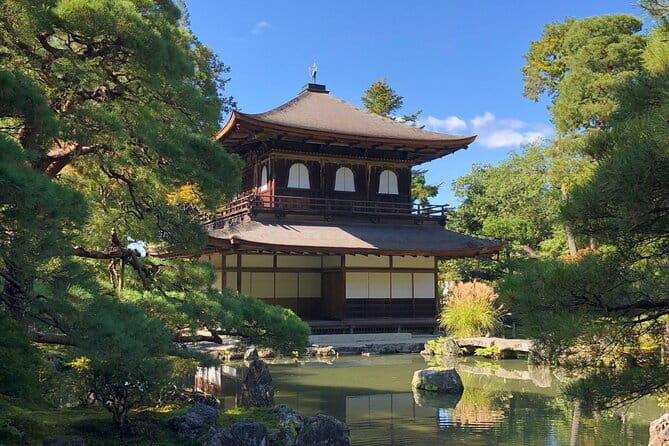
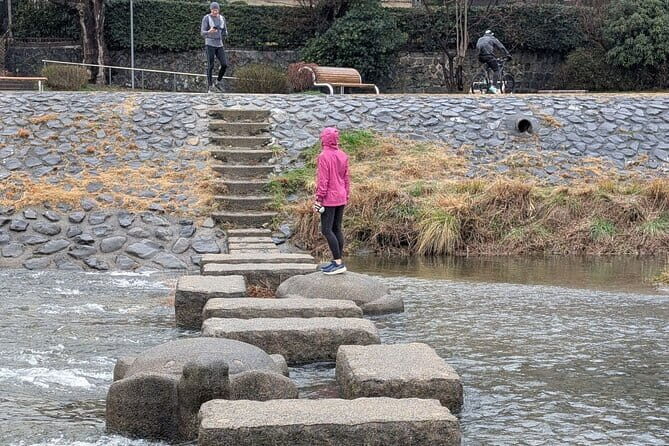
The route then heads toward the Shirakawa River, where the jogging segment is lined with weeping willows and small stone bridges. This is one of the most memorable parts of the experience because it stays atmospheric while you move.
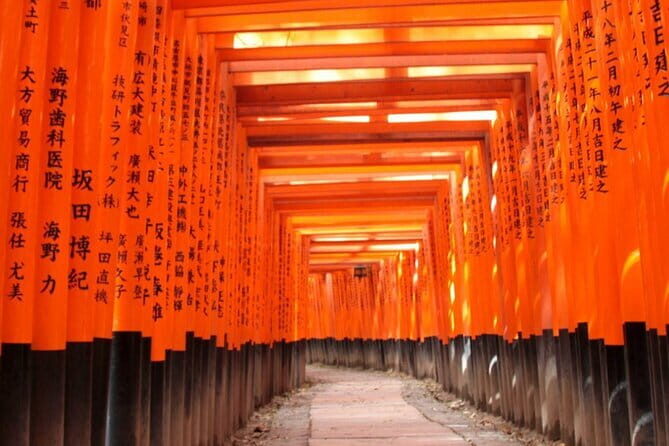
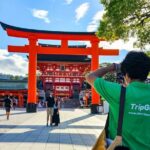
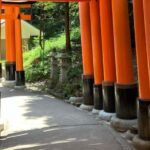
You’ll also pass through an immense torii gate along the way. Even if you’ve seen torii gates in other cities, this one has the effect of a clear transition point. You feel like the scenery changes in a physical way, not just in pictures.
This stretch also tends to work well for photos, but with a twist: you’re not just stopping, posing, and shuffling. You’re still walking forward through the scene. That keeps the route from feeling like a series of interruptions.
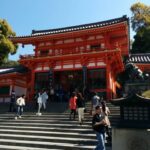
Then you reach Maruyama Park and the approach to Yasaka Shrine. The flow is purposeful. You arrive feeling warmed up and tuned in, so when you stop briefly, it’s not a random pause. It’s a natural wind-down to a major Kyoto sacred and cultural hub.
One thing to keep in mind: river paths can be busy near popular areas. The tour pace helps you avoid the worst of the stop-and-go feeling, but you’ll still want to follow your guide’s instructions and stay aware around slower walkers.
Yasaka Shrine, Gion En Route, and the Kamogawa Stretch Finish
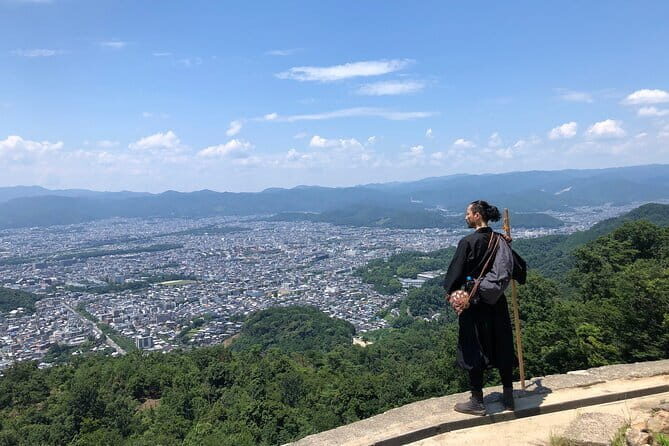
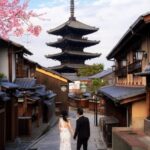
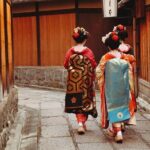
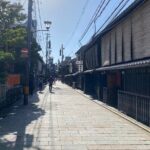
As the tour continues, you pass through Gion. The route description ties Gion to the ancient art of the geisha endures, which is a useful framing even if you only catch glimpses while jogging through. It helps you see the district as living tradition rather than a theme park.
The tour also includes a wind-down phase with stretches at the eastern bank of Kamogawa. That ending matters more than you’d think. When tours cut off without any reset, you’re left sore and stuck thinking about your next move. Here, you finish in a way that sets you up for the rest of your day.
You’ll end near Gion Shijo Station, which is convenient. It puts you close to lots of dinner options and late-evening wandering without forcing you to backtrack to the start. Just plan your footwear and your hydration, because finishing after a workout means you’ll want to keep your energy up.


Effort Level and What You’ll Want to Bring for This 10 km Workout
This tour is aimed at people with moderate physical fitness. That’s good news, because it doesn’t require being a runner club athlete. But it is still jogging, roughly 10 kilometers over about 3 hours, so you should treat it like a real active morning.
The structure helps: you start with a warm-up, then build into interval-style effort at the palace, then continue with jogging segments. Finally, you stretch at the end. If you’re the type who gets anxious about fitness activities, the coached rhythm is the antidote.
What you should bring:
- Comfortable, supportive shoes you can jog in
- A light layer for changes in morning weather
- Your own water, since bottled water isn’t included
- A small towel or tissue for sweat control, especially if you run hot
If you’re sensitive to intensity, pace yourself early. You’ll likely feel the workout most at the Tabata portion, not during the entire jog. The goal is to enjoy the route, not to prove you can suffer.
Price and Value: Is $97.55 Worth a 3-Hour Kyoto Run?
At $97.55 per person for about 3 hours, this isn’t a budget “just ride and watch” tour. But it does add value in a way that’s hard to copy with standard sightseeing.
You get:
- Multiple big-name Kyoto landmarks in one go
- A workout format that keeps you moving through the city center
- Coaching support from a fitness professional plus a tour guide
- All fees and taxes included
The value also comes from time efficiency. Kyoto days can get eaten alive by transit lines, long walks, and crowd delays. Here, you’re stacking sightseeing stops with active transport. The result is fewer dead hours and more actual Kyoto atmosphere.
It’s also capped at 12 people, which can make the experience feel more personal than mass group tours. When guides can manage group pacing, you’re more likely to get good explanations instead of just hearing announcements while people stream past.
One more practical point: it’s usually booked about 18 days in advance on average. If you have fixed plans, it’s smart to lock in early.
Should You Book Kyoto Heritage Run?
If you want a Kyoto day that feels active, focused, and efficient, I’d say yes. This tour is especially strong for your first or second full day when you need route sense fast and you want famous sites without spending the whole morning standing in lines.
I’d avoid it if you:
- Want slow, unstructured wandering
- Are worried about jogging intervals or interval training
- Prefer tours that never break pace for exercise
Also, if the idea of Tabata-style effort sounds like too much, you may find it stressful rather than fun. But if you like movement and can handle moderate fitness, you’ll likely appreciate how the city turns into a breathing, moving map.
FAQ
How long is the Kyoto Heritage Run?
It runs for about 3 hours.
Where do I meet, and where does the tour end?
You meet at Nijojo-mae Station, near Nijō Castle (outside). The tour ends near Gion Shijo Station on the eastern bank of Kamogawa, and the end point is not the same as the start.
About how far will we jog?
The route covers approximately 10 kilometers.
What fitness level do I need?
You should have a moderate physical fitness level.
What kind of workout is included?
You’ll start with a warm-up, do Tabata-style exercises, and finish with stretches.
What landmarks are part of the tour?
The route includes stops at Kyoto Imperial Palace (Imperial Palace Park), Heian Shrine, Yasaka Shrine, Maruyama Park, and you pass through Gion. You also see Nijō Castle outside.
Is lunch or bottled water included?
No. Lunch and bottled water are not included.
What happens if weather is poor?
The experience requires good weather. If it’s canceled due to poor weather, you’ll be offered a different date or a full refund.
Are service animals allowed?
Yes, service animals are allowed.