Gion feels different with a local guide. This 3-hour Kyoto walk connects Gion and eastern Kyoto sights, mixing famous shrines/temples with everyday street life, plus a guide who explains the Meiji Restoration and how it shaped the city. It’s the kind of route that helps you read Kyoto instead of just ticking boxes.
I love the way the itinerary stacks iconic viewpoints and calm moments close together, from Tatsumi Bridge to the stone slopes of old Higashiyama. I also like the small-group feel, capped at 12 people, and the fact that guides run in clear English—names you might hear in past tours include Jay, Ben, Ayumi, Tommy, and Michel.
One catch: it’s a true half-day walk. You’ll want comfortable shoes and you should expect some stairs, so if mobility is an issue, plan for a slower pace and consider where you might need breaks.
In This Review
- Quick hits: what makes this tour worth it
- Why this Kyoto Gion Historical Walk is a smart first taste
- Getting oriented at Tatsumi Bridge and the Gion river approach
- From Chion-in’s Sanmon gate into the temple grounds
- Maruyama Park: a needed reset between major sights
- Nene-no-Michi: the quiet, stone-paved path moment
- Hōkan-ji and Yasaka Pagoda: icon status, right on the route
- Ninen-zaka and Sannen-zaka: the classic cobblestone lanes
- Kiyomizu-dera finish: UNESCO views and the one paid ticket
- Statue of Izumo-no-Okuni and the Gion theater connection
- Walking pace, shoes, and how to avoid the common half-day mistakes
- Price and value: is $40 a good deal?
- Who should book this Kyoto Gion Historical Walking Tour
- Should you book this tour?
- FAQ
- How long is the Kyoto Gion Historical Walking Tour?
- Where do I meet and where does the tour end?
- Is the tour guided, and is it in English?
- Is lunch included?
- Are admission fees included?
- What should I wear or bring for the walk?
- How strenuous is it?
- How many people are in a group?
- What happens if weather is bad?
Quick hits: what makes this tour worth it
- Small group (max 12) keeps the walk personal and question-friendly.
- Meiji Restoration storytelling gives context for what you’re seeing now.
- Gion shibashi to Chion-in pairs a scenic bridge approach with one of Kyoto’s big temple gates.
- Old-street lanes like Ninen-zaka and Sannen-zaka deliver classic Kyoto photo angles.
- A mix of famous and quieter stops (Maruyama Park, Nene-no-Michi) keeps it from feeling like a factory tour.
- Only Kiyomizu-dera costs extra; many listed stops are free to enter.
Why this Kyoto Gion Historical Walk is a smart first taste
If Kyoto is your first stop in Japan, this kind of tour can save you time. In just about three hours, you’ll get your bearings in Gion and the eastern hills, with enough background to understand why the streets, temples, and rituals sit side by side.
What I like most is the balance. You’re not just looking at buildings; you’re walking through the story of the city—religion, theater culture, and later the shocks and reforms of the Meiji era. The guide also points out how Kyoto’s modern identity grew without erasing the old neighborhoods.
It also fits real schedules. Morning Kyoto can be a bit intense, and a half-day afternoon walk is a practical way to get the key highlights without feeling trapped into a full day.
A few more Kyoto tours and experiences worth a look

Getting oriented at Tatsumi Bridge and the Gion river approach
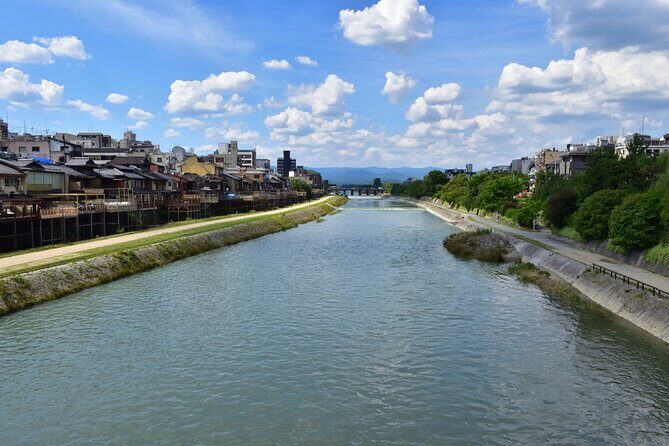
The tour typically kicks off around Tatsumi Bridge and the Gion shibashi area, with a short stroll through one of Kyoto’s prettiest river-edge approaches. This is a great warm-up stop because it’s scenic but not overwhelming, and it helps you understand the physical layout of the Gion area.
Why it matters: Kyoto’s big sights can feel far apart unless you see how the neighborhoods connect. Starting with the bridge gives you that “oh, I get it” moment early on, so later lanes and temple approaches make more sense.
Also, you’ll likely have a better chance of getting photos here than at the densest temple crowd points. Even when it’s busy, the walkway and angles give you options.
From Chion-in’s Sanmon gate into the temple grounds
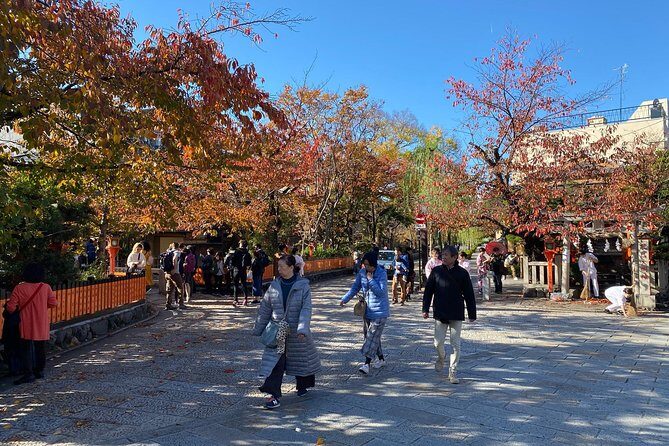
Next comes Chion-in Sanmon, the massive wooden gate that signals you’ve entered a major Buddhist space. Even if you don’t remember every detail the guide shares, you’ll feel it: this is Kyoto architecture at full scale, with the gate setting the tone for everything inside.
Then you move deeper into Chion-in Temple itself. This is where the tour shifts from “pretty sightseeing” into “understanding the role of temples in daily life.” You’ll learn how temples functioned as cultural anchors, not just religious monuments, and you’ll get the sense that Kyoto’s worldview is built from layers.
Practical note: this portion is often calmer once you’re past the gate. Still, it’s a stop where you may spend more time just watching how people move through the space, not just taking pictures.
Maruyama Park: a needed reset between major sights
After temple scale, you’ll get a breather at Maruyama Park. It’s described as an urban oasis, and that’s exactly how it plays on foot: you’re not rushed through a single landmark, you’re given a small pocket of greenery in the middle of the walk.
Why I like this stop: it breaks the “temple rhythm.” Kyoto can stack gates, halls, and lanes in a way that blurs together. A park stop helps your brain sort what you saw before you head into the classic stone streets and pagoda views.
It’s also a good moment to check in with your guide. If you’ve got questions about what you’re seeing—geisha history, how the old districts worked, or why Kyoto looks the way it does—this is the kind of pause where it’s easy to ask.
Nene-no-Michi: the quiet, stone-paved path moment
Nene-no-Michi (the Path of Nene) is the tour’s more intimate historical stop. It’s a stone-paved lane named for Nene, the wife of Toyotomi Hideyoshi, and it winds through the area in a way that feels more like walking with history than standing beside it.
This is one of those stops where you’ll appreciate the slower pace of a guided route. Instead of sprinting to the next famous site, you get a chance to look down at the details—path shape, stone texture, and the way the lane channels movement.
Photo-wise, it’s not all wide-open scenery. It’s more about atmosphere: a narrow, older feeling walkway that contrasts nicely with the river views and temple entrances.
Other walking tours we've reviewed in Kyoto






Hōkan-ji and Yasaka Pagoda: icon status, right on the route

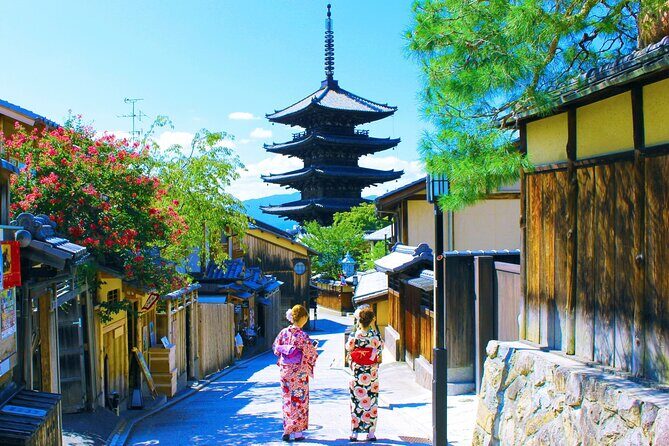
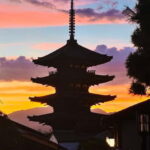
Then you hit Hōkan-ji (Yasaka Pagoda), home to a towering five-story pagoda. This is one of Kyoto’s most recognizable silhouettes, and it’s also a great example of why the walk format works. You don’t just arrive at a landmark—you approach it from the neighborhood streets, and that makes the pagoda feel rooted in place.
This stop is typically quick, but it’s effective. Even in a short time window, the guide can help you see beyond the “pretty tower” part by connecting it to what temples mean in Kyoto’s religious and cultural life.
If you care about photos, pay attention to where you stand. Pagodas look different from different corners, and the sidewalks give you a few reasonable angles without turning it into a photo marathon.
Ninen-zaka and Sannen-zaka: the classic cobblestone lanes
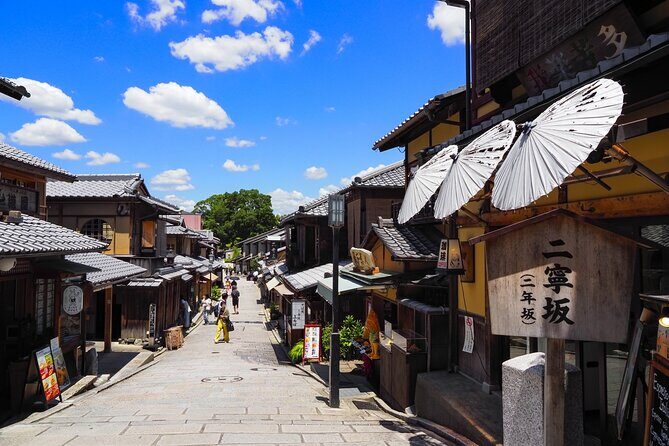
Next come the slopes: Ninen-zaka (Two-Year Slope) and Sannen-zaka (Three-Year Slope). These are the lanes people picture when they think of old Kyoto—cobblestone surfaces, preserved architecture vibes, and shops along the way that keep the atmosphere lively.
What you’re really getting here is the “Kyoto postcard” experience done in a grounded way. Since the tour has already built context with temples and district history, you’re not just walking down a themed street. You’re walking through a neighborhood that still feels like a place people live and trade in.
Practical reality: cobblestones and slopes can be slow going. If you’re wearing shoes that are fine for flat sidewalks but not great for uneven stone, you’ll feel it here.
Kiyomizu-dera finish: UNESCO views and the one paid ticket
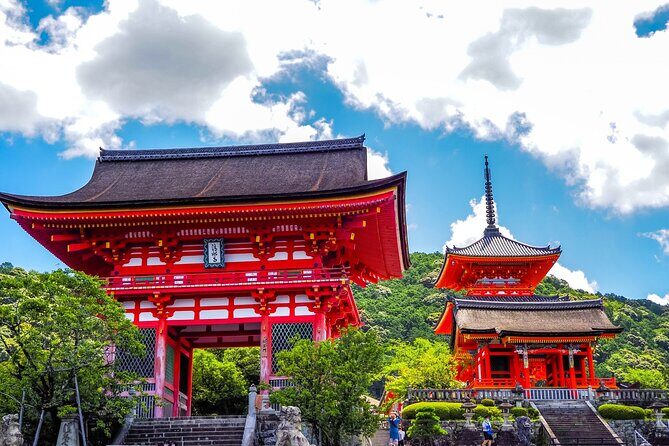
The walk ends at Kiyomizu-dera, a UNESCO World Heritage site that sits on a hillside with major city views. Expect it to feel like the emotional peak of the tour: you’ve spent the half day learning the city’s context, and now you’re looking at the broad picture from one of Kyoto’s most famous temple sites.
Important budget note: Kiyomizu-dera admission is not included. In other words, your tour ticket covers the guide and the walking, but you’ll need to plan for the temple entry fee on your own.
Timing can matter here. Even if your tour portion is structured, the actual time you spend at Kiyomizu-dera depends on how long you want to linger for views and photos.
Statue of Izumo-no-Okuni and the Gion theater connection
One of the tour’s more interesting touches is the stop at the Statue of Izumo-no-Okuni. Izumo-no-Okuni is tied to theater traditions, and placing this kind of stop in the middle of the Gion walk helps explain why Gion isn’t only about temples—it’s also about performance culture and the way historic Kyoto entertained itself.
This matters because a lot of first-time visitors think of Gion as a single vibe. The guide’s approach makes it clear it’s a working neighborhood with deeper roots, and that the district’s story includes art forms, not just architecture.
Walking pace, shoes, and how to avoid the common half-day mistakes
This is a 3-hour walk, and you should plan for real walking time. Even though each stop is short, the transitions add up, and you’ll cover enough ground to feel like you did a “half day” instead of a “quick stroll.”
Bring or wear:
- Comfortable walking shoes (the cobblestones and slopes are the reason)
- A bottle of water
- Something light to snack on before you start, since lunch isn’t included and meal stops aren’t part of the plan
If you’ve got mobility limits, don’t hide it. The tour description calls for moderate physical fitness, and some route parts can involve stair climbing. A small group helps, since a guide can often suggest when to pause or where to take it slower.
A nice bonus from past guides: they’re willing to answer questions and share practical tips, including recommendations for what to do next.
Price and value: is $40 a good deal?
At $40 per person, the value comes from focus and coverage. You’re paying for an English-speaking guide, a route stitched together through major landmarks, and context that helps you understand Kyoto beyond surface-level sightseeing.
You should also factor in what’s not included:
- Lunch (you’re on your own)
- Gratuity to the local guide (standard for guided experiences)
- Kiyomizu-dera admission (the one clearly marked as not included)
On the flip side, many of the stops listed are marked free admission, so you’re not paying entrance fees at every stop. That makes the tour budget-friendly compared to experiences that bundle paid entry everywhere.
It’s also a solid option if you want a guided overview without committing to a full-day itinerary. Three hours is enough time to learn how the neighborhoods connect, not enough time to feel stuck in one place all day.
Who should book this Kyoto Gion Historical Walking Tour
This tour is a great fit if:
- You want an easy-to-follow introduction to Gion and Higashiyama
- You like history told in plain language, with stories tied to the sights
- You want a route that mixes temples with classic old-street streets
It may be less ideal if:
- You’re traveling with very limited mobility and can’t handle slopes or stairs
- You hate walking and would rather take taxis between major stops
It also works well for first-timers who want a guide’s recommendations for later in the trip—especially since you finish at Kiyomizu-dera, a strong anchor for planning the rest of your day.
Should you book this tour?
I’d book it if you want your first Kyoto visit to feel organized and meaningful. The route is a smart blend of Gion scenery, big temple moments, and the older cobblestone streets that define Higashiyama. Add in the Meiji Restoration context, and you’ll come away with a clearer sense of what you’re looking at.
I’d hold off only if your biggest goal is minimal walking or if you know you’ll struggle with slopes and stairs. If that’s you, look for a shorter or more transit-based alternative.
FAQ
How long is the Kyoto Gion Historical Walking Tour?
The tour lasts about 3 hours.
Where do I meet and where does the tour end?
You start at Ben’s Cookies Kyoto Shijo (89 Shinchō, Shimogyo Ward). The tour ends in front of the entrance of Kiyomizu-dera.
Is the tour guided, and is it in English?
Yes. You’ll be led by an English-speaking guide.
Is lunch included?
No. Lunch is not included.
Are admission fees included?
Admission fees are not included. Kiyomizu-dera admission is not included, while many other listed stops are marked free.
What should I wear or bring for the walk?
Wear walking shoes. The tour involves walking for a half day, so bring what you need for comfortable walking.
How strenuous is it?
It’s listed for travelers with moderate physical fitness. There is walking and some stair climbing can be part of the route.
How many people are in a group?
The tour has a maximum of 12 travelers.
What happens if weather is bad?
The tour requires good weather. If it’s canceled due to poor weather, you’ll be offered a different date or a full refund.