Kyoto at night feels like a movie set. This Gion food tour strings together lantern-lit lanes and short, friendly explanations of the people and traditions behind Kyoto’s food culture. You’ll move through historic areas while sampling seasonal bites, from obanzai-style dishes to yuba and sweets, plus a drink at two stops.
I especially like the amount of food you get for the price—13 dishes across four eateries means you’re not just nibbling. And the tour keeps it personal: guides such as Yuvia, Alessio, Pedro, and Amy are repeatedly praised for being engaging and for explaining what you’re eating while you’re still tasting it.
One thing to think about first: the tour isn’t a good fit for everyone. There’s no vegan or gluten-free option, and it’s also not suitable for mobility impairment—plus a review notes some restaurants require you to remove your shoes.
In This Review
- Key highlights worth planning around
- Kyoto Gion at Night: why this food tour feels different
- Price and value: is $72.96 a smart deal?
- Meet at Starbucks, end in Gion-Shijo: the route makes sense
- Stop 1: Pontocho District and the lantern-alley opener
- Stop 2: Kyoto food streets and surrounding eateries
- Stop 3: Gion at night—food, geisha culture, and final bites
- What you’ll actually eat: 13 dishes across 4 eateries
- Drinks and sake: what’s included, what’s not
- The guides: why Yuvia, Alessio, Pedro, and Amy keep showing up
- Walking pace, shoe rules, and comfort tips
- Who should book this tour—and who should skip it
- Should you book the Kyoto Gion food tour with 13 dishes?
- FAQ
- How long is the Kyoto Gion Food Tour?
- How much does it cost?
- What’s included in the tour?
- Is alcohol included?
- How many dishes and where do you eat?
- What are the dietary restrictions?
- Where do I meet the guide?
- Where does the tour end?
- How big is the group?
- What’s the cancellation policy?
Key highlights worth planning around
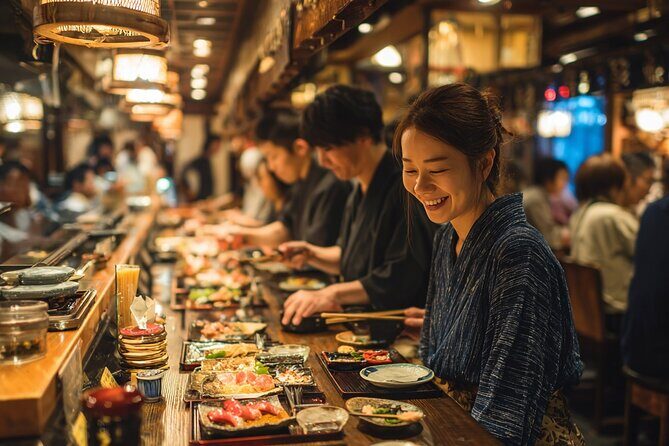
- 13 dishes at 4 eateries means you get variety without having to hunt menus on your own
- Small group (max 10 travelers) keeps the pace lively and questions possible
- Lantern-walk focus in Pontocho and Gion gives you the atmosphere you came for
- Guides named in reviews like Yuvia, Alessio, Pedro, and Amy are consistently described as fun and informative
- Sake and drink included at two eateries (alcohol only for legal age)
- Kyoto-style bites you can’t easily order blindly, including yuba and Kyoto snack culture
Kyoto Gion at Night: why this food tour feels different
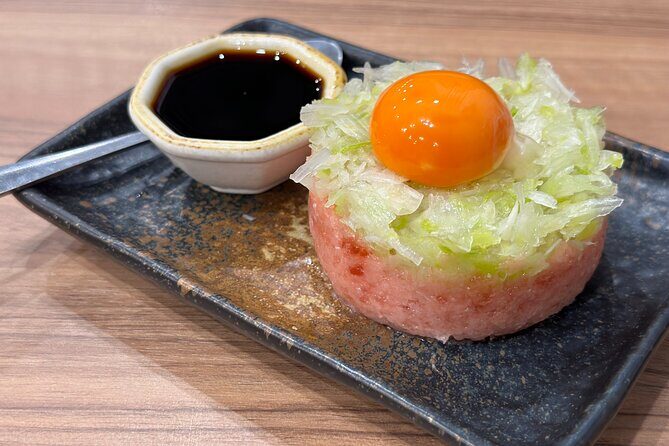
I’ve done plenty of tours that feel like a checklist. This one feels more like an evening out with someone who knows where to stand and what to order. You’re in Kyoto’s most scenic neighborhoods after dark—Pontocho and Gion—and the walking route is part of the experience, not just the commute between tastings.
The structure helps. You don’t linger for an hour in a loud restaurant while everyone waits. Instead, you hop between four spots and let the guide connect the dots: what makes Kyoto cooking distinct, what you’re tasting, and why that dish shows up in this neighborhood and season.
Two details that matter for real life: it runs about 3 hours, and the group stays small (up to 10). That combination keeps the night moving, and it reduces the awkward moments where you’re stuck waiting while the whole crowd takes the same photo.
A few more Kyoto tours and experiences worth a look

Price and value: is $72.96 a smart deal?
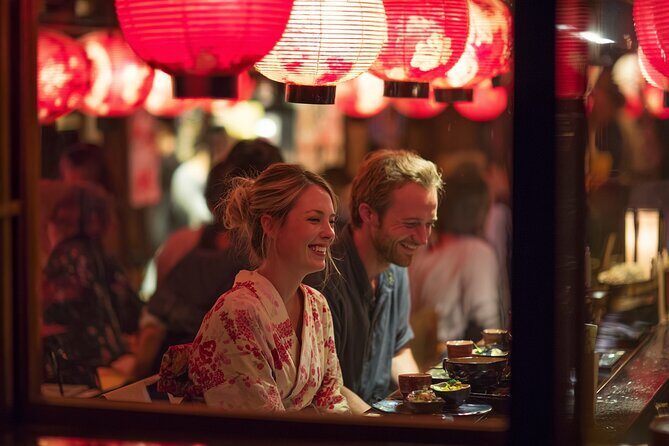
At $72.96 per person, you’re paying for three things: food variety, guided context, and access to places that are hard to find alone. The tour promises 13 dishes across 4 eateries, plus one complimentary drink at two of the stops. That’s the core value math.
If you tried to recreate this on your own, you’d spend money on separate meals, snacks, and drinks—and you’d still risk missing dishes that are typical of Kyoto but not obvious to order as a first-timer (like yuba or Kyoto-style small plates). The guide also helps you navigate practical stuff, like what to expect at a small local restaurant and how to handle ordering smoothly.
You do give up control. You can’t choose every dish, and the tour is very focused on Kyoto classics. If you’re the type who likes variety and guidance more than menu control, the price makes sense. If you only want one specific craving, it may feel like you’re paying to be steered.
Meet at Starbucks, end in Gion-Shijo: the route makes sense
You meet at Starbucks Coffee – Kyoto Sanjo-ohashi Bridge (near Nakajimachō, Ōmiya Building, 1F area) and end at Gion-Shijo Station. That start/end pairing is practical because Gion-Shijo is a major access point for the rest of your evening and the next morning.
The tour uses a mobile ticket, and it’s close to public transportation. Translation: you’re not stuck on a “walk 30 minutes from the bus” scavenger hunt.
One more reality check: the tour is not suitable for mobility impairment. Even if you can walk short distances, older buildings and restaurant steps can be a factor. A review also hints that some places expect you to remove your shoes, which adds another layer of “think ahead” for comfort.
Stop 1: Pontocho District and the lantern-alley opener
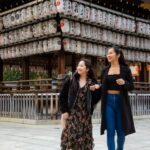
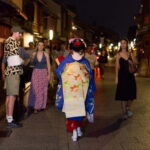
This is where the night sets its tone. You start with a walk through the Pontocho District, one of Kyoto’s best-known preserved alley zones. It’s all about atmosphere: lantern-lit lanes, old-street vibes, and the guide’s explanation of geisha in Japanese culture.
Why this stop is worth your time: you’re not just seeing pretty streets. You’re learning how geisha culture connects to hospitality, performance traditions, and the kinds of places where small courses and drinks fit naturally. That context makes the later food tastings land harder, because you understand the setting.
Also, the pacing here helps. You get an easy “warm-up” that builds excitement before you start eating in earnest. A single hour here is long enough to absorb the place, but short enough that you’re still hungry when you reach the first meal.
Stop 2: Kyoto food streets and surrounding eateries
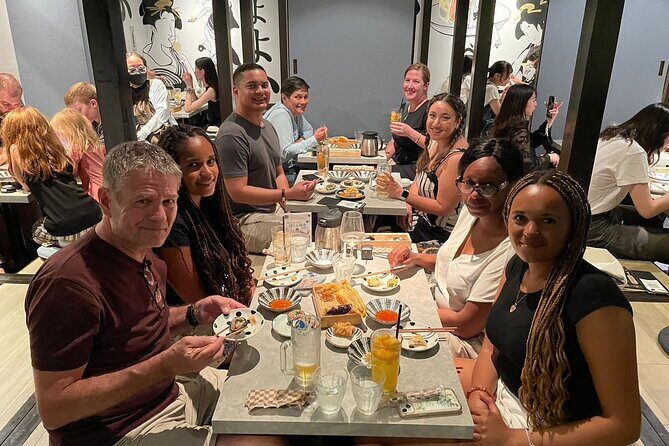
The middle block is where you start feeling the tour’s rhythm. You explore Kyoto and the surrounding eateries in this area for about an hour. This is the stage where the guide’s ability matters most—because you’re relying on them to translate the menus and keep you from ordering something that doesn’t match the Kyoto theme of the evening.
From the tour description, you can expect seasonal Kyoto delicacies—including obanzai (Kyoto home-style dishes) and freshly made yuba (tofu skin). In practice, you’ll likely see the kinds of small-plate food that show up in Kyoto rather than “big tourist meal” items.
I like this stop because it’s built for variety. By the time you leave, you’ve already tried enough to feel like your palate is awake, but you’re still looking forward to what comes next in Gion.
If you’re sensitive to dietary limitations, plan carefully. The tour notes it cannot cater for vegan or gluten-free needs, and it’s also not suitable for FODMAP, vegans, or people with celiac disease. This is a tour you book when you know you can comfortably eat the standard menu offerings.


Stop 3: Gion at night—food, geisha culture, and final bites
Gion is where the tour really cashes in on Kyoto’s visual magic. You stroll lantern-lit streets and savor more Kyoto delicacies at hidden eateries, soaking up the charm of the neighborhood as the evening deepens.
This is also where you can feel the value of the small group. Narrow lanes and small restaurants can feel tense with big crowds. With a max group size of 10, you’re more likely to get a smooth experience—less shoving, more listening, and easier time at the table.
What makes this stop especially good is the way guides connect the food to the setting. Multiple guides are described as enthusiastic and detailed in their explanations. Names that pop up in the reviews include Pedro, Amy, Alessio, Yuvia, and others. The common thread: they don’t just hand you food; they help you understand why the dish exists and what to notice as you eat.
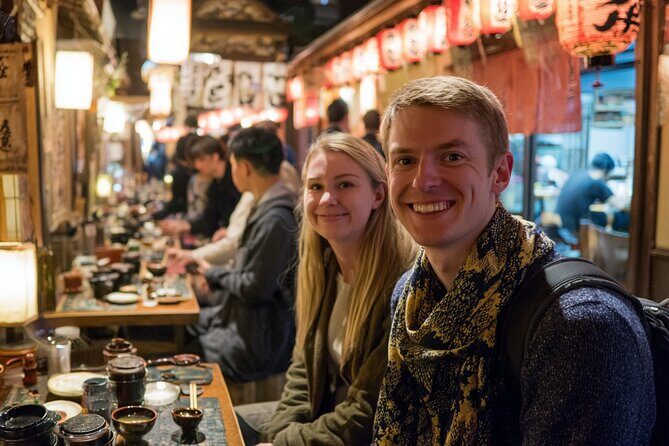
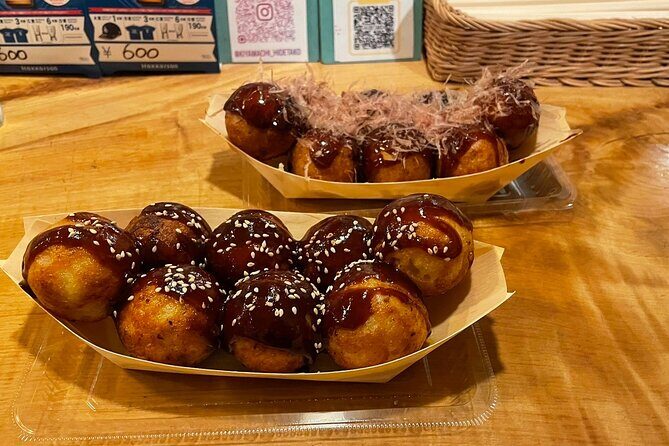
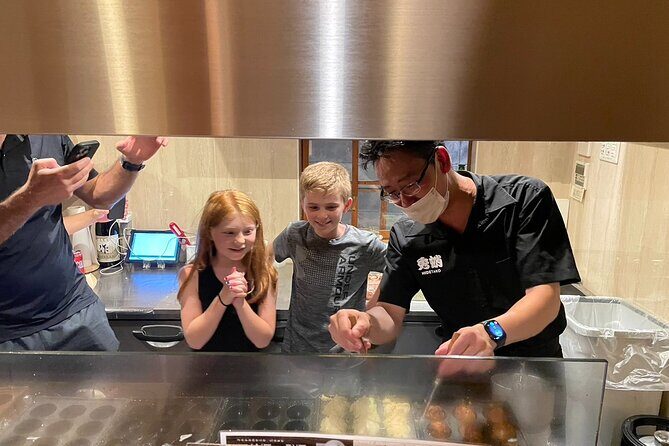
You’ll likely run into Kyoto-style sweets and snack culture too. Reviews mention things like custard-filled taiyaki (and other sweet fish-shaped treats), plus items such as takoyaki with spicy sauce and examples of Kyoto seasoning style. Even when the exact dishes vary by day and restaurant choice, the theme stays consistent: Kyoto comfort, Kyoto detail, Kyoto night.
What you’ll actually eat: 13 dishes across 4 eateries
The headline is 13 dishes and 4 eateries, which is a huge part of why this tour works. You’re not stuck doing one “signature” item and calling it a night.
From the description and the review details, here’s what you can reasonably expect in the mix:
- Kyoto-style small plates like obanzai
- Yuba (tofu skin), often served fresh
- Izakaya-style snacks and street-friendly bites
- Sake or soft drinks, with a complimentary drink at two eateries
- Sweet treats, including custard-filled sweets described in reviews
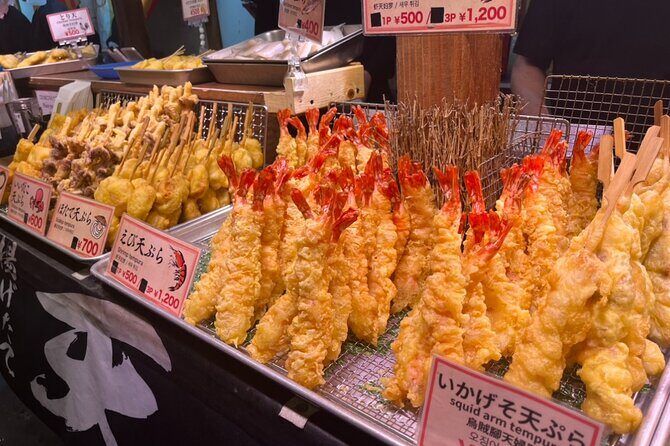
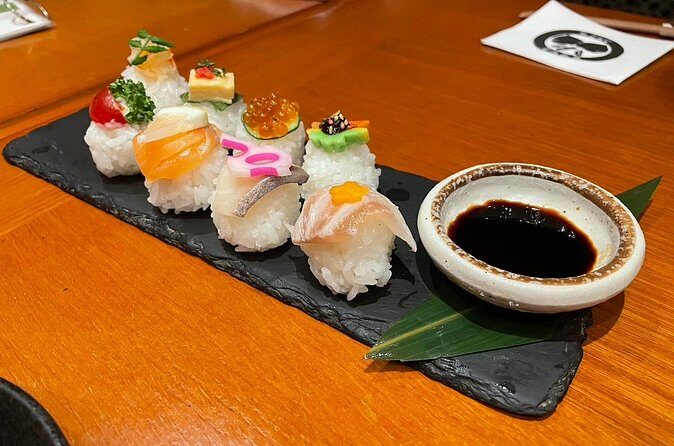
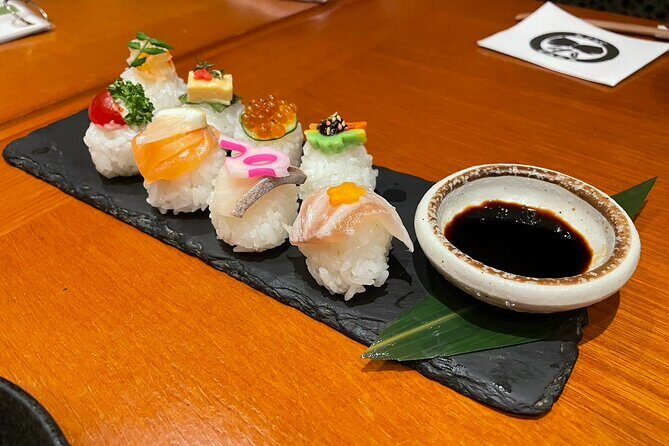
- Dishes mentioned in reviews include takoyaki, taiyaki, tempura, and sushi examples (like wagyu sushi referenced in reviews)
One practical tip: go light earlier in the day. This is a “walk and eat” evening, and reviews repeatedly point out that you leave full. If you start the night with a full lunch, you’ll still have fun, but you may end up tasting more slowly and saving room becomes the challenge.
Also, remember the tour doesn’t offer gluten-free or vegan substitutions. There’s a difference between “no allergy accommodation” and “no dietary match at all.” This tour is closer to the second one, so plan around it.
Drinks and sake: what’s included, what’s not
You get one complimentary drink (alcoholic or non-alcoholic) at 2 eateries. Alcohol is offered only if you’re of legal age, which is exactly what you’d want from a responsible tour.
What I like about the drink setup is that it keeps the evening social without turning it into a heavy drinking night. Some reviews describe drinks like citrus-finished options and even fruity, slush-like textures, but the bigger point is that you get a break between food rounds.
If you don’t drink alcohol, you still get the non-alcohol option included at those two stops. If you’re choosing between tours in Kyoto and you want culture and food without committing to sake, this is a strong sign.
The guides: why Yuvia, Alessio, Pedro, and Amy keep showing up
This tour’s reputation is tied closely to its guides. Reviews repeatedly highlight guides as engaging and informative, and they even call out specific names—Yuvia, Alessio, Pedro, Amy, Mehrab, Maggie, and Gian show up in the feedback.
What that means for you: you’re signing up for someone who can connect the food to the neighborhood. The best parts mentioned include explanations of geisha culture, dish-by-dish guidance, and walking you through the “why” behind Kyoto flavors rather than only delivering “what you’re eating.”
Do watch for one possible mismatch. A couple of reviews mention feeling like the guide was repetitive or difficult to understand, and one review complained about not feeling like they toured Gion as advertised. That doesn’t sound like the norm given the very high rating, but it’s a real reminder: the guide quality can swing your experience.
Walking pace, shoe rules, and comfort tips
This is not a “sit and sample” tour. It’s a night walk through narrow lanes and you’ll be on your feet for roughly three hours total. Reviews mention the walking can be a bit between restaurants, but they also say it’s worth it because you’re moving through the areas you want to see.
Two comfort notes from the feedback:
- Some restaurants require removing shoes, so wear footwear that’s easy to slip on and off.
- The tour is not suitable for mobility impairment, so if mobility is a concern, you should consider an alternative format.
If you want to maximize the experience, wear comfortable shoes and plan to dress for an evening stroll. And yes: you’ll probably take pictures of lantern reflections, even if you say you won’t.
Who should book this tour—and who should skip it
You should book if:
- You want a Kyoto night out that mixes food with real neighborhood atmosphere
- You like guided context more than guessing at menus
- You’re okay with a set itinerary and you want help finding dishes you wouldn’t order alone
- You want a small group setting (max 10)
You might skip or reconsider if:
- You need vegan, gluten-free, celiac-safe, or FODMAP-friendly options (this tour can’t cater for those)
- You have mobility constraints (it’s not suitable for mobility impairment)
- You prefer tours with lots of free time to roam and choose on your own
- You’re sensitive to the idea that some places may require shoe removal
Should you book the Kyoto Gion food tour with 13 dishes?
If you’re choosing between “a Kyoto food tour” and “a Kyoto night experience,” I’d lean toward booking. The big reasons are simple: you get 13 dishes, the route hits Pontocho and Gion, and the guide-driven explanations show up as the strongest theme in the feedback. For most people, it’s a smart first-evening move in Kyoto because it gives you both taste and place.
Just book with clear eyes. If you can’t eat gluten or need vegan substitutions, don’t force it. And if you want a low-walking, fully accessible outing, this format isn’t built for that.
FAQ
How long is the Kyoto Gion Food Tour?
The tour runs about 3 hours (approx.).
How much does it cost?
It costs $72.96 per person.
What’s included in the tour?
You get an English speaking guide, and meals are included (the tour notes it cannot cater for vegan or gluten-free options). You also get one complimentary drink (alcoholic or non-alcoholic) at two eateries.
Is alcohol included?
A complimentary drink is included at two eateries, and alcoholic beverages would be offered only for individuals that of legal age.
How many dishes and where do you eat?
The tour is described as 13 dishes at 4 eateries.
What are the dietary restrictions?
The tour cannot cater for vegan or gluten-free needs. It also states it is not suitable for FODMAP, vegans, and people with celiac disease.
Where do I meet the guide?
You start at Starbucks Coffee – Kyoto Sanjo-ohashi Bridge, Kyoto.
Where does the tour end?
The tour ends at Gion-Shijo Station.
How big is the group?
The tour has a maximum of 10 travelers.
What’s the cancellation policy?
You can cancel for a full refund if you cancel up to 24 hours in advance of the experience start time.