Seeing a maiko up close is rare. This Kyoto experience in Gion pulls you toward the normally private world of geisha culture, with a close-up apprentice performance and time to ask questions. It’s not a distant show you watch and forget. You get a calmer, more personal format in a small group, centered on the arts, the etiquette, and the meaning behind what you’re seeing.
I especially like two things about this tour. First, the group is capped at maximum six, so your questions don’t get lost in a crowd. Second, you get tea and snacks alongside the performance, making the whole hour feel like a hosted cultural moment instead of a rush-through stop.
One consideration: this experience isn’t for very young kids. There’s an age limit (children under 6 can’t join), and the best results come when you’re ready to slow down and pay attention for about 1 hour in Gion.
In This Review
- Key highlights worth planning for
- Why this Kyoto Gion geisha experience feels different
- The timing and meeting point that make or break the tour
- Stop 1 in Gion: where the cultural context actually happens
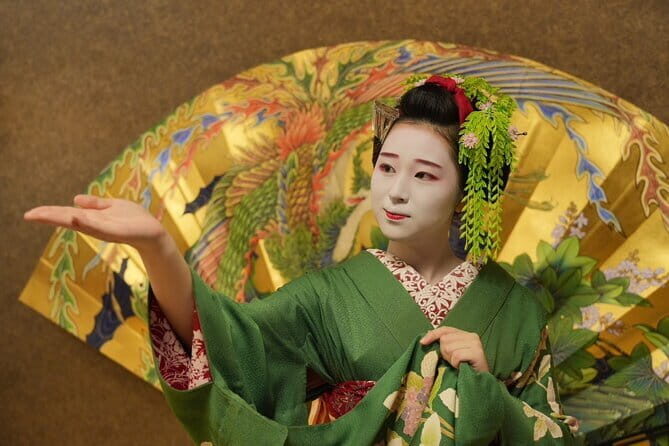
- The maiko performance: what you’re really paying for
- Tea and snacks: a small add-on with big impact
- Q&A with the apprentice: the chance to ask the questions you came with
- The traditional game with the maiko: playful, not gimmicky
- Price and value: what $124.21 buys you in Kyoto
- Group size: why max six changes everything
- Who should book this, and who might skip it
- Practical tips to make the most of it
- Should you book The Art of Geisha: Exclusive Show & Gion Walking Tour?
- FAQ
- FAQ
- How long is the tour?
- Where is the meeting point?
- What time does the tour start?
- How many people are in the group?
- What is included in the price?
- Is there an admission ticket you need to pay separately?
- What should I expect to do during the tour?
- What is not included?
- Are kids allowed?
- Can I cancel for a refund?
Key highlights worth planning for
- Maximum six people keeps the maiko interaction feeling personal
- Tea and snacks turn the show into a hosted break, not just a performance
- Q&A time with the apprentice lets you ask real questions about training and the craft
- A traditional game adds a playful, hands-on moment after the dancing
- Gion walking focus gives you local context while you’re still nearby
Why this Kyoto Gion geisha experience feels different
Kyoto’s geisha districts can be a little mystery-shaped when you’re just wandering. Signs, darkened doorways, and the occasional glimpse are not the same as understanding what you’re looking at. This tour is built for clarity: you start with the neighborhood context in Gion and then shift into the arts right away.
The biggest difference is the format. You’re not parked in a big theater with a wall between you and the performer. The group size stays small, and that matters for two reasons: you can hear the guide and you can actually participate when it’s time to ask questions.
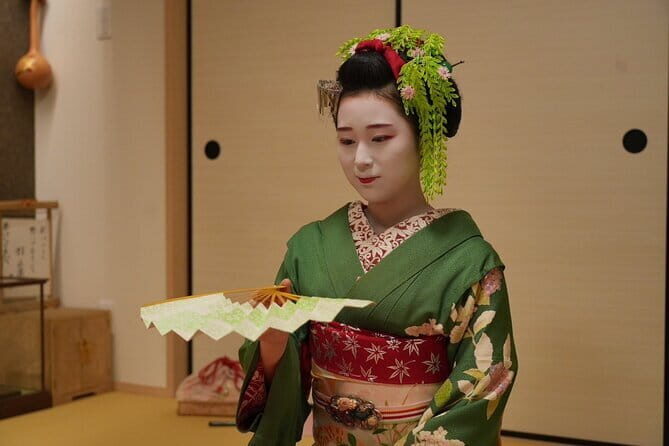
Also, the tour doesn’t just say geisha culture— it gives you time with a maiko (a geisha apprentice). Seeing the discipline and performance skills up close is the headline, but the real value is the human connection you get during Q&A and the playful game that follows.
A few more Kyoto tours and experiences worth a look



The timing and meeting point that make or break the tour
This tour starts at 3:00 pm in Kyoto, and you’ll meet at the Statue of Izumo-no-Okuni on Kawabatacho in Higashiyama Ward. That matters because Gion can feel very different depending on the hour, and an afternoon start gives you a comfortable window to get oriented before the performance.
You end at Hangesho535 Morishitachō, Higashiyama Ward. In practice, that means you’re not just doing a loop and going back exactly the same way. The route is short, but you should expect a little walking in the Gion area as part of the experience.
You’ll also use a mobile ticket, which is convenient as long as you have your phone charged and ready. The tour is described as near public transportation, so you shouldn’t feel stuck if you’re using buses or trains for the rest of your day.
Stop 1 in Gion: where the cultural context actually happens
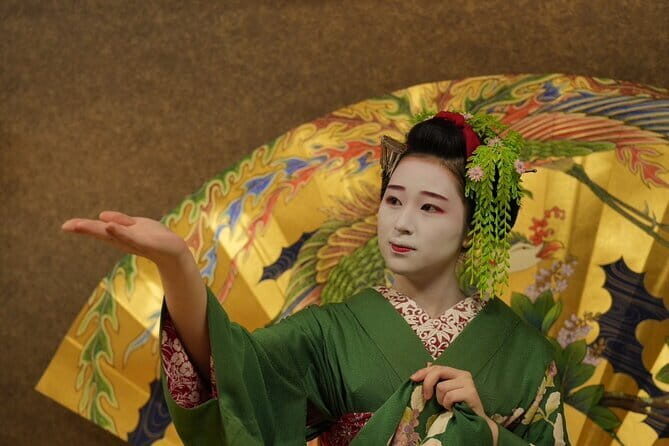
The main stop is in Gion, where you join the guide to learn about the district and see a performance by a geisha apprentice. The tour information frames this as an hour-long experience, though the overall duration is listed as about 1 to 2 hours. In other words, plan for a short, focused block rather than a long afternoon.
What you gain here is context. Instead of treating geisha culture as something you hunt for with binoculars, you get a guided explanation while you’re still in the neighborhood. That sets you up to watch the performance with more than just appreciation—you’ll have a mental framework for what you’re seeing and why it’s meaningful.
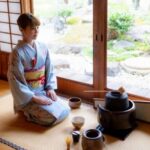
The performance itself is the core event. You watch a maiko perform while you enjoy tea and snacks, then you shift into conversation. Even if you’re not sure what questions to ask, the guide helps keep the experience moving so you don’t feel like you’re sitting in awkward silence.
The maiko performance: what you’re really paying for
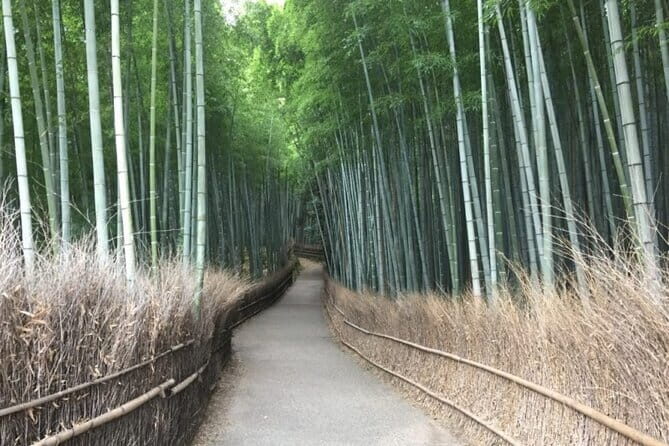
Let’s talk about the heart of the tour: the maiko show. The key promise is access. You’re being shown an art form that’s often hidden from casual passersby, and you’re doing it through a small-group setup that keeps things intimate.
From the strong review pattern, the performance is memorable because it’s not passive. There’s a sense of closeness that you don’t get from far-away viewing, and you also get time with the performer to ask about the craft. Some people highlight getting very close seating during the show, which helps you notice details you’d miss from the back.
The other thing you’re really buying is training insight. You’ll hear about the years of dedication involved in becoming a maiko and the commitment behind the arts. The exact training timeline isn’t listed in the tour details you provided, but the message in the experience is consistent: this takes years, and you’ll see the result in how the performance is presented.
Tea and snacks: a small add-on with big impact
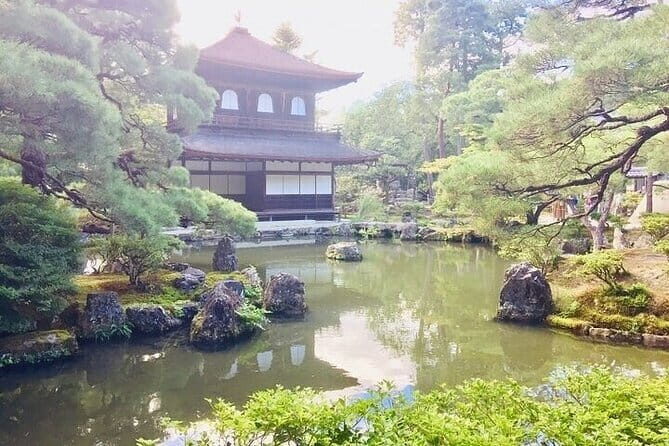
Tea and snacks sound like a soft, extra touch. On this tour, they actually change the pacing. When a show is paired with a break, you’re less likely to feel like you’re being pushed from one moment to the next.
It also makes the Q&A feel more natural. You’re not just asking questions in a formal theater setting—you’re in a calmer space where conversation fits. That’s a big part of why people rate this tour so highly. It’s easier to relax and engage when the experience has that host-like rhythm.
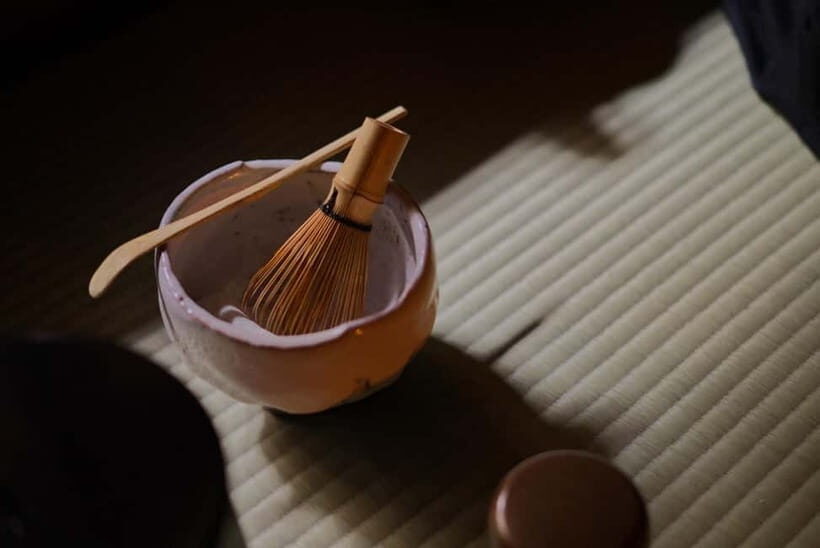
Think of it as a practical cultural courtesy too. In Japan, sharing tea is part of how hospitality shows up. Even if you’re only there for an hour, the tea-and-snacks component helps the whole thing feel respectful rather than transactional.
Other walking tours we've reviewed in Kyoto






Q&A with the apprentice: the chance to ask the questions you came with
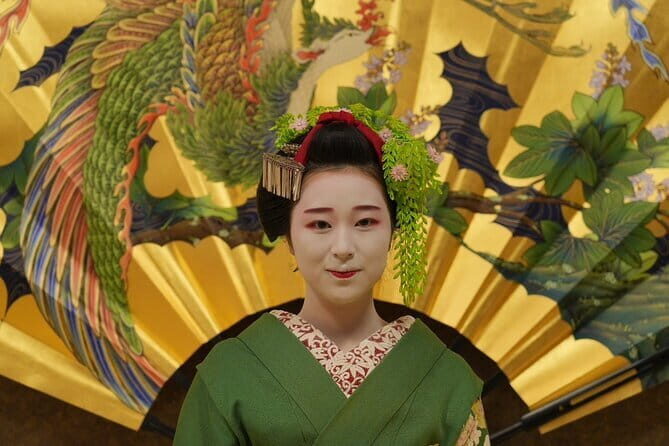
This tour doesn’t just promise interaction—it builds in time for it. You’ll have a chance to chat with the maiko and ask questions. That’s a rare setup in Gion, because most people experience the district as something to look at rather than something to speak with.
The best practical benefit: you’ll leave with clearer answers. Instead of leaving Kyoto with guesses about geisha culture, you can ask direct questions during the hosted moment. If you’ve been curious about training, etiquette, or what it takes to perform, this is the moment to ask.
The guides help steer the conversation. The tour info lists an English-speaking guide, and the review snippets you provided mention guides such as Ai and Yoshino leading the experience. People specifically mention that the guide was friendly and helped connect the dots between Gion as a district and the arts you were seeing.
The traditional game with the maiko: playful, not gimmicky
After the show and Q&A, you play a traditional Japanese game with the maiko. This is one of those “sounds simple” parts that actually has outsized impact on your memory.
Why? Because it turns the experience from spectator mode into participant mode. Instead of just watching skill, you get to interact in a fun, structured way that feels culturally grounded.
From the review details you shared, the game can be a genuine highlight. Some people mention getting to participate right along with the maiko and even winning the challenge. Even if you don’t win, the point is that the maiko interaction continues after the performance, which helps the whole tour feel complete rather than stop-and-go.
Price and value: what $124.21 buys you in Kyoto

At $124.21 per person, this isn’t the cheapest thing you can do in Kyoto. But when you look at what’s included, the value starts to make more sense.
You get:
- the geisha show with a maiko performance
- Japanese tea and snacks
- an English-speaking tour guide
- small-group access (maximum six)
Most budget-friendly Kyoto activities are group tours where the main value is the guide’s commentary. This tour’s value is access. Small-group format and direct interaction cost money, and here you’re paying for proximity, conversation time, and the game.
Duration also supports the price. You’re not paying for a half-day bus tour. The experience is short and focused, built around the show and Q&A. If you’re chasing a bucket list moment, short-and-special often ends up feeling like good value.
Group size: why max six changes everything
A maximum group of six is a big deal in a culturally sensitive experience like this. It affects:
- how easily the guide can manage questions
- how much attention you get during the show
- how comfortable the interaction feels when you’re chatting with the maiko
Smaller groups also help you feel less like a bystander. You’re more likely to ask questions, and you’ll get answers that feel tailored rather than generic. In the review notes you provided, people mention scenarios where only a few guests interacted closely with the maiko, which suggests the format can get even more intimate when the group isn’t full.
Who should book this, and who might skip it
This is ideal for you if:
- you want a maiko performance you can’t reliably find through wandering alone
- you like small group experiences where you can ask questions
- you’re interested in cultural context, not just photos
- you want a hosted experience with tea and snacks rather than a quick viewing
You might consider skipping if:
- you’re only interested in big-picture Kyoto sightseeing and want lots of time outdoors
- you dislike any structured interaction (even playful games)
- you’re traveling with kids under 6, since they can’t join
Also, if you’re the type who gets restless with short programs, remember this is built to be compact. It’s about quality and access, not an all-day tour of every Gion lane.
Practical tips to make the most of it
- Arrive a few minutes early at the Statue of Izumo-no-Okuni. Being on time helps you relax before the show.
- Have your phone ready for the mobile ticket. Don’t wait until the last second with low battery.
- Come with at least one question in mind. Even a simple curiosity helps you get more out of the Q&A.
- Wear comfortable shoes. You’ll be in Gion and doing some walking as part of the experience.
One more small mindset tip: treat it like hospitality. The experience works best when you pay attention and keep your questions respectful and focused.
Should you book The Art of Geisha: Exclusive Show & Gion Walking Tour?
If your goal is to see a maiko perform while you’re still in the Gion district, and you want time to ask questions and play a game, then yes—this tour is a strong fit. The standout value is the small-group setup, the tea-and-snacks pacing, and the structured interaction that keeps you from feeling like you’re simply watching from a distance.
If you’re shopping purely on price or you’re looking for a long sightseeing day, you may feel the experience is too short for the cost. But if you’re placing a premium on access and cultural clarity, the format holds up.
If you’re in Kyoto and Gion is on your list, I’d book this when you want a one-hour cultural anchor that feels personal rather than crowded.
FAQ
FAQ
How long is the tour?
The experience is listed as about 1 to 2 hours, with the main Gion stop described as about 1 hour.
Where is the meeting point?
You meet at the Statue of Izumo-no-Okuni on Kawabatacho, Higashiyama Ward, Kyoto.
What time does the tour start?
The start time is 3:00 pm.
How many people are in the group?
This experience has a maximum group size of 6 travelers.
What is included in the price?
Included items are the geisha show, Japanese tea and snacks, and an English-speaking tour guide.
Is there an admission ticket you need to pay separately?
The Gion stop is shown as admission ticket free, and the show is listed as included.
What should I expect to do during the tour?
You’ll learn about Gion, watch a maiko perform, enjoy tea and snacks, chat with the apprentice, and participate in a traditional Japanese game.
What is not included?
Additional fees are listed as not included, but no specific add-on charges are detailed in the information provided.
Are kids allowed?
Children under age 6 and below cannot join.
Can I cancel for a refund?
Yes. Free cancellation is available up to 24 hours in advance for a full refund. If you cancel less than 24 hours before the start time, the amount paid is not refunded.