Kyoto at night feels like a secret. This Gion & Fushimi Inari tour strings together Kyoto’s biggest symbols with just enough time to feel the mood, not just snap pictures. I love how the route starts at Fushimi Inari’s torii gates after dark and then shifts into Gion’s quieter evening lanes. I also like that you get professional photos during the walk, so you’re not stuck juggling directions and your camera.
You’ll finish at Yasaka Shrine and pick up practical context along the way, including the difference in how shrines and temples work in Japan. One thing to consider: this is a walking-heavy evening plan. You’ll want good shoes and a calm pace mindset, because the stops add up fast.
In This Review
- Key Highlights: What Makes This Kyoto Night Walk Worth It
- Why a Night Walk Changes Fushimi Inari and Gion
- Price and Logistics: What You Pay (and What You Don’t)
- Stop 1: Fushimi Inari-taisha and the Torii Gates at Night
- Stop 2 to 3: Hanamikoji Street and Gion’s Evening Streets
- Stop 4: Yasui-Konpiragu and the Idea of Severing Bad Ties
- Stop 5: Yasaka Pagoda (Hokanji Temple) and Wooden Architecture Without Nails
- Stop 6 to 7: Sannenzaka, Ninenzaka, and Nene-no-Michi
- Stop 8: Yasaka Shrine Finale and a Strong Sense of Meaning
- What the Guide Adds (Beyond the Sights)
- Walking, Timing, and Comfort Tips That Actually Help
- Who This Tour Fits Best
- Should You Book This Kyoto Magical Night Tour?
- FAQ
- What is the duration of the Kyoto Magical Night English Tour?
- Where does the tour start and where does it end?
- What does the tour cost, and what is included?
- What is not included in the tour price?
- Are the temple and shrine admission fees covered?
- Is the tour mostly walking?
- Is it a private tour?
- Can I cancel for a refund?
Key Highlights: What Makes This Kyoto Night Walk Worth It
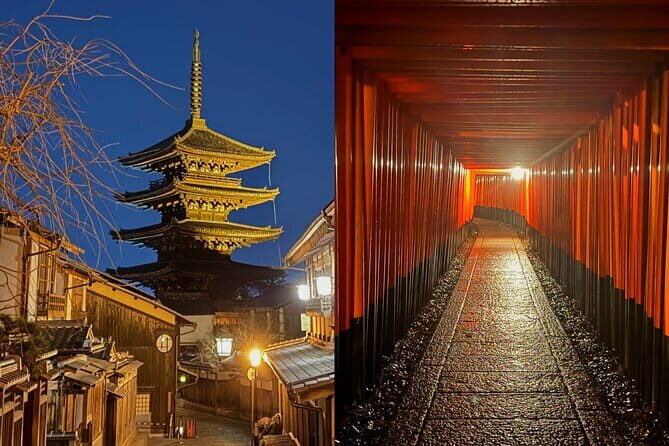
- Fushimi Inari at night: thousands of torii gates turned orange and ghostly under evening light
- Gion orientation: Hanamikoji and the main Gion area in a short, focused visit
- Culture coaching: your guide explains what you’re seeing and how to show respect at shrines
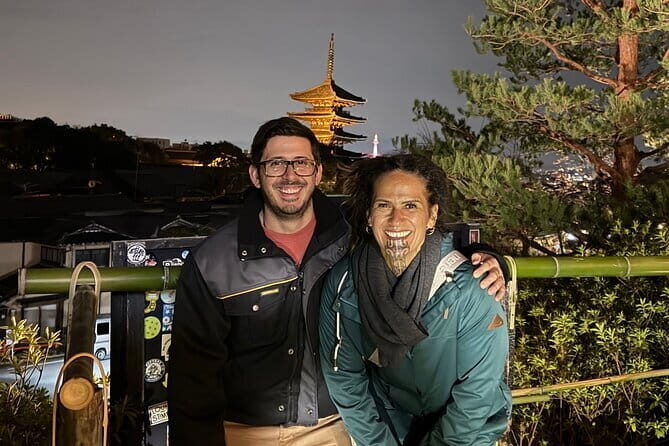
- Photo support built in: you get professional pictures, not just tips
- Shrines to temples to streets: Shinto spots plus famous wooden architecture and historic lanes
Why a Night Walk Changes Fushimi Inari and Gion
Fushimi Inari is impressive in daylight. At night, it feels different. The red gates glow, shadows stretch between pillars, and the whole place has a slower rhythm. You’re walking through a famous forested approach, but the mood turns it into something more personal than a standard checklist stop.
Gion at night has its own effect. The wooden machiya houses and old-street atmosphere look more delicate under soft lighting. And because the evening crowd shifts compared with daytime, it’s easier to actually see details: stone steps, lanterns, and the texture of the streets.
The best part is how the tour doesn’t treat these sights as separate postcards. You get a sequence that makes sense: iconic landmark first, then a cultural neighborhood, then more shrine and temple stops, and finally a strong finish at Yasaka Shrine.
A few more Kyoto tours and experiences worth a look


Price and Logistics: What You Pay (and What You Don’t)
The price is $26.43 per person for a 2.5-hour walking experience in Kyoto, and that’s where the value gets interesting. Your ticket includes a local English-speaking guide, admission fees for the temples and shrines, and professional photos taken during the tour.
You’ll still need to budget for the public transportation portion: ¥480 per person is not included. Food and drinks are also not included, so plan on either grabbing something before you start or after you finish.
A small but important detail: the tour meets at the Statue of Izumo-no-Okuni (Kawabatacho), Higashiyama Ward, Kyoto. You’re walking between stops using public transport and your own feet, so show up a bit early. If you’re late, you won’t be able to join.
Stop 1: Fushimi Inari-taisha and the Torii Gates at Night
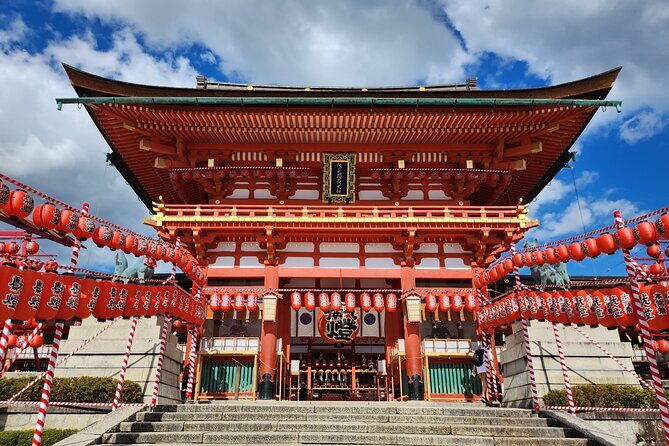
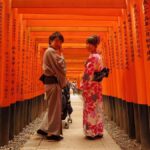
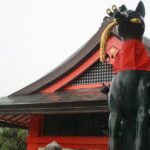
This is the big opening act. Fushimi Inari-taisha is dedicated to Inari, the god of rice and prosperity. You’ll recognize it instantly from the thousands of red torii gates that form pathways up Mount Inari.
At night, the torii tunnel effect hits harder. The gates feel like they’re leading you somewhere, not just lining a walkway. And since you’re with a guide, you’re not guessing what you’re looking at. You get the meaning behind what’s in front of you, including how people treat these spaces and why the shrine is so important.
One timing point to know: you’ll spend about an hour here. That’s enough to enjoy the atmosphere and see the gate rhythm without feeling rushed. If you’re expecting a long hike all the way up, adjust your expectations. This tour is built for walking and orientation, not for a full mountain climb.
Stop 2 to 3: Hanamikoji Street and Gion’s Evening Streets
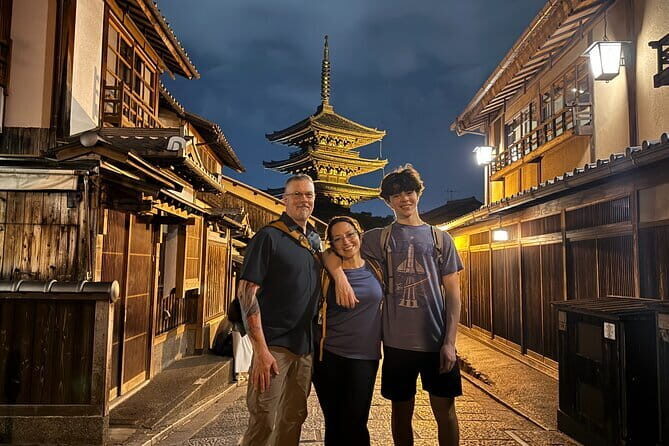
After Fushimi Inari, you shift into Kyoto’s best-known old-town scene: Gion. The tour makes a stop on Hanamikoji Street, the classic lane where you might catch glimpses of geisha or maiko, plus traditional teahouses and historic machiya houses.
This part is shorter (about 10 minutes each for Hanamikoji and the Gion area), but it still works. You’re not trying to recreate a full afternoon in Gion. Instead, you’re getting the lay of the land: where the old streets feel most photogenic, what buildings and storefront styles define the district, and how the neighborhood’s famous identity actually shows up in street-level details.
I like this approach because it keeps the night from dragging. You see the highlights, then move on before the “walk in circles” problem sets in.
Stop 4: Yasui-Konpiragu and the Idea of Severing Bad Ties
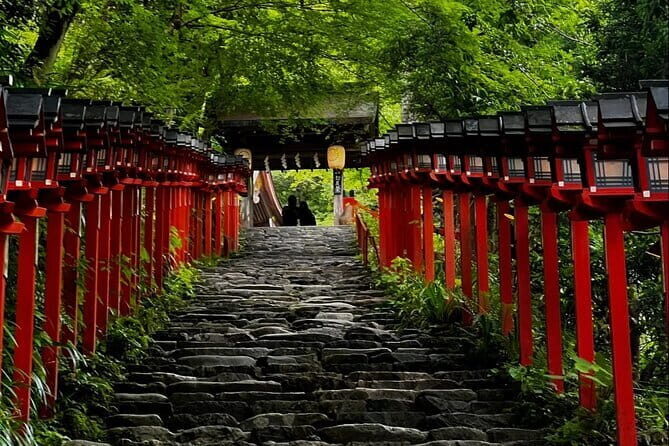
Next up is Yasui-Konpiragu, known for prayers tied to severing bad relationships. The theme here is straightforward: people come to ask for an end to negative ties and to make room for new, positive connections.
This stop adds emotional meaning to the tour. Fushimi Inari is prosperity and rice. Yasui-Konpiragu is personal. You don’t have to be deeply religious to appreciate why this shrine has a reputation for healing through prayer.
You’ll be there for about 10 minutes, which is enough for respectful viewing and understanding the purpose behind what people are doing. It’s also a nice breather between the busier street scenes.
A few more Kyoto tours and experiences worth a look



Stop 5: Yasaka Pagoda (Hokanji Temple) and Wooden Architecture Without Nails
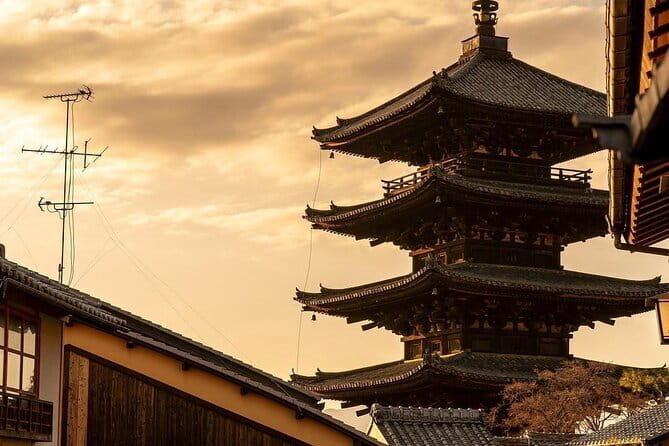
Kyoto has tons of temples and dramatic structures, but Yasaka Pagoda (Hokanji Temple) is special for a specific reason: it’s known as one of Japan’s oldest wooden structures, and it was built without using nails. That fact alone gives you something to look for while you’re standing there.
You’ll spend about 15 minutes at this stop. That’s helpful because the pagoda isn’t just a quick photo object. The scale is the point. Even in a short visit, you can appreciate why it’s considered one of Kyoto’s symbols.
This is also where the guide’s explanations matter. When someone tells you what makes the structure famous, it changes your scan from a general “pretty building” to a more focused “I see what they mean.”
Stop 6 to 7: Sannenzaka, Ninenzaka, and Nene-no-Michi
From there, the tour moves into old-street Kyoto. First is Sannenzaka and Ninenzaka, the traditional stone-paved lanes lined with souvenir shops and restaurants in historic wooden buildings. Walking here feels like stepping into a preserved time capsule, especially at night when storefront lights soften the edges.
You’ll have about 15 minutes here. That’s long enough to notice the slope, the stone texture, and the rhythm of the lanes without turning it into a shopping marathon.
Then you continue to Nene-no-Michi, a quieter path named after Nene, wife of a powerful Japanese shogun. The route is described as serene, taking you past historic temples and offering a more peaceful walk through Kyoto’s cultural spaces.
That contrast is a strong part of the experience. You get the lively historic streets and then the more calm, in-between feeling. It’s a good mental reset before you end at Yasaka Shrine.
Stop 8: Yasaka Shrine Finale and a Strong Sense of Meaning

The final stop is Yasaka Shrine. It’s the headquarters of 2,300 related shrines throughout Japan, dedicated to gods of prosperity and protection. It’s also a major reason this tour feels complete: you end at a place that ties together community, tradition, and everyday hopes.
The visit is about 15 minutes, which works well as a finale. You can slow down, reflect, and absorb what you’ve already learned without needing to drag the evening longer than planned.
This also pairs nicely with what many guides emphasize during the walk: how shrines function in daily life and what it means to show respect as you pass through. In the reviews, guides like Ikki, Yui, Yuki, Yuri, Joi, and Mariko are praised for making these points clear and easy to follow, even if you’re just starting to learn the basics of shrine culture.
What the Guide Adds (Beyond the Sights)
This kind of tour can be either a simple walk-with-stops or a real learning experience. The difference is the guide. The strongest reviews highlight guides who communicate clearly, answer questions, and help you understand the significance of temples and shrines without turning it into a lecture.
Several guides are praised for being easy to talk to and for giving extra context on what you’re seeing. One standout theme: the guide helps you understand the difference between shrines and temples and how that affects what you notice on the ground.
You’ll also likely get practical photo guidance. Multiple comments mention guides taking photos at each stop, with many guests receiving pictures quickly after the tour. That matters because night photography is hard. Low light, busy lanes, and moving groups make phone selfies unreliable. Let the guide handle the technical part while you enjoy the moment.
Walking, Timing, and Comfort Tips That Actually Help
This tour is designed as a walking experience with public transportation between stops, and the physical level is described as moderate. So plan for steady movement for about 2.5 hours, plus transition time.
Here’s what you should do to make the night smooth:
- Wear shoes with grip. Reviews strongly emphasize this, and you’ll be on stone paths and uneven sidewalks.
- Bring a small rain layer if you have it. One review notes the tour still felt magical even with drizzle.
- Keep your pace flexible. Some groups include kids or older travelers, and guides are described as patient and accommodating.
Also, this tour is a private tour/activity, meaning only your group participates. That usually makes it easier to keep your schedule on track and ask questions without waiting.
Who This Tour Fits Best
If you’re in Kyoto for a short time, this is a strong first-evening option. You hit Fushimi Inari, Gion’s historic streets, major shrine and temple landmarks, and traditional lanes all in one guided loop. It’s also a good choice if you want to understand shrine culture in plain language rather than reading signs for half the night.
It works well for couples and solo travelers who want a plan. It also sounds family-friendly in practice: guides are described as engaging with kids and patient with break requests.
If you’re the type who wants to linger for an hour at one place, this might feel fast. The tour is built to cover key sights and meaning, not to maximize time at each single stop.
Should You Book This Kyoto Magical Night Tour?
Book it if you want your evening to feel meaningful, not random. The combination of night atmosphere, a focused route through Fushimi Inari and Gion, shrine-and-temple context from a local English guide, and professional photos makes it good value for the price.
Don’t book it if you dislike walking or you need lots of free time at each location. Also be ready for a schedule that stays tight. This is a “see Kyoto after dark in one guided sweep” tour, not a slow wander.
If you’re deciding between DIY night walking and a guided plan, this is the better bet for most people. You’ll get better context, better photo results, and a smoother route through Kyoto’s most famous evening scenes.
FAQ
What is the duration of the Kyoto Magical Night English Tour?
The tour lasts about 2 hours 30 minutes.
Where does the tour start and where does it end?
It starts at the Statue of Izumo-no-Okuni (Kawabatacho), Higashiyama Ward, Kyoto, and it ends back at the meeting point.
What does the tour cost, and what is included?
The price is $26.43 per person. Included are a local English-speaking guide, admission fees for the temples and shrines, and professional photos taken during the tour.
What is not included in the tour price?
Public transportation fare is not included (¥480 per person), and food and drinks are not included.
Are the temple and shrine admission fees covered?
Yes. Admission fees for the temples and shrines are included.
Is the tour mostly walking?
Yes. It is designed as a walking experience with public transportation and plenty of time on foot. It’s listed as a moderate physical fitness level.
Is it a private tour?
Yes. Only your group will participate.
Can I cancel for a refund?
Yes, you can cancel for a full refund up to 24 hours in advance of the experience start time. Canceling less than 24 hours before the start time is not refundable.