Kyoto hands you a brush, then slows everything down. This private Japanese calligraphy class in the center of Kyoto is one-on-one (just your group) in a real home studio near Nijo Castle. I love that you learn the basic mechanics of shodō—how the brush moves, how pressure changes the character—without needing any prior experience.
My other big plus: you finish with a framed piece you made yourself, usually with more than one example to keep. The only real caution is practical: the tatami room requires clean socks, and the session starts on time—if you’re late by more than 15 minutes, the class can’t run and refunds aren’t offered.
In This Review
- Quick reasons to book
- Entering shodō: what you’re really learning in Kyoto
- Aya’s private approach: why the class feels personal
- Where the lesson happens: near Nijo Castle, inside a Kyoto home
- Socks, tatami, and simple etiquette that matters
- The one-hour flow: from brush basics to your chosen kanji
- Learning in the calm of a Kyoto home studio
- The keepsake: what you’ll take home and how to use it
- Price and value: is $77.51 worth it?
- Who this Kyoto calligraphy class is best for
- Planning tips to make your lesson smoother
- Should you book this Kyoto calligraphy class?
- FAQ
- How long is the Japanese calligraphy class?
- Is this class private or shared?
- Do I need to know calligraphy before I go?
- What languages are offered?
- What should I bring for the tatami room?
- Are children allowed?
- Is transportation included?
- What do I take home after the lesson?
Quick reasons to book
- A private lesson with Aya in a home setting so you’re not competing for attention
- 55+ years of practice guiding your strokes, from posture to brush pressure
- Kanji practice plus your Japanese name as a keepsake
- All tools and paper included, so you only show up and write
- One-hour timing that’s tight enough to feel focused, but you still leave with finished work
- Near Nijo Castle (easy to pair with other Kyoto sights if you plan your day)
Entering shodō: what you’re really learning in Kyoto
Japanese calligraphy (shodō) looks simple until you try it. Then you realize it’s not about “making letters.” It’s about controlling movement—how you start a stroke, how you stop, and how your hand transitions through the character. In this Kyoto class, that’s the point. You’re taught brush movements that match the character you choose, not just copied shapes.
What makes it work for beginners is the pacing. Aya guides you in small steps: you watch, you try, and you adjust. The class is set in a calm Kyoto home studio, so the focus stays on your work rather than a loud classroom vibe. And because it’s private, the teacher can correct what your hand is actually doing, which is where most learning happens.
Other private tours in Kyoto


Aya’s private approach: why the class feels personal
This is a private calligraphy lesson, meaning only your group participates. That matters more than you’d think, especially when you’re learning something that depends on muscle memory. Aya can slow down for you, speed up if you’re grasping it, and spend time on the exact strokes that trip you up.
In the reviews, Aya comes up again and again as patient and encouraging—she doesn’t treat beginners like a “problem to fix.” She helps you build confidence. You also get a history explanation during the session, but it’s not the kind where you sit and listen the whole time. It supports what you’re doing with the brush.
One more practical detail I like: the teacher and her husband are described as making visitors feel welcome at home. That’s a real difference from “tourist craft” classes where everyone makes the same souvenir and you’re left to figure out what you just did.
Where the lesson happens: near Nijo Castle, inside a Kyoto home
The meeting point is SAKURA Experience Japanese Culture Nijo Home, at 660 Izumichō, Nakagyo Ward. It’s near public transportation, and it’s also conveniently close to Nijo Castle—about 200 meters west from the front, based on how the hosts describe it.
This kind of location is part of the charm: you’re stepping into a tatami room, not a storefront. But it also means you should plan for one annoyance. A couple of visitors noted that Google Maps can be slightly confusing because Kyoto streets can look similar, and street-view pins sometimes don’t match what you see on foot. The hosts generally help with finding the right entrance—if you’re booking, I’d treat finding the place like part of the “adventure,” and leave extra time.
If you’re pairing this with other Kyoto stops, Nijo Castle is a good anchor. Do calligraphy either before or after you tour the castle, depending on your energy level. The class is calm, so it can work well right in the middle of a sightseeing day.
Socks, tatami, and simple etiquette that matters
Here’s the rule that can catch people off guard: wear or bring clean socks. Entering the tatami room barefoot is not permitted, and the hosts also note it’s considered impolite to walk in without clean socks.
This is one of those “small” logistics that affects the whole vibe. If you come prepared, you’ll be relaxed from the start. If you don’t, you’ll spend your first minutes worrying about what to do—bad energy right when you’re about to learn controlled brushwork.
It also tells you something about the class culture. This isn’t a grab-and-go activity. It’s a quiet learning space with real etiquette, even though the lesson is friendly and beginner-friendly.
The one-hour flow: from brush basics to your chosen kanji
The lesson runs about one hour. In that time, you’ll do a full mini-course: learning strokes, practicing the character, and producing something you can take home.
Here’s the realistic rhythm of what you’ll likely experience:
1) Get set up with tools and paper
All calligraphy tools rental and paper are included, so you won’t be scrambling for equipment. That’s huge value in Kyoto, where craft supplies can look simple but add up quickly once you start buying.
2) Learn correct brush movements
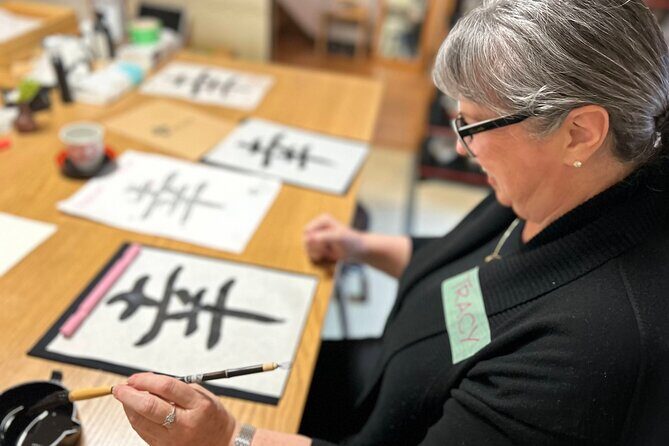
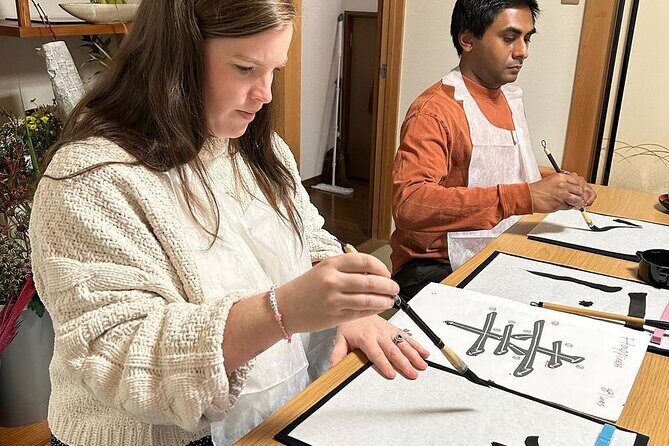
Aya focuses on how to move the brush correctly. It’s less about “draw better lines” and more about controlling direction changes, timing, and the look of thick vs. thin parts of the stroke. The goal is to make the character feel balanced, not just recognizable.
3) Choose a kanji character and write it
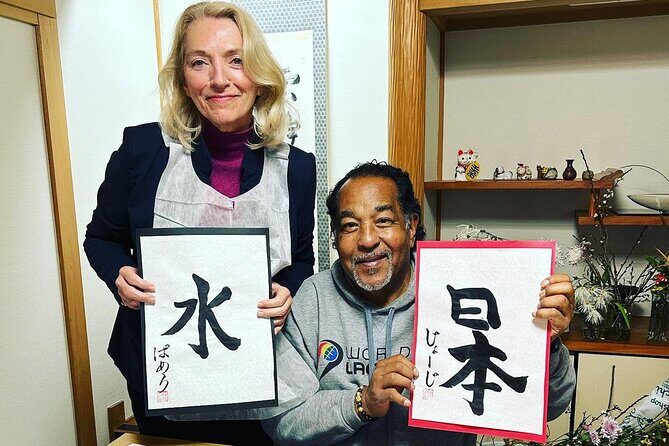
You pick a favorite kanji to work on. Then you practice it using the techniques you’re shown. This part is satisfying because you’re making something personal, not a random template.
4) Add your name in Japanese
Finally, you’ll write your name in Japanese. For many people, this is the emotional peak of the class—because it turns a learning exercise into something meaningful. One review specifically mentions seeing the process of writing the name, and that’s the kind of keepsake detail that makes calligraphy worth the effort.
Time is tight, so you should come in with the mindset that you’re making a first polished version, not “becoming a master by hour’s end.” The class does a good job of setting expectations: it teaches you how to start, then gets you to a finished result you can frame.



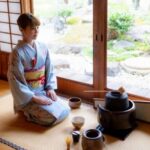

Learning in the calm of a Kyoto home studio
The setting is part of the experience. You’re in a welcoming Kyoto home with a studio room for instruction. The atmosphere helps you slow down and pay attention to what the brush is doing.
In the reviews, people appreciated that Aya creates a no-pressure environment. That’s not just a nice-sounding phrase—it directly affects how you practice. When you feel rushed or watched, you tighten your grip and strokes get stiff. When the mood is calm, you can let your hand flow, which is exactly what shodō asks for.
Some visitors also mention being offered tea and traditional Japanese sweets. Those touches matter because they signal hospitality, not sales. Even if you don’t finish the sweet, it helps you understand you’re being hosted, not processed.
The keepsake: what you’ll take home and how to use it
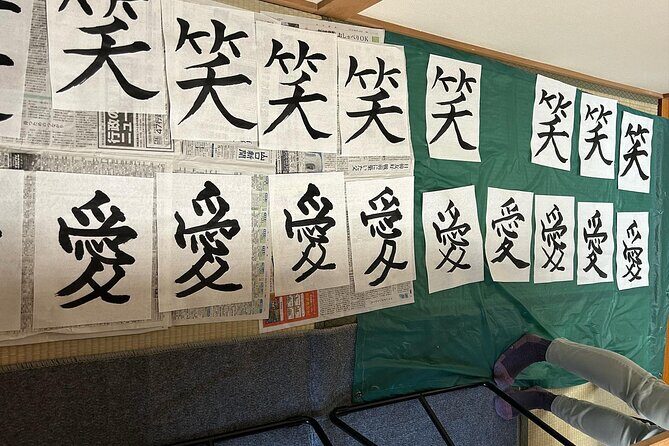
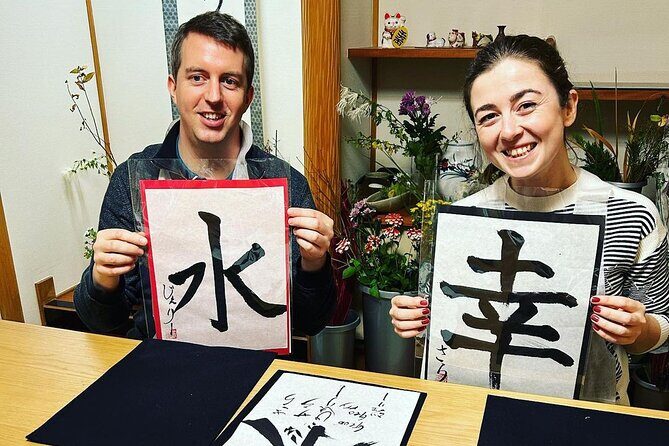
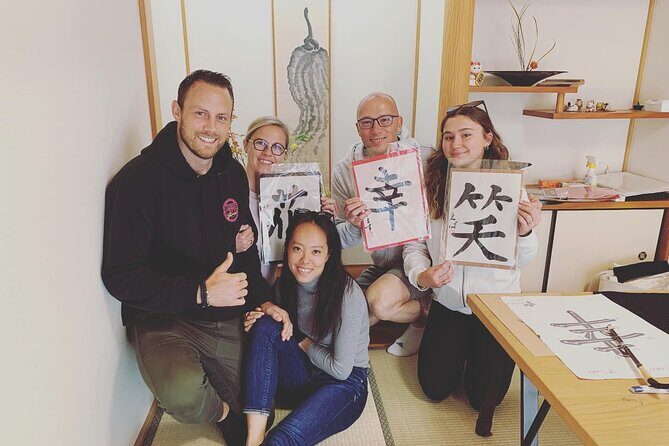
Your finished artwork is included, so you don’t have to negotiate what counts as a “finished product.” You’ll leave with your calligraphy piece as a souvenir to take home.
A few practical notes for what to expect:
- It’s your work, not a teacher’s finished version with your name stamped on it.
- You’ll likely have multiple examples, based on multiple comments about taking home several pieces.
- You can plan to frame it. Several visitors explicitly said they intended to display it at home.
This is one of the best parts of calligraphy tourism: unlike many “make a thing in 60 minutes” activities, shodō results are display-worthy. When your character looks good—even as a beginner—it changes how you see your own handwriting forever.
If you’re hoping to write a very specific style or concept, keep the one-hour limit in mind. The class is designed to get you to a strong finished result, not to let every idea run long.
Price and value: is $77.51 worth it?
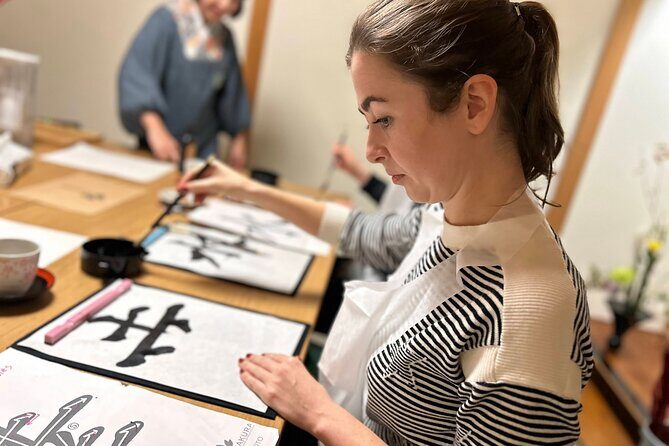
At $77.51 per person, you’re paying for a private lesson, a master teacher, and included materials. For group craft classes, that price can sound high. For a private one-hour lesson that produces framed-worthy artwork, it usually lands as good value.
Here’s why it feels worth it:
- Private attention: one instructor, your group, corrections in real time.
- Tools and paper are included, so your “real cost” is basically just this lesson.
- You get a finished souvenir you didn’t buy pre-made.
- The location near Nijo Castle can make it easy to fit into a Kyoto day without extra logistics.
The main “value risk” is time. If you’re the type who wants a long lecture or lots of free practice time, one hour can feel short. But if you want a focused experience that teaches you the basics and ends with something beautiful, this class hits the target.
Who this Kyoto calligraphy class is best for
This is a strong choice if you:
- want a private cultural activity in Kyoto instead of a crowded group tour
- have no experience and want beginner-friendly coaching
- love crafts that end with a real keepsake you can display
- want a calmer “Kyoto home moment,” close to major sights
It’s also a good “rain backup.” Several visitors described booking it when they needed an indoor option. The session still feels special even when the weather doesn’t cooperate.
The big mismatch is kids. The class rules state that children under 12 cannot be accommodated to maintain a quiet learning environment. One review noted that age clarity wasn’t obvious in the description, and the family had to work it out. If you’re traveling with younger kids, double-check eligibility before you book.
Planning tips to make your lesson smoother
A few practical pointers will make your calligraphy session feel effortless:
- Arrive on time. The class can’t start if you’re more than 15 minutes late.
- Bring clean socks (or plan to buy/bring them). Tatami etiquette matters here.
- Find the entrance carefully. Kyoto addresses can be tricky on foot, and maps can be slightly off. If the host sends a clear Google Maps link and entrance photo, use them.
- Pick a kanji you genuinely like. This is your souvenir, so choose something that feels personal.
- Go in with one goal: learn how to start the character correctly. Then enjoy the result.
If it rains, don’t panic. People in the past noted the hosts helped with things like getting back out safely. Still, you should plan your day so you’re not sprinting across Kyoto right before class time.
Should you book this Kyoto calligraphy class?
If you want a memorable Kyoto activity that feels authentic, not performative, I’d book it. The private format with Aya, the included tools and paper, and the fact that you take home your own shodō piece make it a practical choice for your time and money.
Skip it if you need a classroom-style experience, want long practice sessions, or are bringing children under 12 (the class environment is specifically kept quiet). Also, be ready for the one-hour structure: it’s focused coaching, not a drawn-out art retreat.
If you fit the right vibe—curious, patient, and excited to leave with ink on your own page—this is one of those Kyoto experiences you’ll actually keep.
FAQ
How long is the Japanese calligraphy class?
The private lesson is about 1 hour.
Is this class private or shared?
It’s a private activity. Only your group participates.
Do I need to know calligraphy before I go?
No. The class is designed for beginners, and you’ll learn how to use correct brush movements as you practice.
What languages are offered?
The lesson is offered in English and Japanese.
What should I bring for the tatami room?
You should wear or bring clean socks. Barefoot entry to the tatami room is not permitted.
Are children allowed?
Children under 12 cannot be accommodated to maintain a quiet learning environment.
Is transportation included?
No. Private transportation is not included, though the meeting point is near public transportation.
What do I take home after the lesson?
You take home your finished artwork (and the class includes the tools and paper you use).