Stop for tea, wear silk. This Kyoto experience pairs a traditional kimono moment with a proper tea ceremony explanation in English, then adds a matcha-making hands-on step and a polished photoshoot in the middle of Gion or near Nishiki Market. You also get to walk around afterward in your kimono and soak up the city’s atmosphere between photo spots.
I love that it is not just a dress-up exercise. You learn what is happening and why, you make matcha yourself, and you leave with 3 professional photos that look like you planned the whole thing. I also like the small-group setup, limited to 10 participants, which keeps the pace calm and the questions easy to ask—especially with English-speaking tea masters such as Mami, who is repeatedly described as kind and clear.
One catch: timing is strict. If you arrive more than 10 minutes late, you cannot join, and you must return the kimono by a set time (5:00 PM for Gion, 6:00 PM for Nishiki Market).
In This Review
- Quick hits before you go
- Kyoto kimono tea ceremony: what the 90 minutes feel like
- Picking Nishiki Market or Gion: choose based on your day
- Kimono dressing: choose your look and plan for details
- Inside the tea room: the English demo that makes it click
- Making your own matcha: hands-on, not a spectator show
- The professional photoshoot: 3 images you can actually use
- Timing and rules: small things that can derail your session
- Price and value: $127 for more than a photo op
- Who this fits best in Kyoto (and who should skip it)
- My decision guide: should you book this Kyoto tea ceremony?
- FAQ
- How long is the Kyoto tea ceremony experience?
- Is the tea ceremony explained in English?
- How many photos do I get?
- Do I get to make matcha or only watch?
- Where are the two meeting locations in Kyoto?
- Can I do only the tea ceremony or only the kimono dressing?
- What is the kimono return deadline?
- What if I’m late?
- Are there any rules inside the tea room?
Quick hits before you go
- Two Kyoto locations: choose Nishiki Market (return by 6:00 PM) or Gion (return by 5:00 PM)
- Kimono dressing + tea ceremony together: you cannot do only kimono or only the tea part
- English demo and hands-on matcha: you watch, learn, and make your own tea
- 3 professional photos included: a photographer captures your kimono moment
- Shoes off indoors and no smoking: the tea room rules are part of the experience
Kyoto kimono tea ceremony: what the 90 minutes feel like
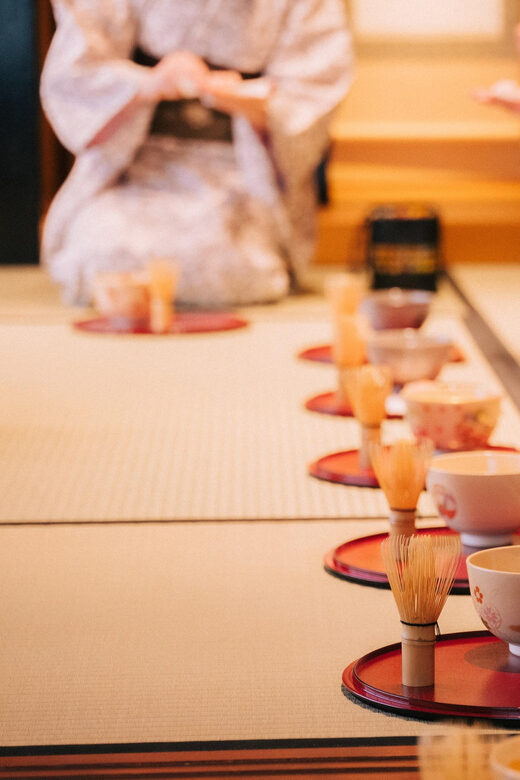
This is a tight, well-managed cultural session built around one goal: make the tea ceremony understandable, then make it personal. In 90 minutes you’ll go from selecting and putting on a kimono, to stepping into a tea room, to learning the flow of the ceremony in English, and finally to tasting matcha you helped prepare.
Because it is time-boxed, you do not get lost in a long program. You get a complete arc: setup, explanation, participation, and keepsakes. It is also designed for people who do not read Japanese, so the English instruction matters a lot.
The group size is small (up to 10), and that changes the vibe. You can hear what the tea master is saying, and you are not fighting for attention when you have a question about the steps.
A few more Kyoto tours and experiences worth a look
Picking Nishiki Market or Gion: choose based on your day
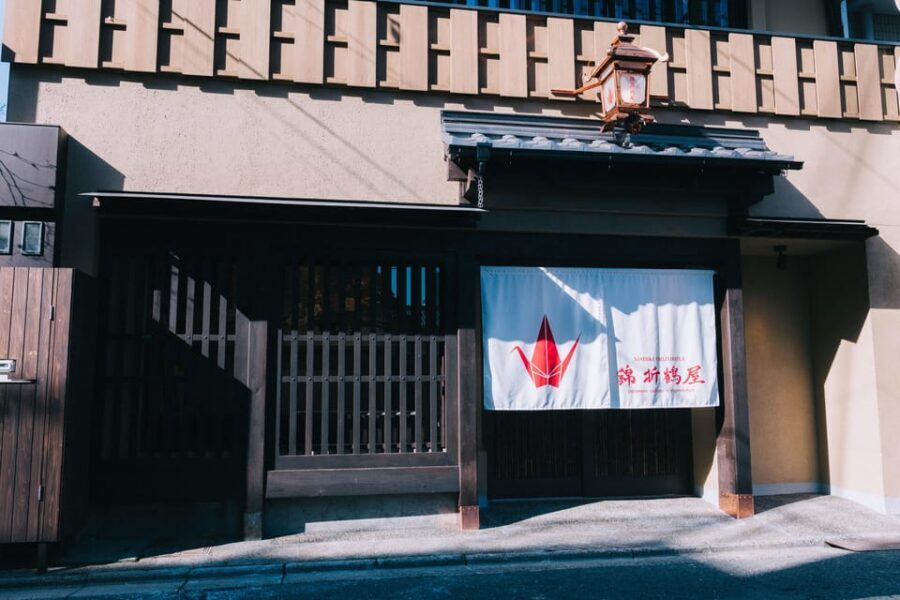
You have two meeting points, and you need to pick the right one at booking. The program runs at each location, but the kimono return deadline differs:
- Nishiki Market location: kimono must be returned by 6:00 PM
- Gion location: kimono must be returned by 5:00 PM
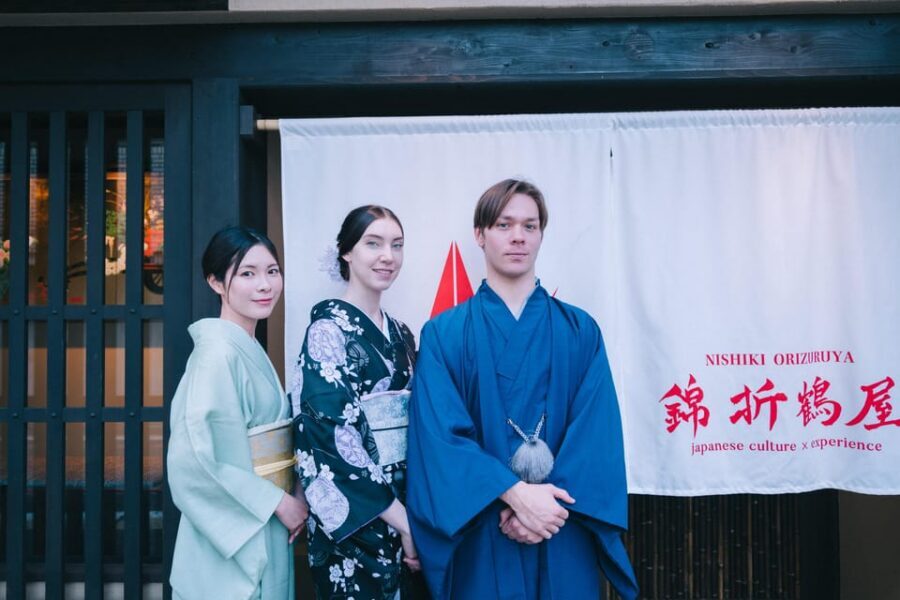
So how do you choose? If your day centers on Nishiki Market and the surrounding shopping streets, Nishiki makes sense because you can keep moving afterward without feeling rushed. If your day is about Gion lanes and evening atmosphere, Gion gives you a head start on the neighborhood feel—then you still have a fixed window before your kimono return time.
Either way, the experience itself is the same idea: kimono dressing, tea room ceremony in English, matcha you make, and professional photo coverage.
Kimono dressing: choose your look and plan for details
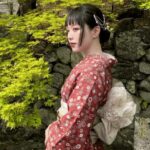
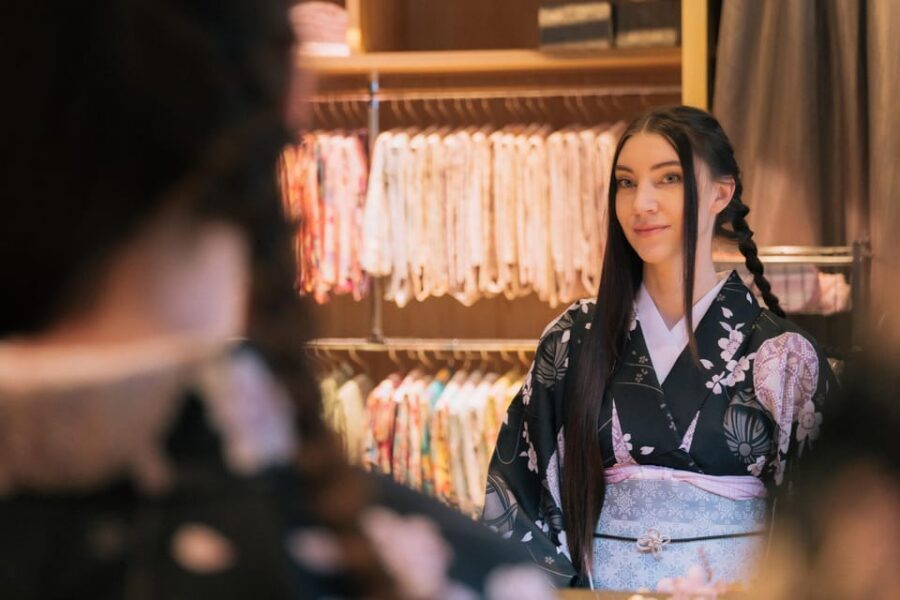
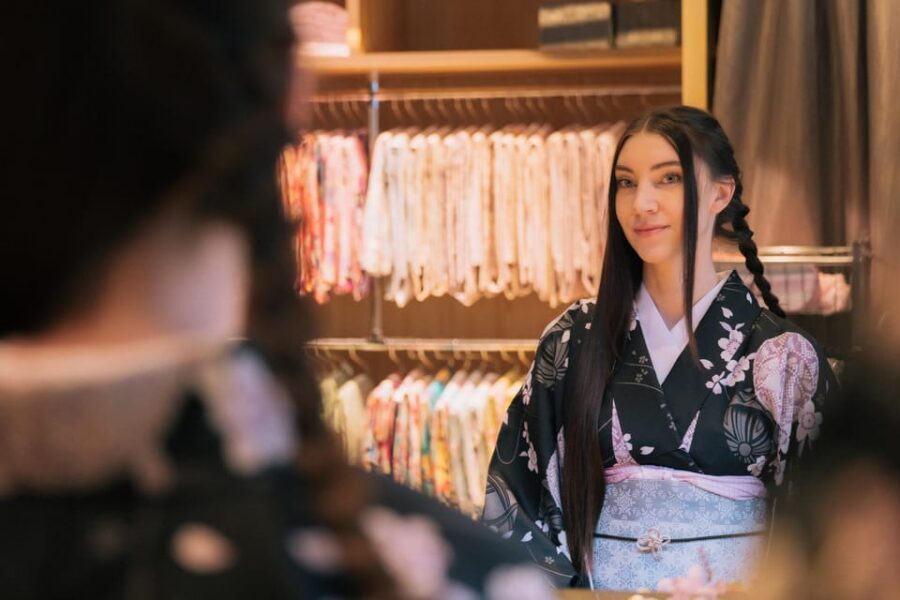
Before you enter the tea room, you’ll change into a kimono at the shop. The experience requires advance info so the staff can prepare a kimono set for you, including your height and gender.
That matters because kimono fit is everything. A bad fit is uncomfortable and can ruin the photos. Here, the program is set up so you are dressing into something prepared for you ahead of time, which speeds things up and keeps the process respectful.
From the experience’s structure and how it is run, the dressing part is treated like a real stage of the day, not a quick costuming grab. You also follow indoor rules: no shoes indoors, which is standard for many traditional spaces in Kyoto and part of making the room feel proper.
If you have any food allergies, tell the organizers in advance. The tea ceremony includes sweets to pair with matcha, so they need to know what to avoid.
Inside the tea room: the English demo that makes it click
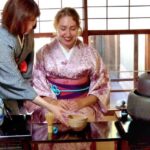
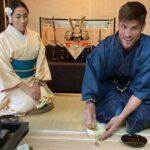
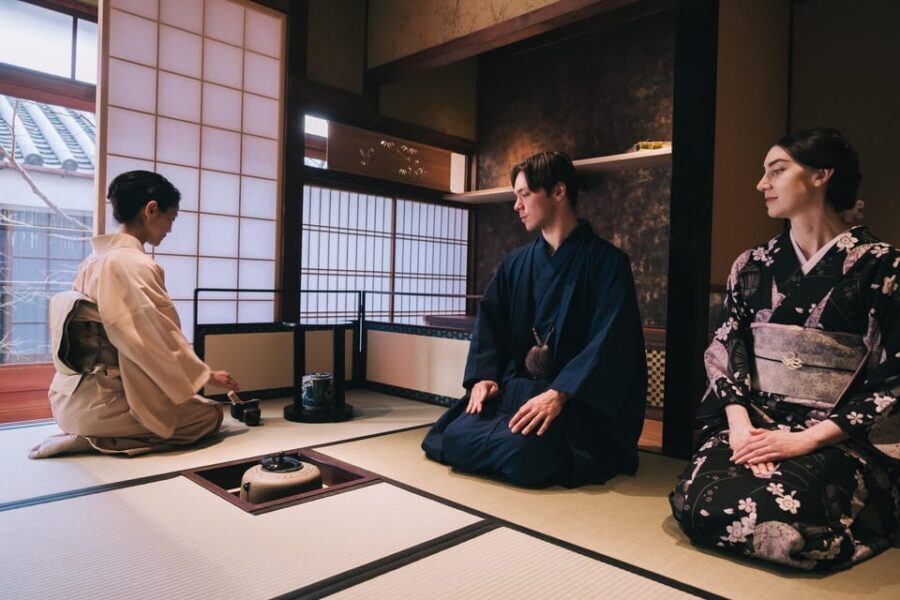
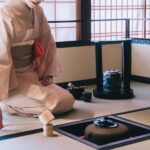
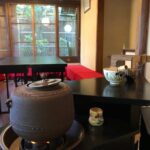
Then you enter the tea room and watch the tea ceremony demonstration in English. The goal here is understanding, not mystery. You learn the history and cultural meaning of the tea ceremony, and you also get the step-by-step rhythm explained in a way that feels relaxed.
This is where the experience is especially valuable if you have never seen a tea ceremony before. You’re not just watching hands move; you’re learning what the actions represent and how the ceremony is meant to create focus.
You’ll also see the ceremony approach in a calm setting. This is not loud, not rushed, and not designed as a performance for crowds. In a city like Kyoto, that slow pace is a nice break from constant walking and sightseeing.
Making your own matcha: hands-on, not a spectator show
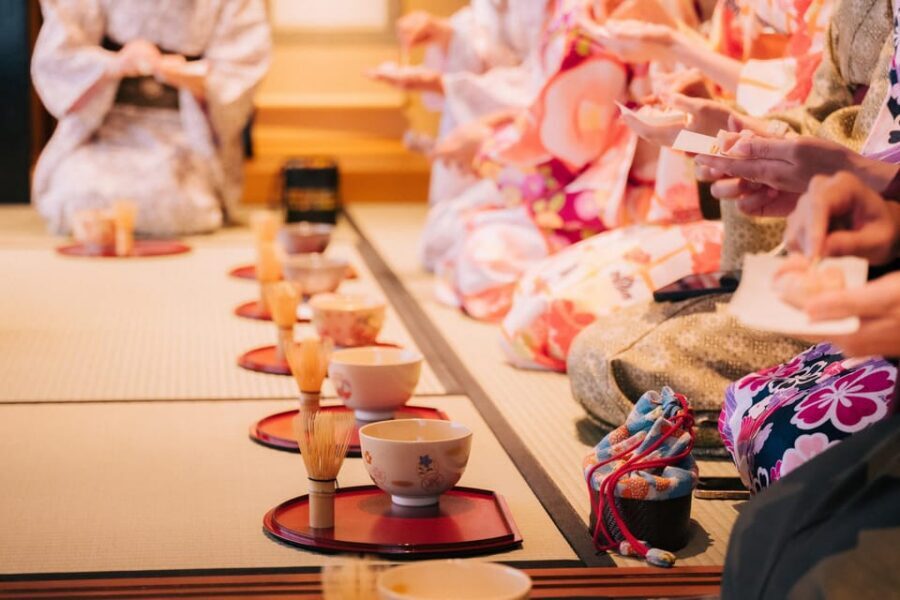
After the demonstration, you make your own matcha green tea and enjoy it with Japanese sweets. This hands-on step is the real memory-maker because it shifts you from viewer to participant.
Matcha is not hard to make, but it does require attention to technique. And when you learn the process in a short, guided format, you get enough understanding to feel confident without turning it into a long cooking class.
The pairing with sweets is important too. Tea ceremony sweets are usually designed to complement the flavor and texture of matcha. Even if you do not care about food details, this pairing helps you experience the ceremony as a full ritual, not just a single drink.
A few more Kyoto tours and experiences worth a look

The professional photoshoot: 3 images you can actually use
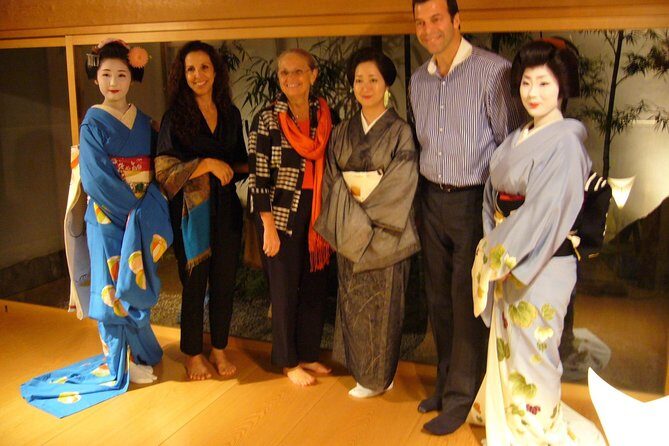
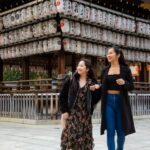
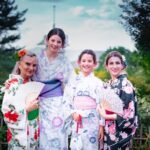
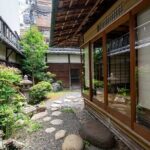
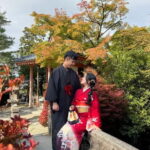
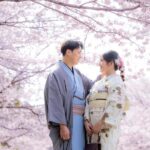
One of the clearest reasons to book is what you leave with: 3 photos taken by a professional photographer. This is not a grab-a-snap-yourself setup. A photographer handles framing and timing so you end up with pictures that look intentional and Kyoto-appropriate.
The photos are included, and the experience also gives you time to take some of your own shots. That combo is ideal: you get the professional results as your main keepsake, then you can add personal angles on your phone.
If you care about kimono photos, you should treat the event like a scheduled shoot, not a casual stroll at random. The kimono portion is time-bound, so it helps to be ready when your photo moments happen.
Also remember the indoor shoes rule. For your photos, the room will be floor-friendly and quiet, which typically makes for cleaner, less cluttered backgrounds.
Timing and rules: small things that can derail your session
This experience runs on a schedule. You must arrive on time, because if you are more than 10 minutes late, you cannot join and there is no refund. That rule alone makes it worth planning your buffer like you would for a train connection.
There’s also the kimono return deadline on the same day. If you want time to stroll in your kimono afterward, you have to manage the whole window, not just the tea room part.
Two additional rules are non-negotiable:
- No smoking
- No shoes indoors
Finally, double-check the location when you book. You cannot show up at the wrong shop and expect to be transferred. The program is organized around the specific meeting point.
Price and value: $127 for more than a photo op
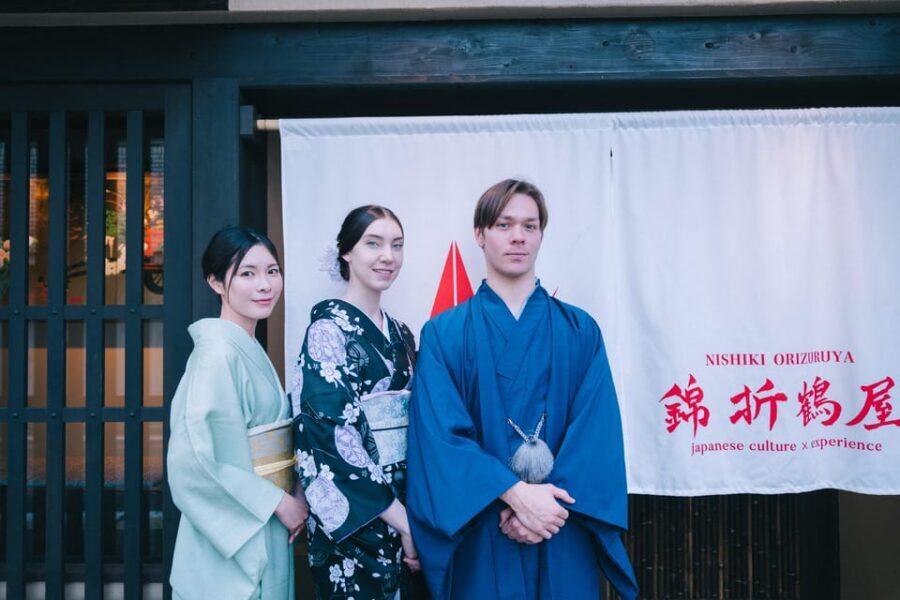
At $127 per person for 90 minutes, you might wonder if this is mainly costume time. The value improves when you look at what’s included:
- Kimono dressing
- Tea ceremony demonstration in English
- Matcha you make plus Japanese sweets
- 3 professional photos
If you tried to recreate this on your own, you would pay separately for a kimono rental, pay for any guided explanation, and then hire a photographer or scramble with phone shots that rarely turn out as well. Here, the staff handles the hard parts: fit, flow of the ceremony, and photo timing.
Also, the small group size matters. You’re not paying for a crowded “one size fits all” experience. You’re paying for structured attention during dressing and the tea room, plus a finished photo set at the end.
So I think the price is fair if you want a real ritual and a real result, not just a costume.
Who this fits best in Kyoto (and who should skip it)
This works well for:
- First-timers who want the ceremony explained in English
- People who want both culture and keepsakes (kimono + matcha + photos)
- Visitors who enjoy short, structured activities without getting overwhelmed
It is not suitable for:
- Children under 5 years old
- Wheelchair users
It’s also not offered as tea ceremony only or kimono dressing only. If you want just the tea room without the kimono, or just the kimono without the ceremony, this may not match your goal.
My decision guide: should you book this Kyoto tea ceremony?
Book it if you want a compact Kyoto experience that feels traditional without requiring background knowledge. The hands-on matcha step and the English instruction are the big reasons this feels worthwhile, and the included 3 professional photos make it a practical souvenir you’ll keep using.
Skip it if you are very late-prone or you hate strict timing. The 10-minute rule is firm, and the kimono return deadline is real. If your itinerary is chaotic or you love wandering with no plan, you might find this too scheduled.
If you do book, show up early, pick the right location (Gion versus Nishiki), and think of the kimono time as part of the experience, not an add-on. You’ll get a calmer, better session and a better photo set to prove it.
FAQ
How long is the Kyoto tea ceremony experience?
It runs for 90 minutes.
Is the tea ceremony explained in English?
Yes. The instructor provides the demonstration in English.
How many photos do I get?
You receive 3 photos taken by a professional photographer.
Do I get to make matcha or only watch?
You make your own matcha green tea, and you enjoy it with Japanese sweets.
Where are the two meeting locations in Kyoto?
You’ll choose between the Nishiki Market location or the Gion location. The exact meeting point can vary by option booked.
Can I do only the tea ceremony or only the kimono dressing?
No. This experience is not available as tea ceremony only or kimono dressing only.
What is the kimono return deadline?
You must return your kimono the same day: 6:00 PM for Nishiki Market and 5:00 PM for Gion.
What if I’m late?
If you arrive more than 10 minutes after the starting time, you are not allowed to join and no refund is available.
Are there any rules inside the tea room?
Smoking is not allowed, and shoes are not allowed indoors.