Kyoto feels big until you move like a local. This small-group bike adventure is designed to help you see a lot of eastern Kyoto in a short window, using scenic backstreets instead of getting stuck in bus traffic. I like how the ride is paired with real place stops like Heian Shrine’s massive torii gate and the Keage Tunnel, so you’re not just passing by, you’re learning as you glide. Two things I also really enjoy are the tempo of the tour (you go at your own pace with guidance) and the memorable food moment with matcha at Murinan. One thing to think about: it’s still a 2–2.5 hour bike outing, so you’ll want moderate physical fitness and comfortable cycling time.
What makes this one work well is the mix of famous and quietly cinematic. You start in the Gion area with Shirakawa Minami Avenue (a historic street that’s also a popular wedding-photo backdrop), snap photos at spots like Tatsumi Bridge, then string together temple landmarks and paths—so the tour feels like Kyoto in scenes rather than a checklist. The guide I saw referenced most clearly is Ben, who’s described as professional and giving enough direction to keep things smooth without rushing you. The only caution I’d give is pacing: if you’re the type who wants to stop for long museum-style reading, you may wish you had more time in the city.
In This Review
- Key points before you pedal off
- Why this eastern Kyoto bike tour feels faster (and more fun)
- Meeting in Higashiyama and getting your rhythm
- Stop 1: Gion and Shirakawa Minami Avenue (the postcard start)
- Stop 2: Tatsumi Bridge (short, sweet, and made for photos)
- Stop 3: Heian Shrine and its huge torii gate
- Stop 4: The Keage Tunnel (Nejirimampo) for an unexpected Kyoto moment
- Stops 5 and 6: The Nanzenji area plus Murinan’s matcha break
- The “emperor’s sign” temple moment and a huge gate pause
- Stop 7: Maruyama Park for cherry blossom season energy
- Stop 8: Nenenokomichi (a scenic path that keeps the ride interesting)
- Stop 9: Yasui-Konpiragu (the rock moment)
- Stop 10: Kennin-ji Temple and its garden approach
- Stop 11: Back to Gion (geisha district vibe to close the loop)
- Price and value: why $119 can make sense here
- Pacing and fitness: the one practical consideration
- Who should book this bike adventure
- Should you book Secret Eastern Kyoto Biking Adventure?
- FAQ
- FAQ
- Where does the Secret Eastern Kyoto biking adventure start?
- How long is the tour?
- How much does it cost?
- Is admission included for all stops?
- What is included besides biking?
- Do I need a printed ticket?
- What fitness level do I need?
- How big is the group?
- Can children join?
- What is the cancellation policy?
Key points before you pedal off
- Small group size (max 4) means less waiting and more flexibility as you stop for photos and explanations
- Backstreet routing helps you avoid traffic and keeps your sightseeing time efficient
- Temple-and-tea moments include a matcha stop at Murinan plus multiple shrine/temple pauses
- Photo stops built in at places like Tatsumi Bridge and the Keage Tunnel
- Gion included twice so you get both the vibe and the scenery without feeling rushed
Why this eastern Kyoto bike tour feels faster (and more fun)
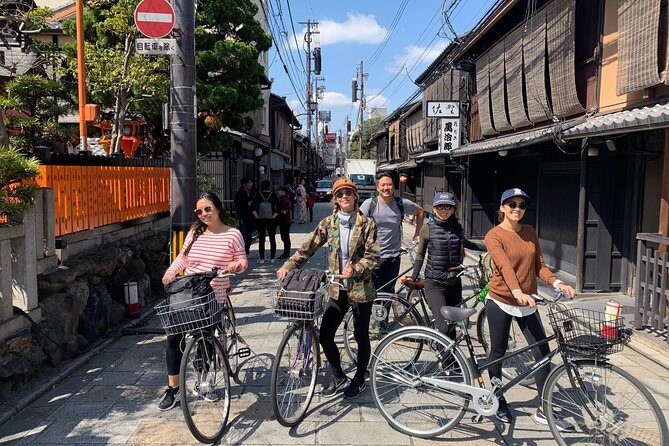
Walking Kyoto is great—until you hit that wall of distance and slow foot-traffic. This is the opposite approach. You’re on a bicycle for roughly 2 hours to 2 hours 30 minutes, which means you can cover multiple major sights without feeling like every transfer is a mini day-trip.
The route design also matters. Instead of bouncing around on main roads, the tour uses quieter scenic streets to help you keep moving. That translates into a different kind of experience: you’re not only seeing Kyoto’s landmarks, you’re also getting glimpses of the neighborhoods between them. It’s one of those rare tours where the transportation is part of the sightseeing, not just a way to get to the next stop.
And you still get structure. Each stop is brief enough to keep energy up, but not so short you feel cheated—most pauses run about 5 to 20 minutes, with the longer breaks for shrines, gardens, and tea.
Other cycling tours in Kyoto


Meeting in Higashiyama and getting your rhythm
You’ll start and end back at the same place: Kyoto, Higashiyama Ward, Ōhashichō, 117 京阪三条北ビル (near public transportation). That round-trip setup is handy if you’re staying in the general Higashiyama/Gion area and want your day planned in one clean block.
The tour uses a mobile ticket, so you’re not dealing with paper vouchers. That’s especially useful in Japan where getting settled fast makes the whole day easier.
From there, the guiding style is built around descriptions and cultural context. You’re not expected to just follow handlebars and hope for the best. The guide’s role is to help you connect what you’re seeing—like a torii gate, a tunnel, a garden, or a shrine path—with why it matters in Kyoto.
Stop 1: Gion and Shirakawa Minami Avenue (the postcard start)
You begin in the Gion area, with Shirakawa Minami Avenue. This is a historic Kyoto street that has become a popular wedding photography backdrop. Even if you’re not there for a wedding shot, it’s the kind of street that instantly tells you: Kyoto isn’t only about monuments, it’s also about atmosphere.
This first stop is only about 5 minutes, so treat it as orientation. I think that’s the right use of early time—get your bearings, take a quick look, and then let the rest of the ride unfold without overthinking it. If you’re a photo person, arrive ready to shoot without stopping your brain from spinning.
Stop 2: Tatsumi Bridge (short, sweet, and made for photos)
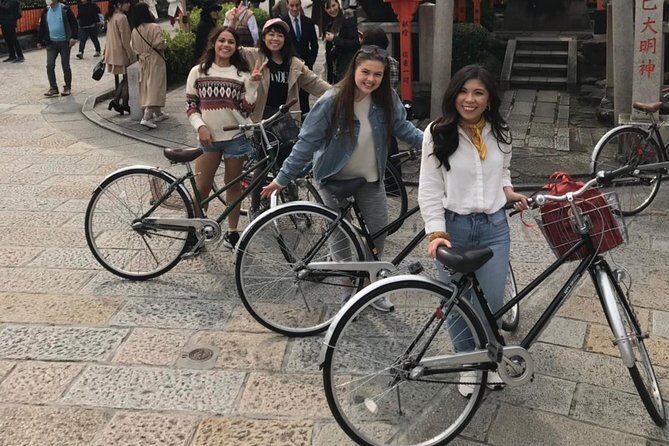
Next is Tatsumi Bridge, also a quick 5-minute stop. The main reason it’s there is visible: it’s a great place for taking photos in this area.
This is one of those “blink and you miss it” moments that can still be worth it because you’re not spending 20 minutes searching for the angle. You’re given the right spot, then you move on.
Stop 3: Heian Shrine and its huge torii gate
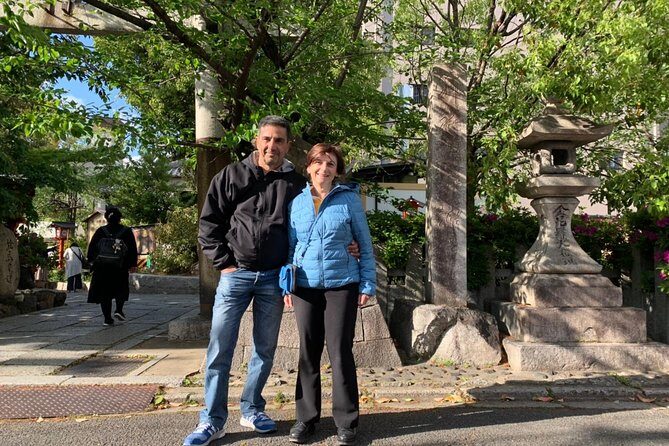
Then comes a big one: Heian Shrine, with time for a 20-minute pause. The headline here is the huge torii gate—and it really works as a “Kyoto landmark” moment. It’s not a tiny shrine you can miss. It’s a visual anchor.
Why I like this stop on a bike tour: it gives you a break from moving without eating your whole morning. And the torii gives you an easy photo reference point, so you’re not guessing where to stand.


Stop 4: The Keage Tunnel (Nejirimampo) for an unexpected Kyoto moment
After the open space feel of a shrine gate, the tour shifts gears to the Nejirimampo (Keage Tunnel). You get about 5 minutes here, and the emphasis is on the tunnel itself—great for photos and a change of scenery.
This is exactly the kind of stop I love on “secret” style tours. Kyoto is full of famous temples, but tunnels, small waterways, and overlooked corners are where you start to feel you’re seeing the city between the well-known headlines.
Stops 5 and 6: The Nanzenji area plus Murinan’s matcha break
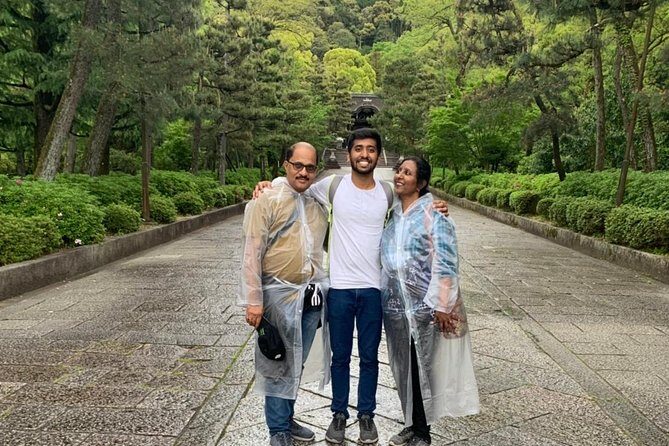
You’ll move into the eastern temple cluster with Nanzenji Fukuchicho (about 20 minutes). It’s described as one of the head temples in eastern Kyoto. Even if you’re not the sort of person who can name every hall, you’ll feel the importance in the scale and the way the grounds are arranged. Short stops here would’ve been fine, but the longer window is a good sign—you get actual time to look around.
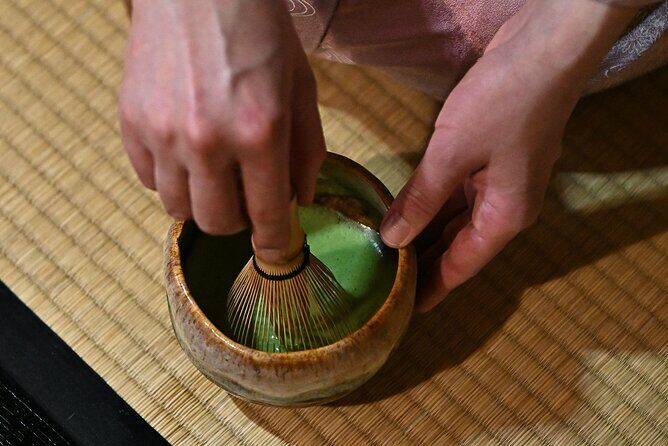
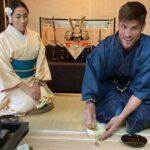
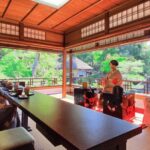
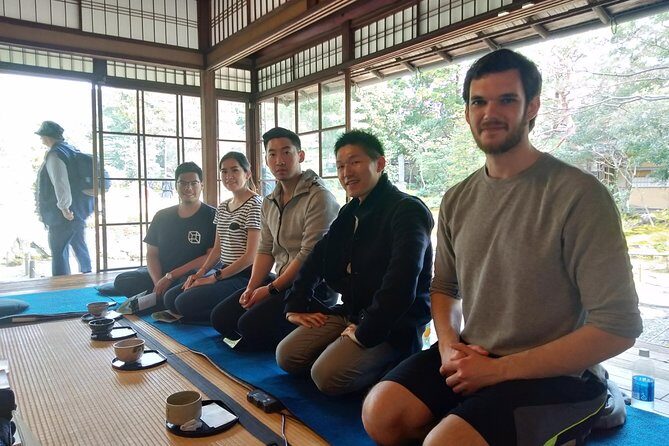
Then it’s on to Murinan, where you get another 20-minute visit and a highlight: local matcha tea is included. This is the stop that turns sightseeing into something you can taste.
Tea breaks in Kyoto shouldn’t be rushed. A matcha pause gives you a reset after cycling and walking through shrine areas. It also keeps the tour from feeling like only moving, stopping, photographing, repeating. You’ll finish this part of the route feeling grounded.
The “emperor’s sign” temple moment and a huge gate pause
The itinerary includes two additional temple-related stops that are described in memorable, non-generic terms:
- A great temple with emperor’s sign
- A huge gate and temple
The important point for you is not the label—it’s the visual impact. These are the kind of moments that make you stop thinking in terms of minutes. You’re looking at statements of power, tradition, and sacred design, and the bike tour gives you just enough time to take it in without dragging the day long.
If you’re the type who likes to understand what you’re seeing, this is a place to slow down your photo-taking and pay attention to what your guide points out.
Stop 7: Maruyama Park for cherry blossom season energy
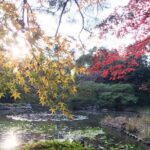
Next up: Maruyama Park for about 5 minutes. This is described as the greatest place for cherry blossoms, with a beautiful garden with a pond.
Even if you’re not there during peak blossoms, the point of this stop is the park setting. A pond and garden layout can do a lot for your mood after temples. On a bike tour, short park stops are smart—they let you see a different “Kyoto texture” without adding a long detour.
Stop 8: Nenenokomichi (a scenic path that keeps the ride interesting)
You’ll also visit Nenenokomichi, a beautiful path with interesting scenery for about 5 minutes.
Paths like this matter because they’re how Kyoto people experience the city. It’s not only gates and big buildings. It’s also the feeling of walking or pausing along a route that frames views—exactly what biking helps you reach efficiently.
Stop 9: Yasui-Konpiragu (the rock moment)
Then: Yasui-Konpiragu for about 5 minutes. The highlight here is described as a “greatest rock is waiting for you.”
This is another “small stop, strong visual” entry. If you’re wondering whether a bike tour can feel repetitive, stops like this break that pattern. You get variety: tunnel, shrines, gardens, a park, a path, then a rock landmark. It stays lively.
Stop 10: Kennin-ji Temple and its garden approach
Kennin-ji Temple comes next, with huge gardens and path and about 5 minutes to take it in.
Short temple time can feel limiting, but here’s the tradeoff: because the overall tour is only around 2–2.5 hours, you get multiple major stops rather than one long deep visit. If you love temples, this tour is a perfect sampler that tells you what you’ll want to return to later on your own.
Stop 11: Back to Gion (geisha district vibe to close the loop)
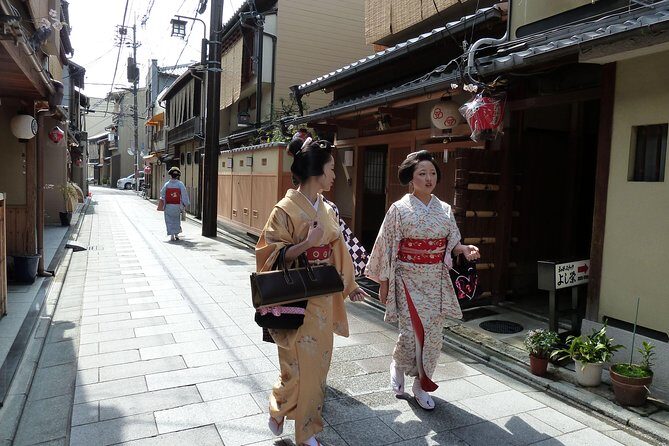
Finally, you return to Gion, again about 5 minutes. This stop is specifically tied to the geisha district vibe.
Doing Gion near the start and near the end is clever. It bookends your ride with the same neighborhood energy, so your last memory isn’t only a single landmark—it’s a sense of place.
And because the tour ends back at the meeting point, you don’t have to plan a complicated end to your day. You can hop on public transportation or continue exploring nearby streets.
Price and value: why $119 can make sense here
At $119 for a 2 to 2.5 hour bike tour, the price isn’t “cheap,” but it’s also not unrealistic for Kyoto when you’re buying planning, guiding, and a tight route.
Here’s what supports the value:
- Small group (max 4), so you get more attention and less time waiting
- Multiple major sights in one run: shrine gates, the Keage Tunnel, temple areas, a park, and paths
- Admission notes: many stops list free admission, and Murinan is where an inclusion is explicitly called out (matcha tea is included)
So you’re not paying mainly for a ride. You’re paying for an organized route that gives you a lot of Kyoto in a short, structured outing.
Pacing and fitness: the one practical consideration
This tour asks for moderate physical fitness. That basically means: you should be comfortable cycling for about 2 hours, not just a leisurely spin. If you’ve got knee issues or you get tired quickly, this might be tougher than a walking tour.
The good news is the guidance includes plenty of description, and there’s an emphasis on not going stale or bored—one of the selling points is that you’ll be kept engaged with cultural and place-focused explanations.
Also, the tour is described as allowing you to go at your own pace. That matters because it keeps stops from turning into a stressful sprint.
Who should book this bike adventure
I’d point you toward this tour if:
- You want to see a stack of eastern Kyoto highlights without losing half your day to transit
- You like guided context, not just photos
- You enjoy a mix of temples, shrines, gardens, and paths, plus a food/drink moment
- You prefer a small group over big bus-style crowds
I might steer you to something else if:
- You hate cycling or you’re not confident riding for 2+ hours
- You want long, slow temple time (this tour is efficient by design)
Should you book Secret Eastern Kyoto Biking Adventure?
If your goal is a smart first pass through eastern Kyoto, I think this is an excellent choice. The combination of small-group attention, a route that avoids getting bogged down, and standout moments like Heian Shrine’s torii, the Keage Tunnel, and matcha at Murinan makes the price feel grounded in value rather than marketing.
Book it if you want Kyoto to feel like scenes—streets, gates, gardens, tunnels—connected by an easy pace you can handle.
FAQ
FAQ
Where does the Secret Eastern Kyoto biking adventure start?
It starts at Japan, 605-0009 Kyoto, Higashiyama Ward, Ōhashichō, 117 京阪三条北ビル.
How long is the tour?
The duration is about 2 hours to 2 hours 30 minutes.
How much does it cost?
The price is $119.
Is admission included for all stops?
Many stops list free admission. One stop, Murinan, includes the matcha tea, and its entry is included in the experience pricing.
What is included besides biking?
You’ll get guidance during the ride and visit multiple stops that include temples and gardens, plus a matcha tea stop at Murinan.
Do I need a printed ticket?
No. The tour uses a mobile ticket.
What fitness level do I need?
You should have a moderate physical fitness level.
How big is the group?
The maximum group size is 4 travelers.
Can children join?
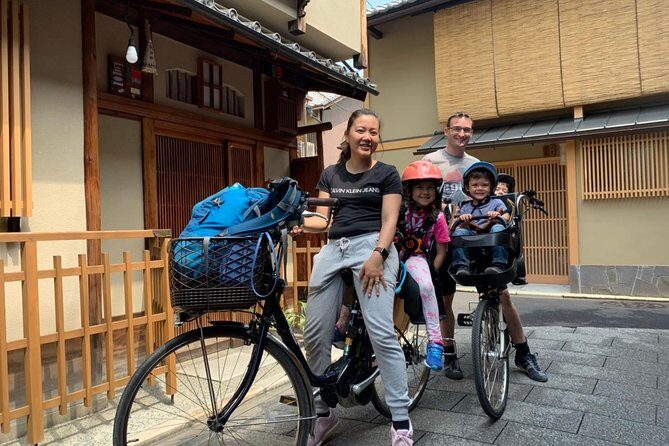
Children aged 1–3 can join, but you must pay an additional fee of ¥2,500 per child bike on the day of the tour if available.
What is the cancellation policy?
You can cancel for a full refund up to 24 hours in advance of the experience start time. Free cancellation is offered, and the tour provider notes that cancellations made less than 24 hours before start time are not refunded.
If you tell me when you’re going (month helps) and where you’re staying in Kyoto, I can suggest an efficient plan for what to do before and after this ride.