Kyoto in one afternoon can feel like magic. This guided run packs three of the city’s most photographed spiritual landmarks into a smooth 4 hours 40 minutes, with an English-speaking guide and entrance fees handled for you. I like how the tour mixes Shinto and Buddhist places back-to-back, and I also like that it includes the paid entry points so you can spend your energy on walking, looking, and taking photos instead of figuring out ticket lines.
The guide experience matters here. In the feedback, guides such as Momo, Yoshi, Donna-San, Jessie, and Amy get singled out for being friendly, funny, and on top of the group. You’ll also get a practical structure: meet near Kyoto Station, hit the big sights in a logical order, then wrap up while you still have time for dinner on your own.
One thing to plan for: because this is an afternoon tour, Kiyomizu-dera timing can land near dusk, and views (and seasonal foliage effects) may be darker than you hoped. Add in crowds at the sites, and you’ll want to keep expectations realistic about slow wandering.
In This Review
- Key highlights you’ll actually feel
- Why this Kyoto afternoon mix works: Inari, Kannon, and the cliffside view
- Start point near Kyoto Station: finding Avanti Tour Desk without stress
- Fushimi Inari Taisha: Senbon Torii gates and what to do with your time
- Sanjusangendo Temple: 1,001 Kannon statues inside a long wooden hall
- Kiyomizu-dera: the climb, the terrace views, and shopping lanes with atmosphere
- Timing and pace: what you can realistically see in 4 hours 40
- Value check: is $82.58 a smart buy for this route?
- Who this Kyoto afternoon tour suits best (and who should skip it)
- Should you book this Kyoto afternoon temple trio?
- FAQ
- What’s included in the Kyoto Afternoon Tour price?
- Where do I meet the guide for this tour?
- How long is the tour?
- How much time do we spend at each stop?
- Are entrance fees included?
- Does the tour enter the Shin-en garden at Fushimi Inari Taisha?
- Is food included?
- Is the group size limited?
Key highlights you’ll actually feel
- Fushimi Inari Taisha’s red torii gates are the fast-start wow factor, with a free admission stop built into the route.
- Sanjusangendo Temple’s 1,001 Kannon statues give you a rare, highly specific Kyoto experience that’s hard to replicate on a DIY loop.
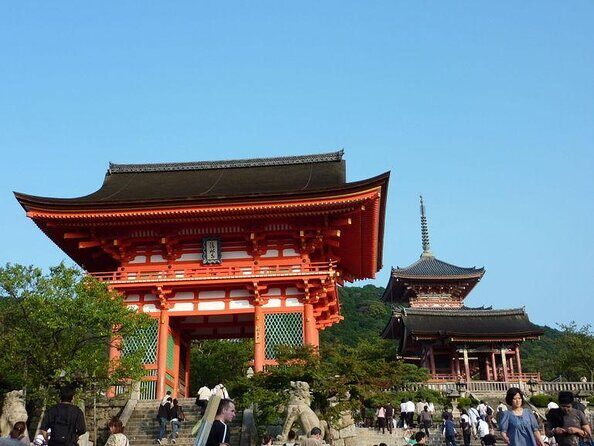
- Kiyomizu-dera panoramas from the terrace are the reason this stop is famous, even when the light shifts late in the day.
- All entrance fees and transport costs are included, so your money goes toward the sights, not logistics.
- Small-group handling (max 40) keeps the tour from turning into a chaotic human conveyor belt.
- A friendly English guide helps you read what you’re looking at, not just walk past it.
Why this Kyoto afternoon mix works: Inari, Kannon, and the cliffside view
Kyoto has a lot of temples. The trick is picking the ones that give you different “faces” of the city in a short time. This tour does that with a smart three-stop spread: a Shinto shrine that looks like a red tunnel, a Buddhist hall famous for a whole forest of statues, and then Kiyomizu-dera, where the views do some of the talking.
What makes the experience click is the pacing and contrast. You go from bright gate-lined drama at Fushimi Inari Taisha to the still, enclosed atmosphere of Sanjusangendo Temple. Then you end with a climb and terrace views at Kiyomizu-dera, plus the fun of the historic shopping lane leading up to the temple complex. It’s a nice way to get an overview of Kyoto’s religious culture without needing a full day.
You’ll also get the benefit of “being guided.” A guide helps you notice details you might otherwise miss: the meaning behind Inari’s shrine network, what you’re actually seeing in Sanjusangendo’s hall, and why Kiyomizu-dera’s layout matters for how you experience the city skyline from above.
If you're still narrowing it down, here are other tours in Kyoto we've reviewed.


Start point near Kyoto Station: finding Avanti Tour Desk without stress
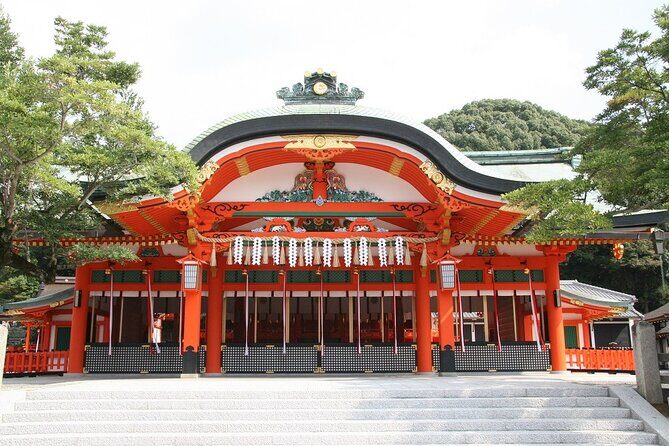
The tour begins meeting your guide at the Avanti Tour Desk near Kyoto Station in the afternoon. That location is convenient in theory, but Kyoto Station is big and confusing if you arrive right on the edge of start time.
Here’s the practical move: plan to arrive early and walk in calm circles until you’re sure you’ve got the right entrance. One tip I learned the hard way on trips like this is that tour offices can be tucked away inside larger buildings, sometimes even in less obvious spots. On this tour, that kind of “where exactly is it?” moment came up in real experiences—so give yourself buffer time.
Also note that there’s no hotel pick-up or drop-off. You’ll be responsible for getting yourself to the meeting point and later moving on to your next stop after the tour finishes.
Fushimi Inari Taisha: Senbon Torii gates and what to do with your time
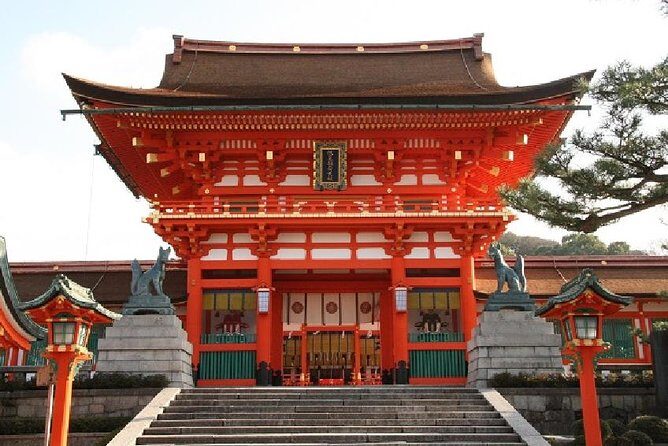
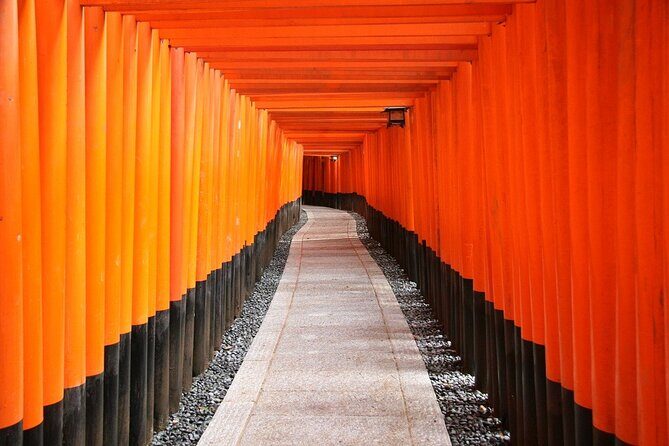
Fushimi Inari Taisha is the Shinto shrine dedicated to Inari, and it’s the headline act in this route. The visuals are immediate: bright-red Senbon Torii gates lined in long rows, which create that unmistakable tunnel effect. It’s also the kind of sight where walking slowly for a few minutes can completely change your photos—from flat and crowded to layered and dramatic.
This stop is planned for about 30 minutes, and admission is free for the main shrine areas on this tour. That short time is a trade-off. You’ll get the must-see gate experience, but you won’t have hours to drift through every path branching off the main route. If your goal is the classic photos at the front and a satisfying walk through the gates, 30 minutes often feels just right.
A key detail: the tour does not enter the Shin-en garden. That’s fine for most people, because your biggest payoff here is the torii-gate walk and the atmosphere of the shrine. If you specifically want the garden areas, you’d need a different plan.
One more logistics note that affects your feet: the tour includes walking from the parking lot to the shrine—about 15 minutes one-way. So even though the official stop time is short, your legs still need to be ready.
Sanjusangendo Temple: 1,001 Kannon statues inside a long wooden hall
Sanjusangendo Temple is where this tour becomes more than just “see three famous places.” It’s a specific, unusual Kyoto site: the world’s longest wooden structure, built in the 13th century, and famous for housing 1,001 life-size statues of Kannon (the Bodhisattva associated with compassion).
The experience here tends to feel concentrated. Instead of big outdoor photo spreads, you’re stepping into a space designed for quiet attention. Even if you only spend about 30 minutes, it’s enough time to take in the scale and get oriented to what you’re looking at.
This stop includes admission fees. That matters for value, but it also means less time standing around. You’re guided into the right flow for the hall, and then your guide can help you understand what you’re seeing—why the statues are lined the way they are and why this temple is such a big deal for people who care about Buddhist art and architecture.
Drawback to keep in mind: 30 minutes goes quickly in a place like this if the hall is busy. If your priority is slow contemplation, you’ll want to treat this as a “first look” stop during the afternoon tour. You can always come back later for a deeper visit if you want.
Kiyomizu-dera: the climb, the terrace views, and shopping lanes with atmosphere
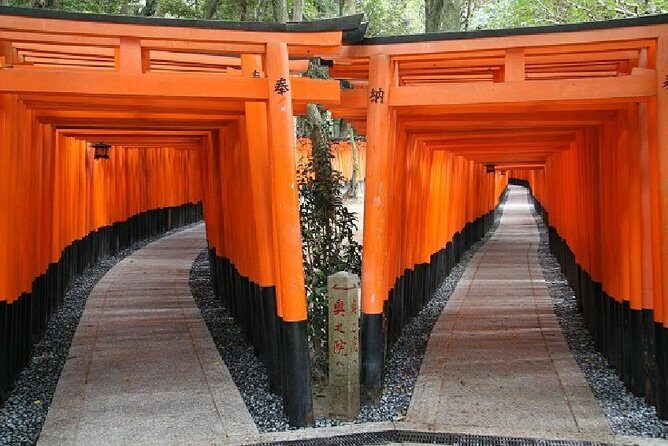
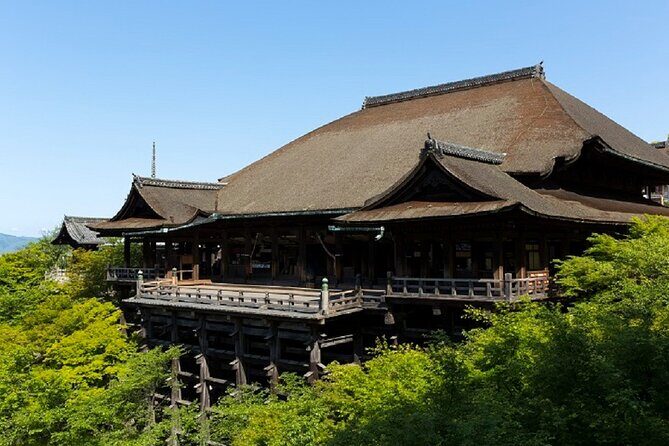
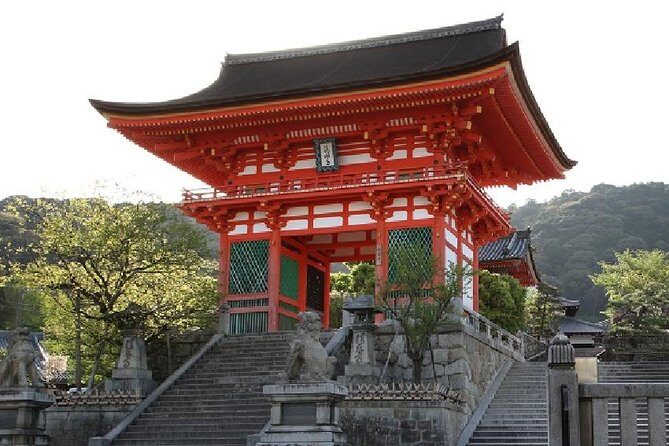
Kiyomizu-dera is the reason many people plan their Kyoto days around this area. It’s a UNESCO World Heritage site, and the terrace and walkways are famous for panoramic views over Kyoto and the surrounding hills. The temple sits above the city, so the view isn’t just pretty—it helps you understand Kyoto’s layout: layers of rooftops, mountain edges, and the way neighborhoods stack.
This stop is planned for about 1 hour 10 minutes, and admission is included. You’ll have enough time to do the essentials: move through the main temple approaches, catch the viewpoint area, and also enjoy the historic shopping street that runs up toward the temple. The street is part of the experience, especially if you like browsing for small gifts or snacks between photo moments.
Two practical realities can shape your experience at Kiyomizu-dera:
First, crowds. This is a top Kyoto attraction, so you’ll likely be navigating peak foot traffic. That’s why a guided visit helps—you’re not guessing how to time your walk.
Second, the afternoon light. Because this is a later-day tour, you might arrive near dusk. When the sun slips, the views can shift from golden and crisp to darker and moodier. In one real account, autumn foliage couldn’t be properly seen because the timing meant night had already started. If you’re traveling during a foliage peak, this is worth thinking about. Try to plan for photo priorities early in your season or consider a different tour if you want daylight peak color.
There’s also a physical side. The climb to the temple area can feel strenuous on hot or humid days, and one person noted how tiring it was in those conditions. Wear comfortable shoes and keep your pace steady. Kyoto has steep moments, and Kiyomizu-dera is one of them.


Timing and pace: what you can realistically see in 4 hours 40
This tour is built as an afternoon loop: three major stops, guided, with a clear return rhythm. That means the pacing is efficient, and you shouldn’t plan on long rest breaks or deep solo wandering at each site.
From what’s structured, your time distribution looks like this: about 30 minutes at Fushimi Inari, about 30 minutes at Sanjusangendo, and about 1 hour 10 minutes at Kiyomizu-dera. In addition to those stop times, there’s walking time like the shrine approach from the parking lot.
What this means for you:
- If you want the highlights and context fast, the pace feels productive.
- If you want to slow down and linger for shopping and extra photos at every stop, you’ll feel the squeeze at 30-minute locations.
A recurring practical point from real experiences is that the tour can feel rushed to people who want to do more than the essentials. The guide can be great—and the timing can still feel tight—so decide in advance which you prefer: “see it all fast” or “see less, slower.”
Value check: is $82.58 a smart buy for this route?
At $82.58 per person, you’re paying for three things: guided interpretation, transportation, and included admission fees. For Kyoto’s top sights, the admissions and the time spent planning routes can add up fast. This tour essentially trades a bit of independence for convenience.
Here’s the value math that matters to most people:
- Entrance fees: included at Sanjusangendo and Kiyomizu-dera, with Fushimi Inari’s main shrine access handled as a free stop.
- Transportation costs: included, which matters in Kyoto because moving between neighborhoods isn’t always quick with public transit when you’re juggling multiple locations.
- Guide time: you get licensed English interpreting, which can turn a “pretty photo spot” into an informed visit.
Is it perfect value? It’s excellent if your time in Kyoto is short and you want three standout sights without the mental overhead. If you’re traveling with someone who really wants to shop longer, sit longer, or take longer temple walks, you might find the price doesn’t feel as justified because your time at each location is limited.
Who this Kyoto afternoon tour suits best (and who should skip it)
This tour is a strong fit if you:
- Have limited time and want a concentrated Kyoto intro.
- Like big “first wow” sights like Fushimi Inari, plus at least one deeper temple experience like Sanjusangendo.
- Appreciate a guide who’s friendly and keeps things organized, including making the day enjoyable with humor.
It may be less ideal if you:
- Want to spend a lot of time shopping or wandering without a schedule.
- Are very sensitive to stairs and climbs, since Kiyomizu-dera involves a strenuous ascent for many people.
- Are traveling specifically for the best daylight photo conditions at Kiyomizu-dera. Afternoon timing can mean you lose some of the crispness you’re hoping for.
If you do go, treat it as a highlight tour. Use the afternoon to get your bearings, then plan one or two longer, slower returns on your own to the sites that grabbed you.
Should you book this Kyoto afternoon temple trio?
I’d book this tour if you want a simple plan that hits three of Kyoto’s most important religious stops in one afternoon, with entrance fees included and a guide who keeps the mood upbeat and the explanations clear. It’s also a good choice as an orientation tour—especially if this is your first Kyoto day or your first time dealing with the city’s dense temple geography.
Skip or consider another option if timing matters more than efficiency for you—especially for daylight views at Kiyomizu-dera. If your heart is set on seeing the terrace in perfect sun, you may want to plan for an earlier or different departure.
If you’re flexible on light and you want to maximize your time without getting stuck in ticket lines or route planning, this is a solid value way to spend an afternoon in Kyoto.
FAQ
What’s included in the Kyoto Afternoon Tour price?
The tour includes a licensed English guide interpreter fee, plus admission fees and transportation costs for the included stops.
Where do I meet the guide for this tour?
You meet your guide at the Avanti Tour Desk near Kyoto Station in the afternoon.
How long is the tour?
The duration is about 4 hours 40 minutes.
How much time do we spend at each stop?
About 30 minutes at Fushimi Inari Taisha, about 30 minutes at Sanjusangendo Temple, and about 1 hour 10 minutes at Kiyomizu-dera.
Are entrance fees included?
Yes. Entrance fees are included for the tour stops.
Does the tour enter the Shin-en garden at Fushimi Inari Taisha?
No. The tour does not enter the Shin-en garden.
Is food included?
No. Food and drinks are not included.
Is the group size limited?
Yes. The tour has a maximum of 40 travelers, and seats may not be designated.