Kyoto after dark has a way of slowing you down. This Kyoto Gion Night Tour turns the usual sightseeing route into an evening stroll through lantern-lit streets, old wooden lanes, and shrine views that feel calmer than daytime crowds.
I really like how the tour is built around Gion’s atmosphere instead of checklists. I also like that you get a passionate English-speaking guide, plus professional photos taken during the walk, which makes this feel more like an experience than a simple wandering route. One thing to consider: it’s a focused walking tour, so comfy shoes and punctual arrival matter.
In This Review
- Key Highlights You’ll Care About
- Why Kyoto’s Gion After Dark Hits Different
- Price and What You’re Actually Getting for $26.06
- Meeting Point and How the Walk Fits Into Your Night
- Stop 1: Hanamikoji Street at Night
- Stop 2: Gion’s Preserved Streets and Wooden Machiya Houses
- Stop 3: Yasui-Konpiragu Shrine for Relationship Reset Prayers
- Stop 4: Yasaka Pagoda (Hokanji Temple) and the Old Wooden Scale
- Stop 5: Sannenzaka and Ninenzaka Stone Lanes (The Evening Tempo)
- Stop 6: Yasaka Shrine, Where Kyoto’s Shrine Network Comes Together
- The Guide Factor and How Ikki Makes the Night Work
- Tips to Get the Most From a 1.5-Hour Evening Walk
- Who This Tour Is Best For
- Should You Book the Kyoto Gion Night Tour?
- FAQ
- What time does the Kyoto Gion Night Tour start?
- Where is the meeting point?
- How long is the tour?
- Is this tour mainly walking?
- What is included in the price?
- What if I’m late or need to cancel?
Key Highlights You’ll Care About
- Hanamikoji Street at night: a classic Gion lane where you might spot geisha or maiko
- Small group size (max 20): easier pace for asking questions and seeing details
- Yasaka Pagoda (Hokanji Temple): an iconic, old wooden structure tied to Kyoto’s skyline
- Sannenzaka & Ninenzaka: stone-paved lanes lined with historic buildings and evening ambiance
- Photo support included: professional photos are taken during the tour
- Guide name you might hear: people mention an easygoing guide, Ikki
Why Kyoto’s Gion After Dark Hits Different
Night in Gion changes the whole mood. The wooden streets and traditional storefronts look softer when lanterns light the corners, and the evening pace feels more like Kyoto stories than a daytime photo sprint.
The big draw is the chance to see the worlds you come to Kyoto for: geisha and maiko neighborhoods, shrine gates, and the layered feeling of historic Higashiyama. Even if you don’t catch a sighting, you’ll still get that evening texture—quiet lanes, temple silhouettes, and photo angles you’d miss in the harsh daytime light.
A few more Kyoto tours and experiences worth a look


Price and What You’re Actually Getting for $26.06
At $26.06 per person for about 1 hour 30 minutes, this is priced like a value-first evening activity. The key reason it feels fair: the tour includes an English-speaking guide and admission fees for temples and shrines, so you’re not constantly paying again as the route changes.
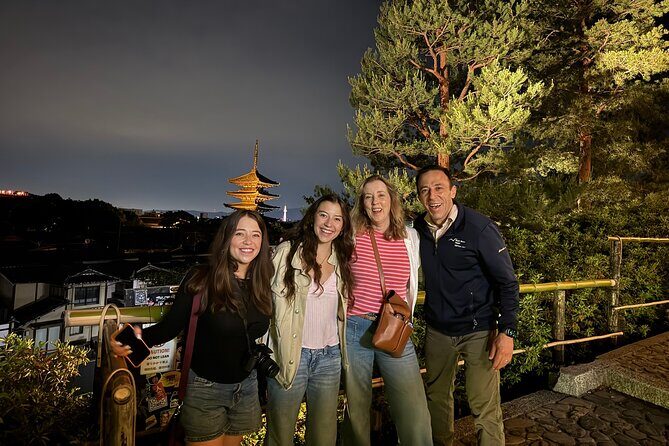
You also get two extras that matter in Kyoto: professional photos and a guided route that strings together Gion, multiple shrines, and the older lanes around Sannenzaka/Ninenzaka. If you’ve ever left Kyoto with a phone full of blurry night shots, this kind of help can be worth more than you expect.
Meeting Point and How the Walk Fits Into Your Night
This tour starts at 6:30 pm at the Statue of Izumo-no-Okuni (Kawabatacho), Higashiyama Ward. It ends back at the meeting point, so you don’t have to think about changing neighborhoods or transport at the end.
It’s designed as a walking experience with time on foot to explore. With that in mind, I’d plan your evening like a pro: eat earlier or keep dinner simple, because the tour is your main event for this slot.
The tour also uses a mobile ticket, which helps you get in fast. One practical caution: if you’re late, you won’t be able to join the tour and there’s no refund—so give yourself buffer time.
Stop 1: Hanamikoji Street at Night
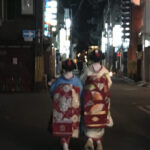
Hanamikoji Street is the kind of Kyoto lane that looks good in any weather, but it gets especially cinematic after dark. You’re walking past traditional teahouses, historic machiya-style houses, and that signature Gion vibe where your eyes keep looking for movement between buildings.
This is one of the places where the tour theme really comes alive: you may have the chance to encounter geisha and maiko. The visit is short—about 10 minutes—so treat it like a focused photo-and-observation window rather than a linger-and-shop moment.
The upside here is pace. You get the classic scene without wasting time waiting around forever, which helps if you want to pack in more Kyoto later.
Stop 2: Gion’s Preserved Streets and Wooden Machiya Houses
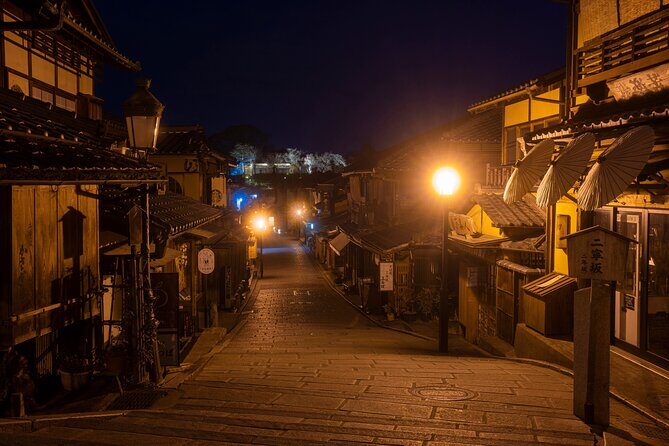
Next is Gion itself, Kyoto’s most famous geisha district. The atmosphere is all about preserved streets, traditional wooden machiya houses, and the feeling that the neighborhood still runs on older rhythms.
This stop is about 20 minutes, which is a good length for looking up as well as forward. In a daylight tour, you might miss the textures of wood and signage; at night, the lighting draws your attention to doors, corners, and the layered depth of the streets.
The only real drawback at Gion at night is that you’ll be walking through a lively sightseeing area. If you need total quiet, this isn’t the best match—though the tour’s guided flow helps keep it from feeling chaotic.
Other evening experiences in Kyoto





Stop 3: Yasui-Konpiragu Shrine for Relationship Reset Prayers
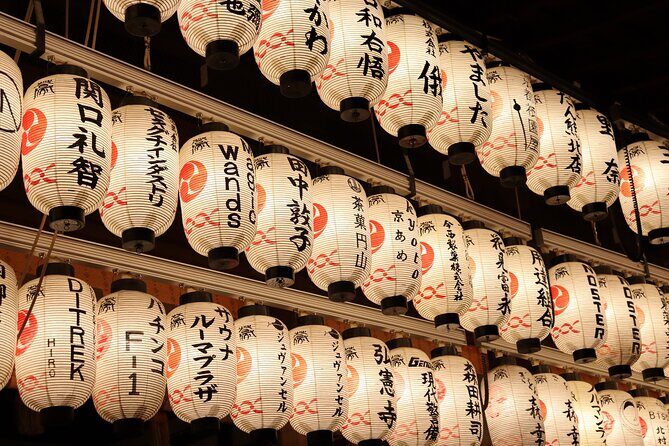
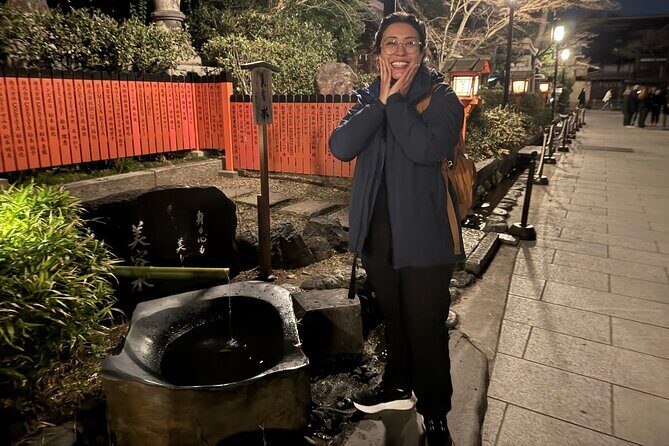
Yasui-Konpiragu is a different flavor from the street scenes. This shrine is known for praying for the end of bad relationships and finding new, positive connections—so it’s not just scenery, it’s purpose.
The visit is about 10 minutes, which keeps it moving without turning it into a quick glance. I like this stop because it grounds the night theme. You shift from neighborhood atmosphere to a place where people come with real intentions, and that gives the whole walk more meaning.
If you enjoy seeing how places carry specific cultural beliefs, this is a stop you’ll appreciate even if you’re not a shrine expert.
Stop 4: Yasaka Pagoda (Hokanji Temple) and the Old Wooden Scale
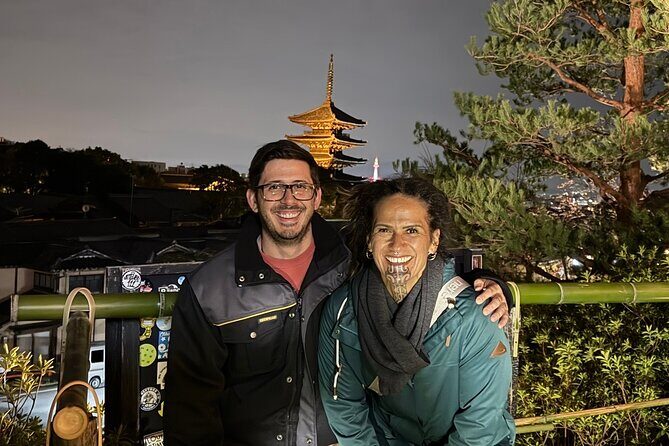
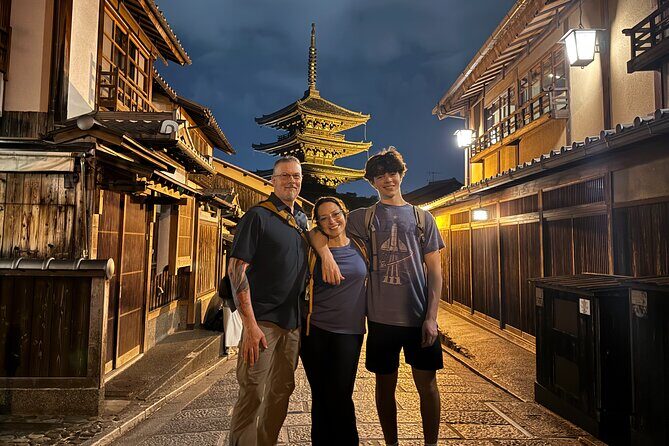
Yasaka Pagoda at Hokanji Temple is one of the most recognizable Kyoto silhouettes. The scale is hard to believe when you’re standing there, especially because it’s known as one of Japan’s oldest wooden structures—and it’s said to have been built without nails.
You’ll spend about 15 minutes here. That time is just right to get your bearings, compare angles, and notice how the structure frames the night street around it.
The practical tip: don’t treat it like a single photo moment. Move slightly within the viewing area, because at night the perspective changes fast, and you’ll get more variety without rushing.
Stop 5: Sannenzaka and Ninenzaka Stone Lanes (The Evening Tempo)
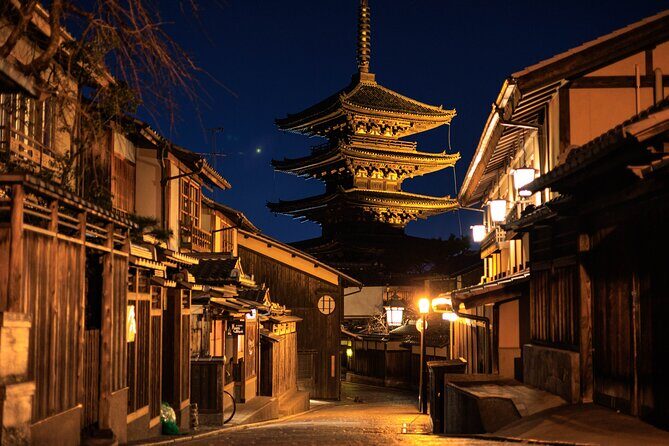
Sannenzaka and Ninenzaka are traditional stone-paved paths lined with souvenir shops and restaurants in historic wooden buildings. Walking here feels like stepping into older Kyoto streets, but with enough evening life to keep it lively.
This stop lasts about 20 minutes, which is great because the lane is designed for strolling. You can slow down, look at shopfront styles, and enjoy the way the stone and wood create natural contrast at night.
One consideration: because this area is popular, you’ll share the space with other people on foot. If you’re the type who hates crowds, keep your expectations realistic and use the guide’s timing to move through calmly.
Stop 6: Yasaka Shrine, Where Kyoto’s Shrine Network Comes Together
Your final stop is Yasaka Shrine. It’s described as the headquarters of 2,300 related shrines throughout Japan, so it’s not just a local landmark—it’s part of a bigger national network.
This shrine is dedicated to gods of prosperity and protection, which fits the emotional arc of the evening. After street scenes, temple architecture, and a relationship-focused prayer stop, you end with a place tied to protection and good fortune.
You’ll have about 15 minutes here. I like finishing with Yasaka because it’s a strong visual anchor: you end the walk with a sense of closure, not just a return to the busy streets.
The Guide Factor and How Ikki Makes the Night Work
A night walk needs a guide who can keep the story flowing. This tour uses a passionate local English-speaking guide, and one review specifically called out an easy-to-talk-to guide named Ikki.
That matters because Kyoto’s details can be invisible if you’re only scanning for photos. A good guide points out what to notice—why a street matters, what a shrine is known for, and how the architecture fits into Kyoto’s identity—so your evening feels smarter, not just prettier.
Also, because professional photos are included, the tour gives you structured chances for images that actually work in low light. That alone can upgrade your Kyoto memories quickly.
Tips to Get the Most From a 1.5-Hour Evening Walk
This is the kind of tour where small choices make a big difference. You’re walking enough that your comfort matters more than your shoe brand.
- Wear comfortable shoes you trust for uneven night streets
- Plan to arrive early so you don’t risk missing the start
- Keep your phone ready for street scenes, but also let the guided photo moments do their job
- If you’re hoping to spot geisha or maiko, treat it as a possibility, not a guarantee, and enjoy the streets either way
And if you do catch a rare moment, don’t turn it into a sprint. The best experience is still the walking, the sights, and the way the evening story unfolds.
Who This Tour Is Best For
This works best if you want an efficient, guided Kyoto evening without having to plan every stop yourself. You’ll like it if you enjoy:
- night photography with built-in guidance
- cultural stops (shrines included) mixed with classic Gion streets
- a smooth route that ties together multiple iconic areas in about 90 minutes
- a small group pace, with time to ask questions
If you hate walking or you only want one neighborhood, you might feel stretched. But if you’re happy to do a short, focused Kyoto night circuit, it’s a strong fit.
Should You Book the Kyoto Gion Night Tour?
I’d book it if you want a Kyoto evening that feels intentional: Gion streets, shrine stops, and classic Kyoto views, all guided and organized. The price feels reasonable because admissions are handled and the included photo support helps you take home better memories than you’d get on your own.
I’d skip it if you’re looking for a long, slow, sit-down experience or if you struggle with standing and walking for about 90 minutes. Also, be honest about the start time—6:30 pm is the whole schedule, so commit to being there early.
If that matches your travel style, this is an easy yes for a Kyoto night that’s both scenic and culturally meaningful.
FAQ
What time does the Kyoto Gion Night Tour start?
The tour starts at 6:30 pm.
Where is the meeting point?
Meet at the Statue of Izumo-no-Okuni in Kawabatacho, Higashiyama Ward, Kyoto.
How long is the tour?
It lasts about 1 hour 30 minutes.
Is this tour mainly walking?
Yes. It is designed as a walking experience with time on foot to explore Kyoto.
What is included in the price?
A passionate local English-speaking guide, admission fees for temples and shrines, and professional photos taken during the tour.
What if I’m late or need to cancel?
If you are late for the meeting time, you cannot join the tour and will not receive a refund. You can cancel up to 24 hours in advance for a full refund.