Kyoto in one packed day can feel like a trade-off. This private walking tour is different because it strings Kyoto’s top sights together with a guide, smart timing, and time to ask questions. You start from Kyoto Station, then hit Fushimi Inari’s torii gates, Arashiyama’s bamboo, Ryoanji’s rock garden, Kinkakuji’s Golden Pavilion, and finish with a stroll through Nishiki Market for small tastes.
What I like most is the way the day stays organized without feeling rigid. One reason it works so well is that your guide takes care of the routes using public transportation, so you are not guessing trains and transfers while trying to enjoy the sights.
The other big win is the human factor. In many experiences like this, the tour can feel rushed; here, guides are described as patient with breaks, helpful with translations while shopping, and ready to adjust to what your group cares about. One possible drawback: the day involves quite a bit of walking, and you should budget extra for public transport and temple entrances (meals are not included).
In This Review
- Key points to know before you go
- Price and what you truly pay for
- Meeting point, start time, and pacing in the real world
- Stop 1: Fushimi Inari-taisha and its torii tunnel effect
- Stop 2: Arashiyama bamboo forest without the foggy feeling
- Stop 3: Ryoanji Temple and the Rock Garden logic test
- Stop 4: Kinkakuji (Golden Pavilion) and the Samurai-culture glow
- Stop 5: Nishiki Market for tastes, not shopping stress
- Your guide makes the day work (and who you might get)
- Logistics: public transit flow and why that matters
- What to bring for a smoother early-riser day
- Who this tour is best for
- Should you book Kyoto Early Riser Golden One-Day Walking Tour?
- FAQ
- What sites does the Kyoto early-riser tour include?
- How long is the tour?
- Where does the tour start?
- Is the tour price all-inclusive?
- Is this a private tour?
- What if the weather is bad or I need to cancel?
Key points to know before you go
- Early start timing helps you see famous places before the day fully swells
- Private guide experience means the pace can match your group, including questions and breaks
- Icon stops in one route: Fushimi Inari, Arashiyama bamboo, Ryoanji rock garden, Kinkakuji Golden Pavilion, Nishiki Market
- Public transport handled so you can travel like a local instead of playing map-chess
- Extra costs to plan for: ¥1,670 transport fare and Ryoanji entrance fee (plus other entrances not listed as included)
- Mobile ticket makes check-in simpler and keeps the day low-drama
Price and what you truly pay for
At $119.30 per person for an ~8-hour tour, this sits in the mid-range for private guiding in Kyoto. The value comes from what you are buying: a licensed, professional guide who handles routing between major neighborhoods and gives you context at each stop. That matters in Kyoto, where the hardest part is often not finding sights, but timing them, moving efficiently, and understanding what you are seeing.
That said, the listed tour price is not the whole bill. You will also pay public transportation fare of ¥1,670 per person, and Ryoanji’s entrance fee is ¥1,100 per person. The tour also notes that entrance fees for Ryoanji and Kinkakuji are not included, while meals are not included either.
So I’d treat the tour cost as the guiding and coordination layer, not an all-in package. If you want to minimize total spend, you can still do that by being strategic about meals and keeping your Nishiki Market spending to tastes instead of a full grocery run.
Other walking tours we've reviewed in Kyoto


Meeting point, start time, and pacing in the real world
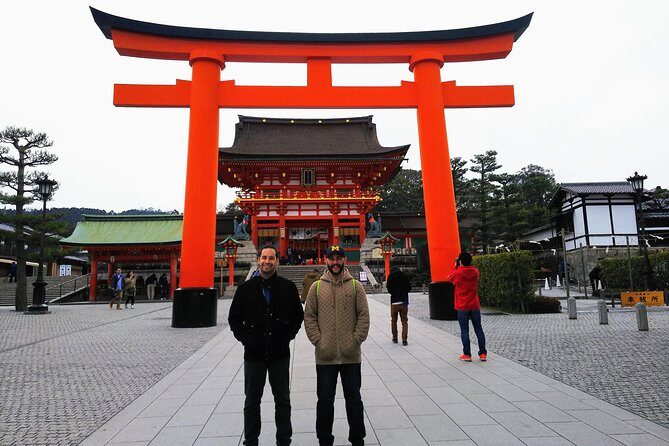
You meet at Kyoto Station Building 901 (address given), and the tour ends back near the start. Multiple guides are described as starting on time at the station, which is crucial on a day like this. When you miss momentum early, you pay for it later in queues and crowded walkways.
In terms of pace, plan for a lot of walking. The tour is marked as moderate fitness, and the experience is private, so you are not trapped in a large group’s pace. In real reviews, guides are credited with mindful break stops, including for people who needed rest more often than average.
Practical advice: wear comfortable shoes with grip. Kyoto stone and temple paths can be slippery when surfaces are damp. Bring water, and consider a small light layer because mornings near the river areas can feel cooler than you expect.
Stop 1: Fushimi Inari-taisha and its torii tunnel effect
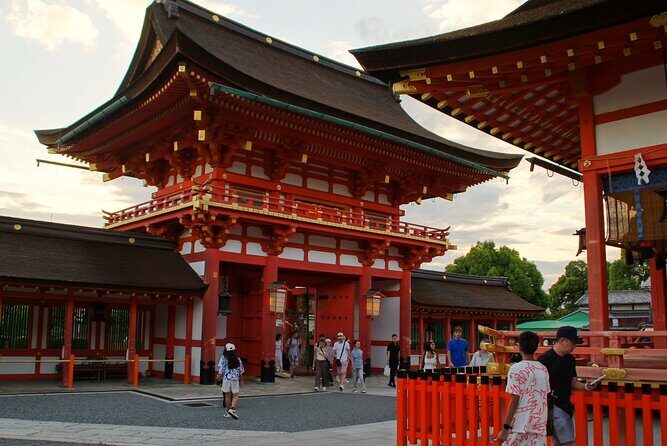
Fushimi Inari-taisha is the kind of place that needs context, or you risk treating it like just a photo stop. You get about 1 hour here, and the highlight is the famous tunnel of thousands of vermilion torii gates.
The torii gates are offered by worshippers to express thanks for good fortune connected to the deity enshrined at the shrine. That bit of meaning matters because it reframes what you are seeing: it is not only an aesthetic corridor, it is a living record of faith and gratitude. Your guide’s commentary also helps you notice why certain arrangements feel intentional instead of random.
One practical consideration: this is an iconic Kyoto sight, so it can attract big crowds later in the day. Starting early helps, and a guide also helps you avoid the most jammed walking moments so you can enjoy the atmosphere instead of wrestling for angles.
Stop 2: Arashiyama bamboo forest without the foggy feeling
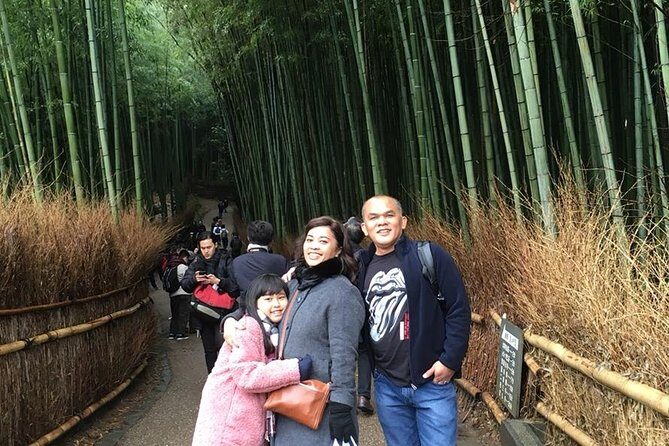
Next is Arashiyama, with about 1 hour 10 minutes on the bamboo side. This area has a special kind of sensory feel. The tour framing focuses on subtle green hues, light filtering through, and the sound of leaves and creaking trunks in the breeze.
In plain terms, this is a place where you benefit from slowing down for a minute instead of rushing straight to the main viewpoints. A guide helps you know where to walk for calmer views and how to read what you are seeing, like why the bamboo here looks so layered in the light.
Potential drawback: Arashiyama can be popular, and bamboo walking often turns into crowd navigation. Since this is a private tour, you should have more flexibility to pause, step aside, and reset your bearings when the crowd thickens.
Stop 3: Ryoanji Temple and the Rock Garden logic test
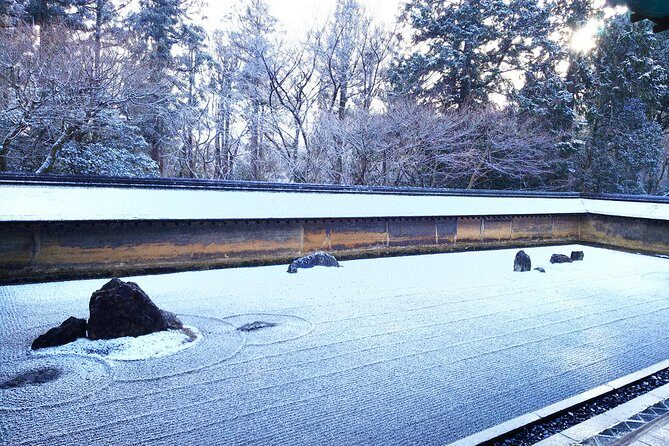
Ryoanji is a UNESCO World Heritage Site and gets one of the strongest “wow, I get it now” responses on a lot of Kyoto trips. Here you have about 50 minutes, and the entrance fee is ¥1,100 per person (not included).
The star attraction is the rock garden. The tour notes that it was once praised by Queen Elizabeth II. The garden itself is described as simple and small, with rocks and white gravel. That simplicity is exactly why a guide helps. Without context, people can stare at the stones for a bit, then leave thinking, I just looked at rocks.
A good guiding explanation turns it into something you can actively experience: how the arrangement invites different lines of sight and attention, and why it fits Zen-influenced ways of thinking. Even if you do not fully “solve” the garden, you leave with a better understanding of why people treat a small space as something profound.
Practical note: because this is the one spot with a specific entrance cost listed, it is worth keeping that fee in mind early so you do not get surprised mid-day.




Stop 4: Kinkakuji (Golden Pavilion) and the Samurai-culture glow
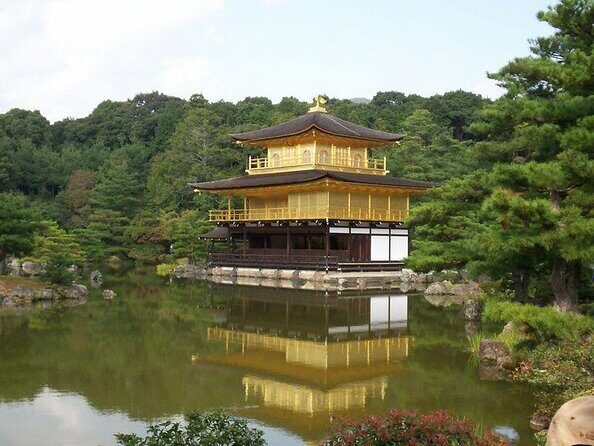
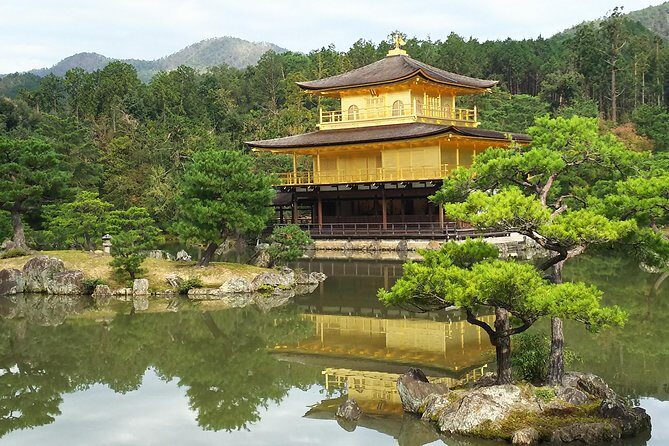
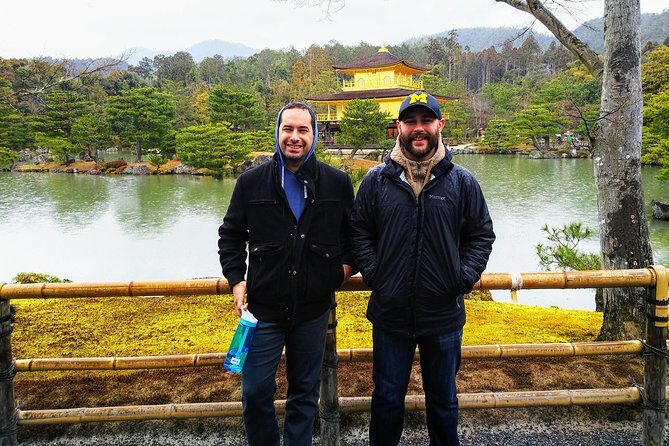
Kinkakuji is next, also about 50 minutes. The tour describes it as a Zen temple icon of Samurai culture, and it is known for the Golden Pavilion shining in a way that is hard to capture in a single photo.
Even with crowds, this stop is worth it because the pavilion is not just decorative. It sits at the intersection of power, religious art, and Kyoto’s landscape aesthetics, and it is one of those sights that looks different depending on where you stand and how the light hits the gold surfaces.
This stop is marked as having entrance fees not included. The exact cost is not listed here, so plan for that as part of your personal budget.
A small reality check: 50 minutes goes fast at the Golden Pavilion because you are moving through viewing zones and photo points. The private guide experience helps because your route through the area can be faster and smoother, and you can spend your time watching the details your guide points out instead of wandering.
Stop 5: Nishiki Market for tastes, not shopping stress
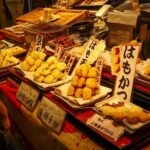
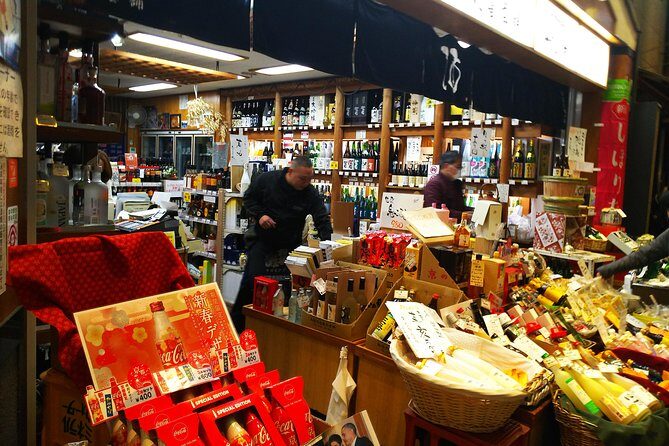
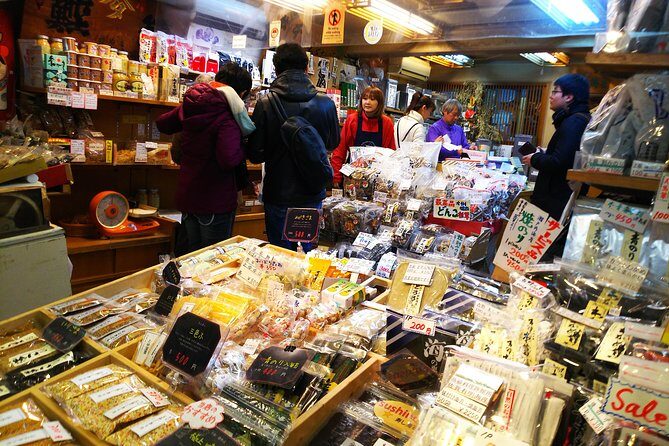
You end with about 40 minutes at Nishiki Market, a historic shopping street that has been popular for 400 years. The tour highlights that there are 126 shops along a 390-meter stretch, and that you can find Kyoto-specific vegetables and pickles while also doing small tastings.
This is the part of the day that feels the most like being in Kyoto day-to-day. It is not only temples and big sights. It is everyday food culture, where a guide can help you choose things that fit your tastes and what you actually want to eat right now.
In reviews, guides are praised for food advice and lunch recommendations, including suggestions for sushi and even conveyor-belt sushi experiences. One guide is described as booking a sushi bar for lunch, and that is exactly the kind of extra support you are paying for: you remove the effort of finding a good place while keeping the experience local.
How to keep this segment fun: set a small budget for bites. Nishiki can tempt you into buying more than you can carry or finish. Think tasting flights, not a full pantry restock.
Your guide makes the day work (and who you might get)
This is a private tour with a professional guide, and the strongest repeated praise is about the guides themselves. Names that come up include Sumiko Yoshikawa, Tomoko, Toshi, Hiro, Satomi, Masa, Chie, Kazuo, Naoko, Keiko, Michiko, Yuka, Hironori, and Nozomi.
What stands out across these experiences is not only background detail at each landmark. It is practical help:
- Guides are described as answering questions in a way that makes the sites feel understandable.
- Some guides provided rest stops when needed, which helps a walking day feel manageable.
- At the market, some guides helped with translation while shopping.
- Several guides are credited with organizing lunch help, including recommendations for sushi places.
If you care about Kyoto beyond the postcard version, this guide skill is a big reason to book. You are not just moving from A to B; you are getting a guided lens.
Logistics: public transit flow and why that matters
Kyoto’s neighborhoods can feel spread out, and the temptation is to rely on taxis. This tour explicitly factors in public transportation by including transport fare as a separate cost, and multiple guides in real experiences are praised for using subway, bus, and other transit efficiently.
That matters because it is also part of the experience. Riding trains and buses in Japan is a skill you can pick up in small doses, and it saves time versus trying to interpret every route on your own while juggling photos and queues.
One consideration: transit in Japan follows schedules closely. If your group stops to linger at a sight longer than planned, you may feel the time pressure. The private guide helps prevent that, but still: if you know you want to linger, communicate it early.
What to bring for a smoother early-riser day
The tour is walk-heavy and temple entry requires some flexibility. Here is what I’d pack based on how this kind of Kyoto day tends to go:
- Comfortable walking shoes with good grip
- Water bottle (temple and market areas can involve standing and slow movement)
- A small cash buffer for entrance fees and any extras you want at Nishiki
- Light layer for morning-to-afternoon temperature swings
- Your phone for the mobile ticket
If you bring that setup, you will spend more time enjoying and less time solving small problems.
Who this tour is best for
I’d say this tour fits best if:
- You are visiting Kyoto for the first time and want the biggest name sights in one day
- You prefer a private experience over joining a large group
- You like learning from a guide who can explain what you are seeing at each stop
- You want help with transit flow and practical choices like food
It may be less ideal if:
- You hate walking and struggle with long outdoor stretches
- You are extremely budget-sensitive and need everything priced in upfront
- You prefer a self-guided day where you can wander without any schedule at all
Should you book Kyoto Early Riser Golden One-Day Walking Tour?
If you only have one full day and you want Kyoto highlights without the planning headache, I think this is a strong option. The value is not just that it includes famous stops; it is that a guide helps the day run smoothly—routes, explanations, and pacing—so you spend less energy figuring things out and more time noticing details.
Book it if you like structure with flexibility and you are okay paying separate costs for transport and some temple entrances. You also get the advantage of a private group format, which matters when crowds swell around places like Fushimi Inari and the Golden Pavilion.
One last practical note: the tour is described as weather-dependent, and if conditions are poor, you should expect an alternate date or a refund. If your trip has only one Kyoto day, that weather flexibility is worth keeping in mind when you schedule.
If you want, tell me your travel dates, party size, and any mobility limits. I can suggest an ideal strategy for when to buy snacks, where to slow down, and how to build a perfect rest-and-dinner plan around this tour.
FAQ
What sites does the Kyoto early-riser tour include?
The tour includes Fushimi Inari-taisha, Arashiyama Bamboo Forest, Ryoan-ji Temple, Kinkakuji Temple (Golden Pavilion), and Nishiki Market.
How long is the tour?
It runs for about 8 hours.
Where does the tour start?
The meeting point is Kyoto Station Building 901 in Shimogyo Ward. The tour ends back near the meeting point.
Is the tour price all-inclusive?
No. The tour price does not include public transportation fare (¥1,670 per person) and some temple entrance fees (Ryoan-ji is listed as ¥1,100 per person). Meals are also not included.
Is this a private tour?
Yes. It is private, meaning only your group participates.
What if the weather is bad or I need to cancel?
You can cancel for a full refund up to 24 hours before the experience’s start time. The experience requires good weather, and if it is canceled due to poor weather, you are offered a different date or a full refund.