Gion looks like a set until someone explains it. This two-hour walk is built for learning how geisha culture actually works in day-to-day Kyoto, with an English guide leading you through Gion and nearby Higashiyama lanes. I like that it’s small-group paced, so you can ask questions and actually take in what you’re seeing.
I especially like the way the route mixes big landmarks with quieter side streets, so you get both the famous view and the details most people miss. The stop at Yasaka Shrine sets the mood fast, then the walk turns into a practical lesson in Kyoto traditions and what to notice as you go.
One thing to consider: you’ll be walking outdoors for about two hours, and Gion gets crowded, especially around the lantern-lit lanes. If you hate crowds or you’re sensitive to heat, plan for it and go in with realistic expectations.
In This Review
- Quick hits
- Gion’s Geisha Backstreets: Why This Two-Hour Walk Works
- Yasaka Shrine to Maruyama Park: Start With Real Kyoto Spirit
- Nene-no-Michi and the Sannenzaka Ninenzaka Footpath to “Old Kyoto”
- Yasui-Konpiragu Power Stone: A Ritual You Can Understand
- Hanamikoji Street and the Geisha-Spotting Game Plan
- Price, Group Size, and What You’re Actually Paying For
- What to Wear, When to Go, and How to Stay Comfortable
- Should You Book This Kyoto Gion and Geisha District Walking Tour?
- FAQ
- How long is the Kyoto: Gion and Geisha District Walking Tour?
- What does the tour cost?
- How big is the group?
- Is the guide available in English?
- What are the main stops on the walk?
- Where do I meet the tour?
- Does the tour require a mobile ticket?
- What’s included and what’s not included?
- Can I cancel for a full refund?
- Is this tour near public transportation?
Quick hits

- Max 10 travelers keeps the walk flexible and easier for questions
- Geisha-culture tips help you know where to look and how to act
- Power Stone archway at Yasui-Konpiragu adds a fun ritual moment to the route
- Old-street slopes like Sannenzaka/Ninenzaka give you the classic Kyoto feel on foot
- Lantern-time Gion on Hanamikoji Street makes the whole neighborhood click
Gion’s Geisha Backstreets: Why This Two-Hour Walk Works
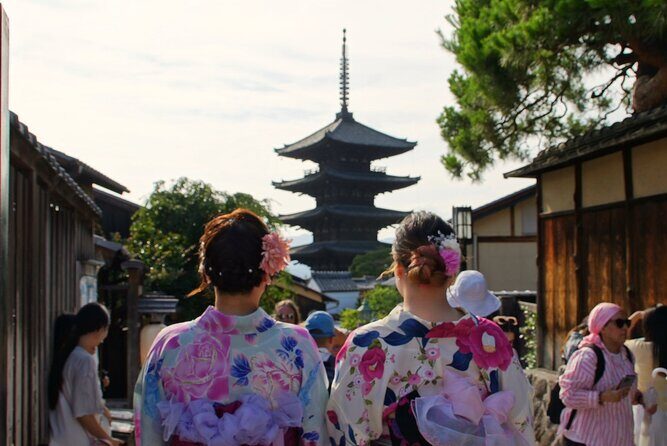
Kyoto rewards curiosity, but Gion can be confusing if you only rely on photos. This tour gives you a guided path through the geisha district area, with context that helps you read the streets instead of just passing them. You’re not trying to hit everything across Kyoto; you’re focusing on one neighborhood and learning the rules of what you’re seeing.
The timing matters, too. Two hours is long enough to get past the first “wow,” but short enough to keep your feet from filing a complaint. It’s a smart format if you’re doing other Kyoto sights on the same day and want a focused add-on rather than a full-day commitment.
I also like the tone of the tour: it’s cultural and practical. You get tips on where you might spot geisha and how to navigate the area respectfully, which is exactly what most first-timers need. And because it’s capped at 10 travelers, you’re less likely to feel like you’re chasing a group through narrow streets.
A few more Kyoto tours and experiences worth a look

Yasaka Shrine to Maruyama Park: Start With Real Kyoto Spirit
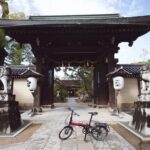
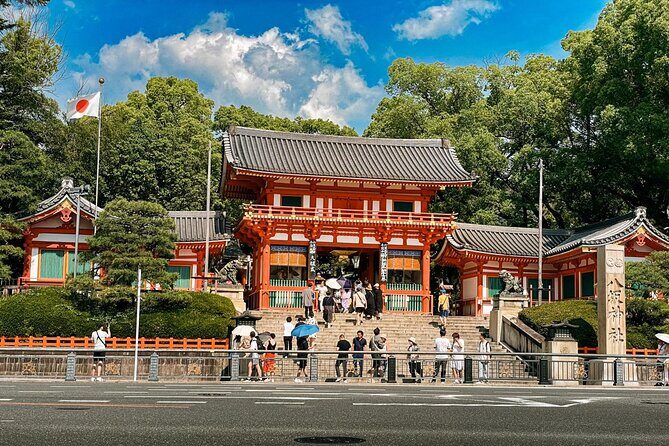
The walk kicks off at Yasaka Shrine, one of Kyoto’s best-known Shinto sanctuaries. You’ll find the iconic vermilion gate and paths lit with lanterns, plus the feeling that this is an active spiritual space, not just a sightseeing stop. Even if you don’t follow Shinto rituals, it’s a strong starting point because it sets the cultural tone for everything that follows.
From there, the route shifts to Maruyama Park, Kyoto’s oldest public park. The big draw here is seasonal beauty, including the famous weeping cherry trees. If you visit in cherry season, you’ll get the classic Kyoto postcard moment; if you visit at another time of year, you still get a calmer pocket near the crowds.
This pairing works for your pacing. Shrine first gives you meaning, then the park gives you breathing room before you hit the tighter old streets. It’s the kind of reset that makes the next parts of the walk feel more intentional instead of rushed.
Nene-no-Michi and the Sannenzaka Ninenzaka Footpath to “Old Kyoto”
After the park, you head into streets where history shows up in the architecture. Nene-no-Michi is a preserved lane named after Nene, the wife of Toyotomi Hideyoshi. You’re not just walking past shops; you’re walking through a named historic space tied to a specific figure from Japan’s past. That makes the stroll feel less random.
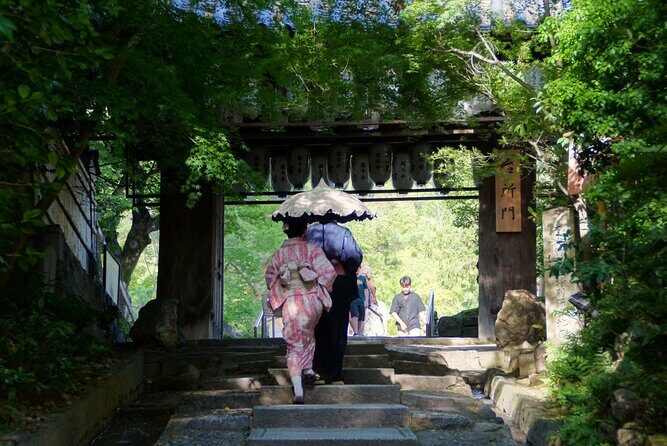
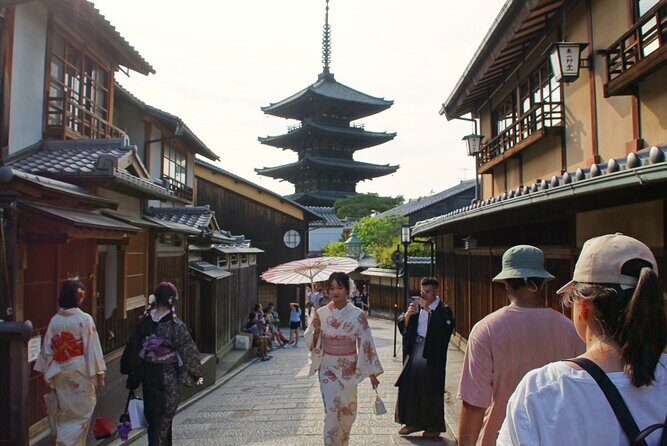
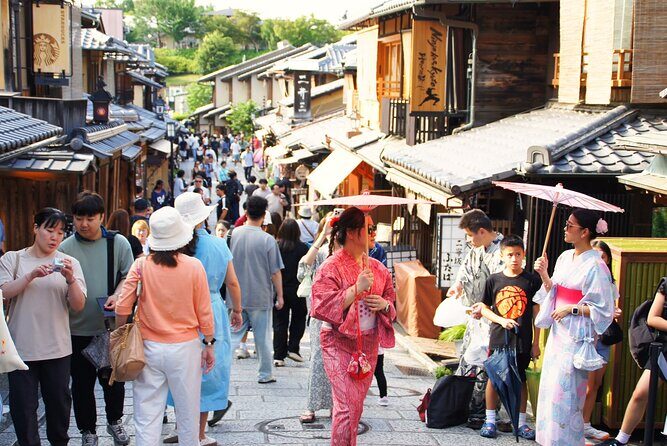
Then comes the famous descent/exploration area of Sannenzaka and Ninenzaka. These stone-paved lanes are exactly the kind of Kyoto slope that looks unreal in pictures, because the buildings and walkway make the era feel physically present. You’ll pass traditional wooden structures and see artisan-style boutiques along the way.
Two practical notes here:
- The slopes are steep enough to slow your pace, especially if you’re stopping for photos.
- Stone walkways can get slippery depending on weather, so keep an eye on your footing.
This is one of the best parts of the tour for photography, but don’t treat it like a sprint. If you keep moving while the guide explains what you’re looking at, the street stops becoming scenery and starts becoming a story you can actually follow.
Yasui-Konpiragu Power Stone: A Ritual You Can Understand
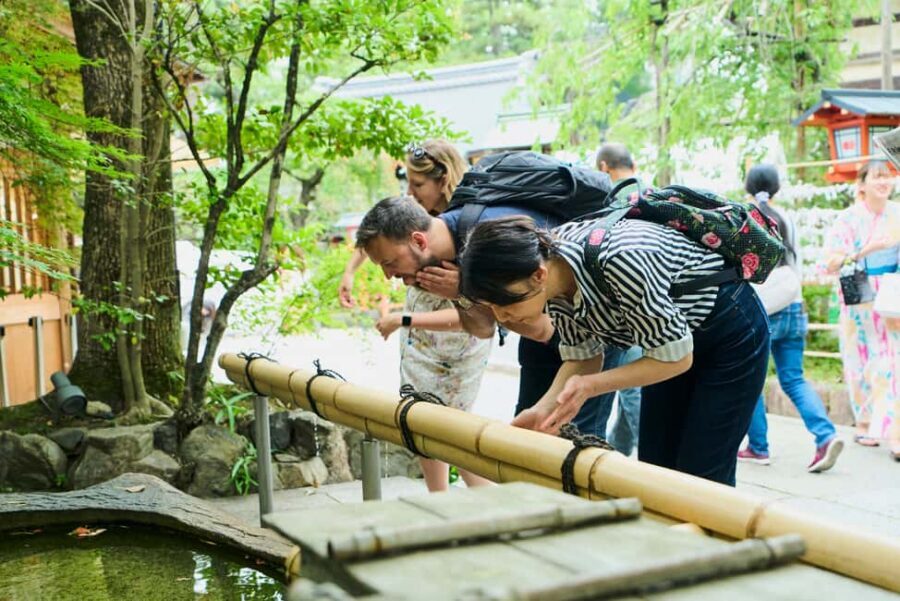
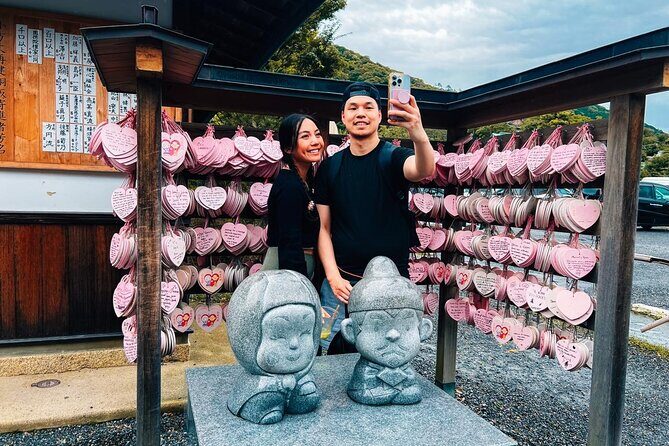
Yasui-Konpiragu is one of those Kyoto spots that turns a “quick stop” into a memorable moment. It’s known for the Power Stone archway, and the tradition involves crawling through it. People connect it to strong relationships and also to breaking ties with the past, depending on the intention of the prayer.
The practical value here is how the guide frames the ritual. When you understand what people believe and why the archway matters, the act stops looking like a quirky stunt and starts making cultural sense. It’s also funny in a human way, not just amusing on the surface, which helps the whole group stay engaged.
If you’re visiting with kids or you’re the type who gets self-conscious doing tourist activities, you’ll appreciate how this stop can be handled without forcing anyone to participate. Even just watching respectfully and learning the meaning is part of why it’s included.
Hanamikoji Street and the Geisha-Spotting Game Plan
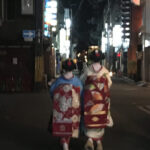
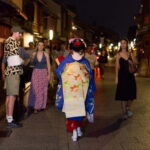
The tour ends back around the core Gion lanes, with Hanamikoji Street as the highlight. This is the centerline of the neighborhood: traditional machiya townhouses, well-known teahouses, and those soft lanterns that make the street feel ceremonial. It’s also where many people go wrong, because they assume geisha culture is just about looking.
This is where your guide’s tips matter most. You’ll get advice on how to look for signs and how to behave around people who are doing their work. The point isn’t to treat sightings like a trophy hunt. It’s more about learning what normal looks like in Gion, and knowing what to notice without crowding.
I like that the tour focuses on how to pay attention, not just “where to stand.” When you know what details to watch for, the street becomes clearer. The lantern glow and preserved architecture also help, because you’re seeing the setting that supports the tradition.
Other walking tours we've reviewed in Kyoto





Price, Group Size, and What You’re Actually Paying For
At $22.55 per person for about two hours, this is very budget-friendly for a guided cultural walk in central Kyoto. You’re paying mainly for the structure and the explanation—someone else does the connecting of dots for you. Without that, you’d probably see the streets, but you’d miss the meaning behind them.
The small-group cap at 10 travelers is part of the value. Narrow lanes don’t forgive big crowds, and a big group makes it harder to hear your guide and easier to bump into other pedestrians. With fewer people, you also tend to get better pacing and more room to ask questions.
Another value point: the tour includes an English speaking guide, plus what’s listed as admission/entry connected to the Gion and Hanamikoji area. Most of the stops themselves are free to enter, like Yasaka Shrine and parks, but the tour still packages access and timing so you don’t have to figure it out on your own.
From the guide names mentioned in past groups—Sam, Shin, Amy, Tim, Maria, and Naoya—it’s clear that strong storytelling and clear English are a big part of why people rate this tour so highly. Even if the guide you get has a different style, this is the kind of tour that depends on good communication.
What to Wear, When to Go, and How to Stay Comfortable
Because this is a walking tour, comfort planning is half the success. Wear shoes with grip for stone paths, especially if you’re going in the cooler months when surfaces can feel slick. Bring a small day bag so you can handle water, a layer, and whatever shopping you do along the way.
Timing also affects your experience. Night in Gion has a special feel because the lanterns do more work for you visually. If your tour runs in the evening, expect a different crowd energy and plan your patience. If it’s daytime, you’ll get the same streets with a brighter view and a calmer pace in some areas.
Heat is the other factor. One guide approach that stood out was keeping people in the shade when it’s hot, which tells you the tour takes weather seriously. Still, bring sunscreen and water if you’re visiting in summer, and consider a light layer for evenings.
One more etiquette tip that helps your whole trip: keep your voice down and don’t block doorways or photo angles. In Gion, the best “geisha spotting” is the kind that lets people move through their day without turning the street into a crowd scene.
Should You Book This Kyoto Gion and Geisha District Walking Tour?
Book it if you want a guided introduction to Gion that’s focused, short, and built around culture—not just famous sights. It’s a great fit for first-timers who want context fast, and for anyone who likes learning how traditions work in real neighborhoods.
Skip it (or pair it carefully) if you dislike walking, hate crowds, or only care about broad sightseeing with minimal talking. Two hours is short, but it still adds up on stone and slopes like Sannenzaka/Ninenzaka.
My take: for $22.55, the guide-led explanations plus the tight focus on geisha district streets are strong value. If you want to leave Kyoto’s Gion knowing what you actually looked at, this is an easy yes.
FAQ
How long is the Kyoto: Gion and Geisha District Walking Tour?
It’s approximately 2 hours.
What does the tour cost?
The price is $22.55 per person.
How big is the group?
This tour has a maximum of 10 travelers.
Is the guide available in English?
Yes. The tour includes an English speaking guide.
What are the main stops on the walk?
You’ll pass places including Yasaka Shrine, Maruyama Park, Nene-no-Michi, Sannenzaka Ninenzaka, Yasui-Konpiragu, and Hanamikoji Street.
Where do I meet the tour?
Meet at Starbucks Coffee – Kyoto Gion Hotel Japan, 1F.
Does the tour require a mobile ticket?
Yes. The tour uses a mobile ticket.
What’s included and what’s not included?
Included: English speaking guide and entry/admission to the Gion and Hanamikoji Street area. Not included: tips (optional).
Can I cancel for a full refund?
You can cancel for a full refund if you cancel at least 24 hours before the experience starts.
Is this tour near public transportation?
Yes, it’s listed as near public transportation, and most travelers can participate.