Gion at night feels like Kyoto turned down to a whisper. This tour strings together Yasaka Jinja, the Geisha district streets, and two neighborhood restaurants for a proper Kyoto-style evening. The payoff is not just pretty alleys, but a guided explanation of how this part of town works after dark, with time to graze instead of rush.
What I like most is the format: you get a large regional dinner across two restaurants plus drinks, so you’re not hunting menus with your stomach doing the math. I also love the small-group vibe of up to 6 people, which makes it easier to ask questions and actually talk. Names that pop up in past groups include guides like Ferdinand, Jamie, Lito, and Laura, and they all seem to share the same knack for keeping the night fun and understandable.
The main thing to consider is that portions can feel more like tapas-style bites than a heavy single-meal shutdown. Also, a couple of reviews flagged smoking at one or both restaurant stops, so if that’s a deal-breaker for you, plan accordingly.
In This Review
- Key things that make this Gion night food walk work
- Meeting Minamiza Theater: start where Gion actually begins
- Yasaka Jinja at night: lighting, atmosphere, and what to notice
- Gion’s narrow lanes and the Geisha district: stories that make the sights make sense
- Kamo River at evening pace: a calmer break between street energy and dinner
- Restaurant stops: how the two-meal format pays off
- Stop 1 (around 45 minutes): beer and drinks, plus varied Kyoto bites
- Stop 2 (around 30 minutes): Ponto-cho area eats and more drink time
- Special option: Kobe (or nearby sourced) beef upgrade
- Dietary considerations (what you should expect)
- Ponto-cho after dark: where the second half of the night comes alive
- Small group and multilingual guide: why the night feels personal
- The real value of $92: what’s included, and what that saves you
- Who this tour fits best (and who should skip it)
- Should you book this Kyoto Night All-Inclusive Eats and Streets tour?
- FAQ
- Where do we meet for the tour?
- How long is the Kyoto Night All-Inclusive Eats and Streets tour?
- What’s included in the price?
- How big is the group?
- What languages are available for the guide?
- Is there a Kobe beef option?
- Is the tour suitable for kids or for people with mobility impairments?
- Can I cancel for a refund?
Key things that make this Gion night food walk work

- Yasaka Jinja after dark: a short, guided start that sets the mood without eating your whole evening.
- Geisha district context: your guide explains local customs and what you’re seeing on those narrow streets.
- Two restaurant stops: enough food variety to taste multiple Kyoto flavors without bar-hopping.
- Small group (max 6): easier conversation, faster answers, less standing around.
- Bite-sized pacing with breaks built in: you walk, you graze, you walk again—comfortable for a 3-hour plan.
- Optional Kobe beef upgrade: available if you book far enough ahead.
Meeting Minamiza Theater: start where Gion actually begins

Your night starts at Minamiza Theater, right at street level by Gion-Shijo Station exit 6. That’s a smart choice: you’re already in the right neighborhood, and you don’t waste time commuting across town.
This also matters because Gion’s streets get busy fast. A quick start from a local focal point helps you get oriented before the night crowds press in. Bring comfortable shoes—you’ll be walking most of the tour, and the sidewalks are not always wide or even.
A few more Kyoto tours and experiences worth a look

Yasaka Jinja at night: lighting, atmosphere, and what to notice

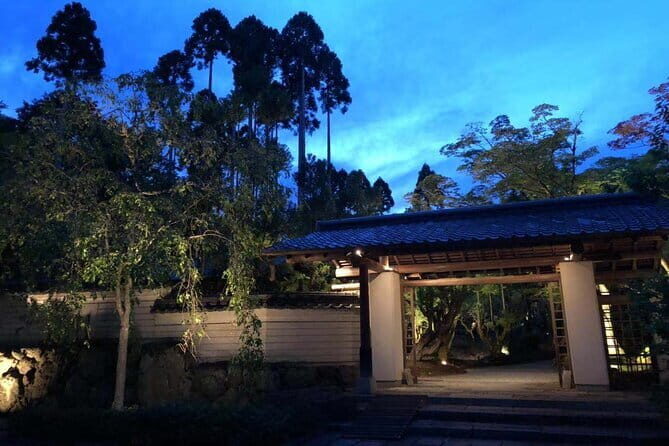
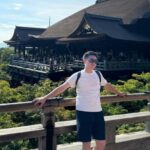
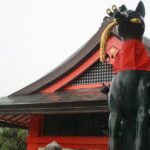
The evening begins with a stop at Yasaka Shrine (Yasaka Jinja) for a short guided visit and walk—about 15 minutes. Even in a brief window, being there at night changes the whole experience. The shrine glow and surrounding streets feel quieter, and your guide can point out what you’d miss in daylight: small details, the rhythm of shrine-area behavior, and why this spot is such a key symbol for Kyoto.
This is also a good warm-up moment. Before you hit entertainment-district streets, you get a cultural grounding. If you’re the type who wants to understand where you are before taking photos, this opening works.
A small practical note: this stop is brief. Don’t count on it as your only chance to slow down and absorb everything. The tour’s value is in the sequence—shrine first, then streets, then food.
Gion’s narrow lanes and the Geisha district: stories that make the sights make sense

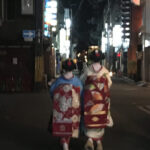
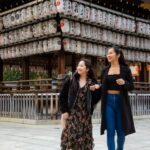
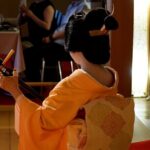
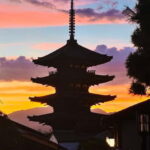
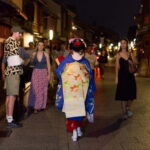
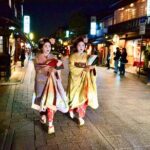
Next you’ll walk through Gion, with another guided sightseeing stretch around 15 minutes. On foot, Gion’s narrow lanes feel more real and less postcard-like. But what makes the tour worthwhile is the guide’s job: connecting what you see with how the district functions, and adding context about the Geisha world.
You’re not just looking at buildings and signs. You’re getting explanations about local rules and cultural mores—basically, how to behave in a place that’s both a historical district and part of modern nightlife. Your guide keeps the tone light and fun, so it doesn’t feel like a lecture while you’re walking.
Here’s what I’d watch for: along these streets, there’s often a mix of quiet storefronts, pedestrian flow, and nightlife energy. The tour helps you sort what’s “tourist street” versus what’s more neighborhood-like. That makes it easier to return later on your own without feeling lost.
Kamo River at evening pace: a calmer break between street energy and dinner

A guided stroll by the Kamo River gives you a breather between the district walks and the restaurant stops. The river section isn’t timed down to the minute in the schedule you shared, but it functions like a reset. You’ll slow your pace, look around, and let the night settle in.
I like this kind of pacing because Gion can make you want to rush—there’s so much to see. The river leg gives your eyes a rest, and it also helps you switch from sightseeing mode to food-and-drinks mode without the “I’m tired and hungry” crash.
Restaurant stops: how the two-meal format pays off

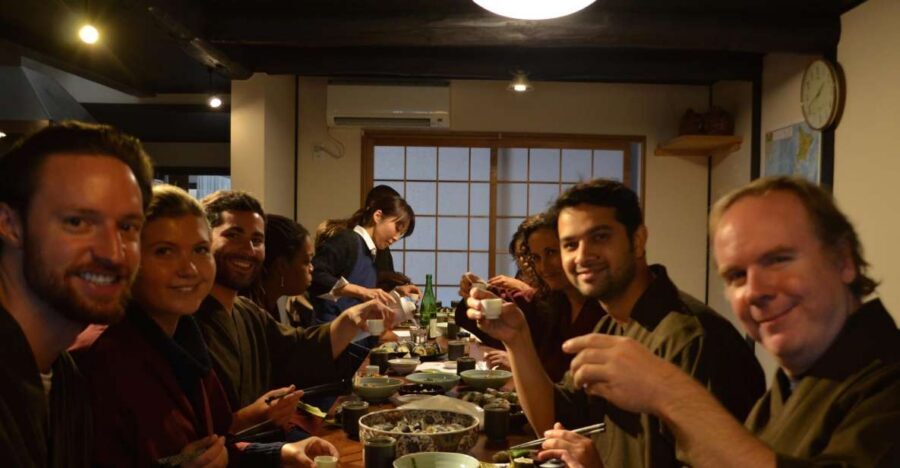
This is the core of the tour: two local restaurants where you graze through multiple small plates, in a Japanese-style tapas format, and you get two drinks total (alcoholic or non-alcoholic). The first meal block is about 45 minutes, then there’s more street walking, then a second restaurant stop of about 30 minutes.
Other evening experiences in Kyoto




Stop 1 (around 45 minutes): beer and drinks, plus varied Kyoto bites
You’ll start the food portion at a local restaurant that includes beer, cocktails, or spirits alongside dinner. The goal isn’t one big dish; it’s variety. That’s why the tour works well for first-timers—your guide brings you to places you probably wouldn’t find alone, and you sample more than you could order randomly.
One review note that matters: portions can be smaller because the format is tapas-style. If you’re used to “sit down and eat a full set meal,” you might wonder if it’s enough after the first restaurant. The structure fixes that. By the time you reach the second spot, you’ve usually built a full meal out of several bites.
Stop 2 (around 30 minutes): Ponto-cho area eats and more drink time
The second restaurant stop is timed at about 30 minutes and happens near Ponto-cho. This area is all narrow alleys and river-facing vibes, and the food tends to match the setting—more evening-walk friendly, easy to enjoy without turning it into a long restaurant commitment.
As with the first stop, you’re getting more small plates and a second drink. Some groups also mention traditional-feeling spots and shareable ordered samples, which is exactly what you want on a night walk: you don’t have to decode menus while you’re hungry and jet-lagged.
Special option: Kobe (or nearby sourced) beef upgrade
There’s an optional Kobe (or nearby sourced) beef choice. The key detail: it’s only available if you book at least 10 hours in advance. If this is on your wish list, don’t assume you can add it at the last minute.
This upgrade can be a smart value move because it upgrades one of the tastings without turning the whole tour into an expensive add-on situation.
Dietary considerations (what you should expect)
The tour includes food, and at least one prior group report mentioned a vegetarian guest being accommodated with alternatives. Still, menus can shift seasonally and by restaurant availability, so if you have strict dietary needs, I’d message in advance and keep your expectations flexible.
Ponto-cho after dark: where the second half of the night comes alive

After the Kamo River and the first restaurant stop, you’ll spend time exploring Ponto-cho with guided sightseeing (around 30 minutes). Ponto-cho is famous for evening atmosphere, and walking it as part of a structured night is better than wandering without a plan.
What you gain here is context. Your guide can explain what you’re seeing in the flow of the district—how entertainment, history, and everyday life sit side by side. That’s the part that helps you appreciate the place instead of just taking photos and moving on.
Also, this timing helps. By the time you reach Ponto-cho, you’re already in “Kyoto at night” mode. You’ve had a shrine and some district street orientation, and now you can focus on the river-adjacent lanes and what makes the nightlife feel distinct.
Small group and multilingual guide: why the night feels personal

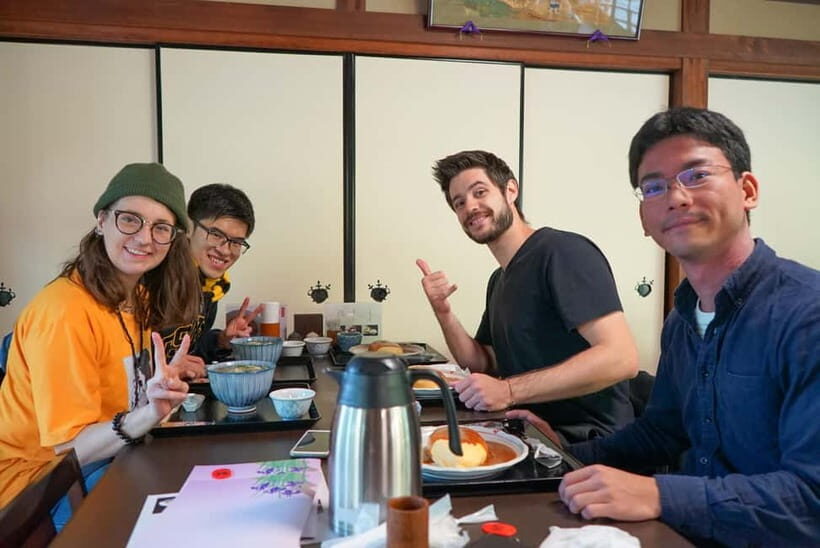
This tour runs in a small group of no more than 6. That size changes everything. You’re not competing for your guide’s attention, and you’re more likely to actually connect with other people in your group. Several past participants described it as feeling like walking with friends, not herded sightseeing.
You’ll also have a live guide fluent in your language, with options including Spanish, French, and English. Past guide names mentioned in the experience include Jamie, Lito, Laura, Hugo, Maya, Hugo, Andres, and Damian—each described as engaging and easy to follow.
Here’s what that means for you: you can ask why a street looks the way it does, what a sign is hinting at, or what you should notice next. And your guide can keep the night’s pace comfortable for a walking-and-eating format.
The real value of $92: what’s included, and what that saves you

At $92 per person for 3 hours, this isn’t a bargain-price snack walk. But when you break it down, the value makes sense.
You’re paying for:
- a guided evening across multiple key areas (not just one neighborhood),
- full dinner coverage across two restaurants,
- two drinks included,
- and gratuities are handled (tipping isn’t typical in Japan).
If you were doing this on your own, you’d likely spend time researching restaurants, translating menus, and trying to coordinate what to eat that won’t leave you underfed or ordering too little. This tour replaces that decision fatigue with a plan.
The only “cost risk” is that tapas-style bites might not satisfy your appetite after the first restaurant unless you’re comfortable finishing with the second. If you go in expecting a true full meal by hour three, you’ll feel good.
Who this tour fits best (and who should skip it)

This is a great match if:
- you want a guided orientation to Gion and Ponto-cho at night,
- you like sampling food in small bites across multiple places,
- you’d rather learn local context than just wander,
- and you enjoy conversations with a small group.
It’s not suitable for:
- people with mobility impairments (there’s walking),
- and children under 18.
If you’re sensitive to smoke, take that seriously. A couple of reviews flagged smoking in indoor restaurant/bar settings during one of the stops. Since the tour includes restaurant time, you might want to ask your operator ahead of time if there’s a non-smoking seating plan or if it’s mostly unavoidable.
Should you book this Kyoto Night All-Inclusive Eats and Streets tour?
Book it if you want your first Kyoto evening to feel guided, social, and food-focused—without cramming in too many logistics. The two-restaurant dinner, the small group cap, and the night explanation of Gion/Geisha-area culture are the big reasons this works.
Skip it or plan carefully if you need a very large meal right away, or if smoke exposure is a deal-breaker. In that case, message about restaurant choices before you go.
If you’re flexible, comfortable walking, and excited to taste Kyoto in a way that feels local rather than “look-and-leave,” this is a strong way to spend a 3-hour night in Gion.
FAQ
Where do we meet for the tour?
Meet in front of Minamiza Theater, at street level of Gion Shijo Station exit 6.
How long is the Kyoto Night All-Inclusive Eats and Streets tour?
The tour lasts 3 hours.
What’s included in the price?
You get a full dinner across two restaurants, plus two drinks (alcoholic or non-alcoholic). Gratuities are included, and tipping is not customary in Japan.
How big is the group?
It’s a small group, with no more than 6 participants.
What languages are available for the guide?
Guides are available in Spanish, French, and English.
Is there a Kobe beef option?
Yes. A Kobe (or nearby sourced) beef option is available if you book at least 10 hours in advance.
Is the tour suitable for kids or for people with mobility impairments?
No. It’s not suitable for children under 18 and not suitable for people with mobility impairments.
Can I cancel for a refund?
Yes. You can cancel up to 24 hours in advance for a full refund.