A calm hour of music lessons.
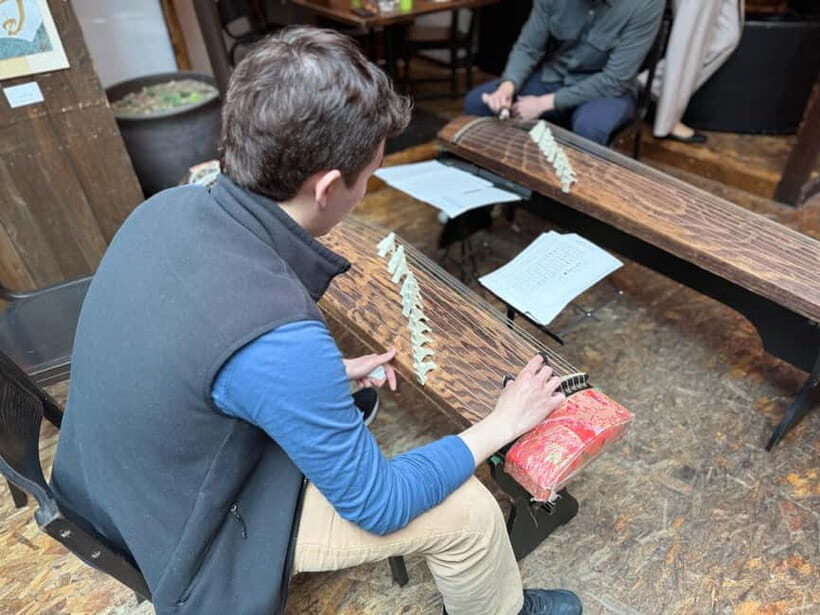
In Kyoto, you can get your hands on a traditional Japanese koto and learn what makes its sound so relaxing. I like that the session starts with a live performance, so you hear the instrument in action before you touch it. I also like that you jump into playing Sakura Sakura, a famous folk song you can recognize and practice right away. One consideration: with just 90 minutes, you’ll learn the fundamentals and one main tune, not a full concert-worthy repertoire.
The setting helps, too. Gojo Paradiso sits along the Takase River on Kiyamachi Street, so the lesson feels like it’s happening in a quiet pocket of the city. The instructor (Natsuko is named in reviews) is consistently described as friendly and patient, and that matters when you’re working with a new instrument and a new technique. Since this is a small group capped at 10 people, it won’t feel like you’re competing for attention.
In This Review
- Kyoto Koto Class: What You’ll Actually Do in 90 Minutes
- Starting at Gojo Paradiso by the Takase River
- The Live Koto Performance: Why You Start by Listening
- Learning Sakura Sakura: The First Tune That Clicks
- When You Can Try Other Songs (and What That Means)
- Small Group Energy: Limited to 10 People
- Photos and Videos: Capture It Without Stress
- Price and Value: Why $32 Often Feels Fair in Kyoto
- Who This Koto Lesson Is Best For (and Who Should Skip It)
- A Balanced View: The One Trade-Off to Plan For
- Tips to Get the Most From Your Lesson
- FAQ
- How long is the Kyoto koto musical instrument class?
- How much does it cost?
- Where is the meeting point?
- Is prior musical experience required?
- What will I learn to play?
- Do I get photos or videos opportunities?
- What languages does the instructor speak?
- How big is the group?
- Is the class suitable for children?
- Is it accessible for wheelchair users?
- Is there a refund if I cancel?
- Should You Book This Kyoto Koto Class?
Kyoto Koto Class: What You’ll Actually Do in 90 Minutes
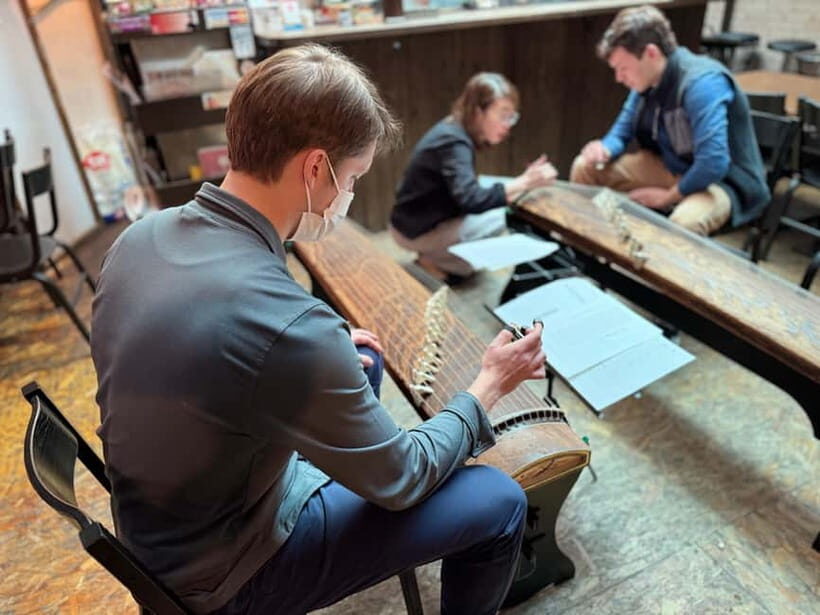
This is a beginner-friendly hands-on music class built around one clear goal: help you play the koto with confidence, even if you’ve never studied an instrument before. The flow is simple. You start by listening, then you learn, then you play, and finally you try more if time allows.
Here’s the basic rhythm you can expect:
- You watch a live performance on the koto.
- You learn Sakura Sakura step by step.
- Once the basics feel comfortable, you may try additional songs.
- You capture the moment with photos and videos.
It sounds straightforward because it is. That’s the point. You’re not there to memorize a music theory textbook. You’re there to hear the instrument, learn how it feels under your hands, and walk away with a real experience you can replay in your own mind back home.
Starting at Gojo Paradiso by the Takase River
Meeting at Gojo Paradiso is part of why this class feels pleasant instead of rushed. The location is on Kiyamachi Street, along the Takase River, and it’s walkable from two Keihan stations.
From Keihan Kiyomizu Gojo Station, plan on about a 5-minute walk. From Keihan Shichijo Station, it’s closer to a 10-minute stroll. If you’re already touring around Higashiyama or central Kyoto, it’s easy to plug this into an afternoon break.
Practical tip: Kyoto streets can be a little confusing when you’re weaving between lanes and river views. Give yourself a few extra minutes the first time you walk this route so you’re not doing a last-second scramble while also trying to focus on music.
A few more Kyoto tours and experiences worth a look


The Live Koto Performance: Why You Start by Listening
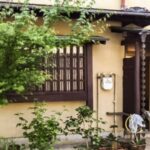
The lesson begins with a live koto performance. This is more than a warm-up. Listening first helps your hands later because you get a feel for:
- the pace of the tune,
- how the melody “lands” on the strings,
- and how the instrument’s tone changes with technique.
It’s also a quick way to appreciate the calming side of koto music without needing any background reading. You can just listen, notice what you like, and then see how that sound gets created.
One reason this matters for beginners: it sets expectations. When you’re learning a new instrument, the worst moment is pressing buttons and wondering why nothing sounds right yet. A live demo gives you the target sound up front.
Learning Sakura Sakura: The First Tune That Clicks
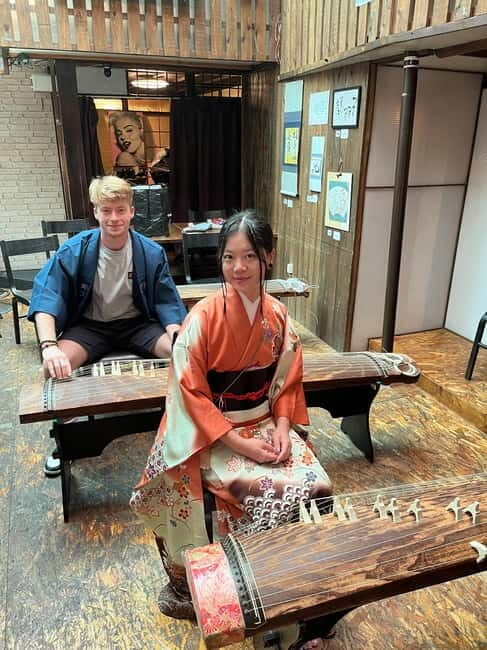
After the live performance, you move into playing Sakura Sakura—the famous Japanese folk song most people can instantly recognize. This is the best choice for a first session because it’s melodic and forgiving in a teaching sense. You’re not chasing something overly complex right away.
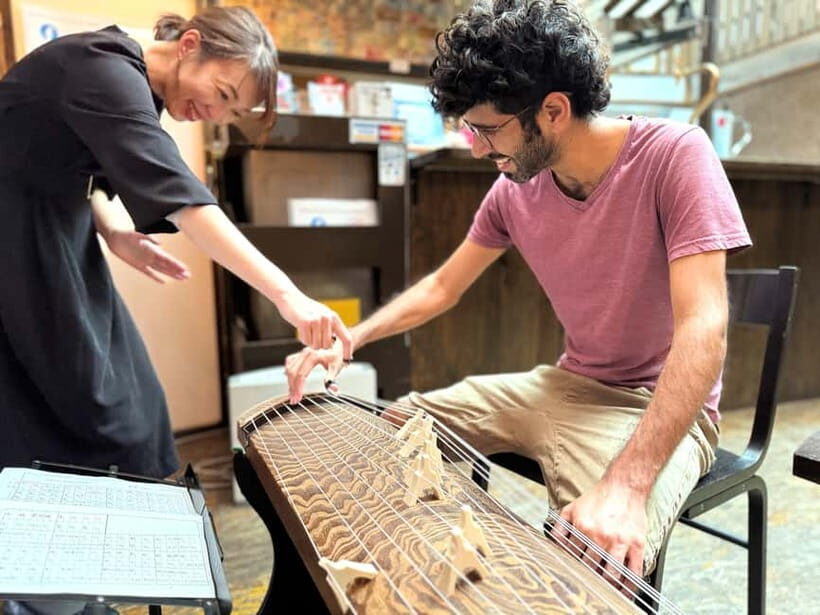
The instructor guides you through the basics so you can actually play rather than just hold the instrument. And because the instructor teaches in English and Japanese, you can ask questions without translation gymnastics.
In the reviews, multiple people highlight how patient the teaching feels. One person even notes that the lesson made them feel capable as a true beginner. That’s exactly what you want from a first musical class: enough structure to get started, but not so rigid that you feel stuck.
When You Can Try Other Songs (and What That Means)
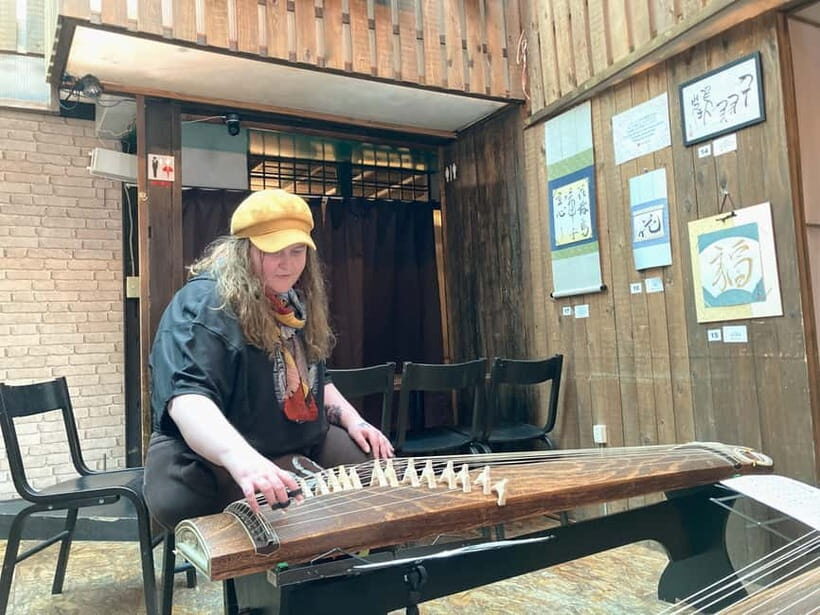
Once you master the main tune to a comfortable point, you can try other songs if time allows. This is important because 90 minutes can feel short, and you’ll likely want something beyond just one moment of success.
Trying additional songs usually helps in two ways:
- it reinforces technique through repetition, not just theory,
- and it gives you more than one souvenir moment.
Even if you only get through a second song or a short variation, it turns the class from a single-song “check the box” activity into a mini music experience.
Small Group Energy: Limited to 10 People
The class runs as a small group with a maximum of 10 participants. That limit makes the lesson more workable for beginners. You’ll get more attention than you would in a large workshop, and you’re less likely to feel like the instructor is moving too fast.
It also means the group stays relaxed. You’re not sharing your learning time with a dozen strangers. You’re there to learn an instrument, not to perform in front of a crowd.
And from the reviews, it looks like the teaching can feel personal even when the group is small. That’s a nice bonus when you’re worried about being new.



Photos and Videos: Capture It Without Stress
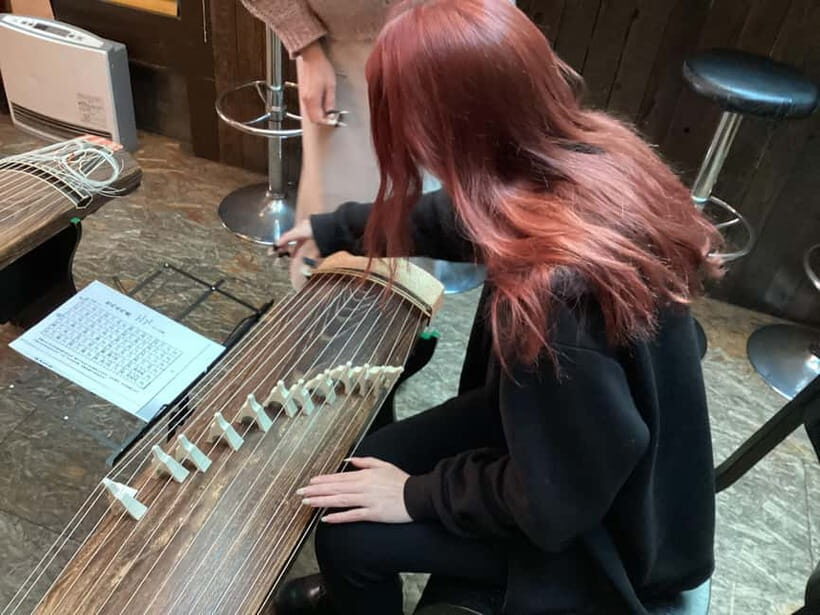
You’ll have time to capture the moment with photos and videos. This is a practical benefit because your first time playing will be worth remembering. You’ll probably want a quick clip to show friends, and you’ll definitely want something to remind you later when the details start to fade.
Tip: keep your phone ready, but don’t let filming steal your attention from learning. Let the instructor finish key steps, then grab a short clip. That way you end up with both memories and progress.
Price and Value: Why $32 Often Feels Fair in Kyoto
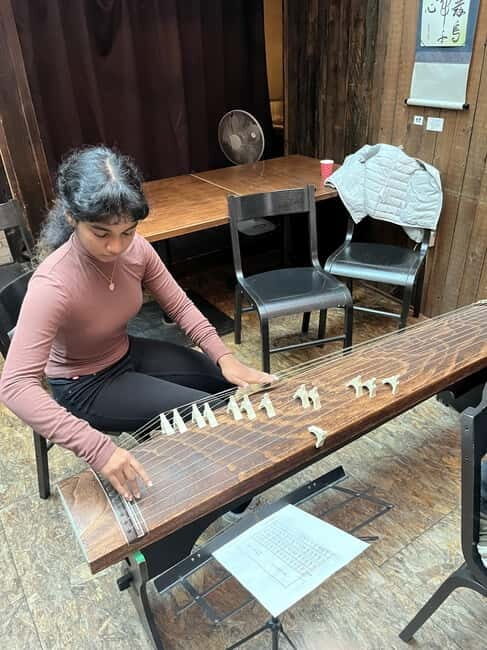
At $32 per person for a 90-minute hands-on class, this sits in a reasonable range for Kyoto. What makes the price feel fair is that you’re not just watching a show. You get:
- an expert instructor,
- a koto and necessary materials provided,
- and instruction with no prior experience required.
So you’re paying for coaching plus instrument time. In Kyoto, that’s often where real value shows up. Many cultural activities are either purely observational or require you to bring your own gear. Here, you arrive, learn, and play.
Also, the “try other songs” possibility means you can get more than one payoff moment in the session. For the cost, that’s a good deal.
Who This Koto Lesson Is Best For (and Who Should Skip It)
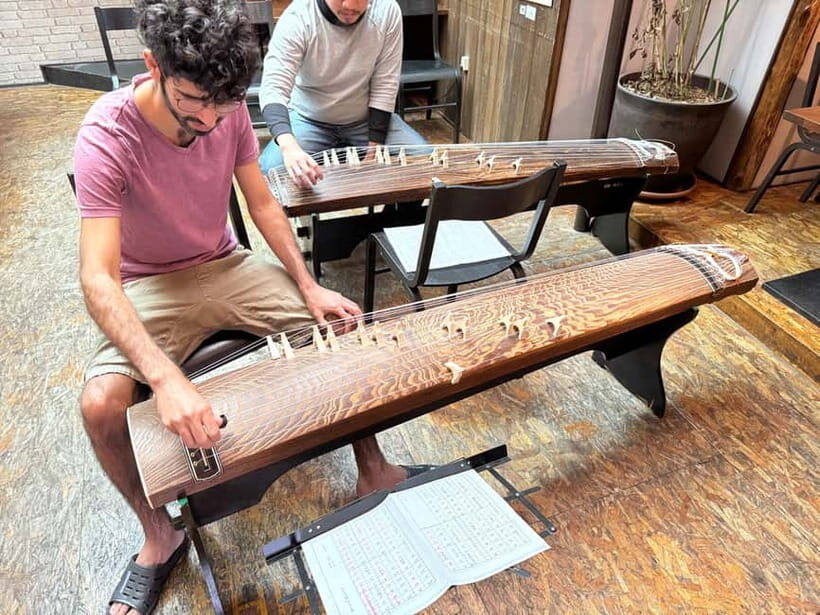
This class is a strong fit if you fall into any of these categories:
- you want a calm, cultural activity in Kyoto that isn’t a long museum day,
- you like hands-on experiences more than passive sightseeing,
- you’re a music fan curious about Japanese instruments,
- you’re traveling with a beginner-friendly mindset.
It’s also a decent option if you don’t have any instrument background. The lesson is explicitly designed for beginners.
A clear non-fit: children under 10 years are not suitable. If you’re traveling with younger kids, you’ll need to plan something else.
A Balanced View: The One Trade-Off to Plan For
The main trade-off is time. Ninety minutes is enough to learn basics, but it’s not enough to master multiple koto pieces or develop advanced technique. If you’re hoping to leave playing like a seasoned performer, you’ll feel disappointed.
That said, the class is designed to build real fundamentals quickly. If your goal is to leave with a tune in your hands and a deeper understanding of the instrument’s sound, you’ll likely be happy with what you get.
Tips to Get the Most From Your Lesson
These are the small things that usually make the difference with instrument classes:
- Arrive ready to focus for the full 90 minutes. New techniques don’t stick if you drift.
- Listen during the demo as if you’re learning a language. Notice rhythm and tone, not just notes.
- Don’t be shy about asking questions. The lesson uses English and Japanese, and that helps.
- Keep expectations simple: your first win is playing Sakura Sakura clearly enough to feel like you did it.
And one extra thought: koto technique can feel unusual at first. That’s normal. Your job is to get the movement right and let sound come afterward. The instructor’s patience is a big part of making that feel doable.
FAQ
How long is the Kyoto koto musical instrument class?
The class lasts 90 minutes.
How much does it cost?
It costs $32 per person.
Where is the meeting point?
You meet at Gojo Paradiso on Kiyamachi Street, along the Takase River. It’s about a 5-minute walk from Keihan Kiyomizu Gojo Station and about a 10-minute walk from Keihan Shichijo Station.
Is prior musical experience required?
No. The class is beginner-friendly and requires no prior experience.
What will I learn to play?
You will learn the folk song Sakura Sakura. After that, you may also try other songs if time allows.
Do I get photos or videos opportunities?
Yes. You can take photos and videos during the experience.
What languages does the instructor speak?
The instructor speaks English and Japanese.
How big is the group?
It’s a small group limited to 10 participants.
Is the class suitable for children?
The class is not suitable for children under 10 years.
Is it accessible for wheelchair users?
Yes, it is wheelchair accessible.
Is there a refund if I cancel?
You can cancel up to 24 hours in advance for a full refund.
Should You Book This Kyoto Koto Class?
If you want one of Kyoto’s most satisfying “do something real” cultural experiences, this is a smart pick. You’ll get a live koto introduction, then real instruction that gets you playing Sakura Sakura in a relaxed small-group setting. With a $32 price for a full 90-minute hands-on session (including instrument and materials), the value is strong.
Book it if you like calm activities, music, and learning by doing. Skip it only if you need something for kids under 10 or if you’re expecting advanced mastery in a single afternoon. For most adults, this is the kind of Kyoto moment you’ll remember for how it felt, not just how it looked.