Your hands make the dye art.
In Kyoto, this Roketsu workshop walks you through the bucket-dyeing process start to finish, from drawing ideas to painting wax patterns. Then you leave with a finished textile you can take home that day, which is a rare treat in a city full of souvenirs you buy, not make.
I love the creative control: you can copy a pattern from lots of options or design your own if you bring a sketch. I also like the studio’s gentle pace under the care of the owner and his mother, Yoko, who help without rushing you.
One thing to plan for is limited English. The instructions are mostly hands-on and visual, so if you need lots of detailed explanations in English, you may find it a bit challenging.
In This Review
- Key highlights I’d book for
- Roketsu dyeing Kyoto: bucket dye + your own drawing
- Finding Roketsu73 and settling in
- Choosing your fabric and design (stencils or your sketch)
- Painting melted wax: the hands-on moment
- Bucket dyeing and finishing: watching your pattern appear
- Timing: plan for 2 hours, but expect longer for detail
- Price and value: about $25.77 for real craft time
- Language barrier and group vibe in the studio
- Who should book this Roketsu workshop
- Should you book Roketsu dyeing at Roketsu73?
- FAQ
- How long does the Roketsu dyeing experience take?
- What can I dye or make in the workshop?
- Can I bring my own sketch to use for my design?
- Do I need experience or artistic skill?
- How big is the group?
- Is English spoken at the workshop?
- What happens if the weather is bad or I need to cancel?
Key highlights I’d book for
- 100% bucket-dyeing experience that matches the full process, not just a quick demo
- Stencils plus freehand design so beginners and confident artists both get a good result
- Wax-resist painting where you physically create the pattern before it turns into dye
- Family-run, patient guidance from the owner and his mother, Yoko
- Calm, seated craft time that feels like a break from walking and sightseeing
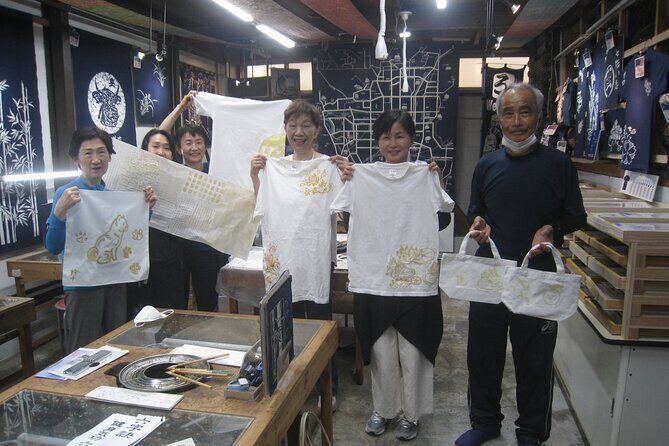
- A wearable or hanging souvenir you make yourself and take home the same day
Roketsu dyeing Kyoto: bucket dye + your own drawing
Roketsu dyeing is a wax-resist style craft where your design becomes the map for where dye can and can’t go. The workshop approach here is simple to understand in real life: you create the pattern on fabric with wax, and then the dyeing happens so the final look matches your handwork.
What makes this workshop especially appealing is that it’s not a passive activity. You’re doing the drawing, the wax painting, and the setup work that turns a blank item into a finished souvenir. It feels more like making art than following a script.
Also, you’re not stuck with one type of outcome. You can start from a stencil, but you can also bring your own sketch and combine drafts to shape an original design. That means the result feels personal even if you’re not an expert artist.
If you're still narrowing it down, here are other tours in Kyoto we've reviewed.



Finding Roketsu73 and settling in
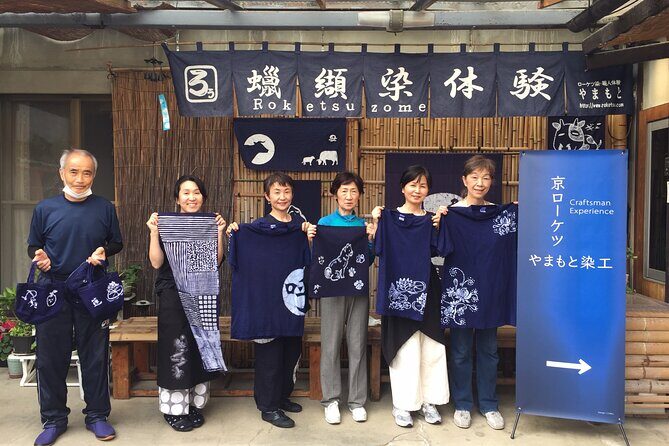
The meeting point is at Roketsu73 (Nishikyōgoku Umazukachō, Ukyo Ward, Kyoto). It’s described as being near public transportation, so you should be able to weave it into your day without extreme detours.
You’ll use a mobile ticket, which keeps things smooth. The studio size is limited (up to 30 people), so it’s not a huge factory vibe where you’re one face in the crowd.
One practical thing I like about this kind of craft stop: it’s outside Kyoto’s main tourist rush. That matters because your brain gets a rest. Even if you’ve been wandering temples all morning, you’ll likely feel more calm the second you sit down with your materials.
Choosing your fabric and design (stencils or your sketch)
You’ll start by deciding what you want to make. The workshop lets you create items like a t-shirt, a tote bag, or a hanging banner (the exact options can vary, but the range is meant for both wearing and displaying).
Then comes the design decision, and this is where the workshop wins points for flexibility:
- Pick from a large set of stencil-style designs if you want a guided starting point
- Or bring your own sketch and use it as your blueprint
Many people worry they’re not artistic enough. The reality is that you don’t need to be a painter. Stencils help you get the structure right, and freehand is encouraged in a way that supports your final look.
If you bring your own sketch, you’ll have more freedom to match a personal idea—names, motifs, symbols, or anything you want to remember from Kyoto. Just know the craft outcome can vary because dye results depend on conditions. That’s part of the charm: even a similar sketch can become a slightly different piece.
Painting melted wax: the hands-on moment
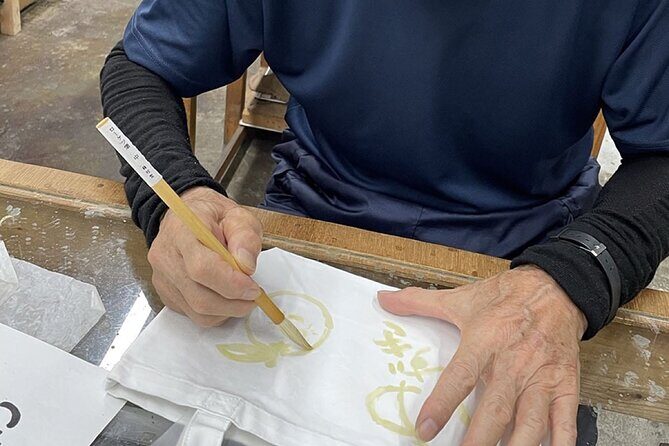
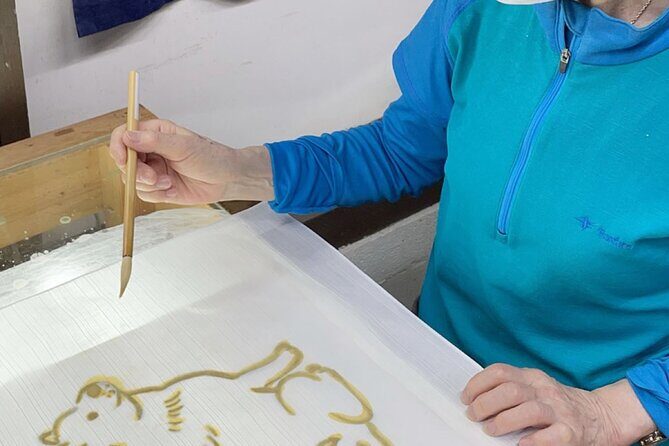
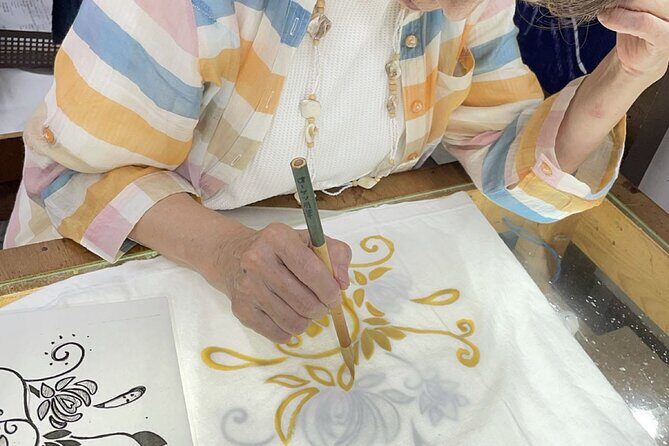
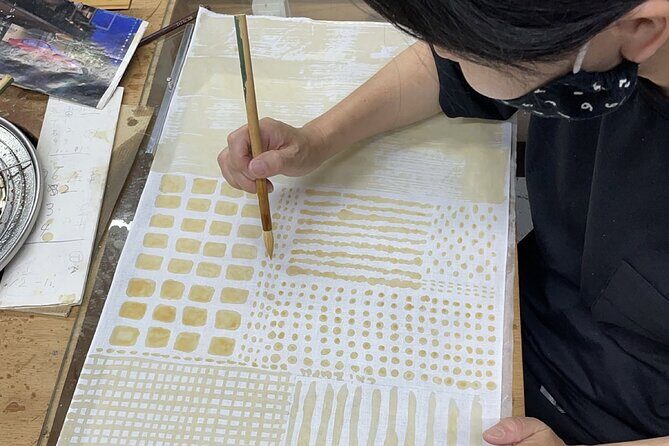
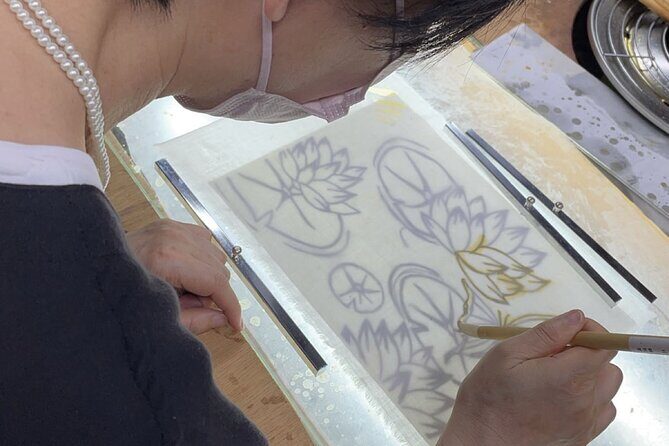
This is the core of Roketsu dyeing, and it’s also why the workshop feels satisfying. Your pattern is created by painting or applying wax onto the fabric in the places you want to resist dye.
A great detail: you get a chance to practice, often with a small piece of cloth before you start on your final item. That practice step is worth paying attention to. It helps you understand how your strokes translate into final lines and shapes.
You’ll work at the studio with the instructors guiding the steps. The owner and Yoko are known for being kind and patient, and they’ll show you what to do rather than just giving you materials and walking away. Even when English is limited, their explanations tend to stay practical—step-by-step, with demonstrations you can copy.
Also, you’re not doing this under a stopwatch. People often take extra time for more intricate designs. If you like detail, give yourself breathing room. A complex design can stretch the experience longer than the headline timing.
Bucket dyeing and finishing: watching your pattern appear
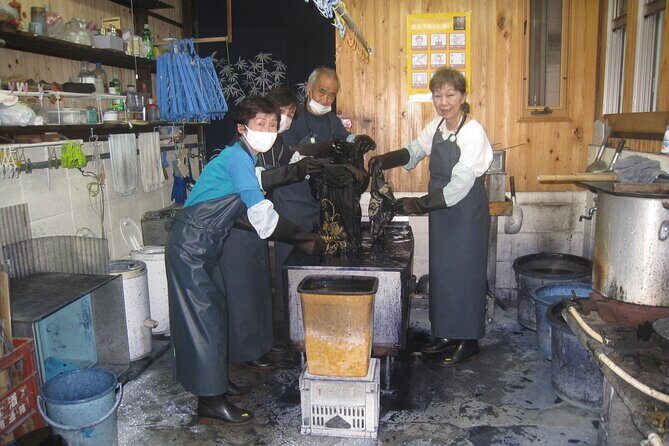
After the wax is placed, the dyeing phase turns the whole process into a transformation. Dye can’t penetrate where wax blocks it, so your lines and shapes start to define the final composition.
One reason the workshop gets such strong praise is that the work still feels guided even as you take the creative lead. You might do the key creative steps, but the dyeing and finishing are handled in a way that helps you get a strong result without needing specialized dye knowledge.
Then you get the best part: seeing the finished piece come together from what looked like a wax-covered fabric. It’s the kind of moment that makes the souvenir feel real, not store-bought.
And because you can take the item home the same day (the workshop says around 90–120 minutes), you don’t have to plan a separate pickup later. That’s especially handy if you’re moving hotels or trying to pack light.



Timing: plan for 2 hours, but expect longer for detail
The experience is listed at about 2 hours and described as roughly 90–120 minutes. But I’d treat that as a guideline, not a promise.
If you choose more intricate designs or spend time refining your sketch, the process can run longer. People sometimes take extra time just to get their drawings right before wax painting begins. That extra time is usually not rushed away, which is a good thing—your result tends to improve with your attention.
My practical advice: schedule it at a time when you’re not sprinting to another timed reservation right afterward. Think of it as your decompression slot. Even a short break from walking temples helps your whole day feel better.
Price and value: about $25.77 for real craft time
At around $25.77 per person, this workshop is priced like an affordable cultural class—but the value comes from what you actually do. You’re paying for:
- hands-on instruction
- materials for a finished item
- and the ability to take your piece home the same day
Many Kyoto craft experiences still feel like a “watch and make one small thing” deal. Here, the hands-on ratio is higher. You draw, you apply wax, and you see the dye outcome as your work.
Also, it’s described as a small, family-run setup. That tends to matter in places where craftsmanship is the product, not just a backdrop for photos.
If you want a souvenir that’s personal and made by you, this is one of the best value types of activities in Kyoto. The cost is low enough that it doesn’t feel like a splurge, while the result feels like something you’ll keep using or displaying.
Language barrier and group vibe in the studio
English support is limited, so don’t expect a lecture. Instead, expect demonstrations and lots of practical guidance.
The upside is that the craft itself is physical. When you’re painting wax and seeing what the instructor does, you don’t need perfect vocabulary to follow. That said, one fair consideration is confusion can happen if you’re trying to understand every step verbally.
Group size is limited to 30 travelers max, so you’re not battling for space at a giant bench. The overall vibe is often described as soothing and relaxing—more seated craft time than standing around.
This also makes it a strong family activity. There’s a reason it works for different ages: everyone can contribute at their own comfort level, and the final piece is rewarding even if your drawing isn’t perfect.
Who should book this Roketsu workshop
You’ll probably love this if you:
- want a break from temple-heavy days
- like hands-on crafts and making something you can wear or hang
- enjoy the idea of Japanese wax-resist dyeing in Kyoto
- want a souvenir with real personal meaning
It’s also a good option for solo travelers because the studio supports people who aren’t part of a group dynamic. You’ll still get help, and the activity structure keeps you from feeling lost.
Families are another strong match. It’s the kind of activity where teens and adults can disconnect for a while because there’s something real to do with your hands.
Should you book Roketsu dyeing at Roketsu73?
If you want a Kyoto experience that feels creative, calm, and genuinely connected to craft—not just sightseeing—yes, book it. The combination of wax-resist creativity and same-day take-home value is hard to beat at this price.
Book it with two expectations: first, plan for limited English and learn through watching and doing. Second, allow extra time if you choose a detailed design. If you do those two things, you’ll walk away with a piece that feels made by you, not bought for you.
FAQ
How long does the Roketsu dyeing experience take?
It’s listed at about 2 hours (approx.), and the full journey is described as roughly 90–120 minutes. Your timing can run longer if you make more intricate designs.
What can I dye or make in the workshop?
You can create items such as t-shirts, tote bags, and hanging or decorative banners, depending on what you choose at the studio.
Can I bring my own sketch to use for my design?
Yes. If you have your own sketch, you can produce an original work based on it.
Do I need experience or artistic skill?
No formal art experience is required. The workshop is designed so most people can participate, and instruction is hands-on with plenty of guidance.
How big is the group?
The experience has a maximum of 30 travelers.
Is English spoken at the workshop?
English is limited. Expect the process to be explained mostly through hands-on guidance and demonstrations rather than detailed conversation.
What happens if the weather is bad or I need to cancel?
The experience requires good weather. If it’s canceled due to poor weather, you’ll be offered a different date or a full refund. There is free cancellation up to 24 hours before the start time for a full refund.