Gion at night has a way of slowing you down. This small-group night walk is built around the Gion geisha world—cobblestones, lantern light, and real alleyways where you may spot geiko and maiko as you learn the context behind the scenes. It runs about 2 hours, and it’s paced for an easy evening stroll, not a sprint.
I especially like how the tour stays intimate. With a maximum of 10 people, you get a real dialogue with the guide instead of a line shuffle. I also like the mix of places: you’re not only chasing possible sightings, you’re also getting stops that explain the culture around Gion—Miyagawacho Kaburenjo, Yasaka Shrine, and the classic Gion Shirakawa lanes. One possible drawback: it needs good weather, and it’s a night walk, so bring your patience for evenings that feel busy or a little damp.
In This Review
- Key things that make this tour worth your time
- Why Gion night walking hits differently
- Meeting at Tsuruha Drug Yasaka Shrine Store near Miyagawasuji
- Stop-by-stop: what you’ll actually see in about 2 hours
- Miyagawacho Kaburenjo: geisha quarters with context
- Zen temple grounds: a calm breather in the middle of the walk
- Yasakanoto: the nightfall view for your camera roll
- Yasaka Shrine: lantern light and a Shinto moment
- Gion Shirakawa: lanes, clubs, and the modern edge
- Guides make the difference: clear English, humor, and good pacing
- Price and value: $33.03 for a guided night route
- Weather and night realities (and how this tour handles them)
- Who this tour is best for
- Should you book this Gion Night Walking Tour?
- FAQ
- How long is the Gion Night Walking Tour?
- What’s the group size?
- Where do we meet?
- Is this tour suitable for children and older adults?
- Do I need admission tickets for the stops?
- What happens if the weather is bad?
Key things that make this tour worth your time
- 10-person max group keeps the vibe calm and personal
- About 2 hours means you can fit it into a full Kyoto evening
- Geisha-area storytelling focuses on what life looks like beyond the headlines
- Lantern-lit photo stop at Yasakanoto is timed for nightfall
- Multiple Kyoto icons in one route: Kaburenjo, Zen temple grounds, Yasaka Shrine, Gion Shirakawa
- Mobile ticket plus a clear meeting spot near Miyagawasuji / Yasaka Shrine area makes it easy to start
Why Gion night walking hits differently
Kyoto’s Gion is already photogenic in daylight. At night, the streets change. The same lanes feel narrower, the light feels warmer, and stories make more sense when you’re standing in the dark, quiet edges of the district.
This is the core value of the tour: you’re guided through the area so you understand what you’re looking at. You’re not only hunting for geisha-related moments. You’re also being helped with the “why” behind the traditions—how these arts and neighborhoods function, and what to notice as you walk past doors, courtyards, and shrine steps.
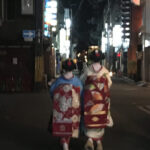
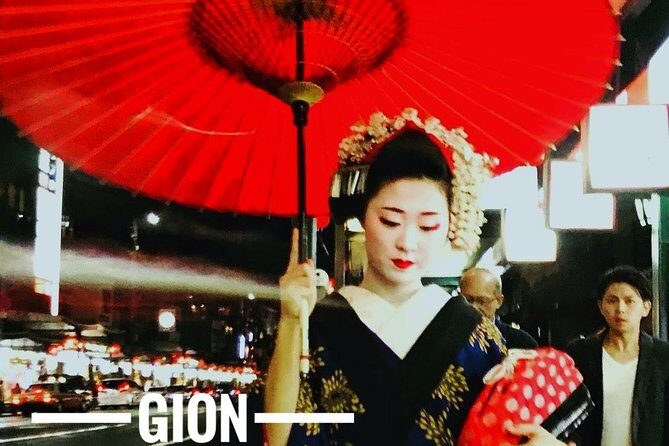
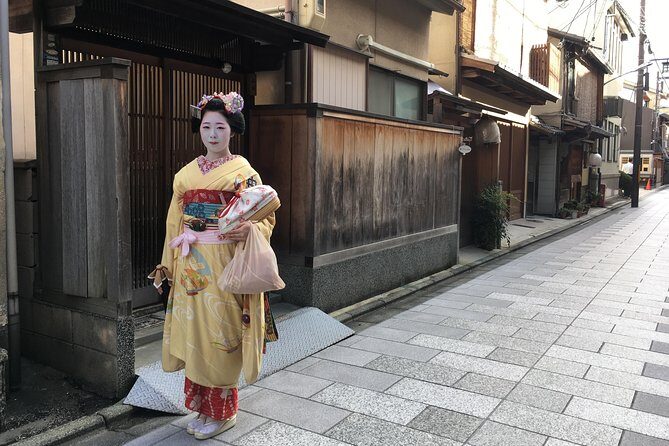
And yes, the tour has strong odds of geisha sightings because that’s part of what you’re walking for. Multiple guests specifically called out spotting geiko, maiko, and even an older geiko, plus several maiko leaving for appointments. Your guide’s job is to keep you focused and explain what you’re seeing as the evening unfolds.
A few more Kyoto tours and experiences worth a look

Meeting at Tsuruha Drug Yasaka Shrine Store near Miyagawasuji
The meeting point is at Tsuruha Drug Yasaka Shrine Store, address listed in Gionmachi Minamigawa (Higashiyama Ward). The good news is that it’s described as an easy-to-find area, near public transport, and close to the 7-Eleven near Miyagawasuji.
For planning your evening, that matters. When a tour starts in an area you can reach without a complicated bus-and-walk puzzle, you save time and stress. And for a night walk, stress is the enemy. You want the first 10 minutes to feel like you’re easing into the neighborhood, not scrambling to catch up.
Stop-by-stop: what you’ll actually see in about 2 hours
This walk is built for a smooth flow. You’ll hit four named highlights, plus a Zen-themed stop in between, with listed time blocks that generally keep the pace steady.
Miyagawacho Kaburenjo: geisha quarters with context
Your first stop is Miyagawacho Kaburenjo. This is where the tour starts turning “Gion as a postcard” into “Gion as a living world.”
You walk through the geisha quarters while your guide explains the secret lives of these masters of the arts. It’s a solid opener because it sets expectations fast: what Gion is, what roles exist there, and what kinds of cultural rules shape daily life. The time here is listed at 30 minutes, and admission is marked as ticket free for the activity.
A small-group start also helps. With only up to 10 people, you can actually hear explanations without being swallowed by a crowd.
Zen temple grounds: a calm breather in the middle of the walk
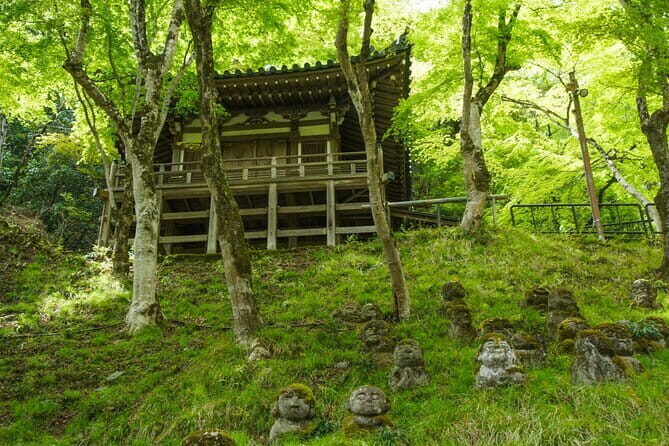
There’s also a stop that takes you through the grounds of a beautiful temple, with a brief introduction to Zen Buddhism. The listing doesn’t name the exact temple in the details you provided, but it’s clearly included as a quiet contrast between the geisha quarter story and the shrine-and-lantern stretch later.
This pause is useful. Night walks can blur together if every stop is a loud “look at this!” moment. A Zen-ground explanation gives you a reset, and it helps you notice atmosphere—wood, stone, and stillness—rather than only chasing photos.
Other walking tours we've reviewed in Kyoto




Yasakanoto: the nightfall view for your camera roll
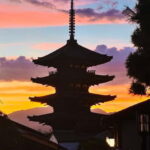
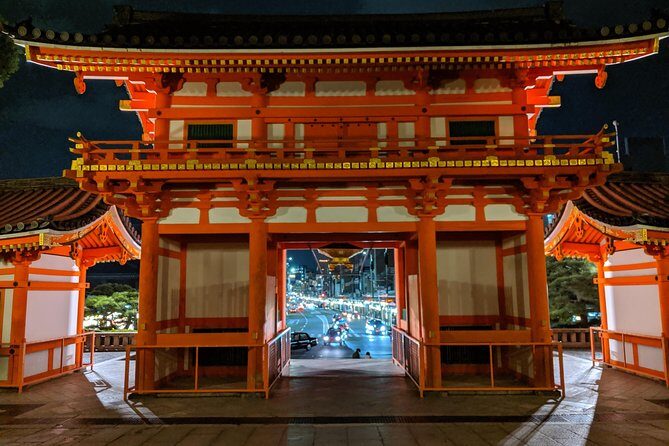
Next up is Yasakanoto, listed as 15 minutes with ticket free admission. This is framed as one of the most remarkable views in Kyoto, especially at nightfall.
If you want the practical reason this matters: this is the tour stop where lighting and timing are doing work for you. Lantern glow and night shadows can make even familiar architecture look more dramatic. Guests also tend to love this kind of planned photo time because you’re not standing there guessing when the light will peak.
Yasaka Shrine: lantern light and a Shinto moment
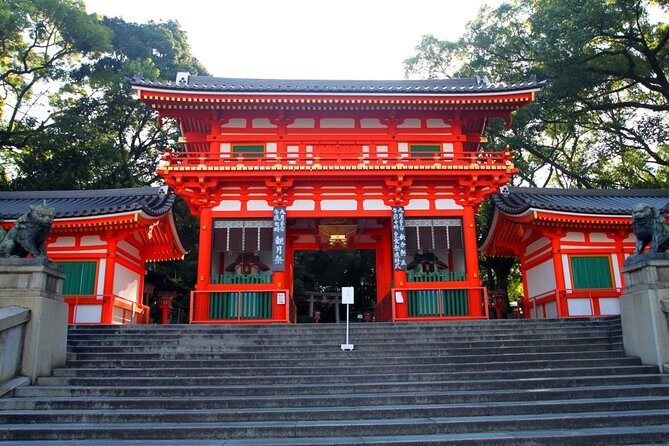
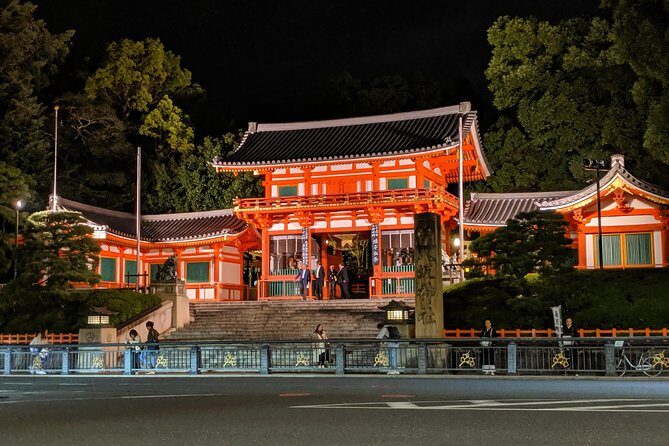
Then you reach Yasaka Shrine, listed at 20 minutes (also ticket free). This part of Gion nightwalking is classic Kyoto: the shrine lit up by lanterns.
The guide explains the Shinto faith and invites you to make a prayer for good fortune. This is more than decoration in the story. It gives you a clear cultural frame for the area beyond entertainment or sightseeing.
If you like tours that connect sights to beliefs, this is a highlight. It also helps explain why Gion’s night rhythm feels different—because religious and seasonal meanings are still part of the neighborhood.
Gion Shirakawa: lanes, clubs, and the modern edge
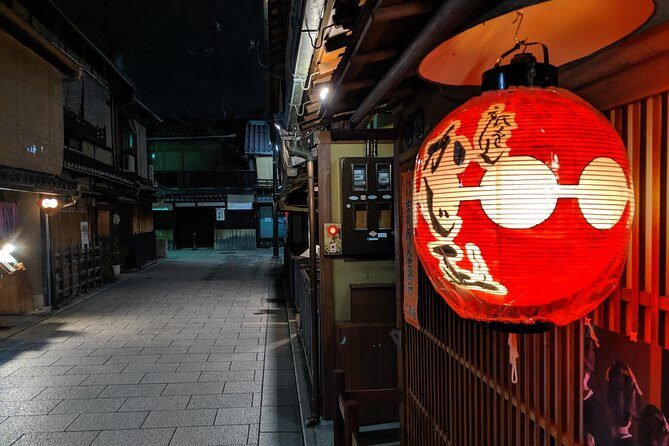
The final named area is Gion Shirakawa, with 15 minutes listed and ticket free admission. Here you walk past modern clubs and high-end restaurants on the way through one of the most beautiful parts of Gion.
This stop is key for perspective. Gion isn’t frozen in time. You’re seeing the blend of tradition and modern business life that keeps the district functioning. The story of geisha culture is stronger when you also understand it lives side-by-side with current-day Kyoto.
Guides make the difference: clear English, humor, and good pacing
A lot of tours advertise the same “see Gion at night” pitch. What makes this one stand out is the way guides are described by guests—especially in terms of communication and pacing.
Multiple reviews praised guides by name:
- Kevin: called out for being awesome, perfect English, and having the right amount of information.
- Karim: praised as personable and very engaging.
- Niall (also spelled similarly in reviews): highlighted for strong knowledge, friendliness, and professionalism.
- Cha cha: noted for doing an amazing job even when rain showed up.
- Shanda: described as enthusiastic and clearly explaining the area.
- Philippe and Raphael: mentioned for history context and adapting for people with different backgrounds.
What you should take from that as a traveler: this tour isn’t just “walk, point, move on.” The group stays small enough that explanations land. And since the route includes both Gion-specific storytelling and shrine/Zen context, you want a guide who can connect the dots. Guests consistently report that the guides did.
Price and value: $33.03 for a guided night route
At $33.03 per person, this tour sits in the reasonable category for Kyoto walking experiences. The best value here isn’t the price alone—it’s what’s bundled:
- A small group (10 max), which usually means better attention and less waiting.
- Several stops with ticket-free admissions listed in the itinerary (Kaburenjo, Yasakanoto, Yasaka Shrine, and Gion Shirakawa are marked ticket free).
- A guided explanation that ties geisha culture to real places, not just general facts.
- Practical timing—notably the nightfall view at Yasakanoto and lantern-lit Yasaka Shrine.
If you’re trying to choose between this and a larger group tour, the math usually favors small groups. You’ll often spend the same money and still get less personal guidance. Here, the structure is built so you can hear and ask questions without feeling like you’re at the back of a crowd.
Weather and night realities (and how this tour handles them)
This experience requires good weather. If it’s canceled due to poor weather, you’re offered a different date or a full refund.
Two useful points from how guests describe the experience:
- One review specifically mentioned the tour ran despite rain and still felt informative and scenic.
- That tells me the guide team seems prepared for typical Kyoto evening conditions, even if the weather isn’t perfect.
My practical advice: check the forecast that day. Kyoto nights can turn uncomfortable quickly. Since this is a walking tour, you’ll feel it faster than in a museum.
Who this tour is best for
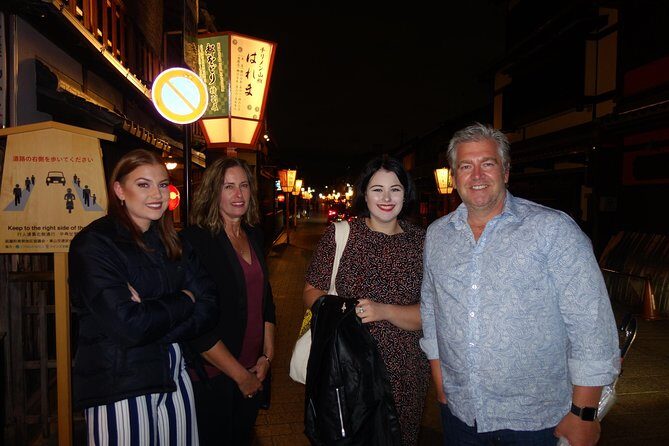
This walk is suitable for ages 10–77, and it’s described as easy to participate in for most travelers. That wide range tells you the route is designed to be approachable.
It also fits best if you want:
- An evening plan that’s about 2 hours, not a half-day commitment
- Small-group culture explanations rather than a mega-tour line
- A route that includes both Gion geisha-area context and Kyoto’s spiritual landmarks like Yasaka Shrine
- A chance to spot geisha-related figures while you’re learning what you’re seeing
If you’re traveling with teens, grandparents, or anyone who wants a manageable walking rhythm, the age range and pacing make this a strong candidate.
Should you book this Gion Night Walking Tour?
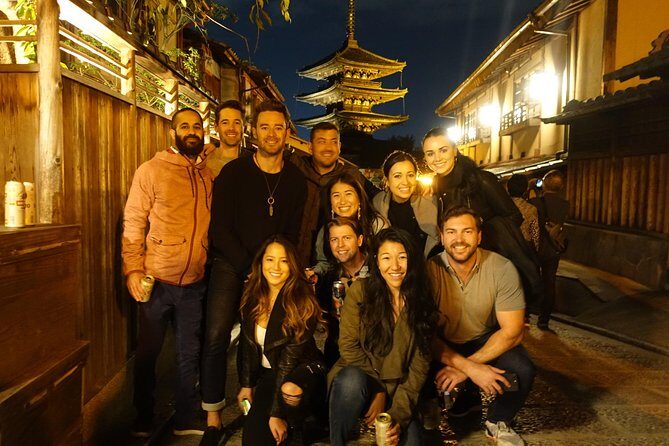
Book it if you want an evening in Gion that feels grounded in place. The biggest strengths are the 10-person limit, the guided storytelling, and the route design that stacks geisha-area context with lantern-lit Yasaka Shrine and the classic Gion Shirakawa lanes.
I’d skip it or reconsider only if:
- You’re visiting during a stretch where the weather is likely to be poor (since it needs good weather)
- You hate night walking or want a strictly low-expectation sightseeing option (because the geisha-related part is something you’re trying to see, not something guaranteed by the listing details you shared)
If you’re okay with a guided walk and you want to understand Gion rather than just pass through it, this is an excellent way to spend your Kyoto night.
FAQ
How long is the Gion Night Walking Tour?
It’s listed as about 2 hours.
What’s the group size?
The tour has a maximum of 10 travelers, and it’s described as a small group.
Where do we meet?
The meeting point is at Tsuruha Drug Yasaka Shrine Store in Gionmachi Minamigawa, Higashiyama Ward. It’s also described as an easy spot near the 7-Eleven near Miyagawasuji.
Is this tour suitable for children and older adults?
It’s described as suitable for ages 10 to 77.
Do I need admission tickets for the stops?
The itinerary lists ticket free admission for the stops shown (including Kaburenjo, Yasakanoto, Yasaka Shrine, and Gion Shirakawa).
What happens if the weather is bad?
This experience requires good weather. If it’s canceled due to poor weather, you’ll be offered a different date or a full refund.